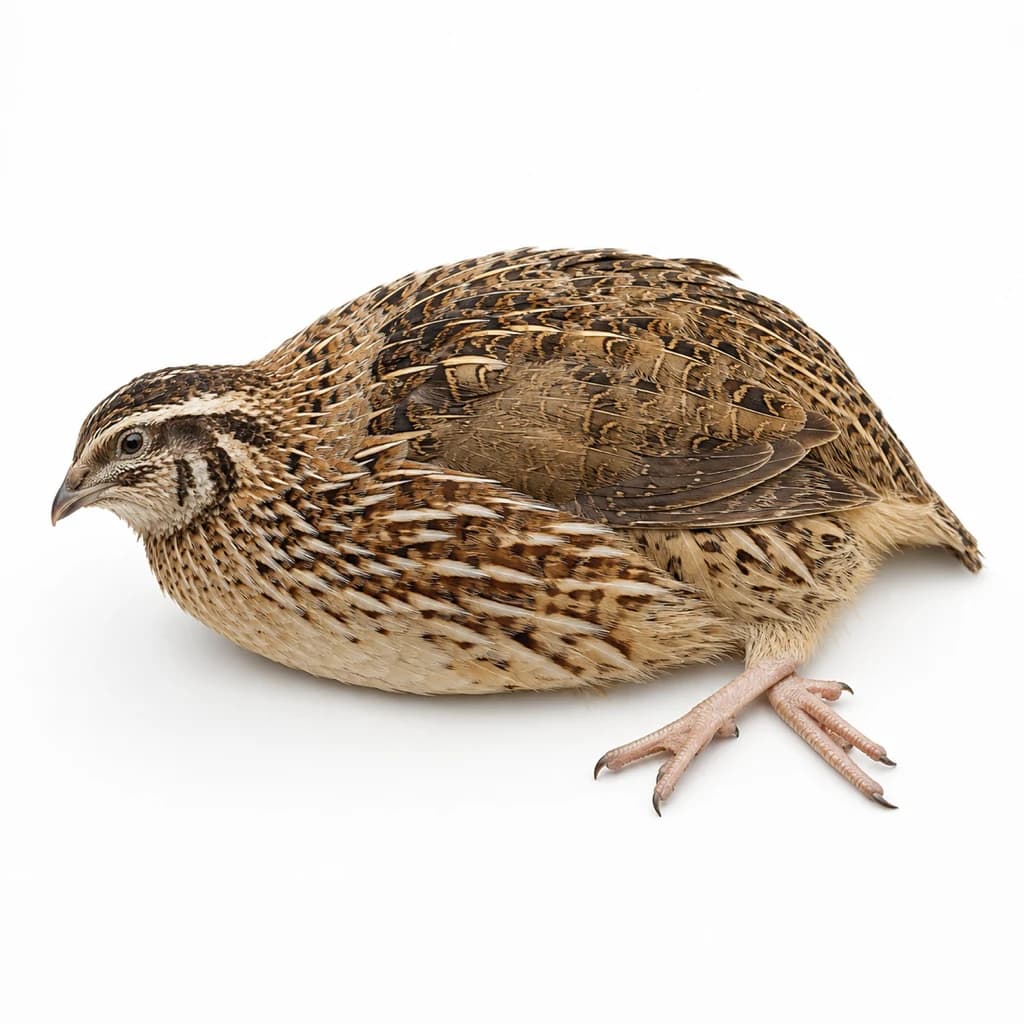
Natural form
Whole raw quail showing the small compact body, mottled brown-and-cream feathered plumage.
Shows the bird's distinctive small size, feather patterning, and overall form so readers can recognize a whole quail before processing.
Proteins
Quail
Small game bird with tender, slightly gamey dark meat; often roasted or grilled whole.
Quail is a small game bird prized for its tender, delicately gamey meat. Whole birds are typically roasted, grilled, or pan-seared, and the eggs are also used. Because they are small and lean, they cook quickly and are often butterflied or stuffed to stay moist.
Quail is a small game bird prized for its exceptionally tender, mildly gamey dark meat—a delicacy that appears on fine dining menus and in traditional hunting cuisines alike. The bird is quite lean, with about 3–4% fat compared to chicken's 7–10%, which makes it far more susceptible to drying out during cooking. The breast is the most coveted portion, though the legs and thighs are darker and more forgiving. Farmed quail—predominantly Coturnix or Japanese quail—is available year-round and offers mild, consistent flavor; wild quail, especially Bobwhite from North America, has more pronounced game character and is a seasonal treat from late summer through winter. Quail is typically sold dressed at 4–8 oz each, yielding roughly 50–60% edible meat.
The small size is both an asset and a challenge. Individual portions make an elegant presentation when roasted whole, but the diminutive frame cooks unevenly if you're not careful—breasts overcook while legs remain underdone. This is why many cooks split and spatchcock the bird rather than roast it intact. Quail tolerates a slight pink center like other game birds; the USDA recommends 145°F (63°C) internal temperature as the target. At that temperature, the meat is juicy and yielding, not chewy or dried out. Quail also yields small, speckled eggs (from Coturnix hens) that are available in specialty markets—they have a nutty flavor and are roughly one-third the size of chicken eggs.
Beyond the kitchen, quail occupies a particular cultural space in European and American game cookery. It is the quintessential small bird for a grand occasion: roasted with herbs, wrapped in bacon, and finished with a fruit jus. It also appears in rustic preparations—braised with wine, confited in fat, or tucked into terrines. The bird rewards attentive cooking and responds well to brining, high-heat searing, and brief rests.
- Measured in
- piece
- Storage
- Fridge
Types & varieties
Most common globally; brown/tan plumage; bred extensively for meat and eggs; smallest commercial quail, ~4–5 oz dressed
Native to eastern North America; named for distinctive call; slightly larger than Coturnix; the benchmark for wild quail flavor in the US; 6–8 oz dressed
Distinctive teardrop plume; hunted recreationally; rarely found in commercial markets
Largest North American quail species; two long plumes; hunted but rarely sold commercially
Color mutation of Coturnix; similar size and flavor to standard Coturnix
Why Quail Dries Out—and How to Prevent It
The fundamental challenge with quail is its leanness. With almost no intramuscular fat, there is nothing to baste the meat from within while it cooks. The moment the internal moisture reaches the surface and evaporates, the meat begins to tighten and dry. This is why high heat applied for too long is the most common failure mode. A probe thermometer is not optional—it is essential. Pull the bird at 145°F and let it rest; carryover heat will bring it to temperature while the juices settle.
Brining addresses this directly. A 3% salt solution (about 3 grams of salt per 100 grams of water) for 30–60 minutes denatures proteins enough to help the meat retain moisture without making it taste cured. For a quick brine, dissolve 1 tablespoon of salt in 2 cups of water and submerge the birds for 30 minutes before cooking. Pat thoroughly dry afterward to ensure good browning.
Fat is the other solution. Wrapping quail in bacon or pancetta before roasting adds a protective layer of fat that bastes the bird as it renders. Barding with thin slices of fatback works for pan-seared breasts. Even scoring the skin and fat layer helps render what little subcutaneous fat exists, allowing it to baste the meat as it cooks.
- Brine 30–60 minutes in 3% salt solution before cooking
- Use a probe thermometer; remove at 145°F internal temperature
- Wrap in bacon or pancetta to add fat and prevent drying
- Leave skin on during cooking; remove before serving if desired
- Rest 5 minutes after cooking to allow juices to redistribute
Whole vs. Spatchcocked: Choosing Your Approach
Roasting a quail whole is elegant but requires attention. The small frame means breasts cook much faster than thighs, so the bird often reaches safe temperature in the breast before the legs are done. Trussing the legs tightly against the body helps, as does starting the bird breast-side down for the first half of cooking. Basting every 3–4 minutes prevents the delicate skin from scorching.
Spatchcocking—removing the backbone and pressing the bird flat—solves the uneven cooking problem entirely. With the bird flattened, heat penetrates more uniformly and cooking time drops by roughly half. The technique is straightforward: place the bird breast-side down, cut along both sides of the backbone with kitchen shears, flip the bird, and press firmly on the breastbone until you feel it crack and the bird lies flat. Season and grill or pan-sear over high heat for best results. The exposed skin also means more surface area for browning, which improves flavor significantly.
- Whole roasting: truss legs, start breast-side down, baste every 3–4 minutes
- Spatchcocking cuts cooking time roughly in half and ensures even doneness
- Press firmly on the breastbone after removing the backbone to flatten evenly
- Spatchcocked birds are ideal for high-heat grilling or pan-searing
Common uses
Tips & pitfalls
- Never overcook—quail's minimal fat means it dries out quickly; use a probe thermometer and remove at 145°F
- Brine for 30–60 minutes in 3% salt solution before cooking to improve moisture retention
- Score the skin and fat layer of the breasts with a knife to help render fat and allow heat to penetrate evenly
- Always rest roasted or grilled quail for 5 minutes before serving to allow juices to redistribute
- Leave the skin on during cooking to baste the meat; remove before serving if desired
- High-heat sear followed by gentle finish works better than steady high heat
- For whole birds, truss or tie legs to maintain shape and ensure even cooking
- Basting every 3–4 minutes when roasting prevents the delicate skin from scorching
- If spatchcocking, press firmly on the breastbone to flatten evenly—cuts cooking time by roughly half
- Wild Bobwhite quail has more pronounced game flavor than farmed Coturnix; adjust seasoning accordingly
Nutrition
Energy
803 kJ · per 100 g
Where the calories come from
Protein
19.6g
39% DV
Carbs
0g
0% DV
Fat
12.1g
15% DV
Fiber
0g
0% DV
Sodium
53mg
2% DV
Source · USDA FoodData Central · Quail, meat and skin, raw
View on FDC →In the shops
Matched grocery products
No matched grocery products for Quail yet.
Good to know
- Type
- Small game bird (Galliformes family)
- Primary Species
- Coturnix quail (Japanese quail) for farming; Bobwhite quail for North American game hunting
- Weight Range
- 4–8 oz (125–225g) per bird, dressed
- Edible Yield
- Approximately 50–60% of live weight
- Meat Type
- Dark meat; very lean with minimal intramuscular fat (3–4% fat vs chicken's 7–10%)
- Flavor
- Delicate gamey notes; sweeter and more tender than other wild birds
- Doneness Target
- 145°F (63°C) internal temperature; safe to serve slightly pink like other game birds
- Typical Cooking Time
- 15–25 minutes depending on size and method
- Peak Season (Wild)
- Late summer through winter; farmed quail available year-round
- Shelf Life (Refrigerated)
- 1–2 days raw; cooked quail keeps 3–4 days
- Shelf Life (Frozen)
- Up to 3 months at 0°F (-18°C)
- Protein Content
- Approximately 21–24g protein per 100g serving
- Key Nutrients
- B vitamins (niacin, B6), iron, zinc, selenium
Substitutes
- Cornish hen — Larger portion (8–12 oz) but similar proportion of dark meat and delicate flavor; increase cooking time proportionally
- Poussin — Young chicken that is the closest substitute in texture and mild game character; season and cook identically
- Squab (young pigeon) — Slightly larger with more pronounced game flavor; excellent substitute if you can source it
- Grouse — Similar lean dark meat and game intensity; adjust for larger size if using whole birds
- Partridge — Comparable size and flavor profile; can often be interchanged 1:1
Pairs with
Appears in these dishes
Related
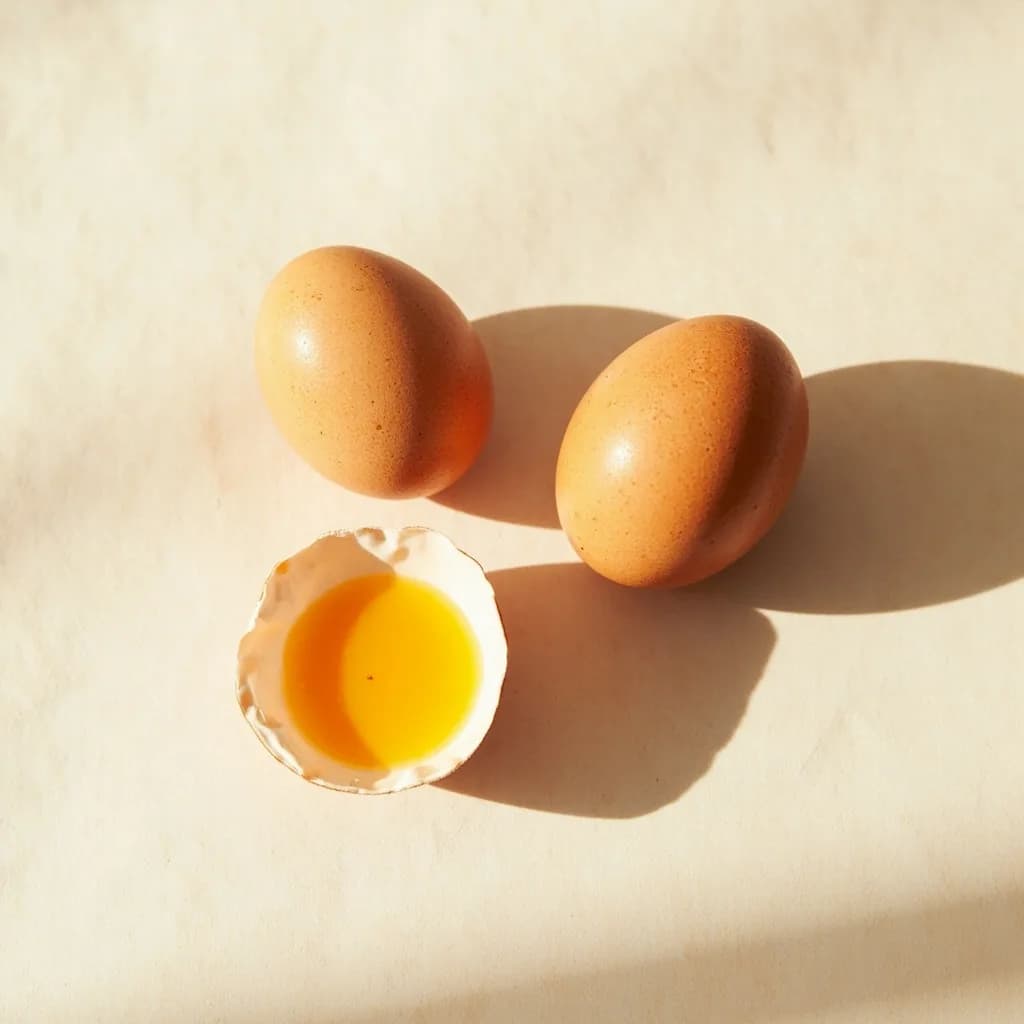
Egg
The kitchen's everything ingredient — bind, leaven, enrich, or fry
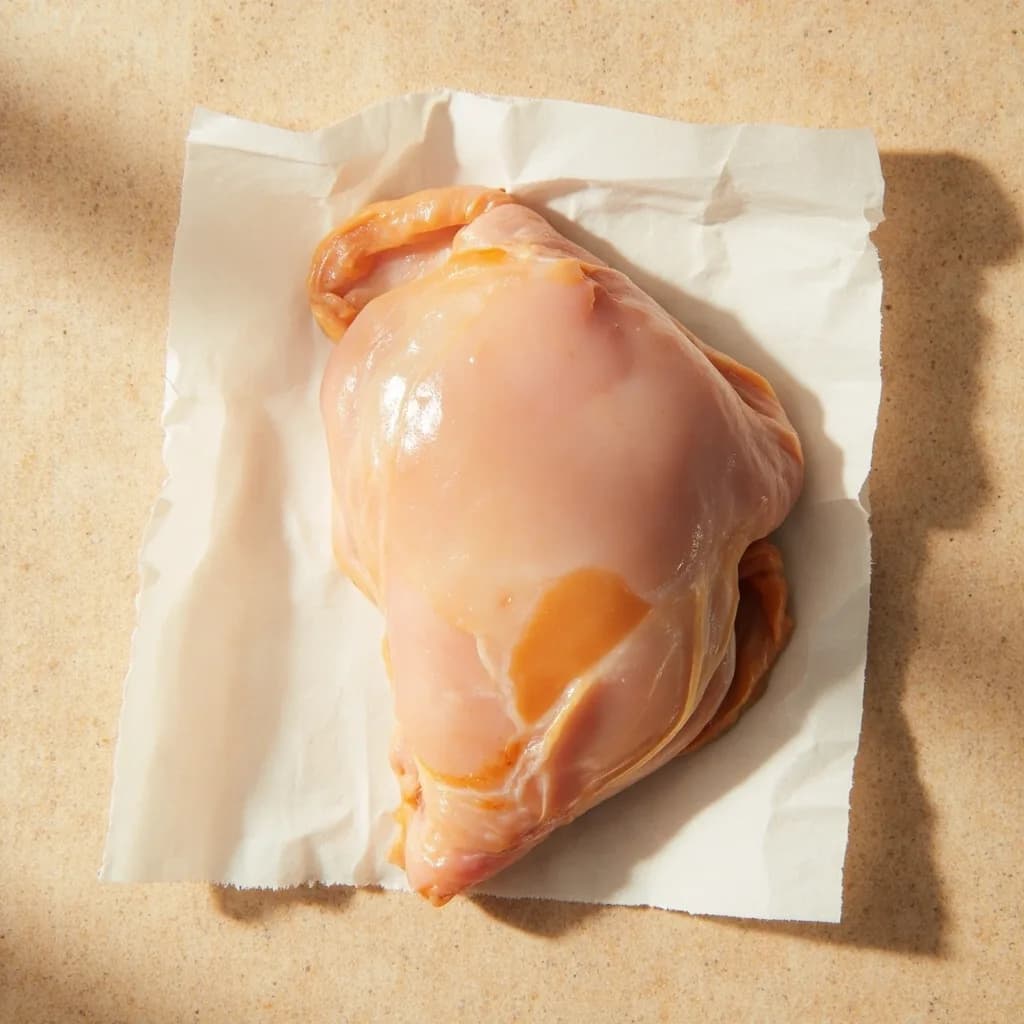
Chicken Breast
Lean, quick-cooking white meat for everyday dinners

Ground Beef
Versatile minced beef for burgers, ragù, tacos, and meatballs
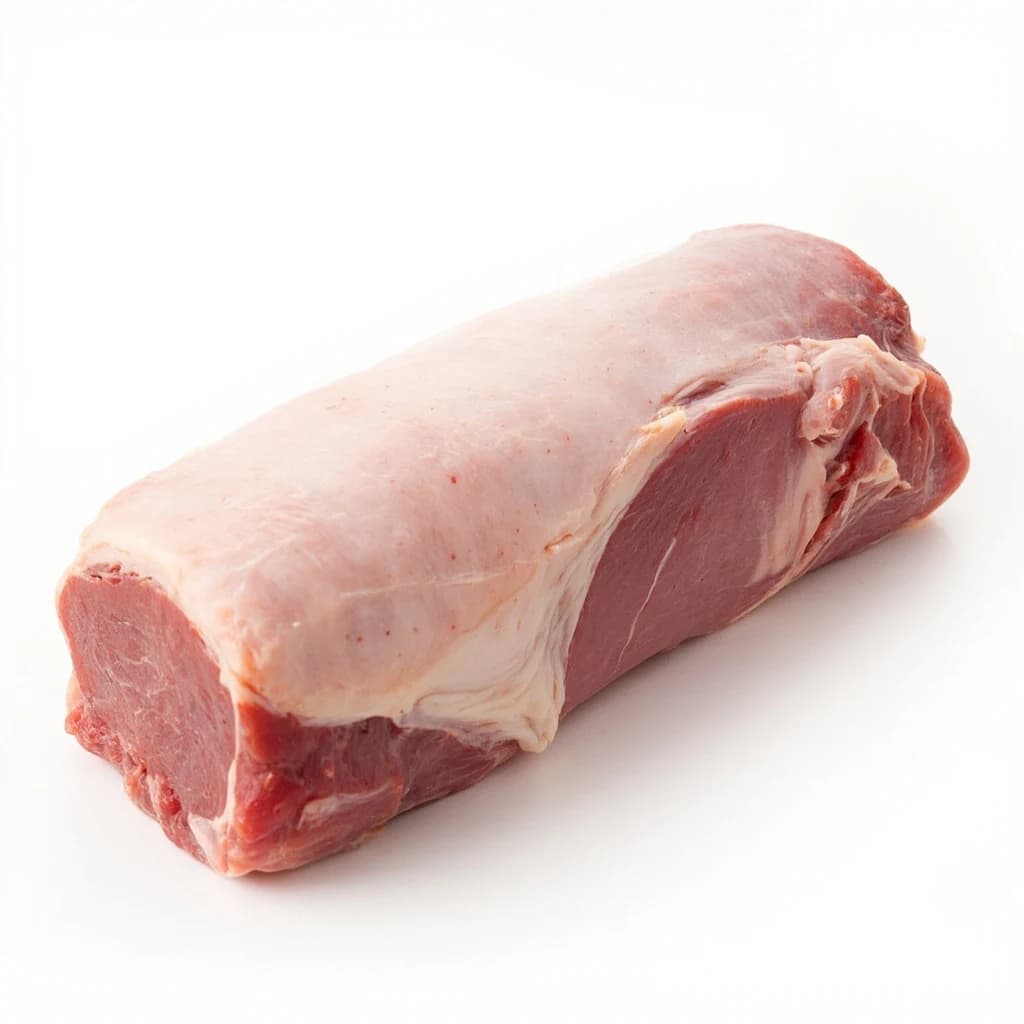
Pork Loin
Lean, tender roasting cut that stays juicy with care
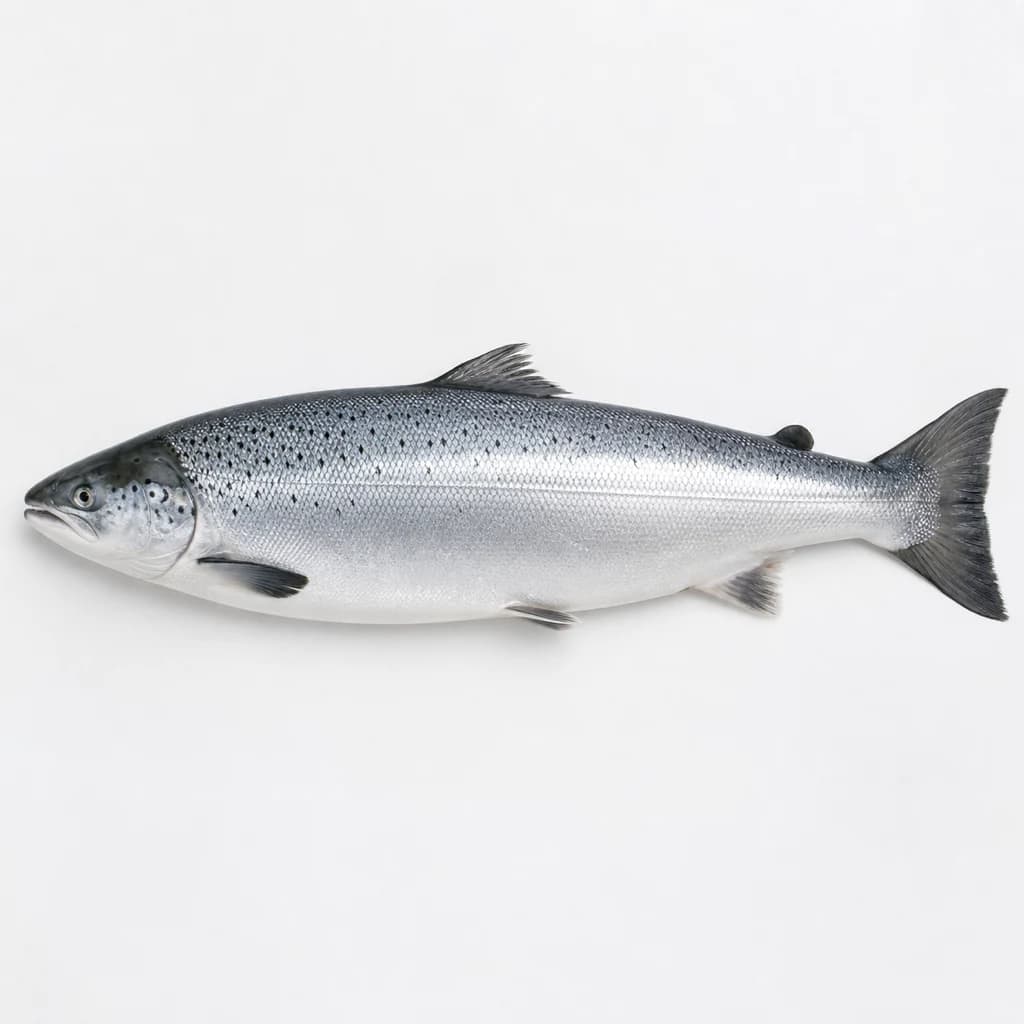
Salmon
Rich, rosy fish that roasts, grills, or cures beautifully

Egg White
Pure protein that whips to airy peaks for meringue and more
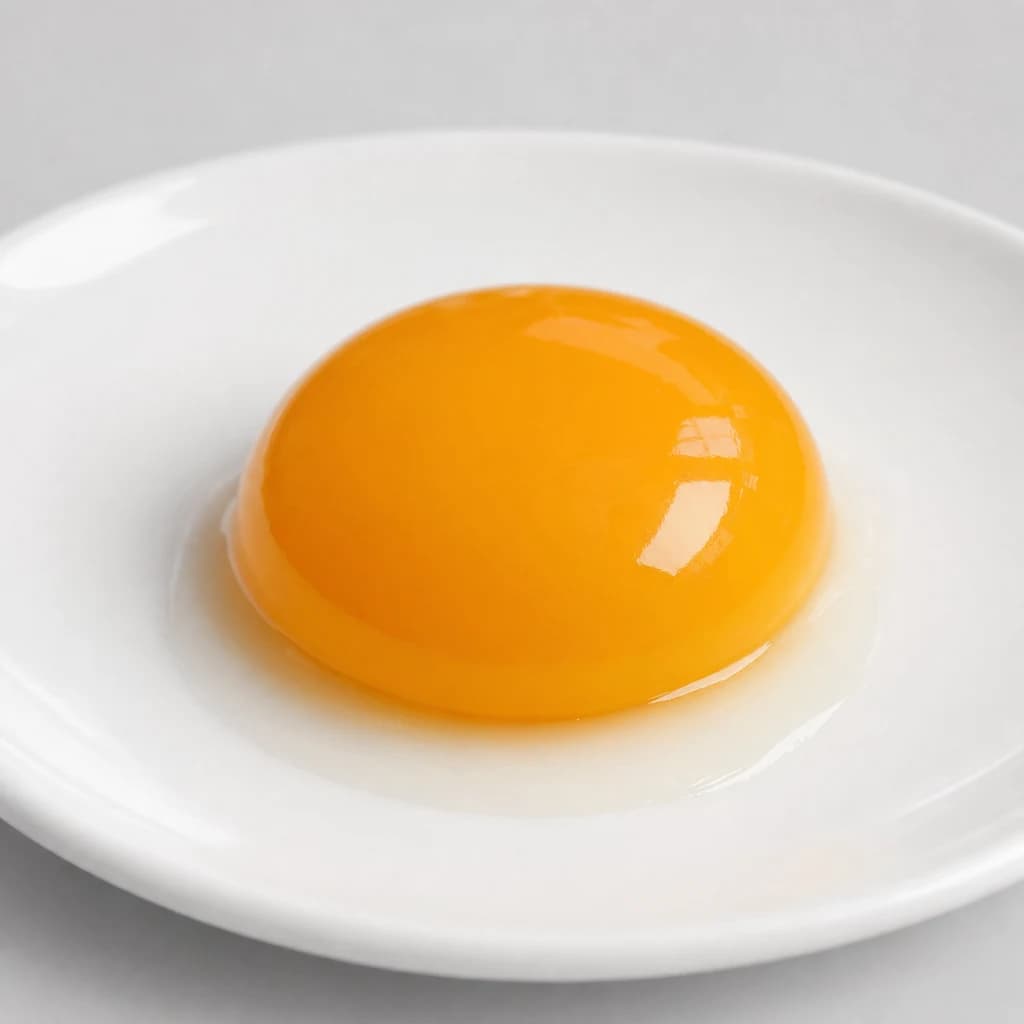
Egg Yolk
Rich, golden yolk for custards, mayonnaise, and pasta

Quail Egg
Tiny, speckled eggs for garnishing and elegant bites