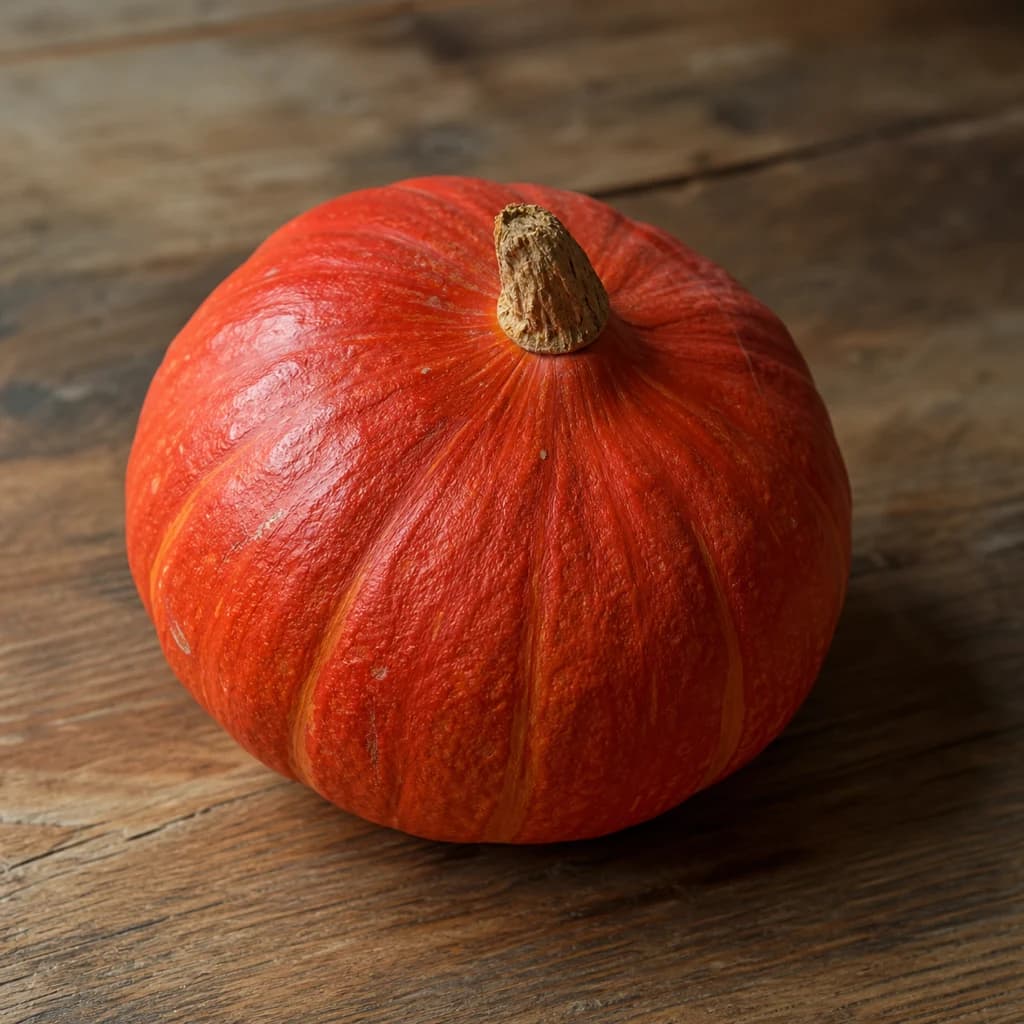
Natural form
A whole red pumpkin showing its deep orange-red rind and compact round shape.
Shows the reader exactly what to look for when selecting a red pumpkin at the market — its distinctive color, ribbed rind, and form.
Produce
Red Pumpkin
Deep orange-red winter squash with sweet, dense flesh for curries and soups.
Red pumpkin is a sweet, deep orange-fleshed winter squash widely used in South Asian cooking, where it is called kaddu or lal bhopla. The dense, sweet flesh is cooked into curries, dals, soups, and sweets, and the firm texture holds up in stews. It stores well thanks to its hard rind.
Red pumpkin refers to a group of Cucurbita varieties distinguished by their deep orange-red rind and dense, sweet flesh. Chief among them is Cucurbita moschata—the type most commonly sold as 'red pumpkin' in South Asian and Southeast Asian markets—alongside varieties like Red Hubbard and Red Kuri from Cucurbita maxima. Unlike the jack-o'-lantern pumpkins (Cucurbita pepo) sold in Western grocery stores, which are watery and mild, true red pumpkins have low moisture content and high starch, giving them a creamy, dense texture that holds its shape through long cooking.
This matters enormously in the kitchen: add a Cucurbita pepo to a traditional kaddu ki sabzi and you'll get a soupy, bland mess; use the right red pumpkin and the flesh softens into the gravy while retaining structure. Their flavor is assertively sweet with earthy, slightly nutty undertones—more complex than butternut squash and far more satisfying in applications where the squash must absorb bold spices without being overwhelmed.
- Measured in
- g
- Storage
- Pantry
Types & varieties
Bright orange-red smooth skin, pale orange flesh. Standard variety for South Asian cooking; skin is thin and sometimes left on for certain dishes.
Large with warted exterior; deep orange flesh with excellent sweetness. Common in North America; excels in roasting and purees.
Teardrop-shaped, reddish-orange skin; sweet, chestnut-like flavor. Japanese variety with skin tender enough to eat when roasted.
Flattened round shape, deep orange-red skin; dense, dry flesh. Common in Brazilian and Caribbean markets, often labeled simply as red pumpkin.
Small to medium size, intense orange-red exterior; very sweet flesh. Standard in Southeast Asian curries and desserts.
Common uses
Tips & pitfalls
- Cut the pumpkin in half by scoring around the circumference with a heavy knife, then use a cleaver and mallet to strike once through the scored line—this prevents slipping and serious injury. Never attempt to cut a dense pumpkin through brute force with a small knife.
- Scoop seeds immediately after halving while the flesh is warm; seeds cling tenaciously once cooled, making removal far more tedious.
- Salt cut flesh and let it drain for 15–20 minutes before cooking to draw out excess water and concentrate flavor—this is particularly useful for Indian curries where a drier, more concentrated texture is desired.
- Toast the seeds with oil and spices for a crunchy garnish; they have a milder, sweeter flavor than butternut squash seeds and hold up well.
- For purees destined for soup or pie, roast the halved pumpkin cut-side down on a lined baking sheet at 200°C (400°F) for 40–50 minutes. The sugars caramelize against the pan, yielding far deeper flavor than boiling or steaming.
- In bhuna-style curries, add cubed pumpkin late in cooking—it breaks down quickly and will dissolve into the gravy if added too early, creating a watery result.
- The skin of most red pumpkins becomes tender and edible when cooked thoroughly, but peeling produces smoother textures for soups and purees. For Indian dishes where skin is eaten, ensure the pumpkin is young and the skin is truly thin.
- A common mistake is confusing red pumpkin with jack-o'-lantern varieties—jack-o'-lanterns have watery flesh that turns mushy in curries and bland in soups. If the flesh looks pale, watery, or lacks density, it is the wrong pumpkin.
Nutrition
Energy
109 kJ · per 100 g
Where the calories come from
Protein
1g
2% DV
Carbs
6.5g
2% DV
Fat
0.1g
0% DV
Fiber
0.5g
2% DV
Sugars
2.8g
of which
Sodium
1mg
0% DV
Source · USDA FoodData Central · Pumpkin, raw
View on FDC →In the shops
Matched grocery products
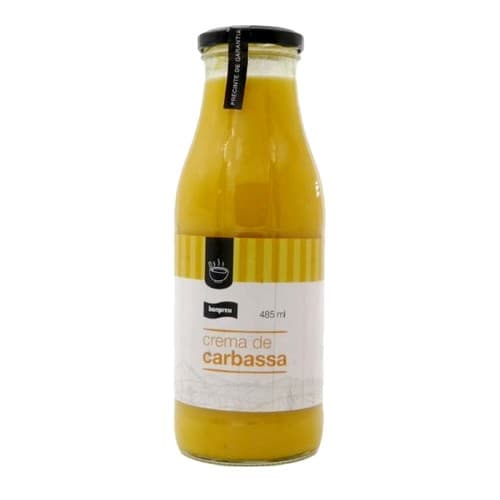 €1.99
€1.99Pumpkin Cream
BONPREU · l · Bonpreu
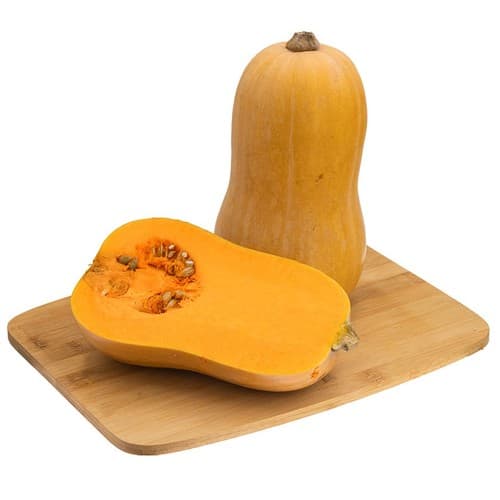 €2.70
€2.70Km0 Pumpkin, 1 unit
ud · Bonpreu
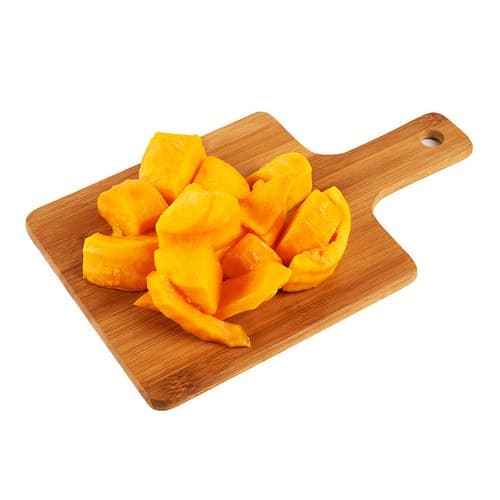 €1.99
€1.99La Collita Pre-cut Pumpkin
LA COLLITA · kg · Bonpreu
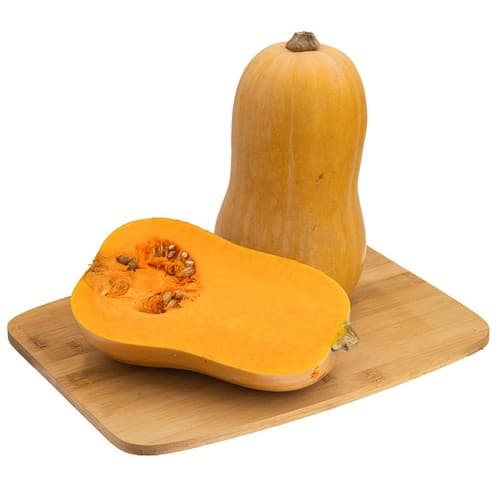 €2.49
€2.49LA COLLITA Pumpkin Km0 1 unit
LA COLLITA · Bonpreu
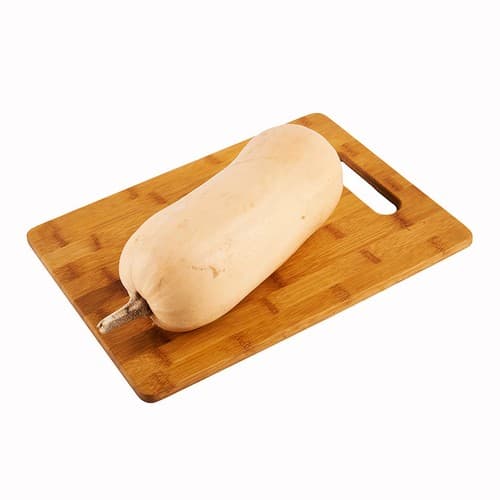 €2.19
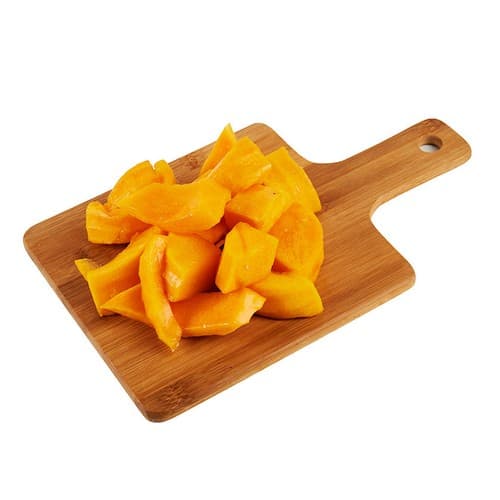
€2.19Ecological Pumpkin Local 0km 1 unit
Bonpreu
 €2.19
€2.19LA COLLITA Organic Cut Pumpkin Zero Km in 400g Bag
LA COLLITA · kg · Bonpreu
Good to know
- Scientific names
- Cucurbita moschata, Cucurbita maxima
- Origin
- Mesoamerica; cultivated varieties developed across South Asia, East Asia, and the Caribbean
- Peak season
- Late summer through early winter; stored specimens available year-round
- Average weight
- 2–8 kg (4–18 lbs) for most culinary varieties
- Flavor profile
- Sweet with earthy, slightly nutty undertones; more assertive than Kabocha, less starchy than Hubbard
- Yield
- Approximately 75% edible after peeling and seeding
- Shelf life
- 3–6 months whole in a cool (10–15°C), dry, dark place; up to 2 weeks cut in the fridge; 6 months frozen as puree or blanched cubes
- Prep equipment
- Heavy chef's knife or cleaver for cutting rind; sturdy metal spoon for seeds; vegetable peeler or paring knife for peeling
- Difficulty
- Easy to prep; rind requires moderate force to cut but no special technique beyond firm pressure
Substitutes
- Butternut squash — Closest substitute; slightly sweeter and less dense. Substitute 1:1; reduce cooking time slightly as it cooks faster.
- Kabocha (green or orange) — Similar density and sweetness; skin is more tender. Good for roasting and soups. Substitute 1:1.
- Sweet potato — Acceptable in soups and curries; different texture (creamier) and flavor (less earthy). Use 1:1 ratio.
- Acorn squash — Less sweet, more watery; not ideal for Indian-style dishes. Best for simple roasting. Reduce cooking liquid by 20%.
- Pumpkin puree (canned) — Use for pie filling and soup; not suitable for cubed applications. 400g canned equals approximately 500g fresh cubed.
Pairs with
Also called
Red Pumpkin · Kaddu · Lal Bhopla
Related

Tomato
Juicy, sun-sweet fruit for sauces, salads, and slow-cooked depth

Yellow Onion
The aromatic backbone of soups, sofritos, and braises

Garlic
Pungent cloves that perfume nearly every savory dish

Lemon
Bright, acidic citrus that wakes up almost any dish

Potato
Humble, hearty staple — roast, mash, fry, or boil

Carrot
Sweet, crunchy root — raw, roasted, or the base of a sofrito

Cucumber
Cool, crisp, and watery — for salads, pickles, and tzatziki

Lettuce
Crisp leaves for salads, wraps, and a fresh crunch