Stored
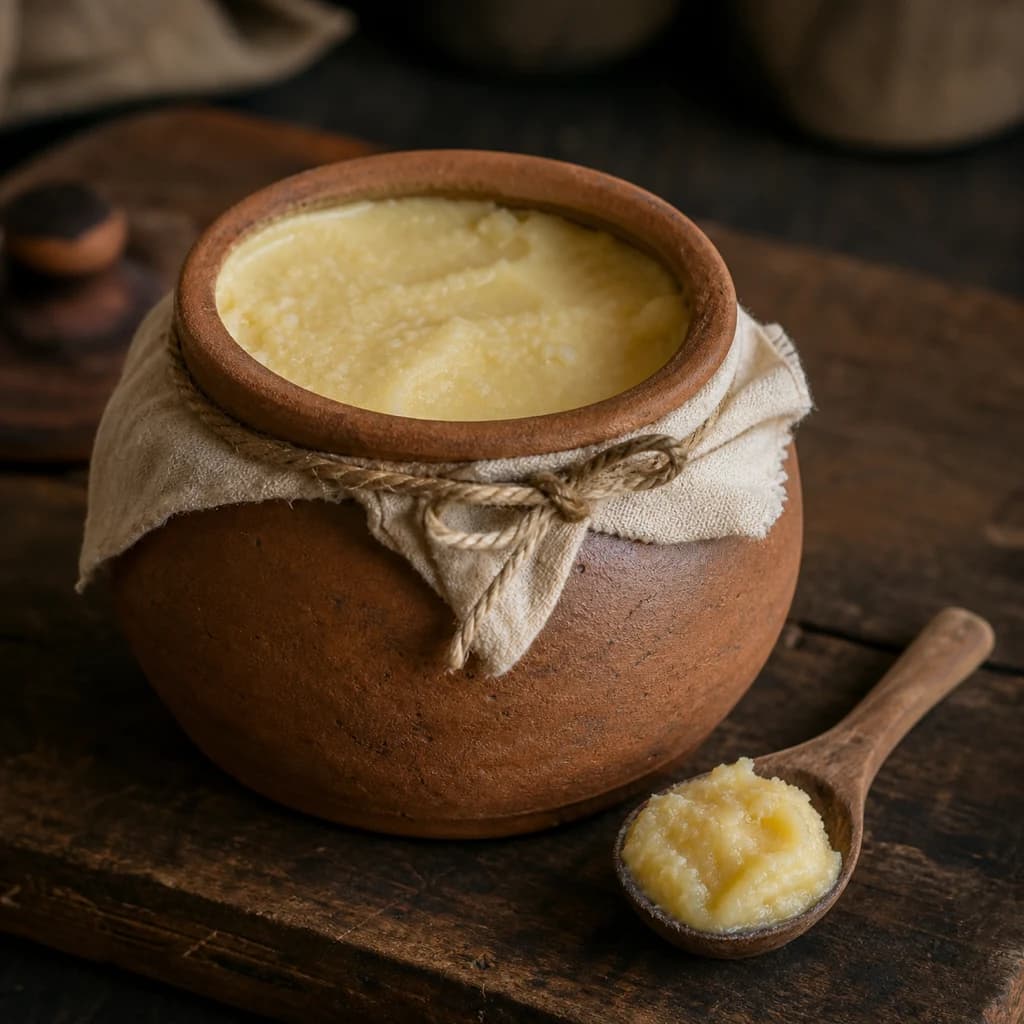
Smen packed into a traditional clay jar, sealed for months of aging.
The sealed clay jar is the defining storage vessel and most recognizable form of smen, showing how it is aged and preserved.
Oils & Fats
Smen (Fermented Clarified Butter)
North African aged, salted clarified butter with a pungent, cheesy depth.
Smen is a North African and Middle Eastern fermented, salted clarified butter, traditionally aged in sealed jars for months or years. It develops a strong, pungent, almost cheesy flavor used to enrich couscous, tagines, soups, and breads. A little goes a long way as a deeply savory cooking fat.
Smen is a fermented, salted clarified butter that has been a cornerstone of North African cuisine for centuries, particularly in Morocco, Algeria, Tunisia, and Libya. Its preparation follows the same clarification process as ghee—melting butter and separating the milk solids and water—but introduces a deliberate fermentation step where salt and time work together to develop an intensely complex flavor. The result sits somewhere between a preserved cooking fat and a fermented ingredient, with a pungent, cheesy, barnyard-like aroma that deepens remarkably with age. In rural communities, especially among Amazigh (Berber) families, quality homemade smen is a source of quiet pride; households have been known to maintain the same batch for years, drawing from it and replenishing it like a living pantry staple. The 'rancid' character prized in aged smen is not rot but controlled enzymatic and oxidative breakdown—a flavor that must be acquired through repeated exposure, much like aged cheeses or fermented fish sauces in other culinary traditions. Unlike fresh butter or even standard clarified butter, smen behaves differently in cooking: it resists the browning and scorching that plague fresh butter at high heat, yet carries a depth of flavor that ghee simply cannot match.
- Measured in
- g
- Storage
- Pantry
Allergens
Types & varieties
Factory-produced; milder, more consistent flavor; widely available in North African markets
Prepared by rural families; often with added herbs; flavor varies by household and region
Rancid-style aged butter prized for intense, complex flavor; used sparingly as a flavoring rather than a primary cooking fat
Smen infused with wild thyme, rosemary, or oregano; common in Moroccan Atlas Mountain region
The Fermentation Process
Unlike simple clarified butter, smen undergoes a controlled fermentation that transforms its flavor fundamentally. Traditional preparation begins by melting butter and removing the foam (the milk solids and water being expelled). Salt is then folded in—typically 2–4% by weight—and the clarified butter is transferred to a clean vessel, traditionally earthenware or goat skin, though glass jars work equally well. The vessel is covered loosely with cheesecloth and left in a warm spot (25–30°C/77–86°F) for anywhere from one week to several months. during this time, wild cultures naturally present in the butter (especially if unpasteurized) and environmental yeasts slowly break down the remaining dairy proteins and fats, producing the signature pungent, cheesy aroma. The longer it ages, the more assertive and complex it becomes, darkening from pale white to deep golden yellow.
- Use pasteurized butter for a milder, more predictable result; unpasteurized butter produces a more authentic but variable product
- Stir the smen once daily during fermentation to distribute cultures evenly and prevent hot spots
- The surface may develop a slightly darker layer—this is normal and can be stirred back in or left as is
Why Smen Survived Before Refrigeration
Before widespread refrigeration, preserving dairy in hot climates presented a serious challenge. Butter spoils quickly; fresh cream even faster. Smen emerged as a practical solution: by clarifying butter, you remove the water and milk solids where spoilage organisms thrive. Adding salt further inhibits microbial growth. The fermentation step, paradoxically, actually protects the fat by populating it with beneficial cultures that outcompete harmful ones. The result is a cooking fat that remains edible for months or even years at room temperature—a genuine survival technology that happened to produce something delicious. This heritage makes smen both a preserved ingredient and a fermented one, bridging two ancient food preservation traditions.
- The salt content (2–4%) is critical: too little and spoilage organisms win; too much and the flavor overwhelms
How to Tell When Smen Has Gone Bad
Smen spoils differently than fresh dairy. Instead of the simple rancidity you might expect from oxidized butter fat, bad smen develops genuinely foul off-notes—rotten, slimy, or putrid aromas that go beyond the expected pungency. If it smells like rotting meat or has a slimy texture despite being properly salted and stored, discard it. The 'rancid' aroma of properly aged smen is funky and intense but not repulsive—think aged parmesan or blue cheese, not spoiled milk. Trust your nose: if something genuinely disturbs you, trust that instinct. Properly made smen, stored in an airtight container away from light and heat, will keep for a year or more at room temperature and continues improving for the first several months of aging.
- Separate the concepts: 'aged' funky aroma (good) versus 'rotten' off-smell (bad)
- Mold on the surface is a bad sign—unlike the dark layer in properly aged smen, mold indicates contamination
Common uses
Tips & pitfalls
- Start with high-quality, unsalted butter if fermenting at home for better control over salt levels and fermentation intensity
- When fermenting at home, use a clean glass jar, cover loosely with cheesecloth, and keep in a warm spot (25–30°C/77–86°F) for 2–4 weeks, stirring daily
- Traditional fermentation relies on wild cultures in unpasteurized butter; commercial pasteurized butter produces a milder, more consistent result
- Aged smen develops the most complex flavor but becomes quite potent—use it sparingly, often as a finishing drizzle rather than a primary cooking fat
- Smen spoils differently than fresh butter: watch for genuinely foul smells (rotten, slimy) rather than simple fermented aroma; if it truly disturbs you, discard it
- Store in airtight containers; even though the salt and low moisture content preserve it, exposure to air accelerates flavor degradation
- If using store-bought smen, knead the jar before opening to redistribute any separated oils and flavor compounds
- When cooking with smen, add it early to tagines and stews so the flavors meld; for finishing, drizzle it warm over grains or soups just before serving
Nutrition
Energy
3766 kJ · per 100 g
Where the calories come from
Protein
0g
0% DV
Carbs
0g
0% DV
Fat
100g
128% DV
Fiber
0g
0% DV
Sugars
0g
of which
Sodium
0mg
0% DV
Source · USDA FoodData Central · approx. Butter, Clarified butter (ghee)
View on FDC →In the shops
Matched grocery products
No matched grocery products for Smen (Fermented Clarified Butter) yet.
Good to know
- Origin
- North Africa (Morocco, Algeria, Tunisia, Libya)
- Primary Type
- Fermented clarified butter
- Traditional Base
- Cow or goat milk butter
- Key Additives
- Salt (typically 2–4%), sometimes thyme, rosemary, cumin seeds, or caraway
- Traditional Storage
- Cured in goat skin, earthenware, or glass jars
- Shelf Life
- Months to years at room temperature; improves with age
- Color
- White to deep golden yellow, darkening with age
- Consistency
- Semi-solid when cool; pourable when warm
- Aroma
- Pungent, cheesy, barnyard-like; stronger and more complex when aged
- Cultural Role
- Essential fat in rural North African cooking; historically vital before refrigeration
Substitutes
- Ghee — Closest in texture and method; lacks the fermented, pungent notes; add a small amount of aged cheese shavings or a pinch of fermented dairy powder to approximate depth
- N'Dambé — Senegalese fermented butter; similar fermentation character and funky depth; slightly different spice profile and intensity
- Clarified butter with fermented ingredients — Warm clarified butter and stir in a teaspoon of white miso paste or plain yogurt; steep for 24 hours, then strain through cheesecloth
Pairs with
Also called
Smen Butter · Sman
Appears in these dishes

Related
Olive Oil
Fruity, peppery everyday oil for sautéing, dressing, and finishing

Vegetable Oil
Neutral, high-heat oil for frying and all-purpose cooking

Canola Oil
Light, neutral oil for frying, baking, and dressings

Sunflower Oil
Clean, neutral oil for frying and everyday cooking
Sesame Oil
Toasty, aromatic oil — a finishing splash for Asian dishes
Coconut Oil
Fragrant, solid-at-room-temp fat for baking and frying

Peanut Oil
High-heat oil with a faint nutty note — ideal for frying

Lamb Tail Fat
Rich rendered fat from fat-tailed sheep — used as a cooking fat and flavor base in Central Asian and Middle Eastern dishes.