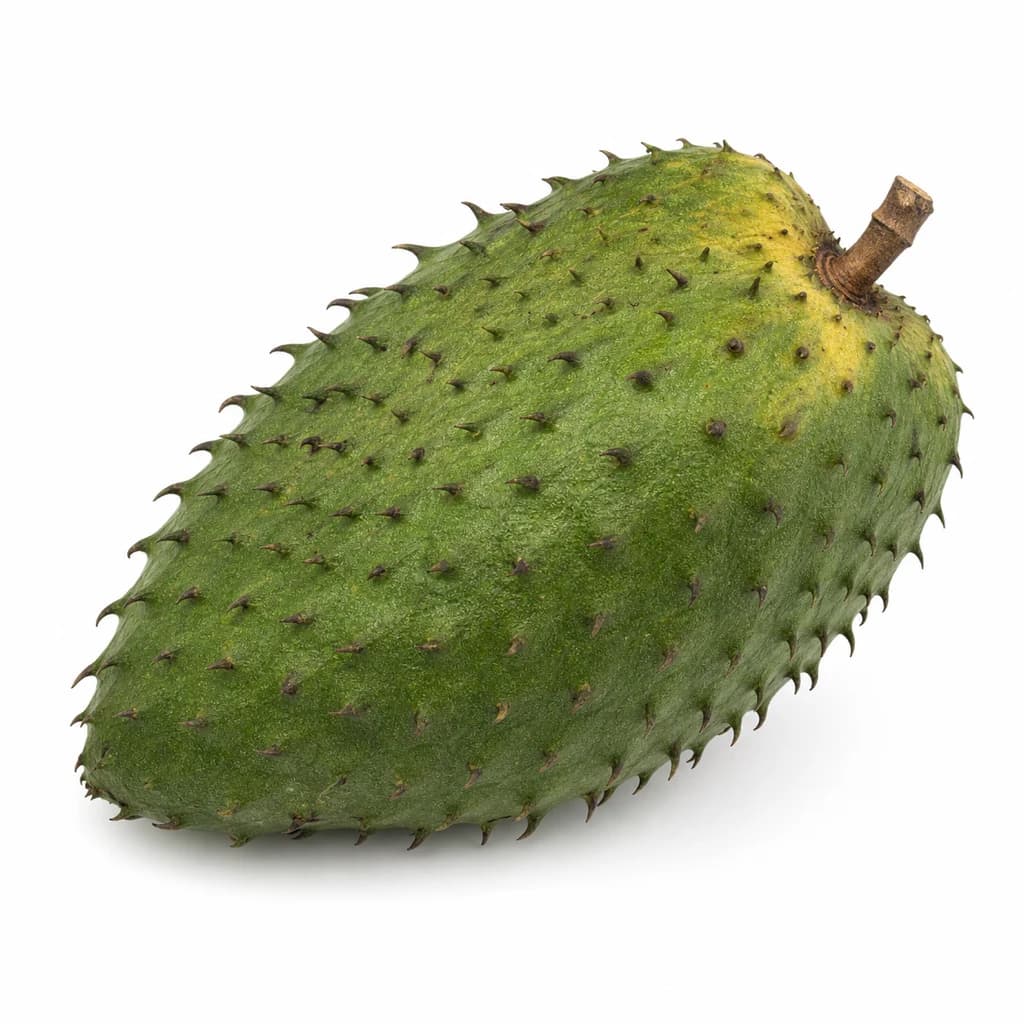
Natural form
Whole soursop fruit showing distinctive spiny green exterior and large oblong shape.
Establishes the fruit's unmistakable appearance — deep green, heavily spined, and much larger than most tropical fruits.
Produce
Soursop
Spiky green tropical fruit with creamy tart-sweet pulp blended into juices, ice creams, and shakes.
Soursop is a large, spiny green tropical fruit with soft, fibrous white pulp that tastes like a tangy blend of pineapple and banana with a creamy texture. The pulp is blended into juices, smoothies, ice creams, and sorbets across the Caribbean, Latin America, and Southeast Asia. The fruit is too soft and sour-sweet to slice neatly, so it is usually scooped and pureed.
Soursop (Annona muricata) is a large, spiny tropical fruit distinguished by its dark green rind covered in soft, curved prickles. Inside, the flesh is creamy white, slightly fibrous, and divided into segments that enclose shiny black seeds. Native to the warm, humid regions of Central America, the Caribbean, and northern South America, soursop has spread throughout tropical cultivation zones including Southeast Asia, West Africa, and the Philippines, each region developing its own culinary traditions around the fruit.
The flavor is uniquely complex: tart and refreshing with notes that shift between strawberry, pineapple, and citrus, balanced by a creamy, almost custard-like body. This tartness is genuine—not just a background acidity—and requires significant sweetening in most preparations. Soursop behaves well under heat and retains its flavor through freezing, making it versatile across fresh, frozen, and cooked applications. Its Annonaceae cousin, the cherimoya, shares a similar creamy texture but lacks soursop's assertive tartness, making direct substitution require flavor adjustment.
In Caribbean and Latin American kitchens, soursop is a pantry staple. In Puerto Rico and Trinidad, soursop ice cream is a traditional dessert, often made by steeping leaves in the custard base for subtle herbal flavor. The Philippines transform it into candies and preserves, while throughout tropical regions, the fruit appears in agua fresca, tiki cocktails, and blended shakes. Fresh eating is straightforward: cut the fruit open, scoop the flesh, and spit out the seeds. The fruit oxidizes quickly once cut, so work fast or toss with citrus juice immediately.
- Measured in
- piece
- Storage
- Fridge
Types & varieties
Lower acidity, preferred for fresh eating and desserts
Standard tart variety, most widely grown for processing
Reddish-tinted skin variant found in some Caribbean regions
Selection and Ripeness
Choose fruit that feels heavy for its size and yields slightly to firm palm pressure. A completely firm fruit is underripe; one that feels mushy or dented is overripe. The stem end should emit a sweet, fragrant aroma when ripe. Avoid fruit with large dark spots or signs of fermentation.
- Select fruit that yields slightly to palm pressure; completely firm means underripe, mushy means overripe
- Ripe soursop will emit a fragrant, sweet aroma from the stem end
- Refrigerate only after full ripeness; cold slows and can halt the ripening process
- Frozen pulp thaws quickly in cold water or overnight in refrigerator
Preparation
Cut the fruit in half lengthwise, then into wedges for easier handling. The spiny rind does not penetrate skin, but work carefully. Pull the flesh away from the rind and squeeze or scoop segments free from the central core. Every seed must be removed before eating or cooking—seeds contain anonaine, a toxic alkaloid. For smooth-textured preparations like ice cream or cocktails, blend the flesh with a small amount of water and strain through a fine-mesh sieve to catch any remaining seed fragments and fibrous strands. The flesh oxidizes rapidly once exposed to air; add citrus juice immediately or work quickly.
- Cut fruit in half or into wedges, then scoop flesh away from spiny rind
- Remove every seed without exception—grinding seeds releases toxins
- Blend flesh with a little water, then strain through fine mesh to remove remaining seed fragments and fibrous strands for smooth textures
- The fruit oxidizes quickly once cut—add citrus juice or consume immediately
Safety and Storage
In addition to toxic seeds, soursop contains annonacin, a neurotoxin associated with atypical parkinsonism in cases of chronic heavy consumption. Occasional culinary use is considered safe for most adults, but those with neurological conditions or who are pregnant should exercise caution. Do not combine unpasteurized dairy with soursop in uncooked preparations. Refrigerate ripe whole fruit for up to 2 days; freeze surplus pulp in airtight containers for up to 4 months.
- Seeds contain toxic alkaloids (anonaine); must be removed completely before consuming flesh
- Do not mix dairy and soursop in uncooked preparations without pasteurization due to food safety concerns
- Ripe whole fruit: refrigerate up to 2 days. Pulp: freeze up to 4 months
Common uses
Nutrition
Energy
276 kJ · per 100 g
Where the calories come from
Protein
1g
2% DV
Carbs
16.8g
6% DV
Fat
0.3g
0% DV
Fiber
3.3g
12% DV
Sugars
13.5g
of which
Sodium
14mg
1% DV
Source · USDA FoodData Central · Soursop, raw
View on FDC →In the shops
Matched grocery products
No matched grocery products for Soursop yet.
Good to know
- Origin
- Central America, Caribbean, northern South America; now cultivated throughout tropical regions including Southeast Asia, West Africa, and the Philippines
- Scientific Name
- Annona muricata
- Peak Season
- Year-round in tropical climates; June through September in Caribbean
- Flavor Profile
- Tart-sweet with notes of strawberry, pineapple, and citrus; creamy, slightly fibrous texture
- Typical Size
- Oval to heart-shaped, 6–12 inches long; 2–10 pounds when mature
- Color When Ripe
- Dark green with slight yellowing; flesh turns from white to cream-colored
- Caution
- Seeds contain toxic alkaloids (anonaine); must be removed completely before consuming flesh
- Yield
- About 35–40% edible flesh by weight; 500–600g pulp per fruit on average
- Storage
- Unripe: room temperature. Ripe: refrigerate whole up to 2 days, or freeze pulp up to 4 months
- Forms Available
- Fresh whole fruit, frozen pulp blocks, juice, concentrate, dried leaves for tea
Substitutes
- Cherimoya — Closest textural match; milder, less tart; increase acid or add lemon to match soursop's tartness
- Custard Apple (Bullock's Heart) — Similar Annona relative; softer texture, sweeter; adjust sweetener to taste
- Passion Fruit — Provides tropical tartness but lacks creamy body; use as concentrated flavoring, not texture substitute
- Jackfruit — Tropical flavor and fibrous texture; better for savory applications
Pairs with
Also called
Guanábana · Graviola · Guyabano
Related
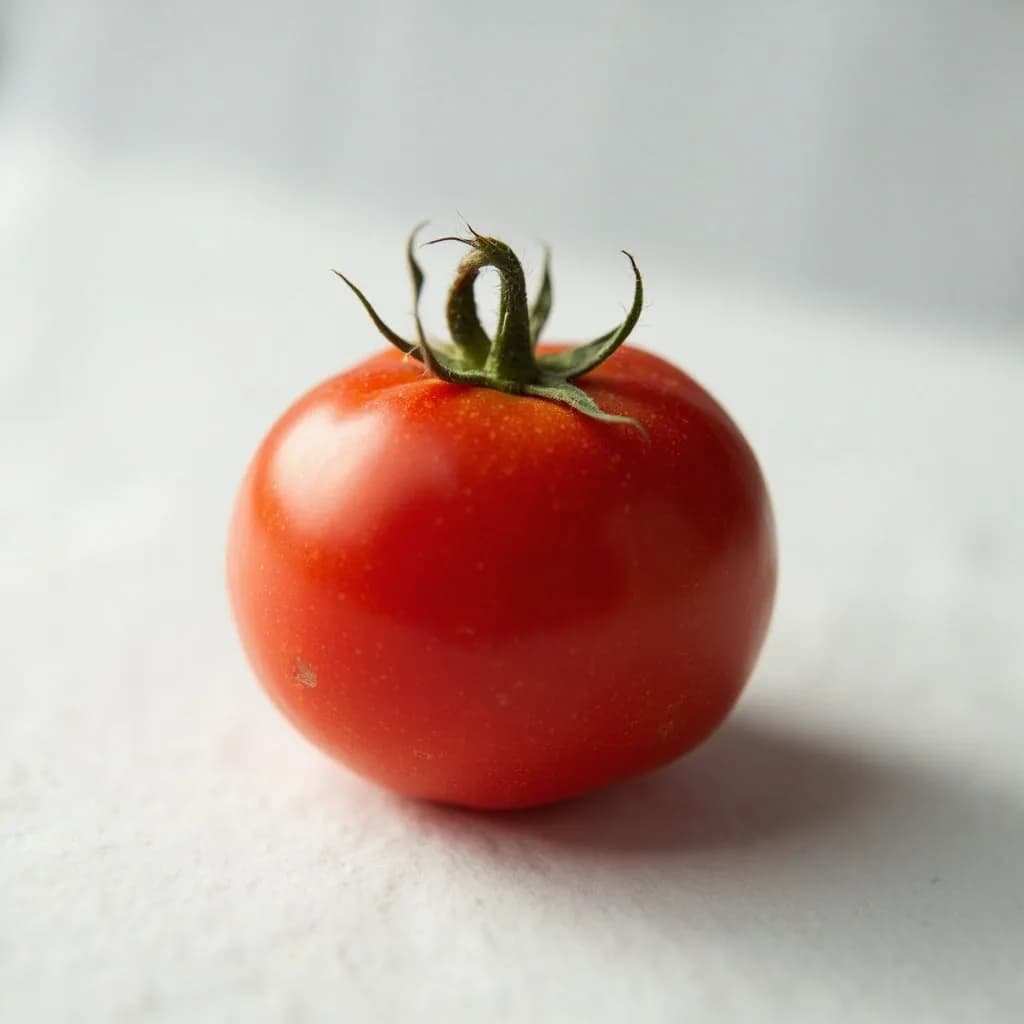
Tomato
Juicy, sun-sweet fruit for sauces, salads, and slow-cooked depth
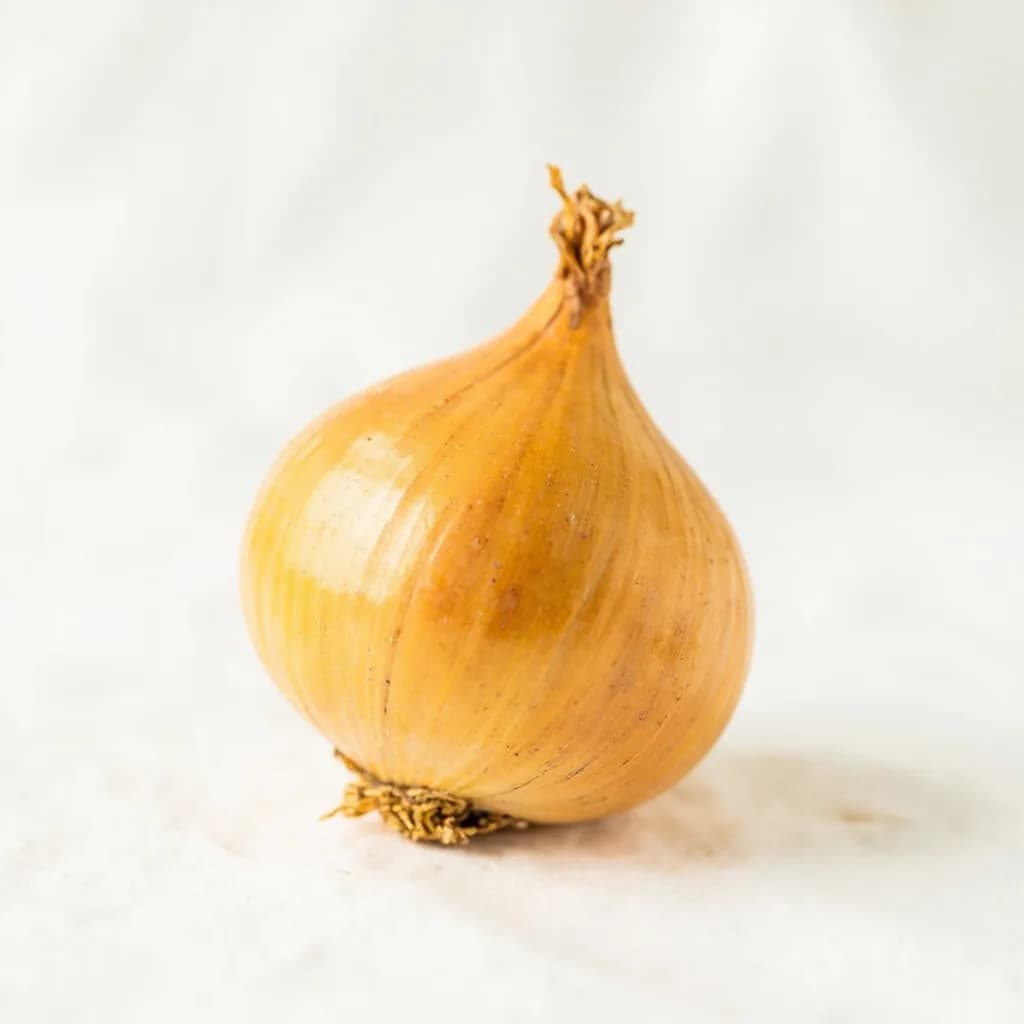
Yellow Onion
The aromatic backbone of soups, sofritos, and braises
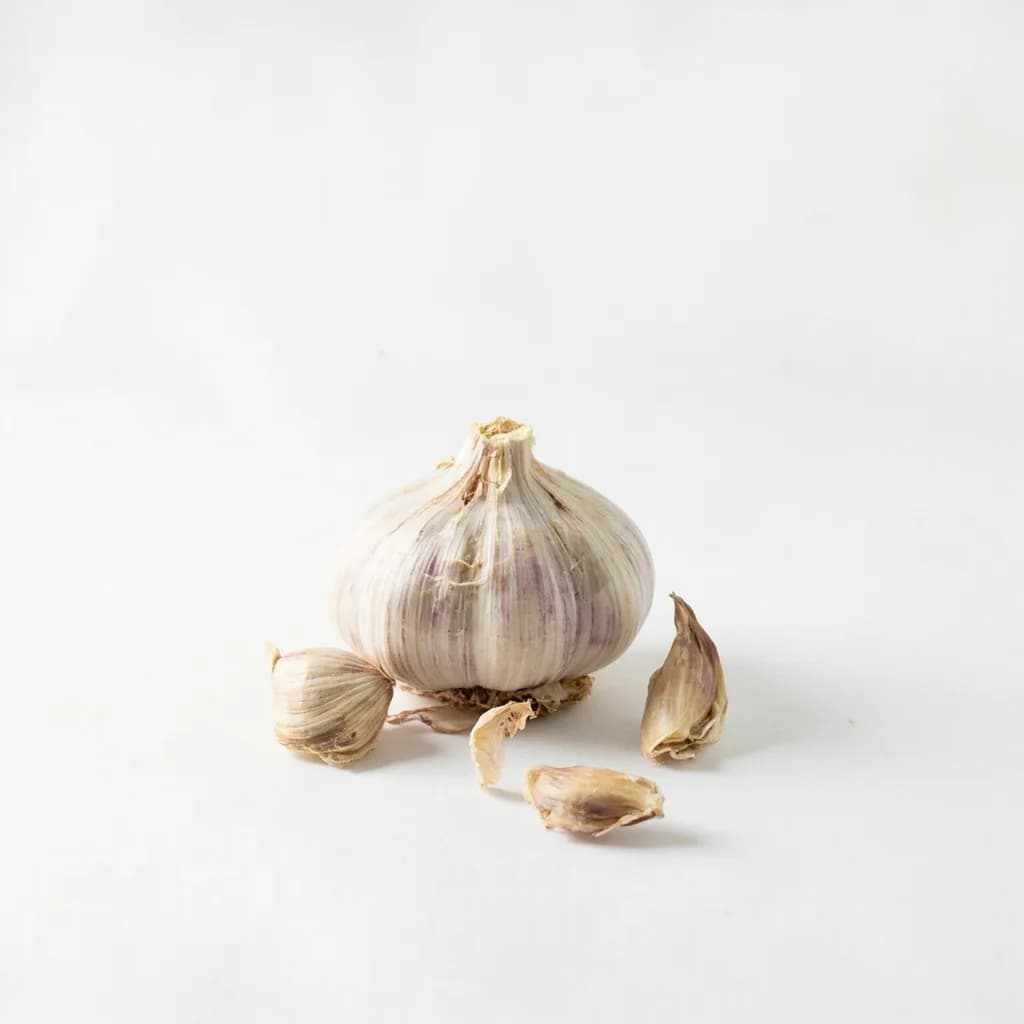
Garlic
Pungent cloves that perfume nearly every savory dish
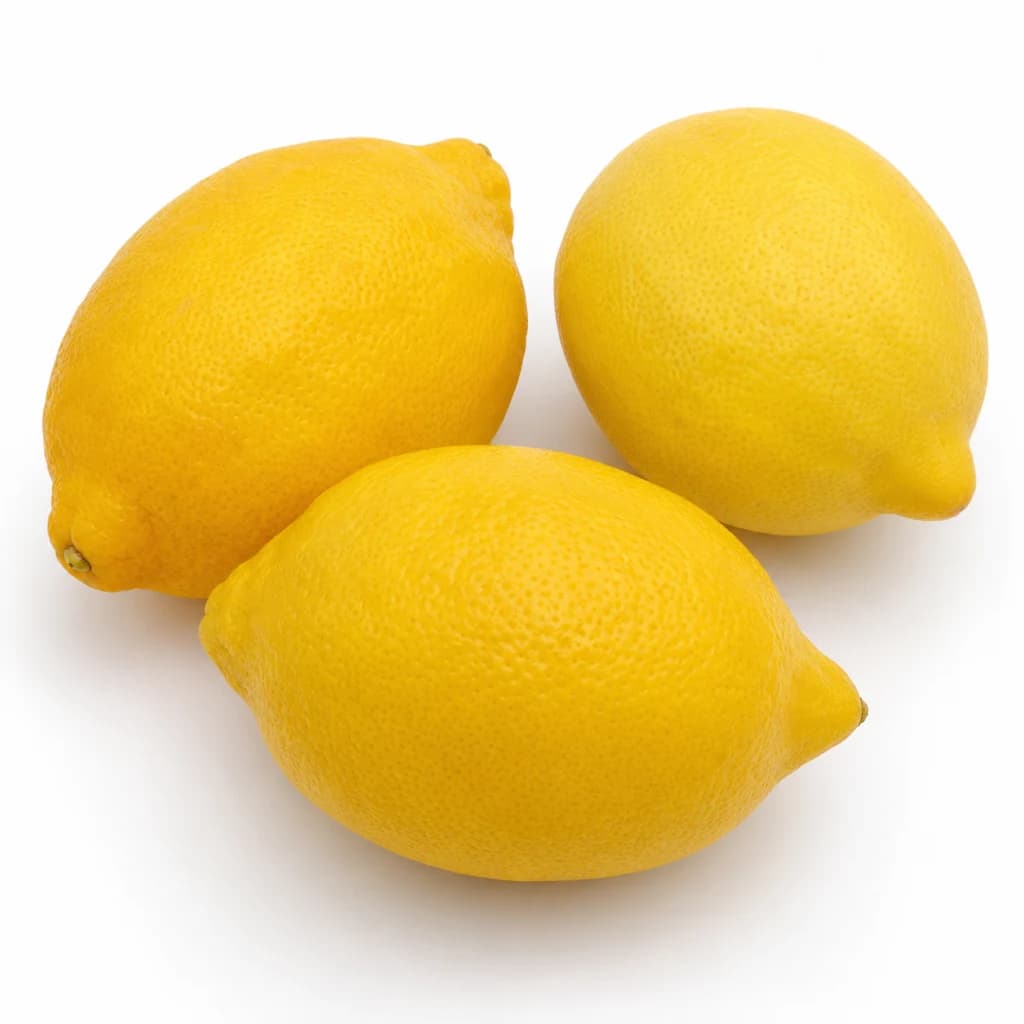
Lemon
Bright, acidic citrus that wakes up almost any dish
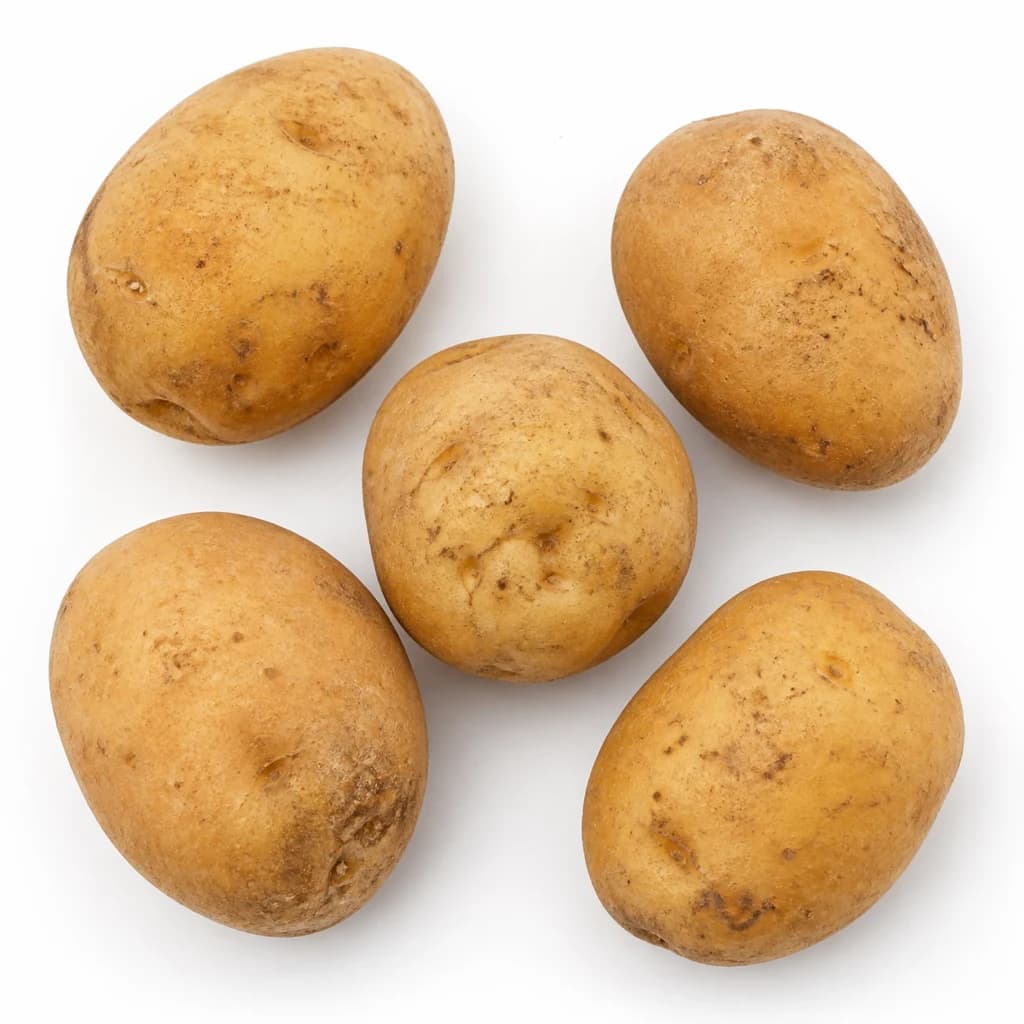
Potato
Humble, hearty staple — roast, mash, fry, or boil
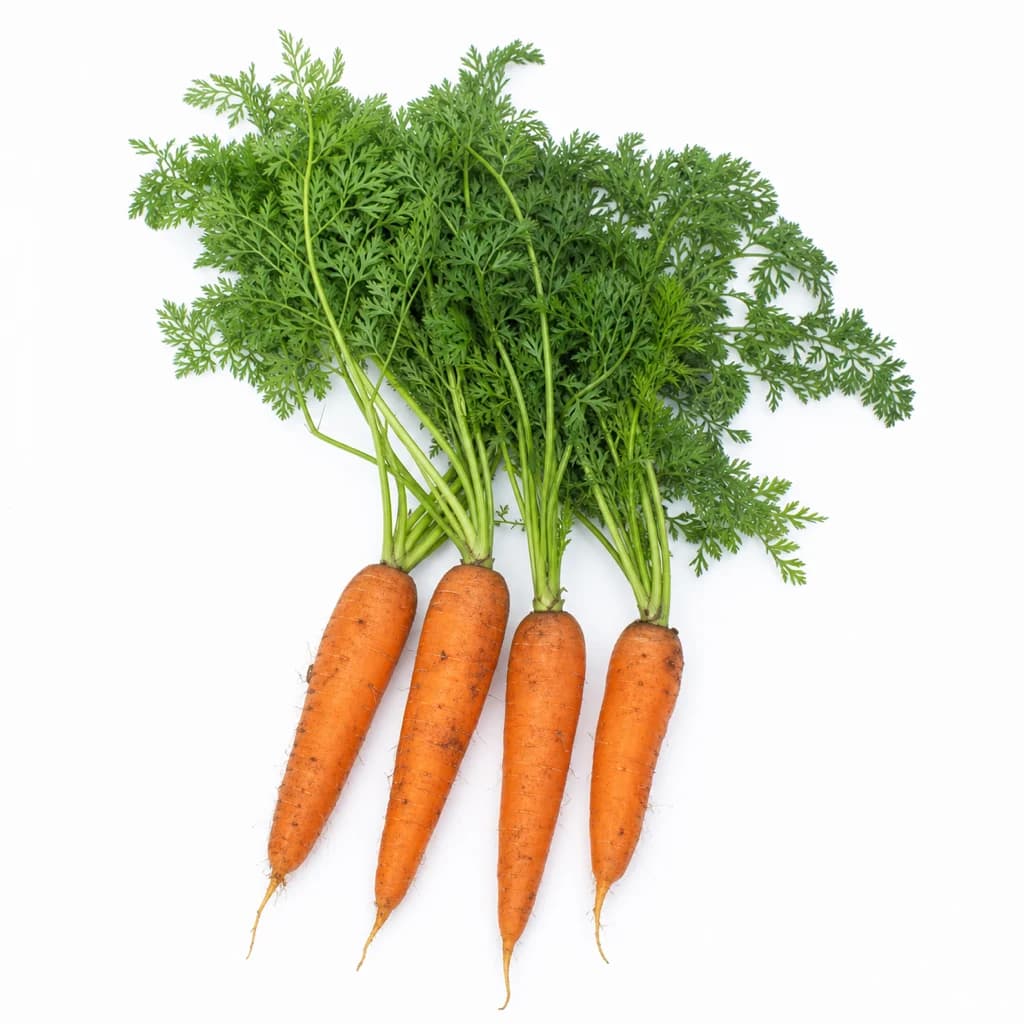
Carrot
Sweet, crunchy root — raw, roasted, or the base of a sofrito
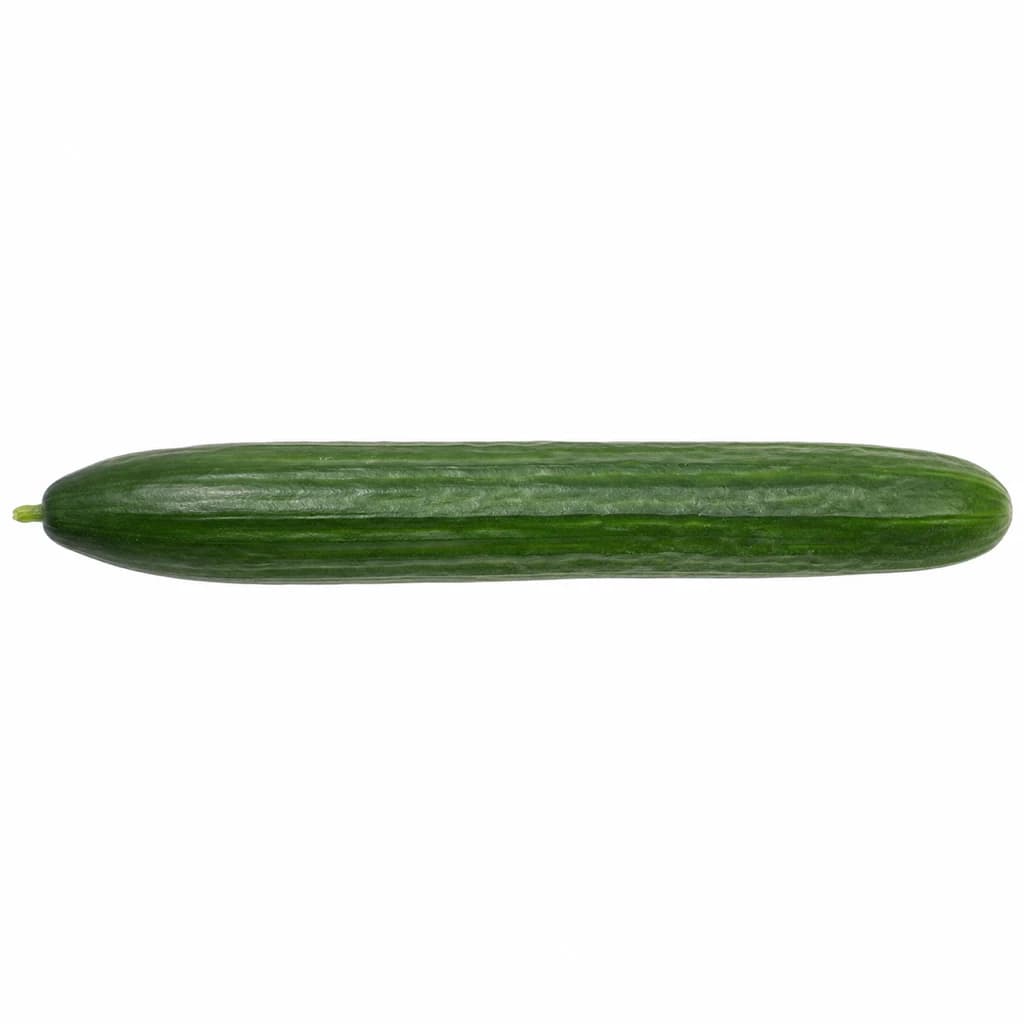
Cucumber
Cool, crisp, and watery — for salads, pickles, and tzatziki

Lettuce
Crisp leaves for salads, wraps, and a fresh crunch