Proteins
Streaky Bacon
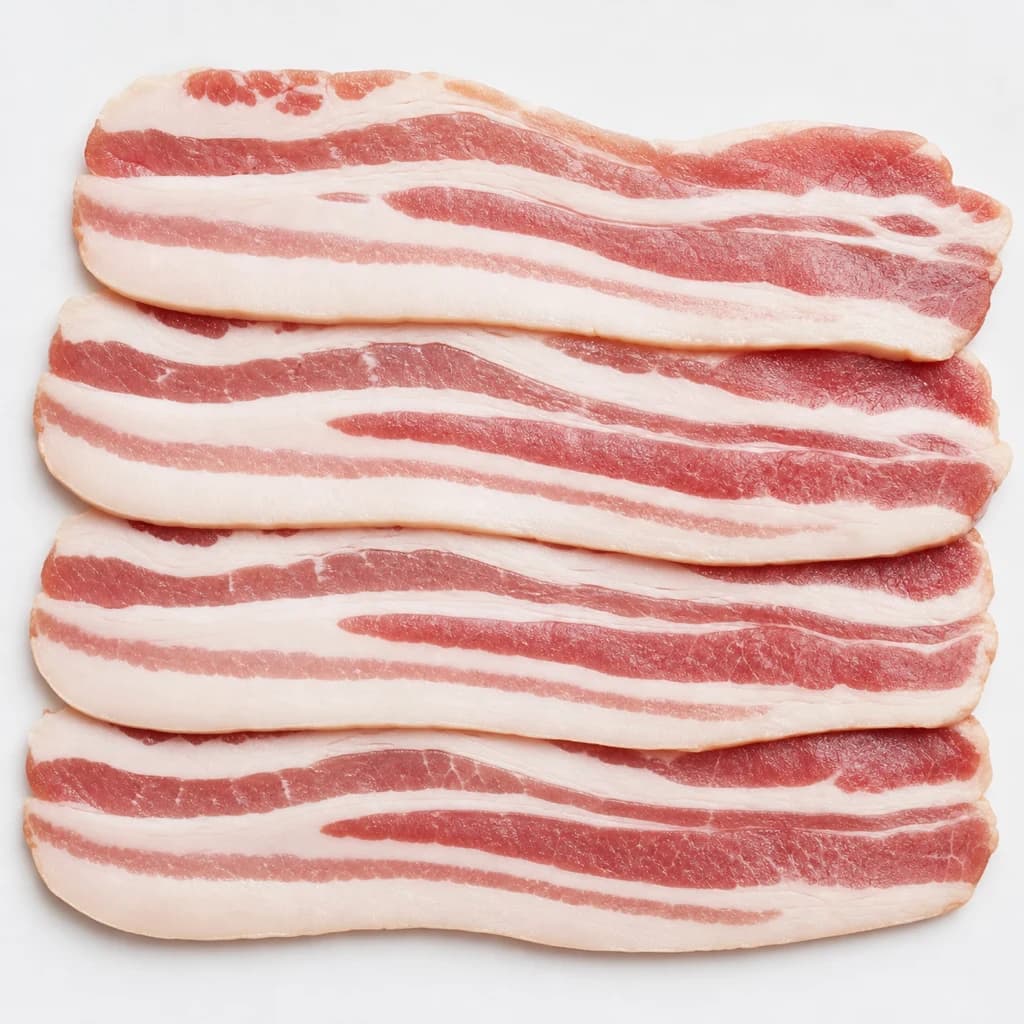
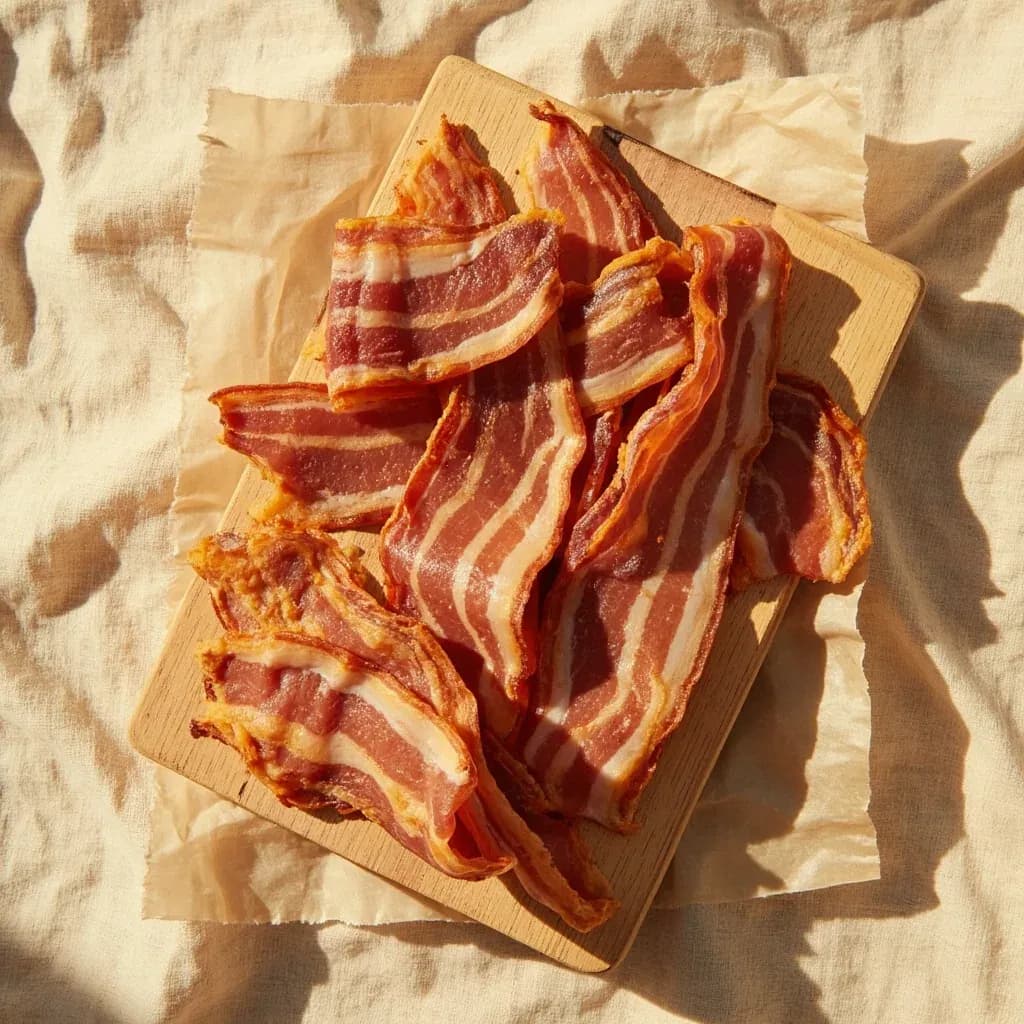
Bacon cut from the belly, with alternating streaks of fat and meat (American-style). Crisps to a shatter when fried; the classic for crumbling, wrapping, and breakfast plates.
Streaky bacon is cured and smoked pork belly, cut into long thin slices that show the cut's defining feature: clean horizontal stripes of fat and lean running the length of each piece. The belly primal sits along the underside of the pig, beneath the loin, where the muscle is interlarded with sheets of soft fat rather than marbled through. Sliced across that lamination, the result is a strip almost designed for the pan — enough fat to baste itself, enough lean to hold its shape, and enough surface area to crisp in a few minutes.
The cut matters because streaky bacon's behavior in the pan is dictated by its structure. Heat renders the fat first, then the lean stripes brown and crisp in their own fat. Cooked correctly, each strip finishes brittle and shattery with a concentrated salt-and-smoke flavor, and the rendered fat — typically 40 to 50 percent of the raw weight — becomes a prized cooking medium in its own right. In the United States, "bacon" without further qualification nearly always means streaky; in British and Irish butchery the word "streaky" is used specifically to set it apart from back bacon (cut from the loin), which is itself often the default "bacon" in the UK.
Streaky bacon is also the starting point for two of Italy's most important cured meats — pancetta and guanciale — and the base for nearly every bacon-driven technique in Western kitchens, from wrapping and braising to crumbling and candying. Learning to cook it well is largely about controlling render: get the fat out cleanly, get the lean brown, and capture what is left in the pan.
- Measured in
- g
- Storage
- Refrigerate
Find it in
Types & varieties
Cold-smoked after curing; the standard in the US and UK and the benchmark 'bacon' flavor
Cured but not smoked; preferred when you want pure pork flavor without competing smoke, or in dishes where smoke would clash
6–10 mm slices; holds its shape, good for sandwiches, BLTs, and pan-frying like a small steak
1.5–2 mm slices; crisps in under three minutes, ideal for wrapping dates and scallops or crumbling over dishes
Whole unsliced cured belly, often thick; cut to order at the counter and fried like a steak or braised
Irregular trimmings from the slicing line; inexpensive, perfect for stews, baked beans, stocks, and lardons
Cured or glazed with maple syrup; sweet-savory, excellent for candied bacon and breakfast plates
Coated in cracked black pepper during curing; assertive seasoning that pairs well with eggs and steak
Cured with a dry salt mix rather than wet brine; denser texture, deeper flavor, and less shrinkage in the pan
Same belly cut, cured without smoke, often rolled and tied; the closest Mediterranean analogue
Cured pork jowl rather than belly; richer and more intensely porky, prized for carbonara and gricia
Rendering for crispness
Streaky bacon's signature texture — a brittle, glass-like crackle that snaps when you bend it — depends on rendering the fat fully before the lean overcooks. The classic method is a cold-pan start: lay the strips in a dry skillet over medium-low heat without crowding, and let the fat slowly melt out into the pan. As the strips shrink and turn translucent, then golden, then deep amber, they are essentially confiting in their own fat. Drain them on paper towels and reserve the liquid gold left behind.
- Cold-pan, medium-low start renders fat before the lean browns, giving flat, evenly colored strips without charred edges or violent curling.
- A wire rack set over a foil-lined sheet pan in a 200°C / 400°F oven gives even crispness in 15–20 minutes, with a single halfway flip.
- Patting slices dry with paper towels before cooking speeds rendering and helps the surface brown.
- Strain the rendered fat through a fine sieve into a jar; refrigerated, it keeps for weeks and is one of the best cooking fats for eggs, potatoes, greens, and cornbread.
- Reserve the burnt ends and trimmed bits for stock or for seasoning dried beans while they soak — they carry a surprising amount of flavor.
Streaky and its cured cousins
Streaky bacon sits inside a small family of cured pork products that share a method but differ in cut and smoke. Pancetta is the Italian version of the same belly, cured without smoke and usually rolled tight; it is interchangeable with streaky in most cooked applications and slightly more delicate. Guanciale is cured pork jowl, fattier and more intensely flavored than either, and is the traditional choice for pasta all'amatriciana, gricia, and carbonara. Back bacon (called Canadian bacon in the US and rashers in Ireland) is cut from the loin and behaves like ham; it does not render the way streaky does and is a different ingredient, not a substitute.
Common uses
Tips & pitfalls
- Start in a cold pan over medium-low heat: the fat renders before the lean browns, giving flat, even, shatter-crisp strips rather than curled, charred edges.
- Reserve the rendered fat — strain it through a fine sieve and refrigerate; it keeps for weeks and is excellent for frying eggs, grilled cheese, or roasting vegetables.
- Pat slices dry with paper towels before cooking if you want maximum crispness and faster rendering.
- Never crowd the pan: trapped steam prevents browning. Cook in a single layer in batches, or use a sheet pan in the oven.
- For oven baking, set a wire rack over a foil-lined sheet pan at 200°C / 400°F for 15–20 minutes, flipping halfway.
- Use thin-cut for wrapping (dates, scallops) and crumbling; use thick-cut for sandwiches and anywhere you want a meaty bite.
- Salt content varies widely by brand — taste a small piece before salting the rest of the dish.
- Do not fry on high heat from the start: the lean streaks burn before the fat has a chance to render, leaving bitter, unevenly cooked bacon.
Nutrition
Energy
1293 kJ · per 100 g
Where the calories come from
Protein
11.7g
23% DV
Carbs
5.3g
2% DV
Fat
29.5g
38% DV
Fiber
2.6g
9% DV
Sugars
0g
of which
Sodium
1465mg
64% DV
Source · USDA FoodData Central · approx. Bacon, meatless
View on FDC →In the shops
Matched grocery products
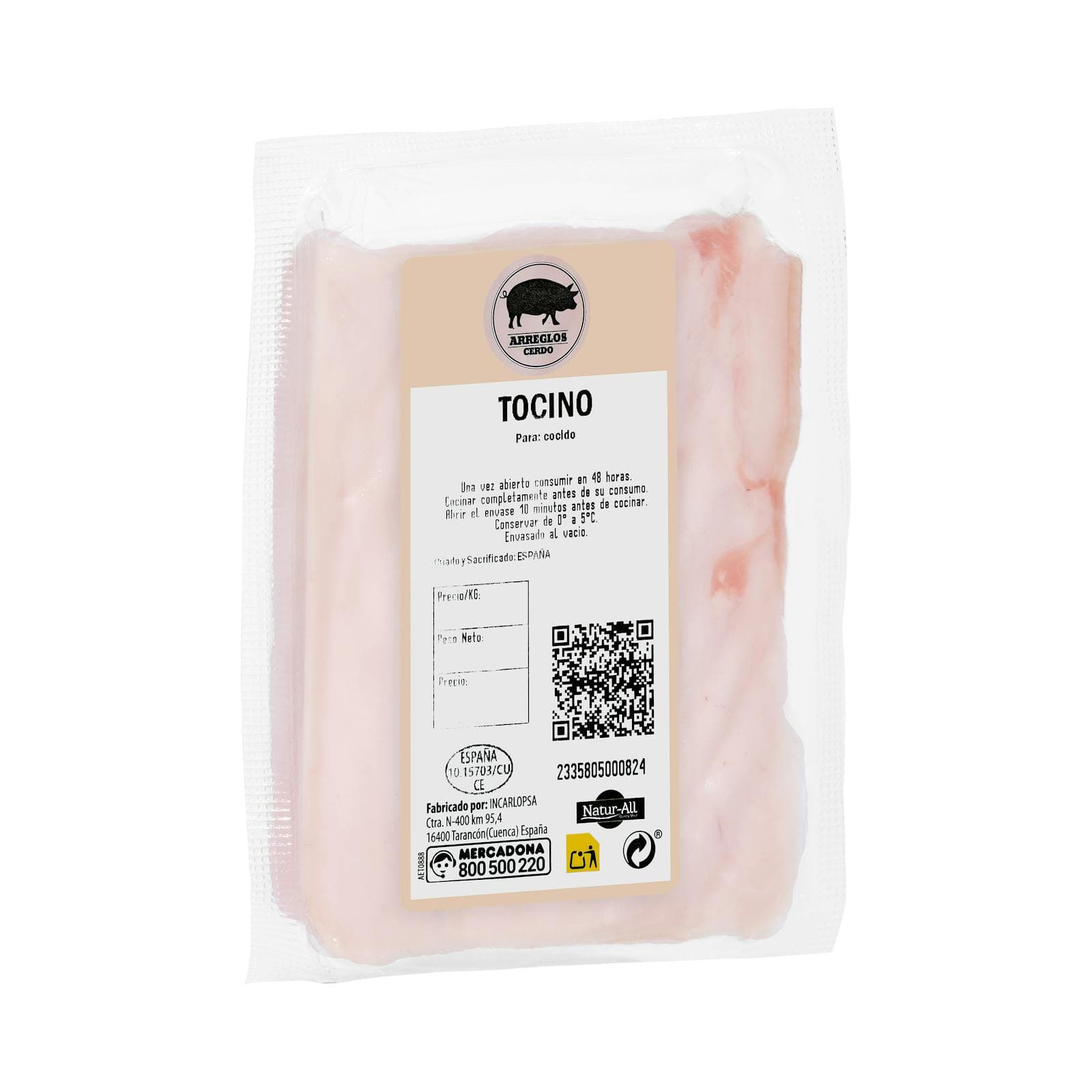 €1.48
€1.48Pork Fatback
190 g · Mercadona
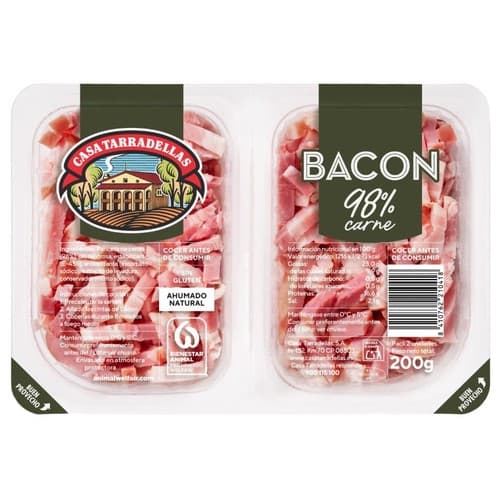 €1.99
€1.99Pork Bacon Strips
CASA TARRADELLAS · kg · Bonpreu
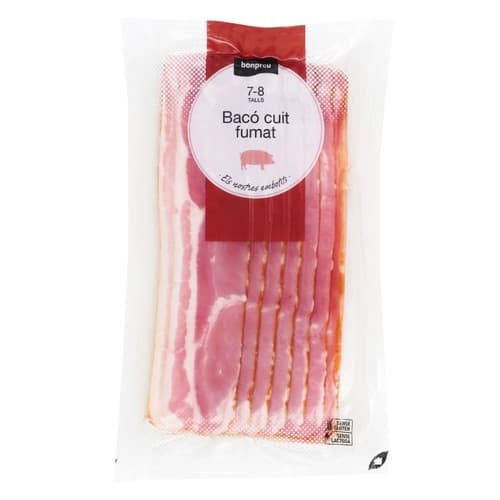 €1.85
€1.85Smoked Cooked Bacon
BONPREU · kg · Bonpreu
 €2.20
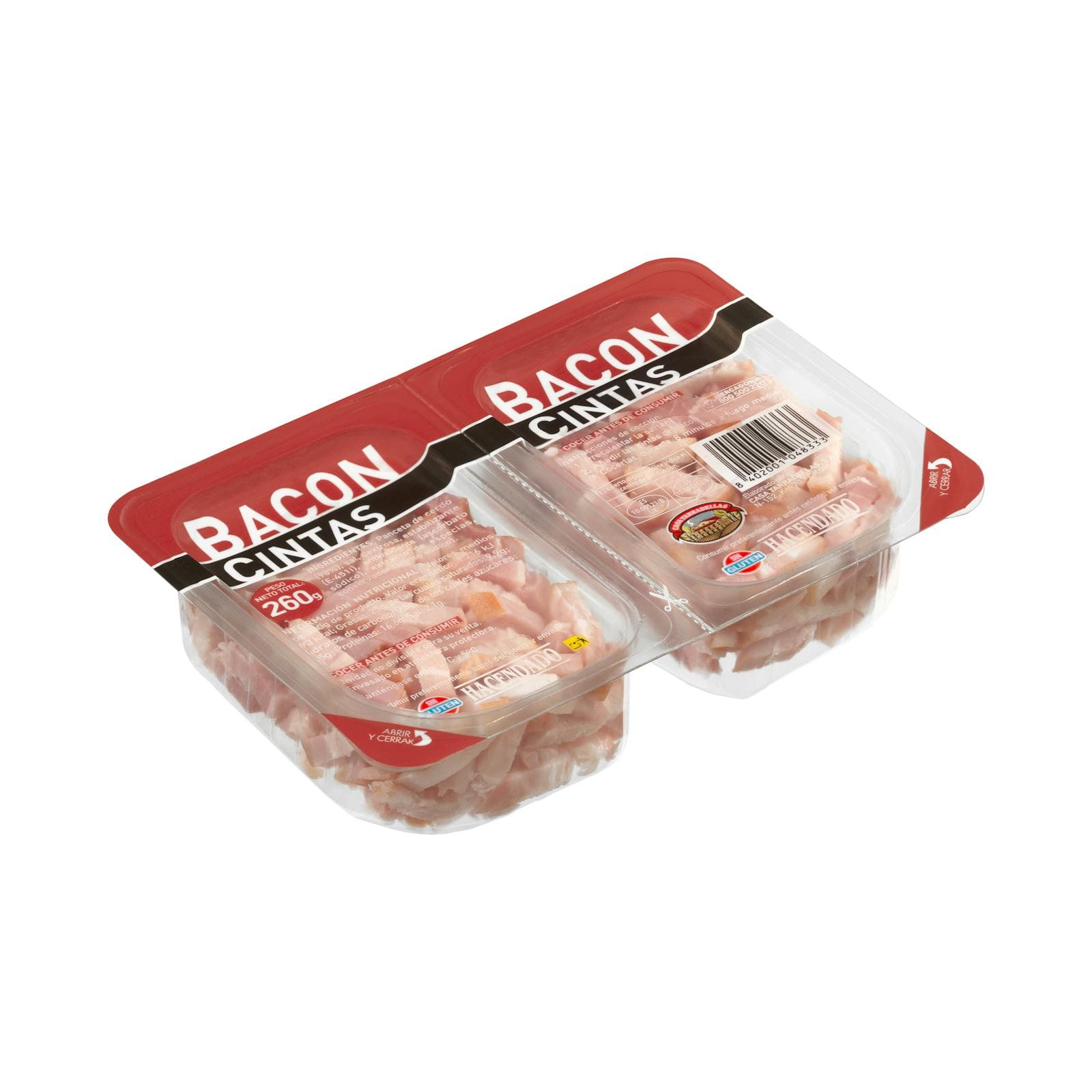
€2.20Bacon Strips
Hacendado · 260 g · Mercadona
 €2.35
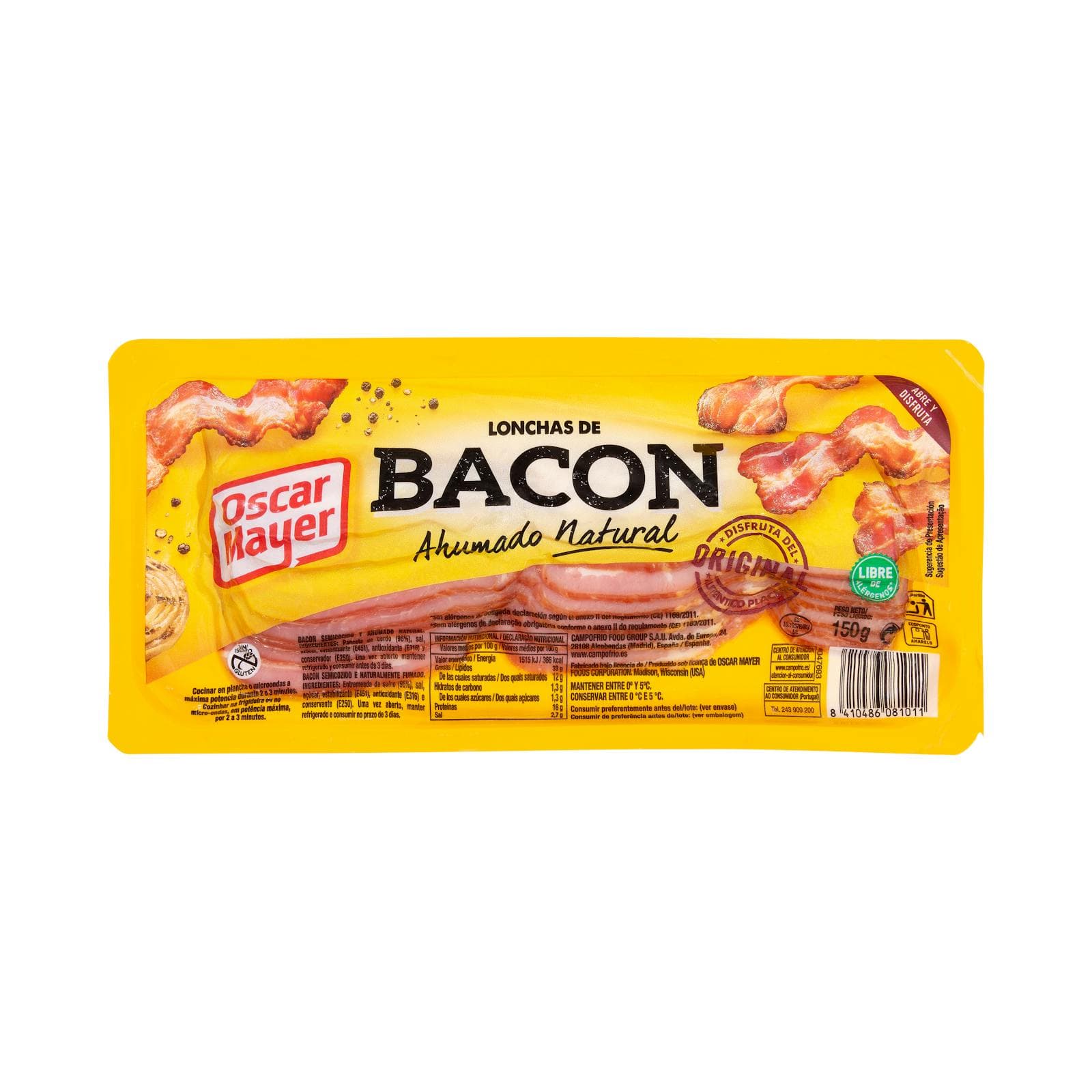
€2.35Oscar Mayer Bacon Slices
Oscar Mayer · 150 g · Mercadona
 €2.89
€2.89Smoked Cooked Bacon Bonpreu
BONPREU · kg · Bonpreu
Good to know
- Cut from
- Pork belly (ventral side of the pig)
- Also called
- American bacon, side bacon, belly bacon
- Composition
- Long horizontal stripes of fat and lean meat running the length of each slice
- Slice thickness
- 1.5–3 mm (thin) up to 6–10 mm (thick cut)
- Cure
- Salt, often with nitrites or nitrates; sometimes maple, brown sugar, or cracked pepper
- Smoke
- Usually cold-smoked over hickory, applewood, or other hardwoods; unsmoked versions exist
- Cooked yield
- Loses 40–50% of raw weight as fat renders out
- Cooked texture
- Brittle and shattery when the fat is fully rendered
Substitutes
- Pancetta — Italian cured pork belly, rolled, usually unsmoked; interchangeable 1:1 in cooked dishes, flavor slightly more delicate and less smoky
- Guanciale — Italian cured pork jowl; richer and more intensely porky than streaky, the traditional choice for carbonara and gricia
- Salt pork — Cured but unsmoked belly or back fat; needs a brief soak or blanch to draw out excess salt, then renders like bacon
- Smoked pork belly (uncured slab) — Uncured slab smoked at home; similar fat content and texture, slightly less salty than standard streaky
- Canadian bacon / back bacon — Loin cut, lean and ham-like; only a substitute when you want the smoky saltiness without the rendered fat
- Turkey bacon — Lean and low-fat alternative; lacks the fat-to-lean ratio and depth, useful for wrapping but not for rendering
- Vegetarian bacon / coconut bacon — Smoked coconut or tempeh strips that mimic texture and smoke; useful for vegans, not a substitute for rendering fat
Pairs with
Also called
American bacon · side bacon · belly bacon · streaky rashers