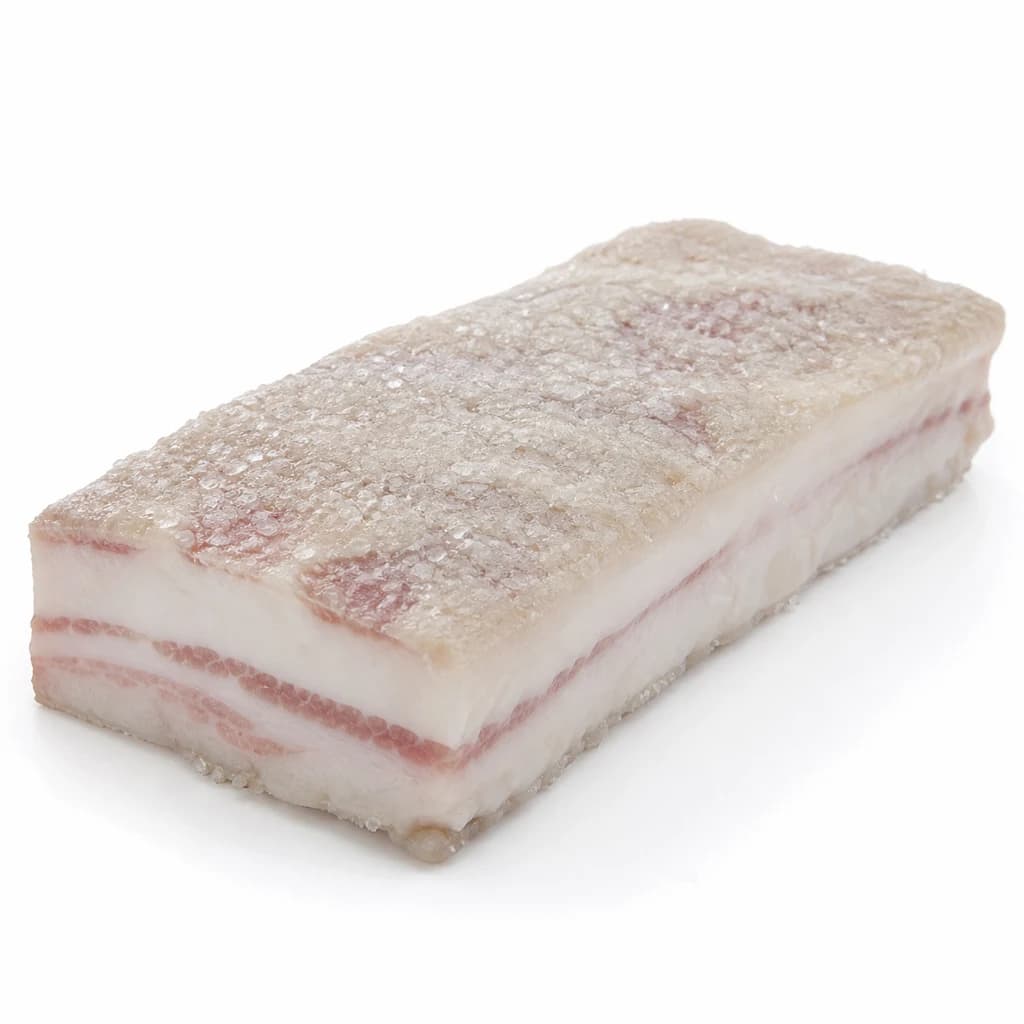
Natural form
A thick slab of raw salt pork showing its dense white fat layers and pale pink lean streaks.
Shows the characteristic high-fat ratio, pale color, and thick slab form that distinguish salt pork from bacon or fresh pork belly.
Proteins
Salt Pork
Salt-cured fatty pork belly or back used to flavor beans, stews, and chowders.
Salt pork is fatty pork, usually from the belly or back, cured heavily in salt for preservation. It is rendered or simmered to add deep, savory richness to dishes like baked beans, chowders, greens, and stews. Unlike bacon it is generally unsmoked and far saltier, so it is used as a seasoning fat rather than eaten on its own.
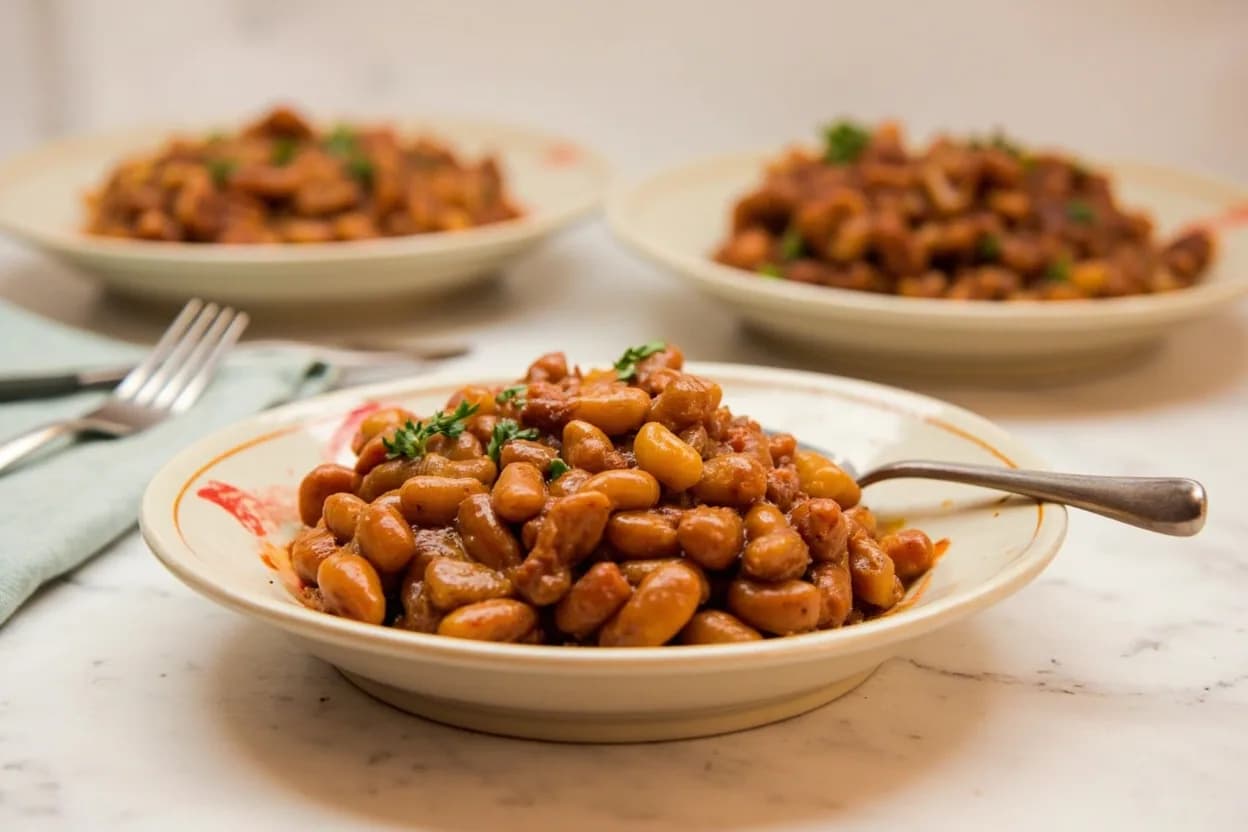
Salt pork is salt-cured pork belly or back fat, distinguished from bacon by its minimal meat content and absence of smoking. The cure is typically applied through dry-salting or brining, resulting in a product that is roughly 60–80% fat with thin ribbons of lean running through belly cuts. Its primary purpose is as a cooking fat and flavoring agent, not as a main protein. Before refrigeration, salt pork was indispensable in Northern Europe and colonial America—a way to preserve pork fat for months without spoilage, essential for ship provisions and frontier cooking where fresh ingredients were scarce. In the kitchen, salt pork behaves like a flavor reservoir: when rendered slowly, it releases fat that carries the subtle, savory essence of pork into beans, stews, and chowders. The fat that remains after rendering (called lard) is exceptionally stable for high-heat cooking and imparts a distinct richness that modern shortening cannot replicate. Its role in New England and Southern American cooking is foundational rather than incidental—leave it out of Boston baked beans and you have a different dish entirely.
- Measured in
- g
- Storage
- Fridge
Types & varieties
Cut from pork belly; contains more meat content and marbling; most common variety for general cooking.
Cut from the back; almost pure white fat with minimal meat; preferred for rendering into lard.
Lightly cold-smoked after curing; adds subtle smokiness; common in Southern U.S. cooking.
Technically uncured pork fatback; used interchangeably in some regions but lacks salt entirely.
Salt Pork vs. Bacon
The confusion between salt pork and bacon is understandable—both are cured pork. But the differences are consequential. Bacon is always smoked, contains substantially more lean meat, and is cut thin for serving as a protein. Salt pork is rarely smoked (unless specified), is cut in thick slabs for rendering, and exists primarily as a cooking medium. When a colonial recipe calls for salt pork and you use bacon, expect smokiness and meatiness that the dish was not designed to have. This matters most in traditional preparations like Boston baked beans and authentic New England clam chowder, where the subtle savory fat is meant to integrate invisibly into the background of the dish.
- Salt pork: cured but not smoked, mostly fat, cut thick for rendering
- Bacon: cured and smoked, meat-heavy, cut thin for serving as a protein
- Swapping bacon for salt pork in traditional recipes noticeably alters character
Rendering Salt Pork
Rendering salt pork is straightforward but rewards patience. The fat inside the pork is locked within connective tissue; slow heat allows the tissue to shrink gradually, expressing the fat cleanly. Rush the process and the outside scorches while the inside remains raw. Start with cold salt pork in the pan and place over low heat; as the fat renders, the pieces will slowly crisp. Once rendered, the cracklings (the crispy remnants) are edible and valuable—toss them into beans, salads, or serve as a garnish on greens.
- Cut into small cubes or strips for even rendering
- Start with cold pan and low heat; raise to 300–325°F as fat renders
- Stir occasionally; do not walk away
- Fat is ready when pieces are golden and floating
- Strain and store liquid fat; discard solids or reserve cracklings
Common uses
Tips & pitfalls
- Rinse salt pork under cold water and pat dry before using to remove excess surface salt.
- Render slowly over low to medium-low heat (300–325°F) to extract maximum fat without burning.
- Save rendered lard in a jar; it keeps for months in the refrigerator and is excellent for frying.
- For chowders and beans, add early in cooking so the fat melts into the dish and fat-soluble flavors develop.
- Do not substitute bacon for salt pork in traditional recipes expecting the same result—bacon adds smoke and meat flavor.
- If a dish becomes too salty, add a peeled potato to absorb excess salt, then discard before serving.
- Fatback is the closest substitute but lacks salt; add salt to taste when using it.
- In traditional bean recipes, place a layer of salt pork fat on top of beans while baking—this bastes as it renders.
Nutrition
Energy
3130 kJ · per 100 g
Where the calories come from
Protein
5.1g
10% DV
Carbs
0g
0% DV
Fat
80.5g
103% DV
Fiber
0g
0% DV
Sugars
0g
of which
Sodium
2684mg
117% DV
Source · USDA FoodData Central · Pork, cured, salt pork, raw
View on FDC →In the shops
Matched grocery products
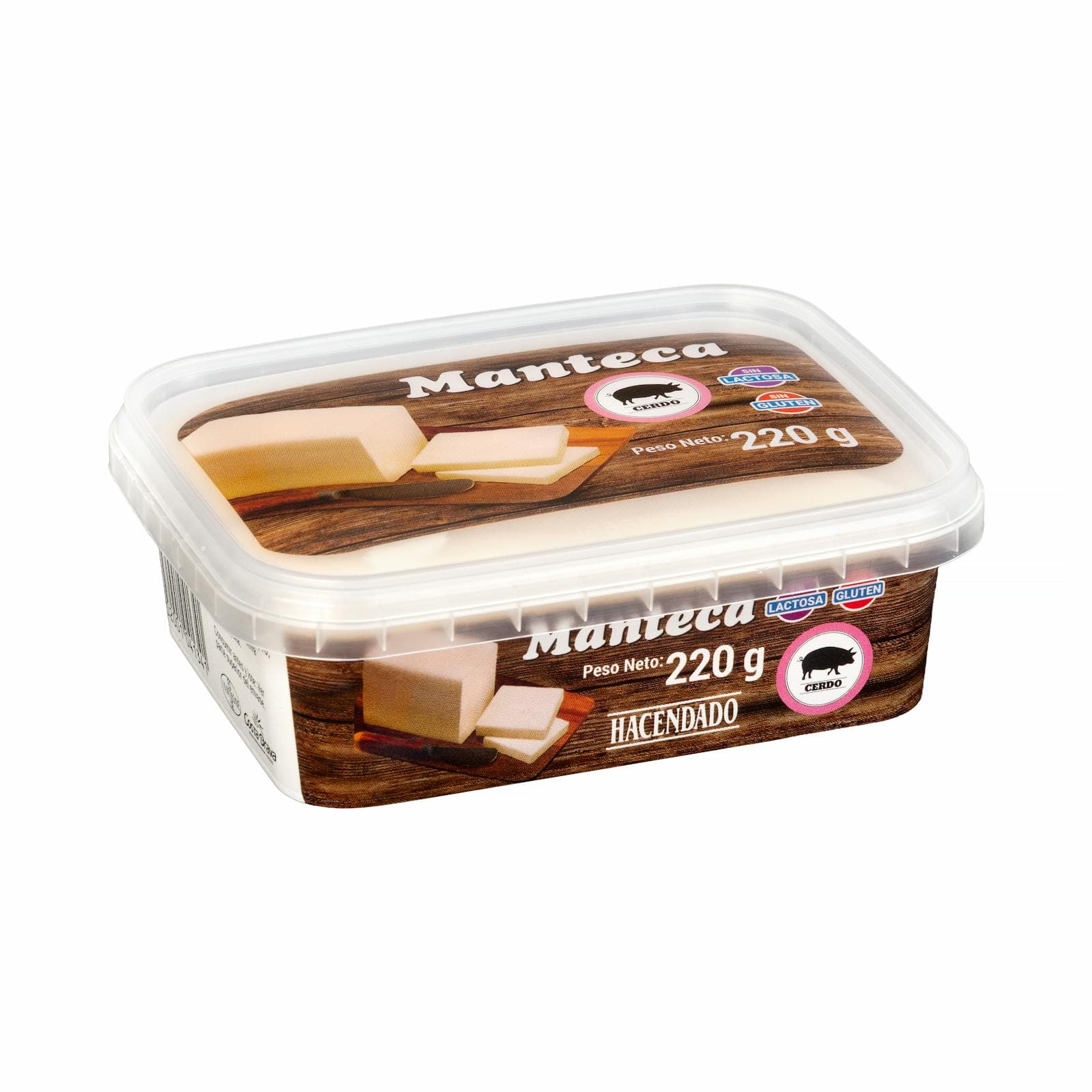 €2.20
€2.20Pork Lard
Hacendado · 220 g · Mercadona
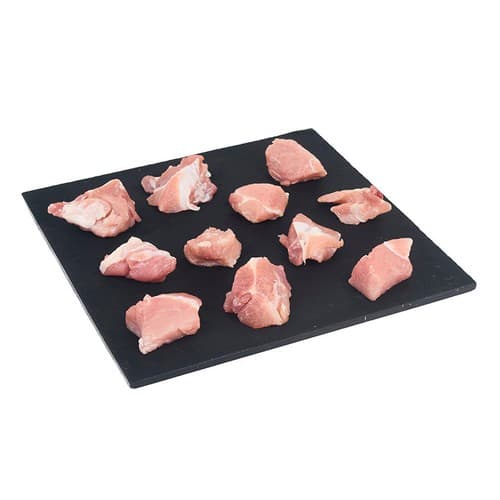 €3.40
€3.40Pork Stew
BONPREU · ud · Bonpreu
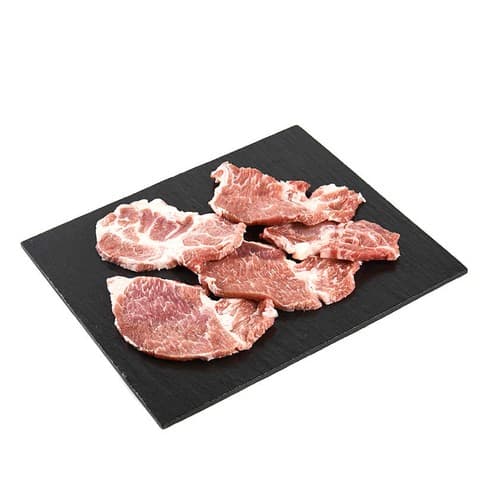 €3.45
€3.45Lean Pork
BONPREU DE L'ERA · ud · Bonpreu
 €2.10
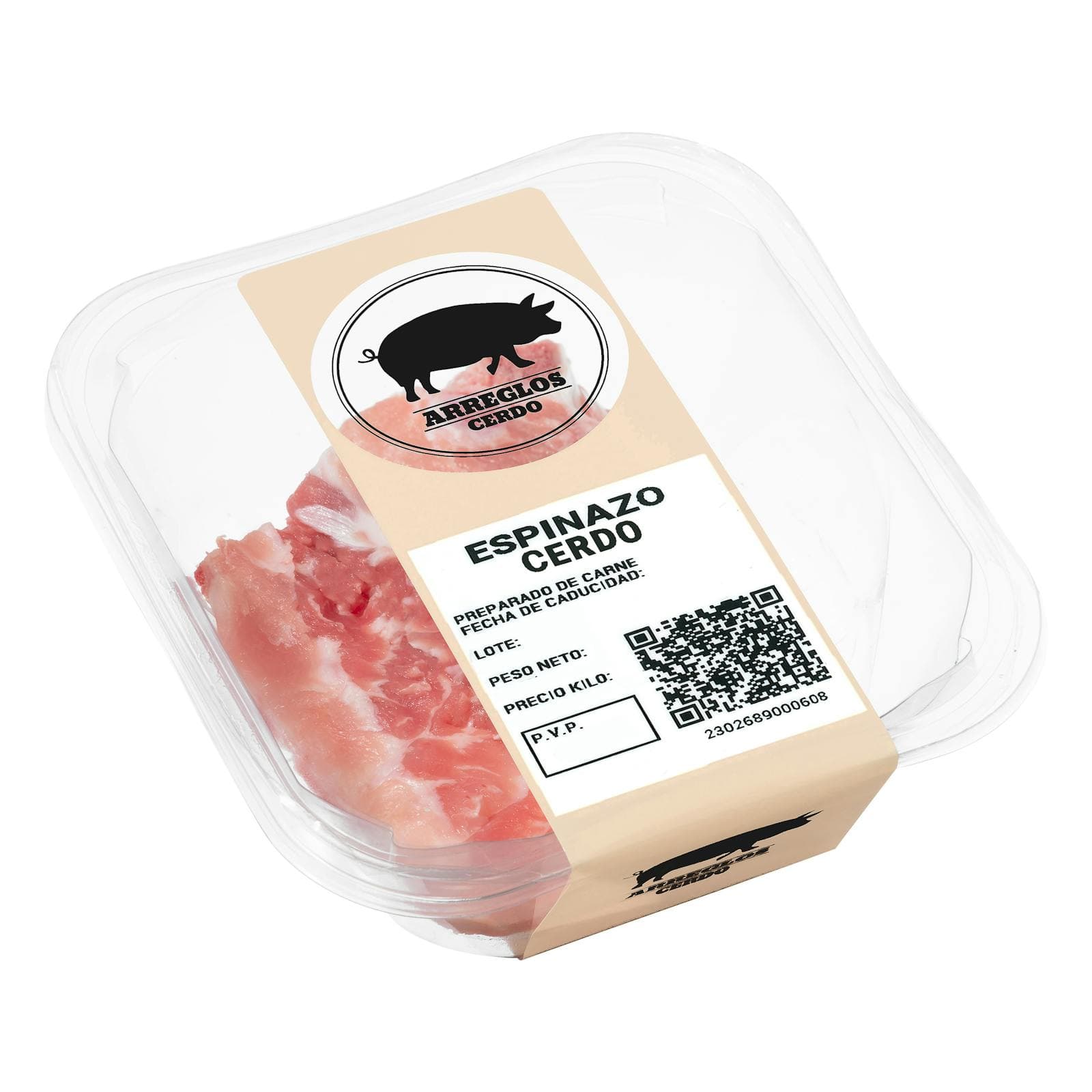
€2.10Pork Spine
300 g · Mercadona
 €3.22
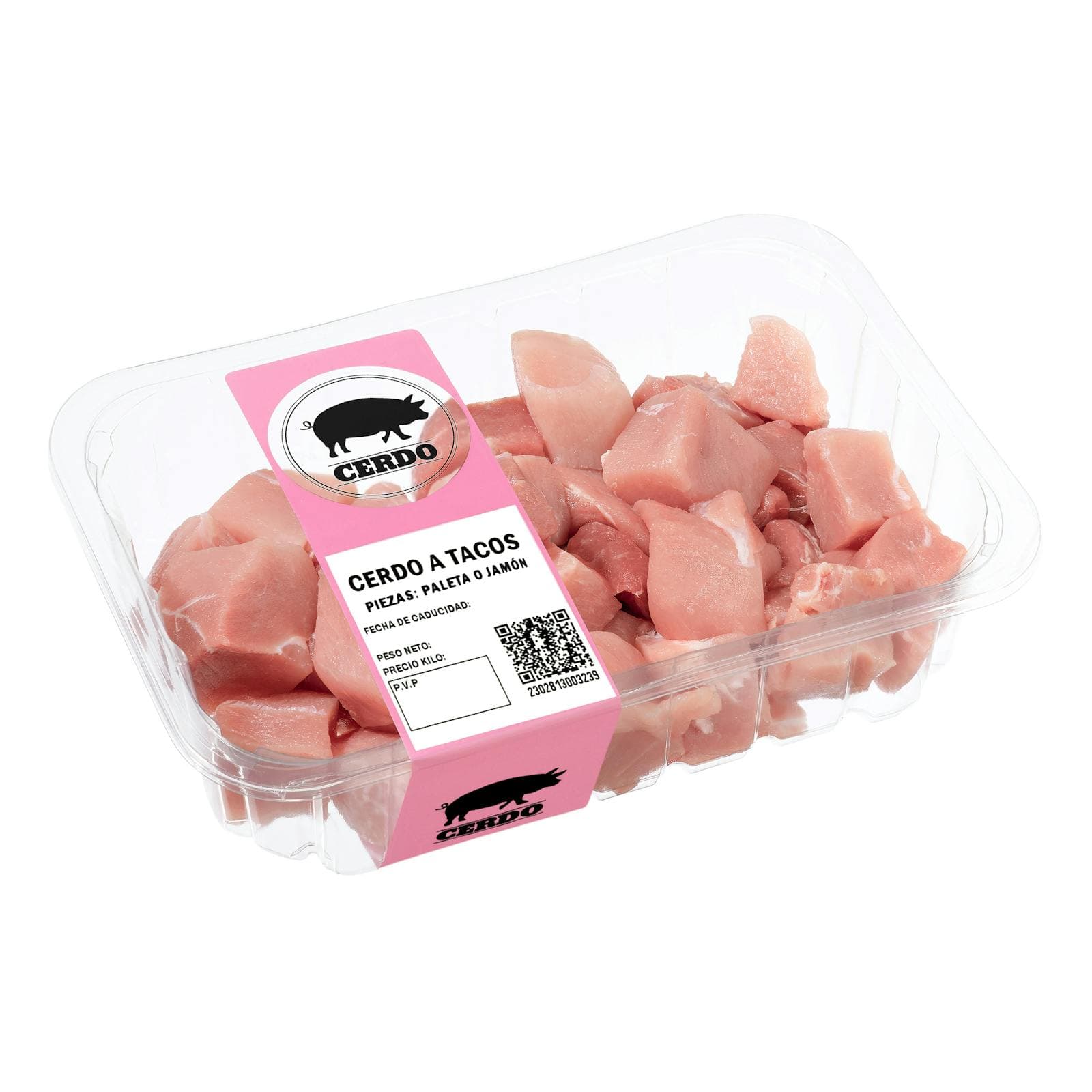
€3.22Diced Pork
560 g · Mercadona
 €3.75
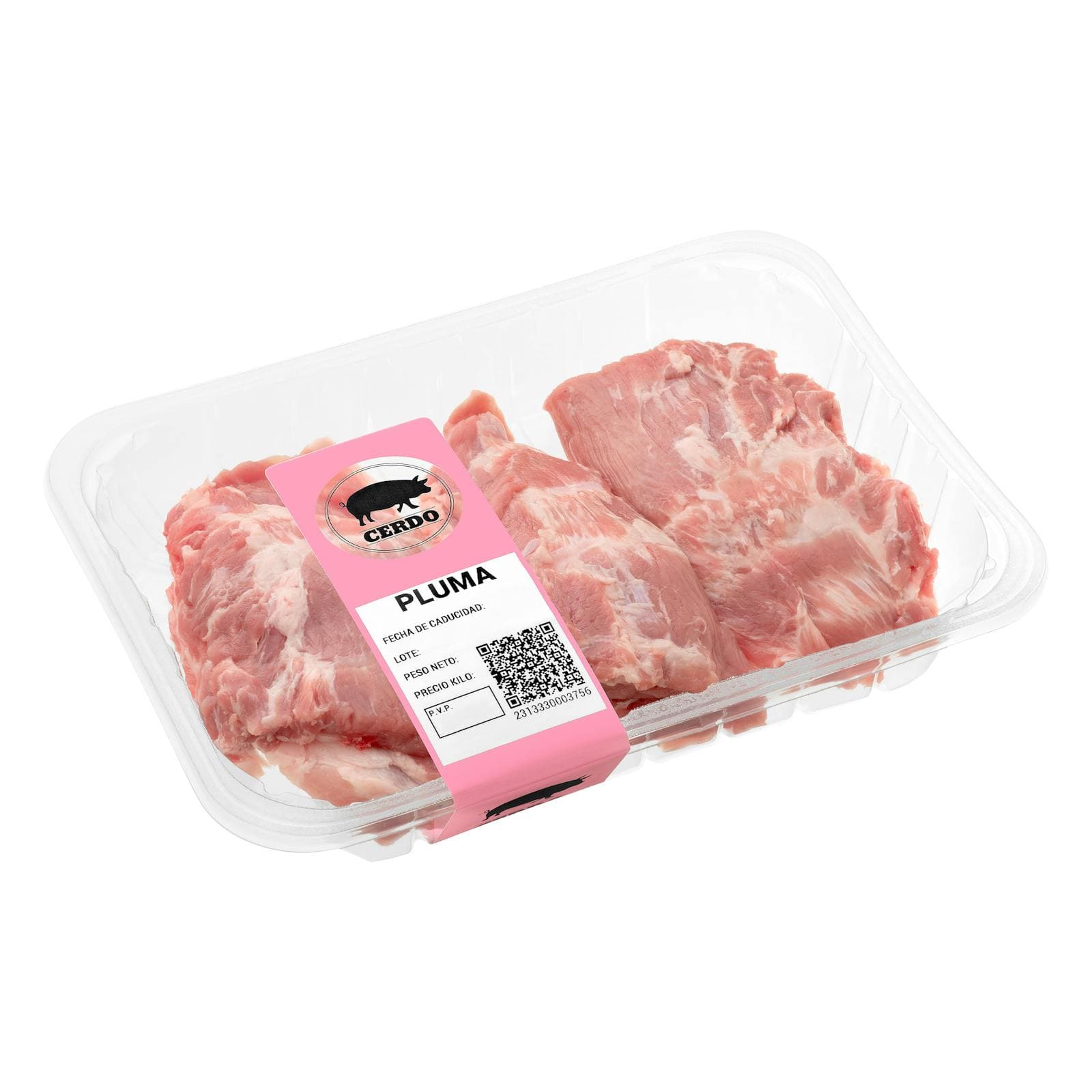
€3.75Pork Pluma
300 g · Mercadona
Good to know
- Definition
- Salt-cured pork belly or back fat, high in fat content with minimal meat, preserved through dry-salting or brining.
- Primary Origin
- Northern Europe and colonial America; essential preserved protein before refrigeration.
- Curing Method
- Dry salt cure or brine cure; some varieties lightly cold-smoked.
- Salt Content
- Very high in sodium; rinsing before use is recommended.
- Typical Form
- Strips, slabs, or blocks; fat-streaked with thin ribbons of meat on belly cuts.
- Yield
- Renders approximately 60–80% usable fat for cooking.
- Shelf Life (Unopened)
- Months at room temperature when properly cured; refrigeration extends indefinitely.
- Shelf Life (Opened)
- Refrigerate wrapped tightly; use within 1–2 months.
- Equipment
- No special equipment required beyond a knife and cutting board.
- Difficulty
- Using salt pork is simple; rendering fat requires low heat and patience.
Substitutes
- Pancetta — Italian salt-cured pork belly; less aggressively salted, more pronounced pork flavor; suitable for Italian preparations.
- Fatback — Uncured pork fatback; nearly identical texture and fat content; add salt to approximate flavor.
- Bacon Fat (rendered) — Adds smoky flavor; adjust quantity for saltiness; good for seasoning and frying.
- Uncured Pork Belly — Fresh pork belly; sear and render its own fat; season with salt to taste.
- Lard — Fully rendered pork fat; use as the cooking medium; lacks the texture of salt pork pieces but provides the fat component.
Pairs with
Also called
Salt-Cured Pork · Fatback · Cured Pork · Pork Fatback
Appears in these dishes
Related

Egg
The kitchen's everything ingredient — bind, leaven, enrich, or fry
Chicken Breast
Lean, quick-cooking white meat for everyday dinners

Ground Beef
Versatile minced beef for burgers, ragù, tacos, and meatballs
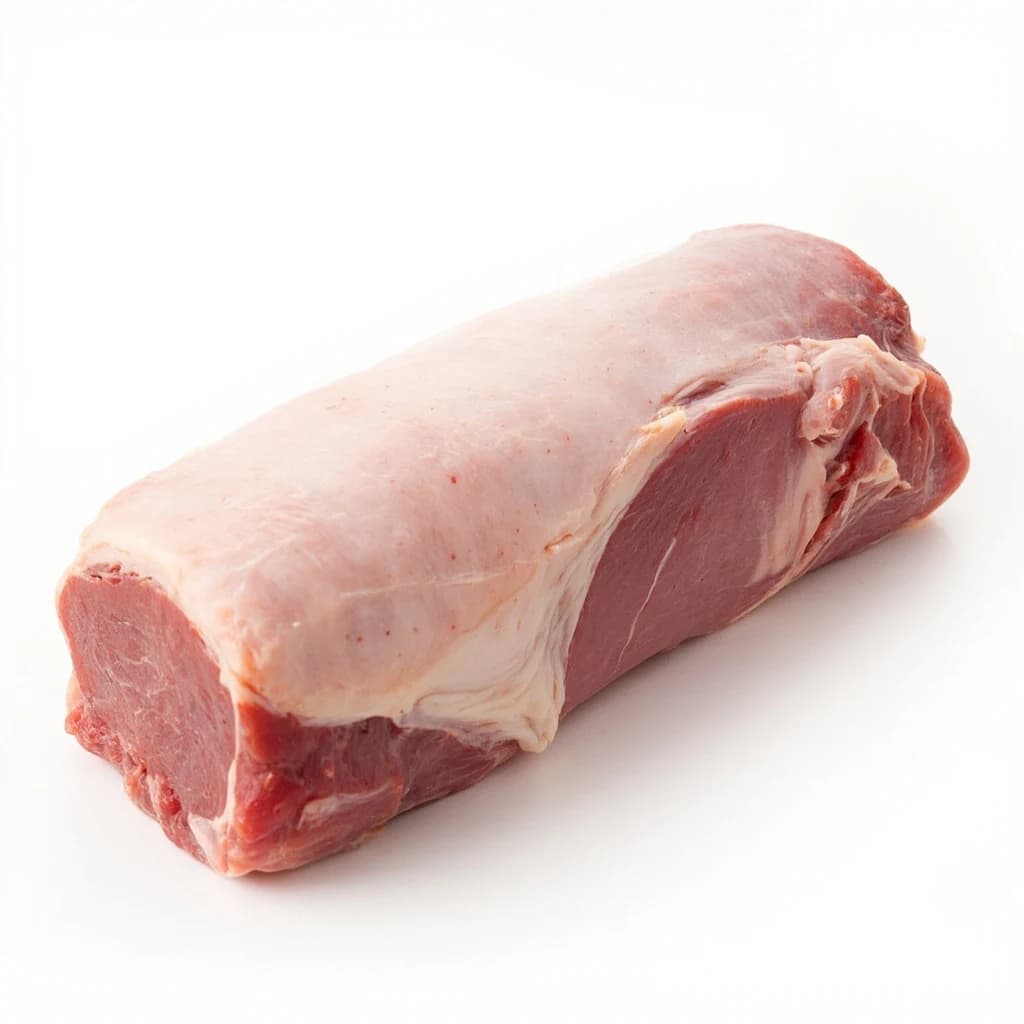
Pork Loin
Lean, tender roasting cut that stays juicy with care
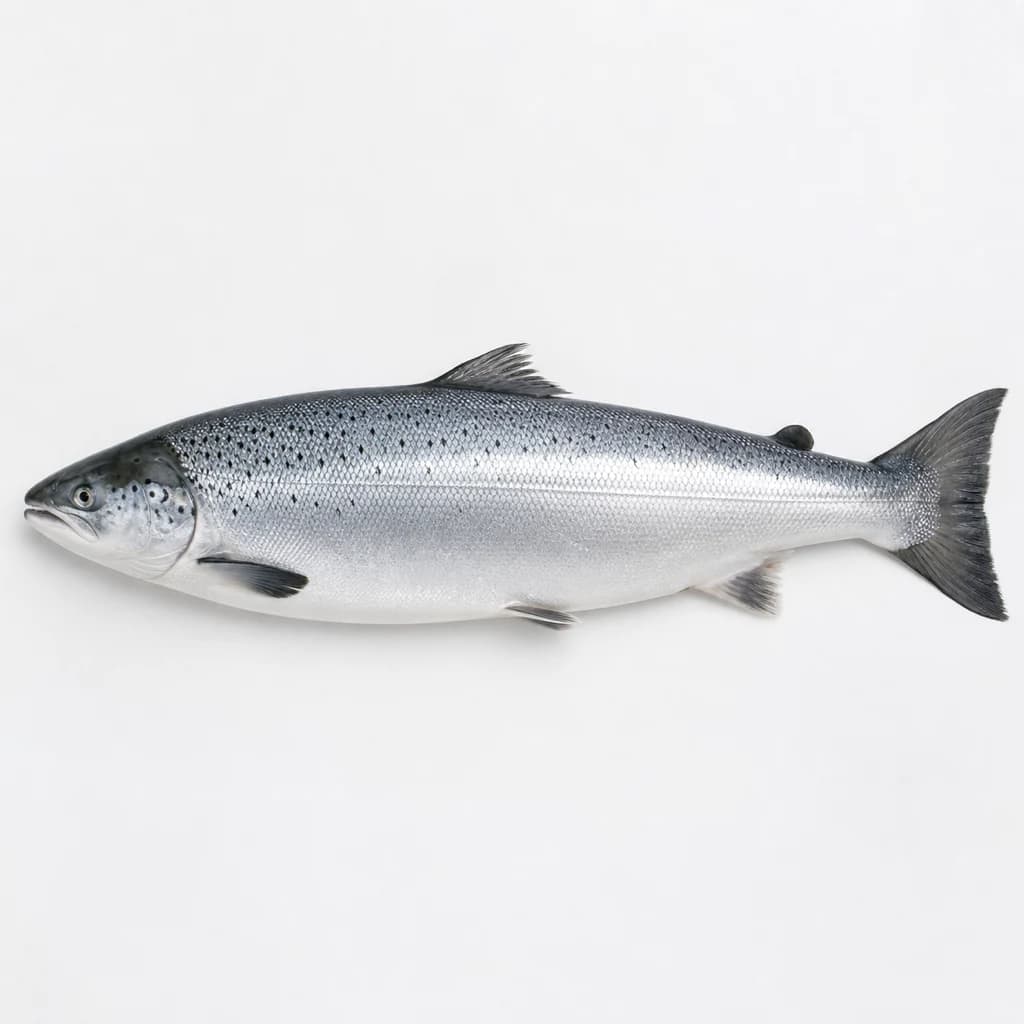
Salmon
Rich, rosy fish that roasts, grills, or cures beautifully

Egg White
Pure protein that whips to airy peaks for meringue and more

Egg Yolk
Rich, golden yolk for custards, mayonnaise, and pasta

Quail Egg
Tiny, speckled eggs for garnishing and elegant bites