Proteins
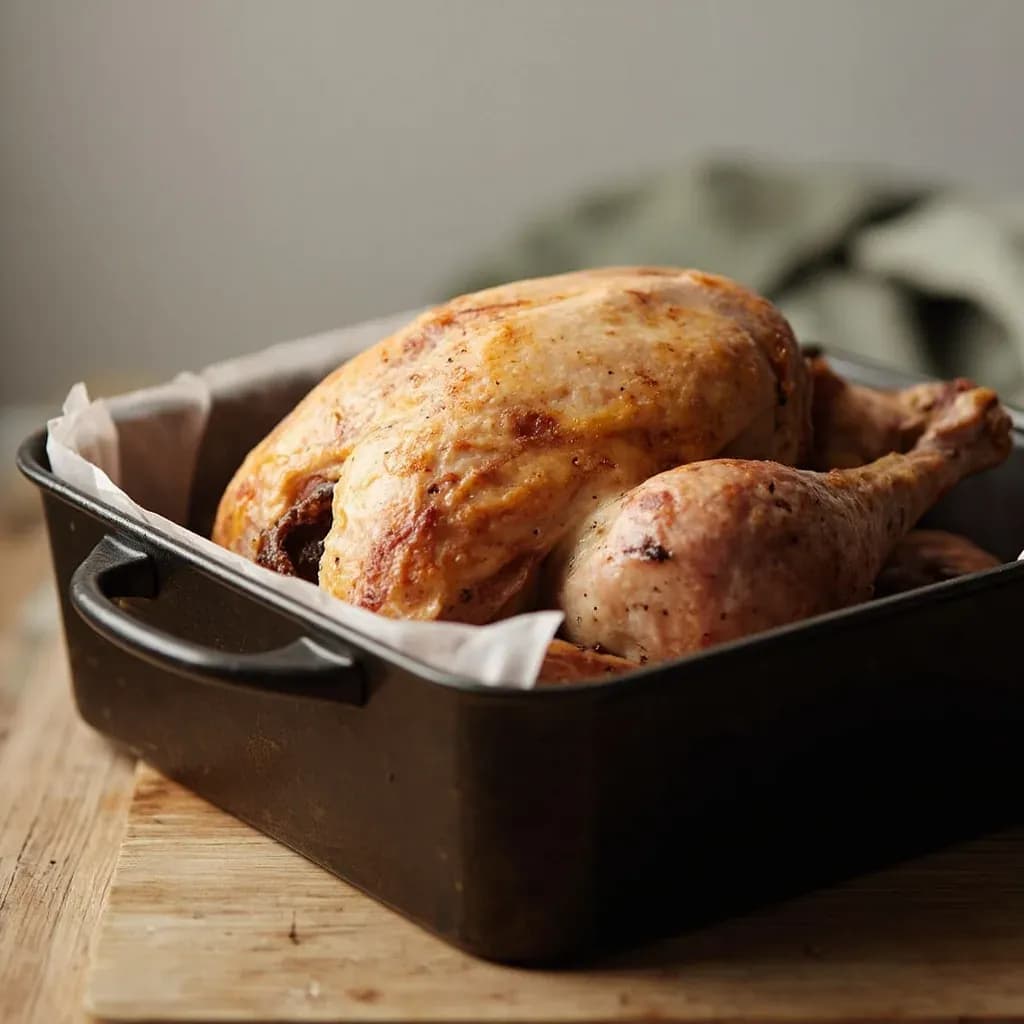
Whole Turkey
Large whole bird roasted as the centerpiece of holiday feasts.
A whole turkey is a large domestic fowl, the traditional roast centerpiece of Thanksgiving and Christmas in the United States and beyond. It is often brined or seasoned and roasted slowly so the lean breast stays moist while the dark legs cook through. Leftover meat and the carcass make stock, sandwiches and soup.
Whole turkey is the centerpiece protein of North American holiday cooking and, more practically, one of the most demanding whole-bird roasts a home cook will tackle. The meat itself is a study in contrasts: a broad, lean breast that dries out quickly under heat, and dark leg meat that needs longer cooking to tenderize. Cooking a whole turkey well is essentially the problem of bringing both of those muscles to the table at once without sacrificing either, which is why technique (brining, thermometer-driven doneness, proper resting) matters more than the bird's pedigree.
Most whole turkeys sold in the United States are Broad Breasted Whites, a fast-growing commercial breed that cannot breed naturally and is harvested young at four to six months. Heritage breeds — Bourbon Red, Narragansett, Standard Bronze, and others — are slower-growing, naturally mating, more flavorful, and richer in dark meat, but harder to source and more expensive. Either way, the cook's job is the same: manage a 12 to 24 pound bird through thawing, roasting, and resting so the breast is juicy and the thighs are tender.
Beyond the holiday table, a whole turkey is a high-value raw material. One bird produces a centerpiece, two to three days of leftovers (sandwiches, soup, pot pie, salads), and a carcass that simmers into several quarts of stock. Treating the purchase as the start of a week of cooking, rather than a single meal, is how serious home cooks get the most out of it.
- Measured in
- piece
- Storage
- Fridge
Types & varieties
The standard commercial turkey: large, broad-breasted, white-feathered, fast-growing, and the bird most Americans buy
Same build as the White with dark bronze plumage; meat is similar in taste and texture
Bourbon Red, Narragansett, Standard Bronze, Black Spanish, Slate, White Holland, Royal Palm; slower-growing, more dark meat, more flavorful, and naturally mating
Raised on certified organic feed with outdoor access; requires USDA certification
Has access to the outdoors; duration and quality are not strictly defined by USDA
Raised primarily on pasture; not a USDA-regulated term, so look for third-party certifications (Animal Welfare Approved, Certified Humane)
Processed under rabbinical supervision and salted during preparation; cooks faster and browns more aggressively than conventional
Injected at processing with broth, oil, seasonings, or butter; stays moister but contains added sodium
Frozen is flash-frozen shortly after slaughter; 'fresh' is never held below 26°F and is typically more expensive
Most retail birds are young (4 to 6 months); mature hens and toms are rare at retail and mostly go to processed products
Choosing the bird
For most cooks, a 12 to 16 lb Broad Breasted White is the practical sweet spot: large enough to feed a crowd with leftovers, small enough to thaw and roast without heroic logistics. Hens tend to be slightly more tender with proportionally more breast meat; toms are larger and leaner. If you have a choice, pick by the people you're feeding rather than the label — a 14 lb hen will plate more white meat than a 14 lb tom.
For flavor, heritage breeds are a clear step up: more dark meat, more fat under the skin, more pronounced poultry taste. They're also typically smaller than commercial broad-breasted birds, which actually suits smaller gatherings. Pasture-raised and organic birds are widely considered to taste better than commodity birds roasted the same way — the difference is real for many cooks, even if the cooking technique is identical.
Two special cases change how you cook. Kosher birds have been salted during processing, which seasons the meat deeply but also pulls moisture and means the bird browns faster and can over-roast if you follow conventional timing. Self-basted birds have been injected with a salt-and-fat solution; skip the brine or you'll oversalt. A conventional, untreated bird is the blankest canvas and benefits most from brining.
- A 12 to 16 lb bird feeds 8 to 12 people with leftovers
- Kosher and self-basted birds are already seasoned — do not brine them
- Heritage and pasture-raised birds reward simpler seasoning because the flavor is stronger
- Buy frozen if you're planning more than a week out; buy fresh if you can use it within two days
Thawing and prep
Thawing is the step most home cooks underestimate. The only safe, reliable method for a whole bird is the refrigerator: roughly 24 hours per 4 to 5 lb, which means a 16 lb bird needs four days. Cold-water thawing works in about 30 minutes per pound if you change the water every 30 minutes, but it requires attention and a clean sink. Counter thawing is unsafe — the exterior enters the bacterial danger zone long before the interior thaws.
Once thawed, give the bird 12 to 24 hours uncovered in the refrigerator if you have the time. The circulating air dries the skin, which is the single biggest factor in crisp, well-browned skin at roasting. Pat the skin dry again before rubbing with fat. Brining (wet or dry) for 12 to 24 hours before roasting seasons the meat through and buffers the lean breast against overcooking, but skip it for kosher, self-basting, or pre-salted birds.
- Refrigerator thaw: ~24 hours per 4 to 5 lb
- Cold-water thaw: ~30 min per lb, change water every 30 minutes
- Uncovered overnight in the fridge dries the skin for crisper roasting
- Wet or dry brine for 12 to 24 hours (skip for kosher or self-basting birds)
- Remove the giblet bag from the cavity before cooking; reserve for gravy
Roasting
Set the bird on a V-rack in a roasting pan so air circulates underneath and the skin does not stew in drippings. Roast at 325°F as the baseline: roughly 13 to 15 minutes per pound unstuffed, 15 to 17 stuffed. For crisper skin, start at 450°F for the first 20 to 30 minutes, then drop to 325°F.
The single most important rule: cook to internal temperature, not to time. A probe thermometer in the thickest part of the thigh is the most reliable position; the breast should also hit 165°F. Pull the bird at 160°F in the thigh — carryover cooking will bring it to 165°F during the rest, and pulling early is the best defense against a dry breast. Skip the pop-up timer that ships in the bird; it's unreliable and consistently overcooks the breast.
Stuffing inside the cavity is optional and creates real problems: longer cook times, uneven doneness, and a longer window in the food-safety danger zone. Cook stuffing in a separate dish for more reliable results, or stuff loosely if tradition demands it. Truss the legs loosely to hold the shape, but leave the wings loose against the body or the wing tips will scorch.
- Roast on a V-rack over a roasting pan for air circulation
- 325°F for the full cook, or 450°F for 20 to 30 min then 325°F for crispier skin
- Pull the bird at 160°F in the thigh; carryover brings it to 165°F
- Stuff loosely or, preferably, bake stuffing separately
- Rest at least 20 to 30 minutes tented loosely with foil before carving
Carving and leftovers
After the rest, separate the legs and thighs from the body, then slice the breast meat off the carcass in two whole pieces before slicing crosswise into even portions. Slicing breast meat against the grain into uniform pieces keeps it tender; cutting it on the bird tends to produce ragged, uneven slices.
The carcass is the overlooked prize. Strip any remaining meat for soup, sandwiches, or pot pie filling, then simmer the bones with aromatics (onion, carrot, celery, parsley, peppercorns) for 4 to 6 hours for stock. Turkey stock is richer than chicken stock and is the foundation for next-day gravy, soup, and risotto.
Cooked turkey keeps 3 to 4 days refrigerated and freezes well for 2 to 3 months if wrapped tightly. Slice before freezing for faster thawing and more useful portions.
- Carve breast into two whole pieces, then slice crosswise against the grain
- Save the carcass for stock: simmer with aromatics for 4 to 6 hours
- Refrigerate leftovers within 2 hours; use within 3 to 4 days
- Slice before freezing for faster thawing and easier portioning
Common uses
Tips & pitfalls
- Brine for 12 to 24 hours before roasting to keep breast meat moist and seasoned through; skip the brine for kosher, self-basting, or pre-salted birds
- Pat the skin completely dry and rub with butter, schmaltz, or oil before roasting for crisp, well-browned skin
- Use a probe thermometer in the thigh and pull the bird at 160°F — carryover will bring it to a safe 165°F during the rest
- Let the turkey rest 20 to 30 minutes minimum, tented loosely with foil, before carving so juices redistribute into the meat
- Skip the pop-up timer that ships in the bird; it's inaccurate and consistently overcooks the breast
- Avoid basting every 10 minutes — each oven opening drops the temperature 25°F or more and lengthens the cook; baste once at most
- Stuff the cavity loosely if at all, or bake the stuffing separately; in-bird stuffing lengthens cook time and keeps meat in the danger zone longer
- Always thaw in the refrigerator, not on the counter — counter thawing puts the exterior in the bacterial danger zone for hours
Nutrition
Energy
519 kJ · per 100 g
Where the calories come from
Protein
18.2g
36% DV
Carbs
0.1g
0% DV
Fat
5.1g
7% DV
Fiber
0g
0% DV
Sugars
0g
of which
Sodium
136mg
6% DV
Source · USDA FoodData Central · Turkey, whole, giblets, raw
View on FDC →In the shops
Matched grocery products
 €2.85
€2.85Turkey Ham
Hacendado · 500 g · Mercadona
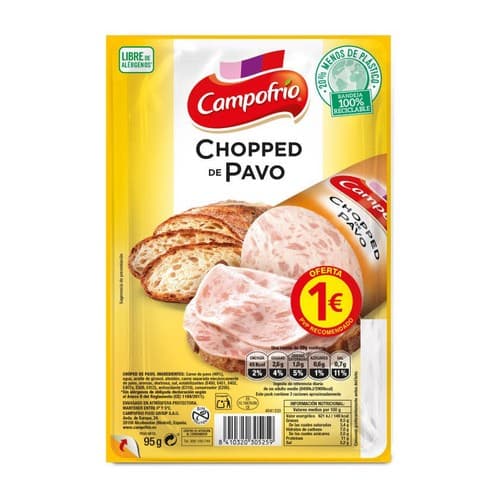 €1.00
€1.00Turkey Xoped
CAMPOFRIO · kg · Bonpreu
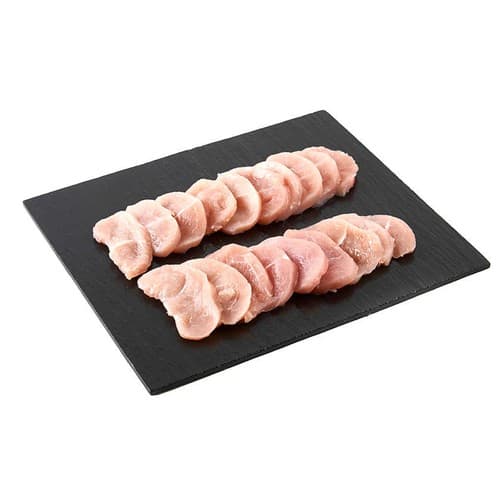 €3.99
€3.99Turkey Filet
BONPREU · kg · Bonpreu
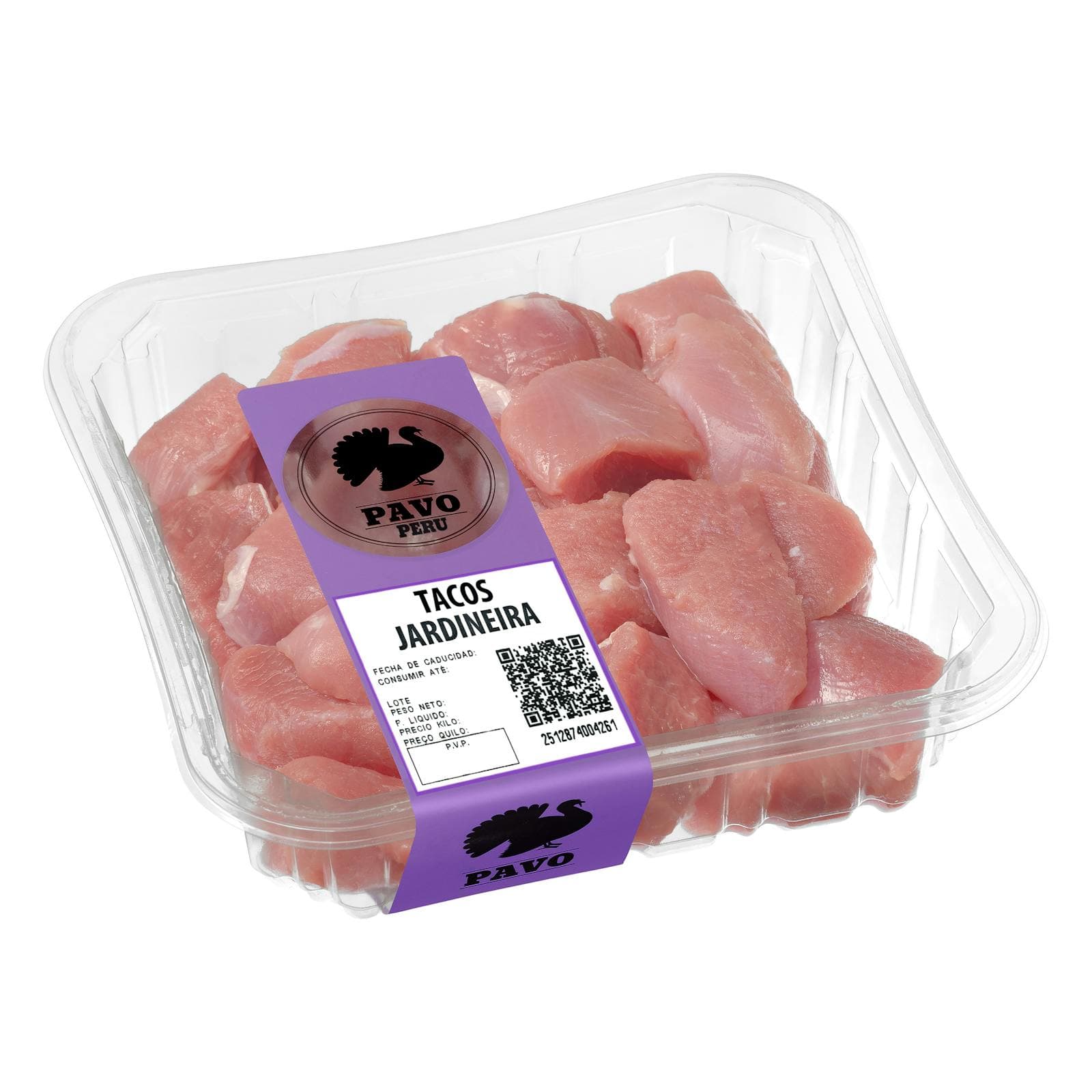 €4.16
€4.16Turkey Tacos
570 g · Mercadona
 €3.50
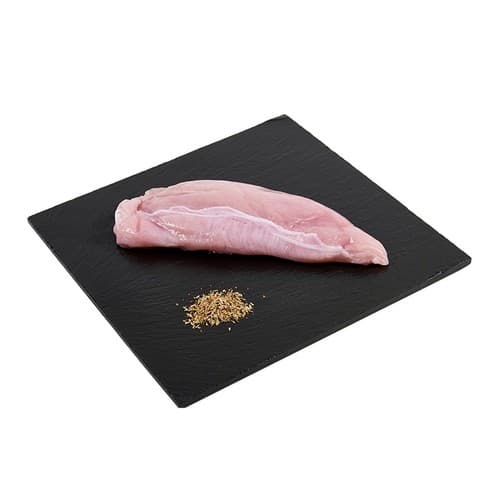
€3.50Turkey Fillet
BONPREU · ud · Bonpreu
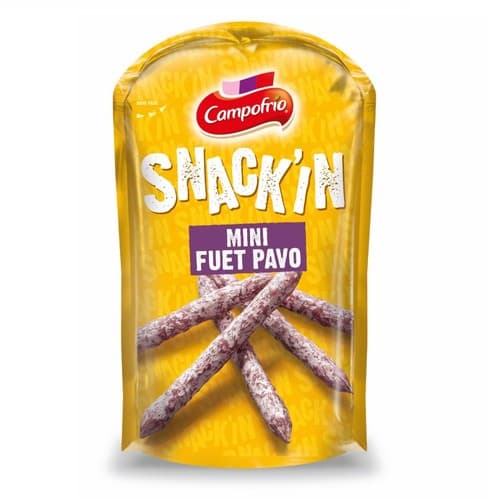 €1.49
€1.49Mini Turkey Fuet
CAMPOFRÍO · kg · Bonpreu
Good to know
- Scientific name
- Meleagris gallopavo (domestic turkey)
- Typical weight
- 10 to 24 lb; most supermarket birds are 12 to 16 lb hens or toms
- Hen vs. tom
- Hens are smaller, more tender, and have proportionally more breast meat; toms are larger, leaner, and slightly more flavorful but can be tougher
- Safe internal temperature
- 165°F in the thickest part of the thigh, innermost wing, and thickest part of the breast (USDA)
- Roasting at 325°F
- Plan roughly 13 to 15 min per lb unstuffed, 15 to 17 min per lb stuffed; always cook to temperature, not by time
- Thaw time (refrigerator)
- About 24 hours per 4 to 5 lb; a 14 lb bird needs roughly 3 days
- Resting time
- At least 20 to 30 minutes tented loosely with foil; larger birds benefit from up to 45 minutes
- Yield
- About 50 to 55% edible meat by weight once bone, skin, and drippings are removed
- Serving estimate
- Plan 1 to 1.5 lb of whole bird per person (roughly 1/2 to 3/4 lb cooked meat, assuming leftovers)
Substitutes
- Whole chicken (capon or roaster) — Closest substitute; a 6 to 9 lb capon cooks and serves similarly, though the meat is less rich and the cook time is shorter per pound
- Whole duck — Richer, fattier, and smaller (usually 4 to 6 lb); renders a lot of fat and works for special-occasion roasts but has a stronger flavor than turkey or chicken
- Whole goose — Larger and very fatty with dark, intense meat; roast at lower temperatures to render the fat without burning the skin
- Two or three Cornish hens — Good visual stand-in for a centerpiece; cook in less total time but yield similar meat per bird
- Bone-in turkey breast — If you want turkey flavor without the whole-bird commitment, a 5 to 8 lb bone-in breast roasts in 2 to 3 hours
- Boneless turkey roast (rolled and tied) — Easier to carve and faster to cook, but lacks the presentation and stock-making advantages of a whole bird
Pairs with
Also called
Turkey · Roasting Turkey
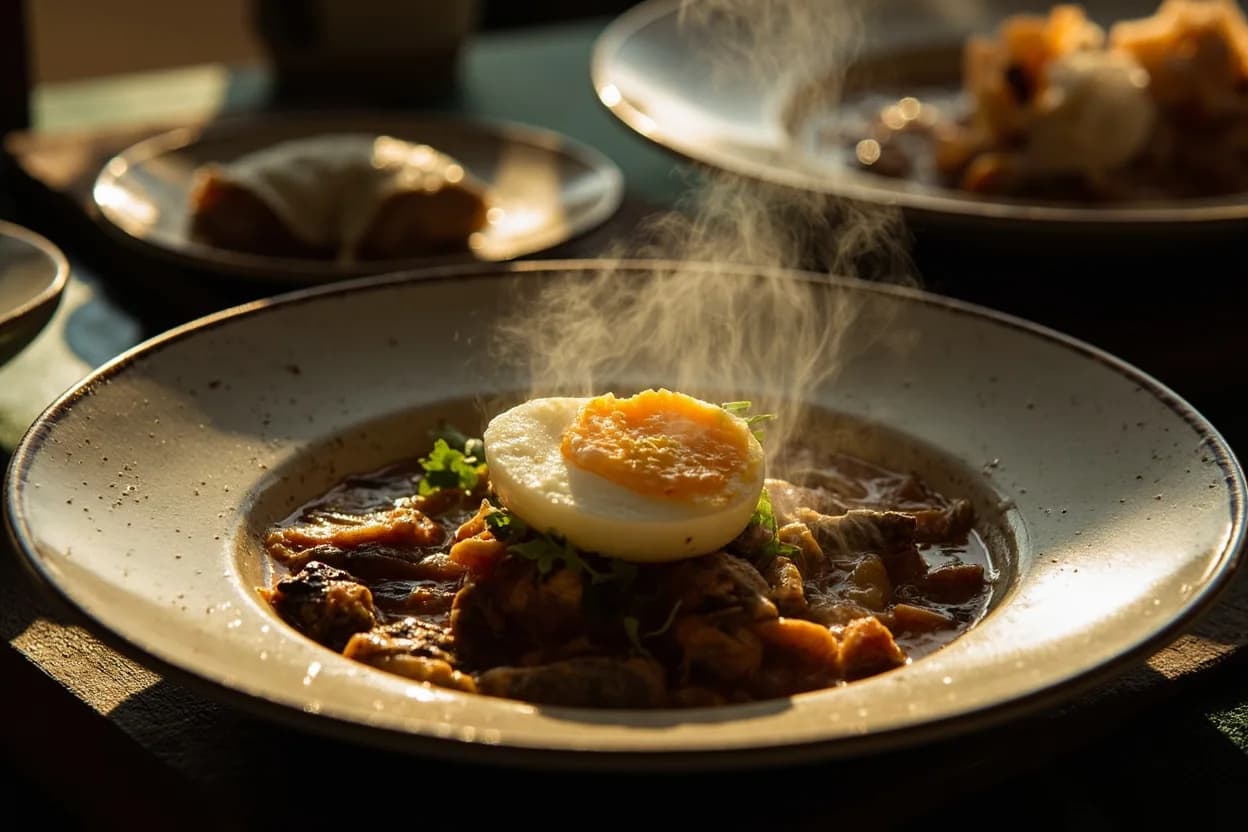
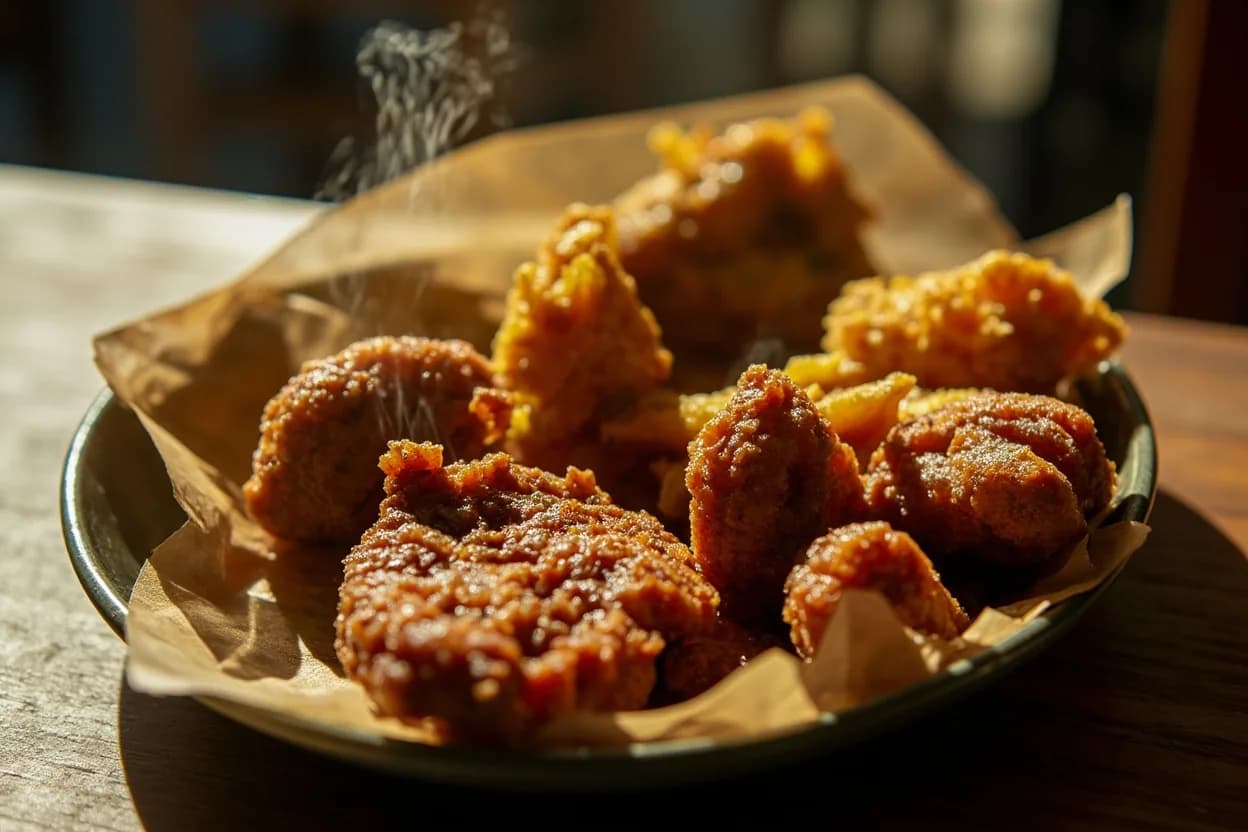
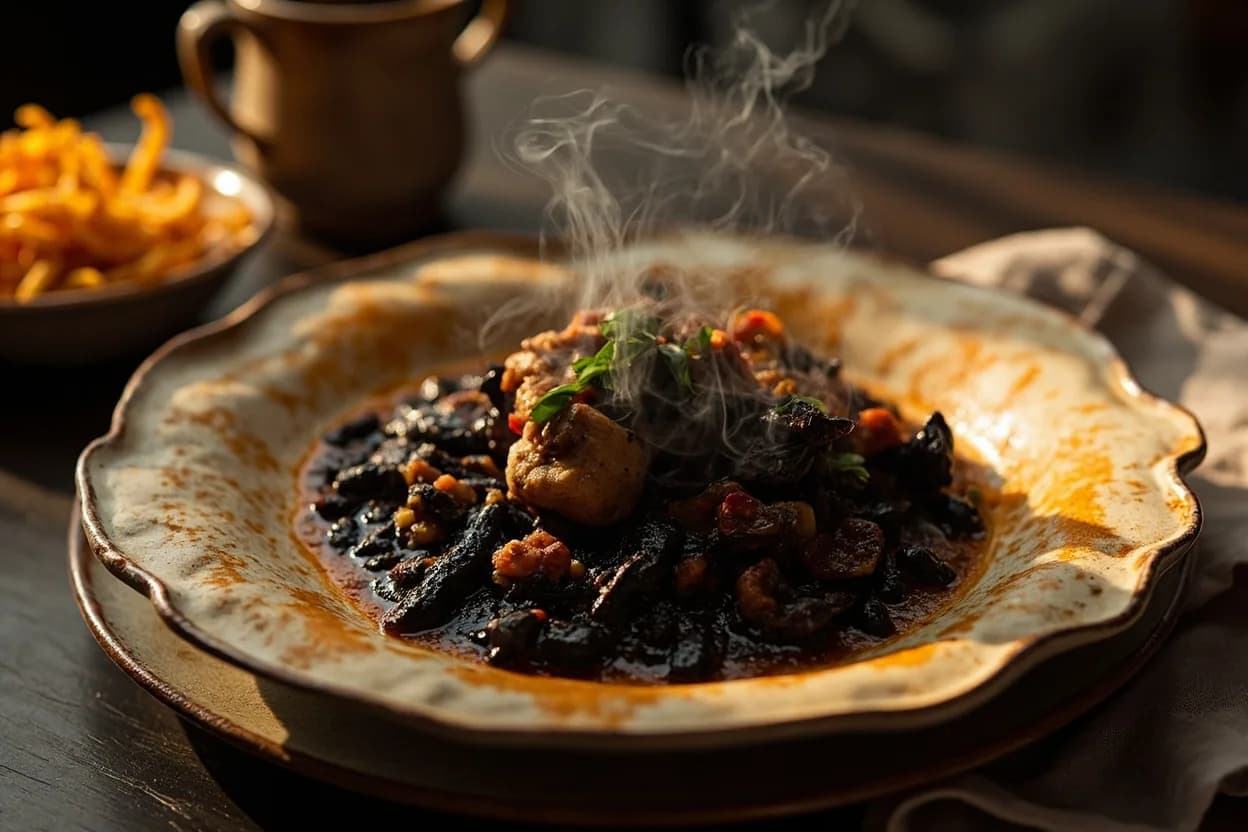
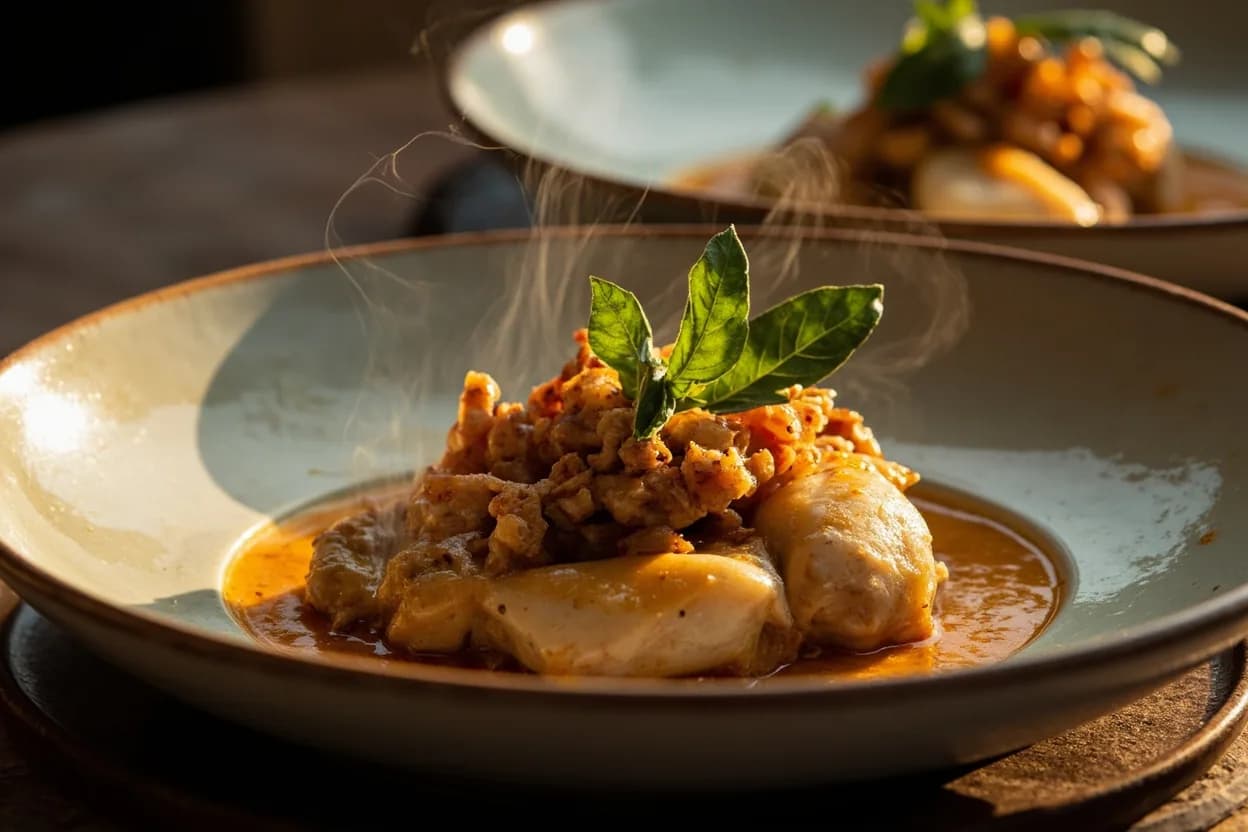
Appears in these dishes
Related
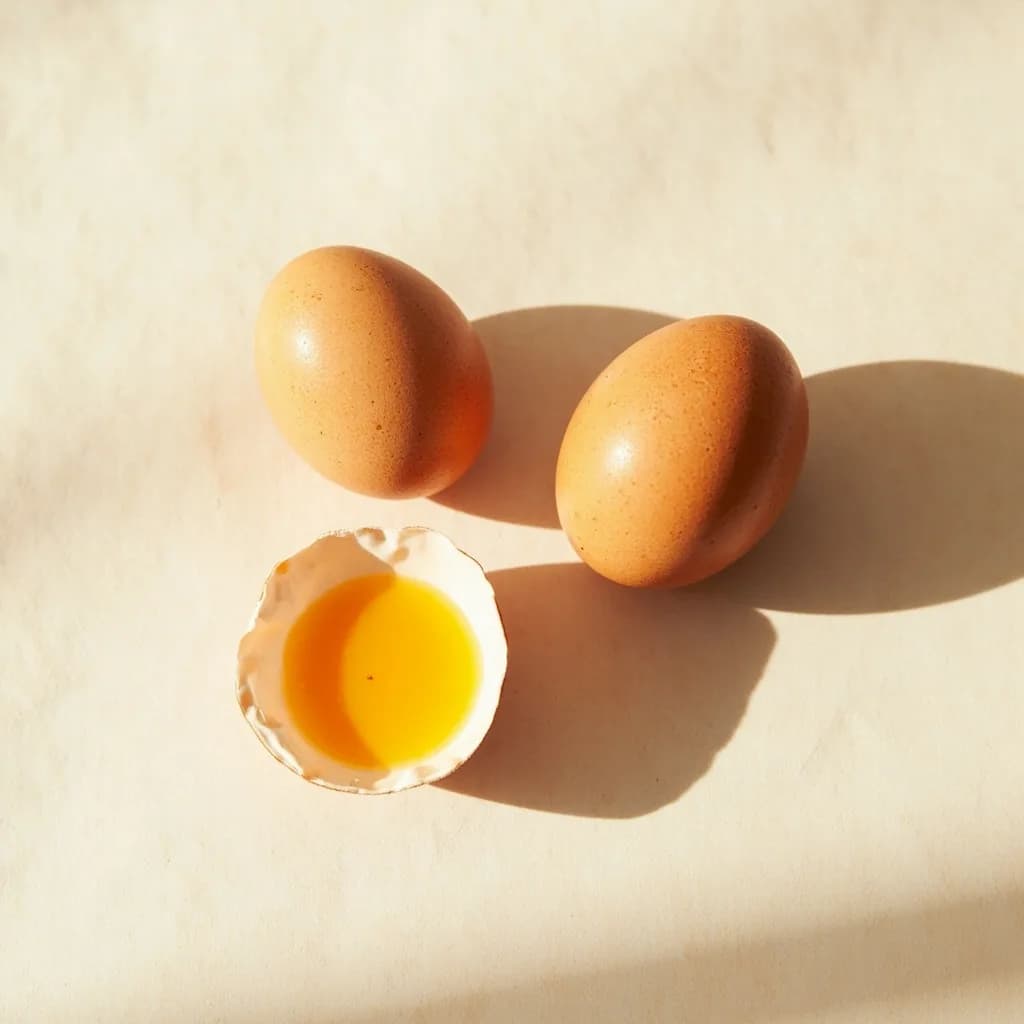
Egg
The kitchen's everything ingredient — bind, leaven, enrich, or fry
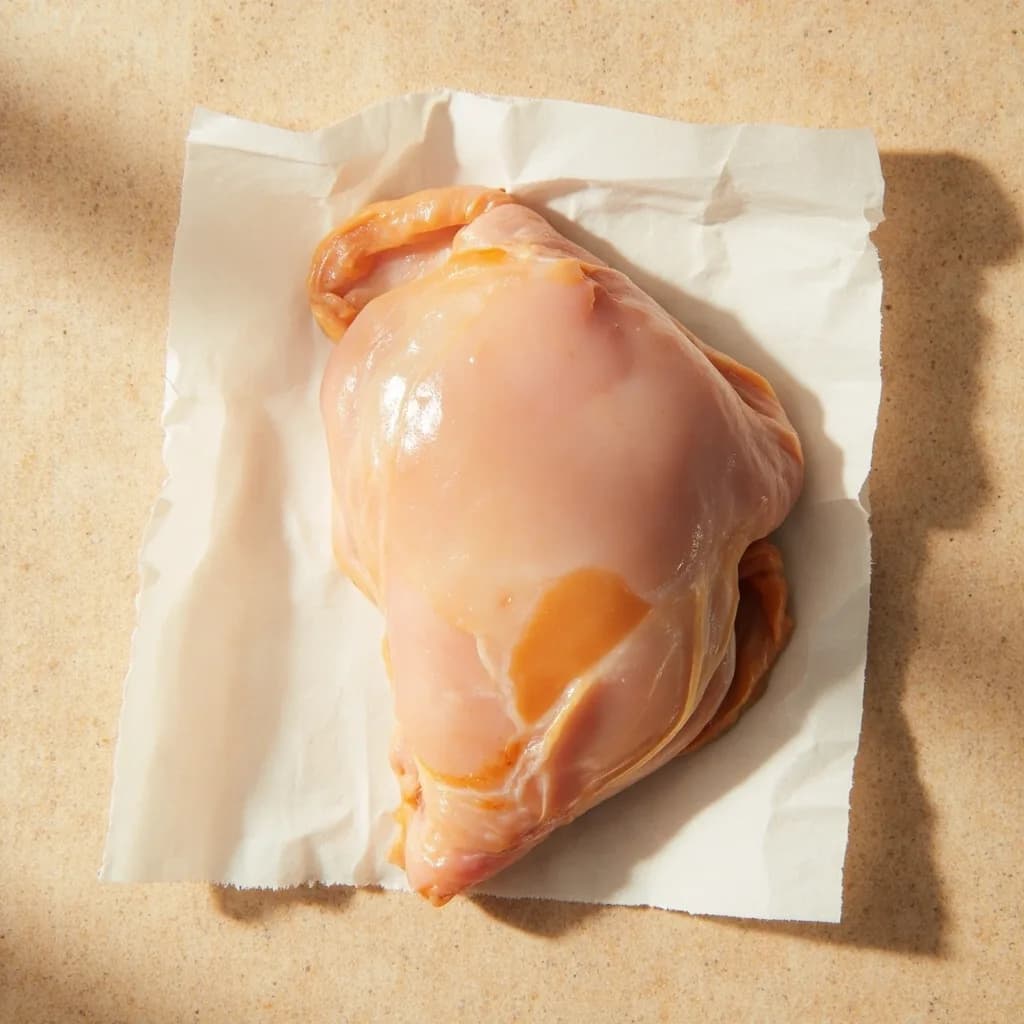
Chicken Breast
Lean, quick-cooking white meat for everyday dinners

Ground Beef
Versatile minced beef for burgers, ragù, tacos, and meatballs
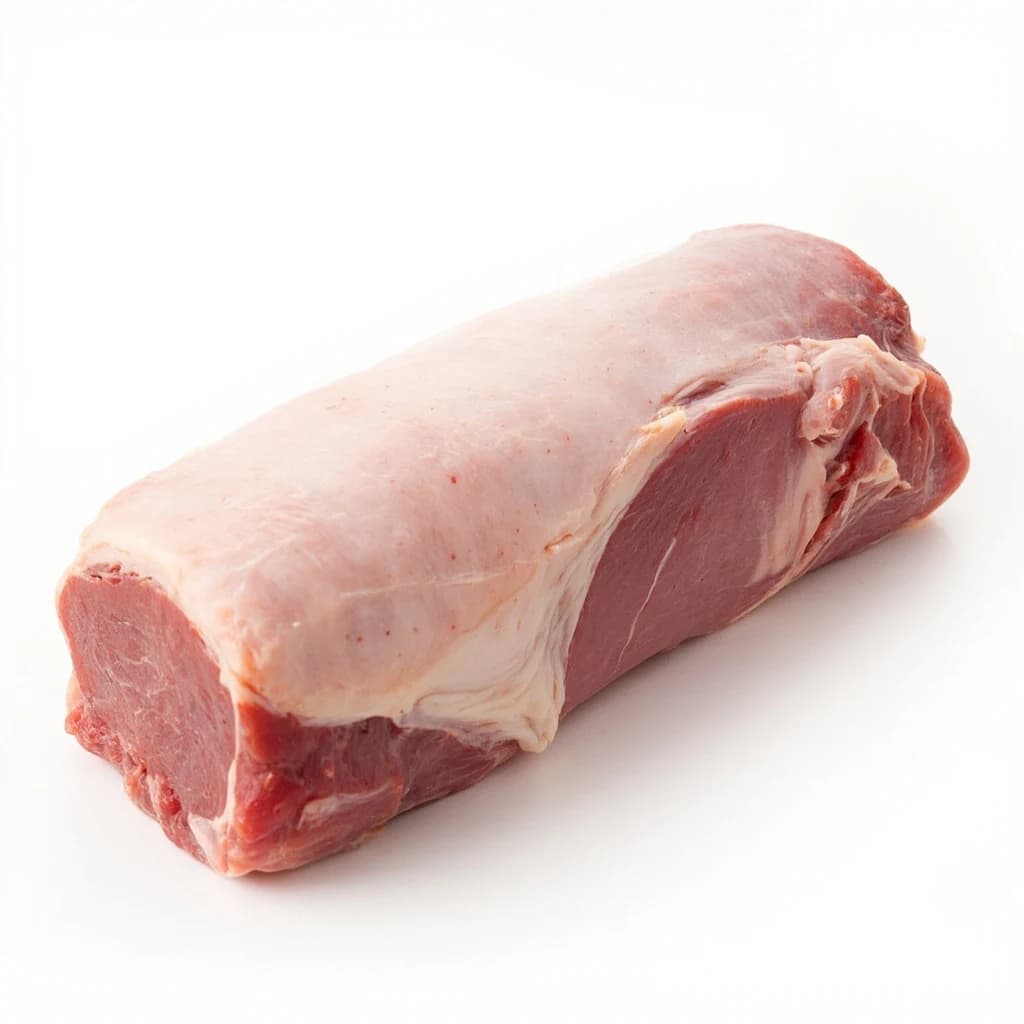
Pork Loin
Lean, tender roasting cut that stays juicy with care
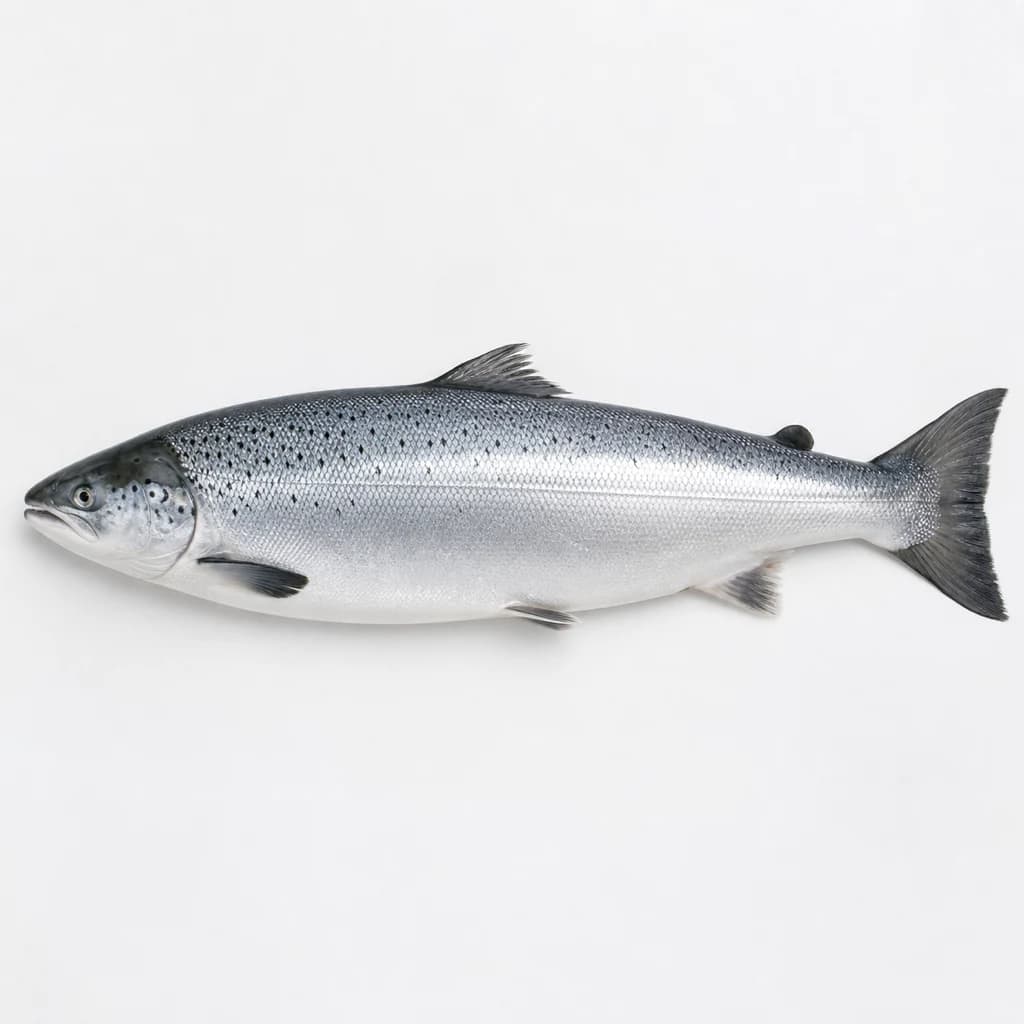
Salmon
Rich, rosy fish that roasts, grills, or cures beautifully

Egg White
Pure protein that whips to airy peaks for meringue and more
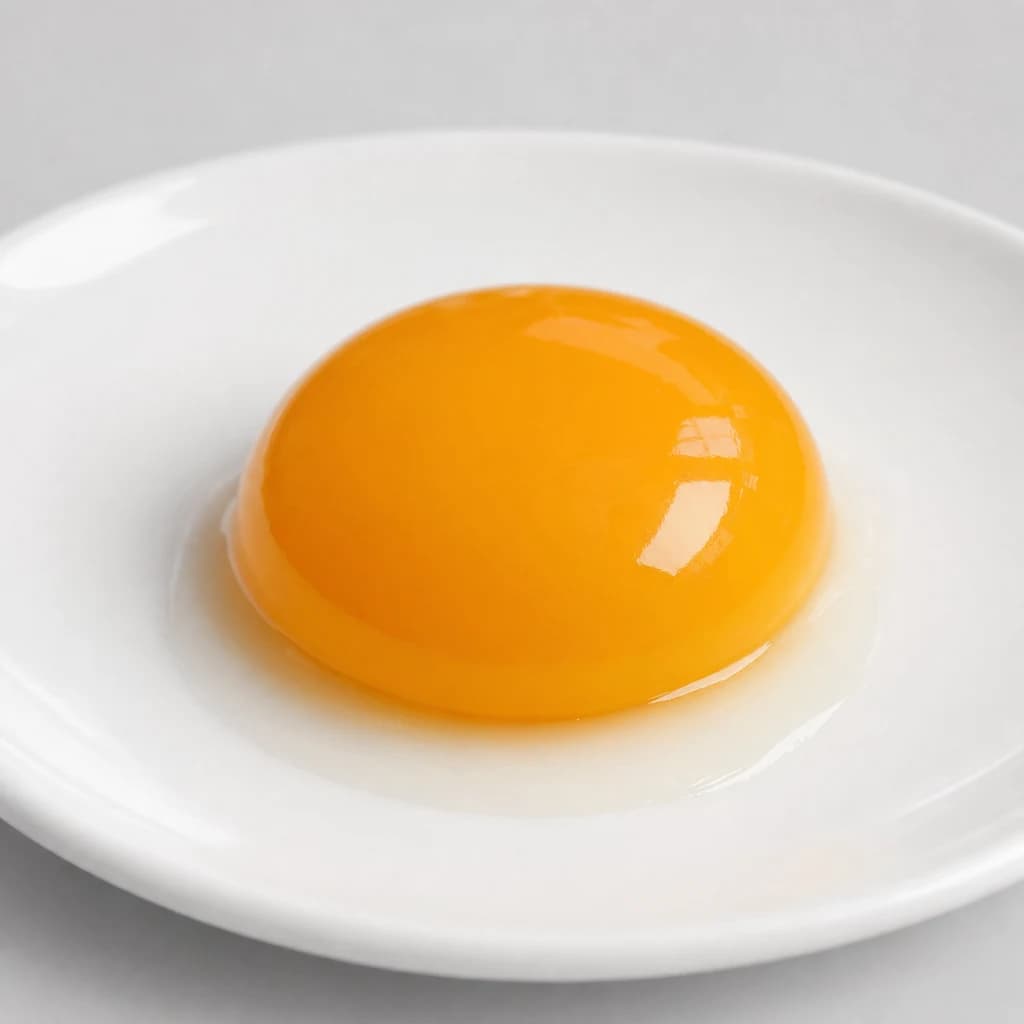
Egg Yolk
Rich, golden yolk for custards, mayonnaise, and pasta

Quail Egg
Tiny, speckled eggs for garnishing and elegant bites