Legumes & Beans
Yellow Lentil
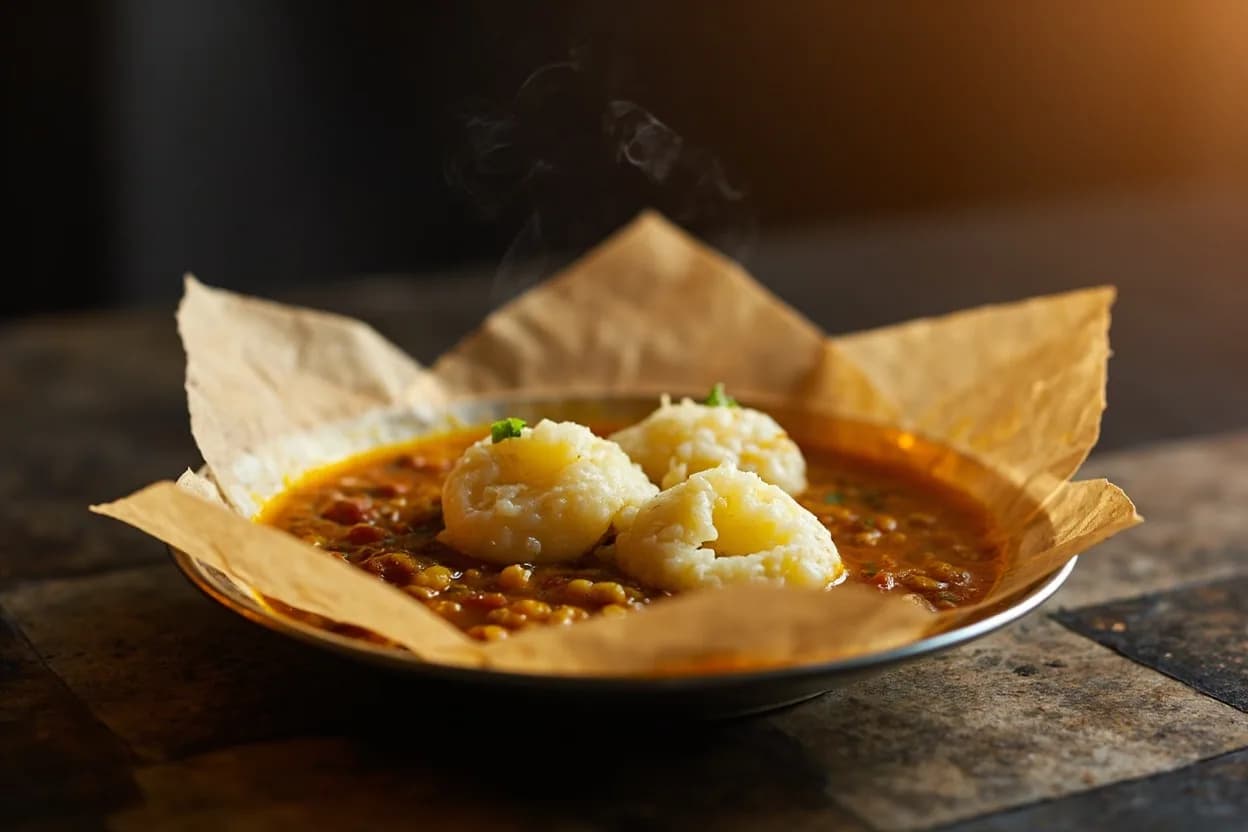
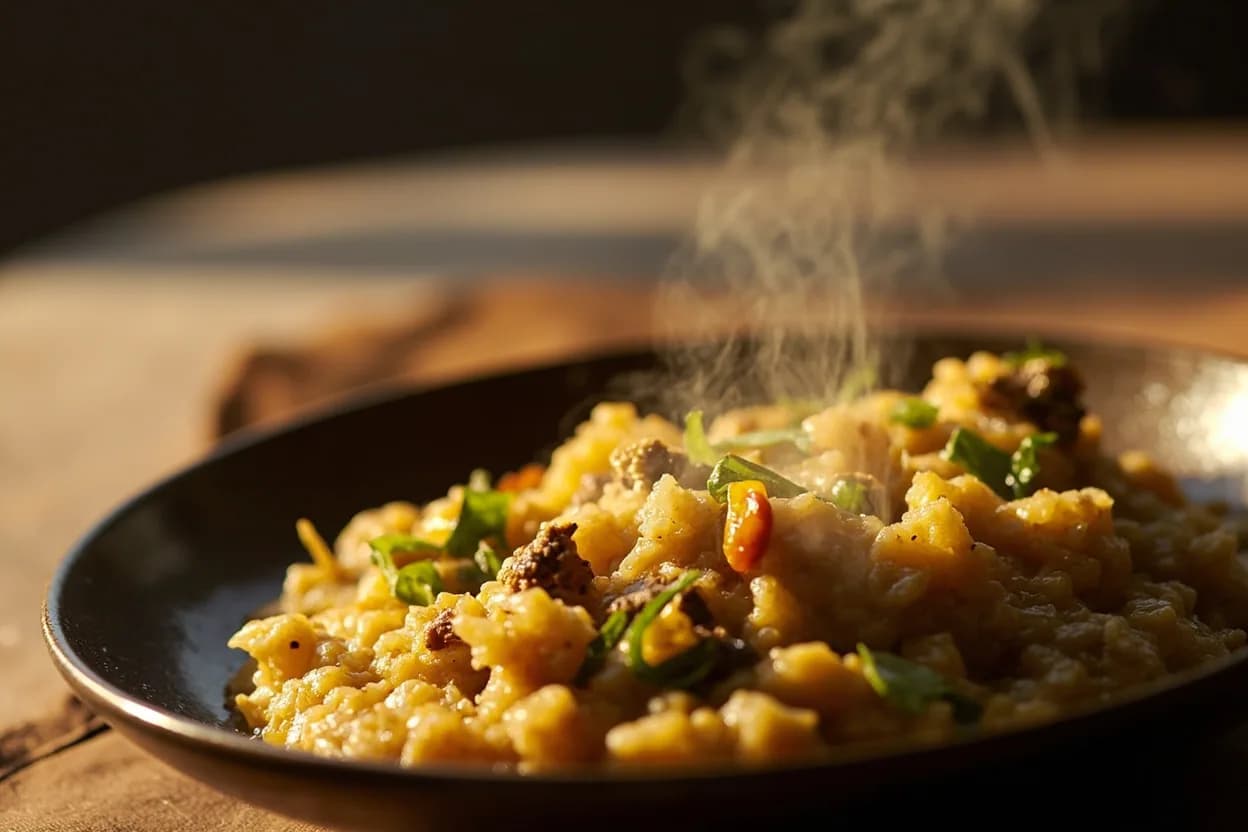
Mild, quick-cooking split lentils that break down into a soft golden puree. The backbone of Indian dal and creamy soups, needing no soaking and ready in about 20 minutes.
"Yellow lentil" is a market name rather than a single species, and that's the first thing a cook needs to sort out. In Indian shops the bag labeled "yellow dal" is most often toor (split pigeon peas), moong (split mung), or chana (split chickpea) — all legumes, none of them true lentils. In Western bulk bins the same name usually points to hulled red lentils, called masoor dal in South Asia, which are the only true Lens culinaris in this color range. Yellow split peas are a fourth possibility, a different species (Pisum sativum) that cooks and tastes similarly. For most soups and purées they are interchangeable; for an authentic Indian recipe, match the specific dal called for, since cook time, texture, and flavor drift noticeably between them.
What unites them is behavior in the pot. All are split and husked, so they need no soaking and soften in 15 to 25 minutes, eventually collapsing into a thick, spoon-coating purée. That breakdown is exactly what makes them so useful: a weeknight dal, a creamy soup, a thickener for a vegetarian braise, all from a handful of dried legumes and a short simmer. They are also among the most forgiving ingredients in the pantry — hard to overcook by more than a few minutes, hard to undersalt, and almost impossible to ruin — which makes them a natural place to start for a new cook.
The flavor is mild and earthy, with a faint sweetness and a clean, almost neutral base that takes spice unusually well. Indian cooking leans into this by finishing the cooked dal with a tadka — spices bloomed in hot ghee and poured over the top — which carries most of the dish's aroma. Western cooks can use the same trick with olive oil, garlic, and herbs for a different but equally effective finish.
- Measured in
- g
- Storage
- Pantry
Find it in
Suits
Types & varieties
Split, husked pigeon peas (Cajanus cajan) — the everyday "yellow dal" of Indian thalis, especially in the South. Slightly nutty, cooks in 20–30 minutes.
Hulled, split mung beans (Vigna radiata). Pale buttery yellow, very quick (12–18 minutes), light and easy to digest; used for khichdi and South Indian payasam.
Split, husked chickpeas (Cicer arietinum). Amber-yellow, firmer, and nuttier; takes 30–45 minutes and holds its shape, which makes it the dal for chana masala and a chunky chana dal tadka.
True Lens culinaris with the seed coat removed, appearing tan to yellow. Softens fastest (15–20 minutes) and is the "yellow lentil" most often sold in Western bulk bins.
Field peas (Pisum sativum) — a different species but cooks and tastes similarly. Slightly earthier and a touch sweeter; classic in British pease pudding and Swedish ärtsoppa.
What you're actually buying
The species confusion matters less in a free-form soup than in a recipe from a specific region, but it shapes both texture and timing. Masoor and moong break down to a soft, almost saucy purée and are the right choice for a North Indian-style dal tadka or a quick weeknight soup. Toor sits in the middle: it softens thoroughly but keeps a little more body, which is why it anchors a Gujarati varan or a sambar. Chana keeps its shape and wants a longer simmer, so it shows up in dishes that lean on the dal as a bean, not a sauce. Yellow split peas behave like a slightly firmer, slightly earthier masoor and are a fine stand-in in any non-Indian context. The simple rule: shorter cooking and softer texture for masoor and moong, longer cooking and more bite for chana.
Building a tadka
A tadka (also called chhonk, vaghaar, or phodni) is a finishing sizzle of spices bloomed in fat and poured over cooked dal. It is the move that turns a pot of mild, soft legumes into a finished Indian dish, and it is the single technique most worth learning for working with any yellow lentil. The fat — usually ghee, sometimes coconut oil or mustard oil — carries fat-soluble aromatics, and the heat unlocks them in seconds.
- Heat 1 to 2 tablespoons of ghee in a small pan over medium heat until it melts and just begins to smoke.
- Add cumin seeds (about 1 tsp) and let them sizzle and darken for 10 to 15 seconds — they should smell nutty, not burnt.
- Add any combination of minced garlic, grated ginger, sliced shallot, dried red chili, or asafoetida; stir for 30 to 60 seconds until fragrant.
- Off the heat, stir in ground spices — turmeric, Kashmiri chili, coriander, or garam masala — and a few curry leaves if you have them.
- Pour the sizzling mixture over the finished dal; the surface should audibly crackle. Cover for a minute before serving so the aroma infuses.
Common uses
Tips & pitfalls
- Rinse thoroughly under cold water until it runs clear — this removes surface starch that causes excess foam and a slightly muddy flavor.
- Toast the dry lentils in a little ghee or oil for 2–3 minutes before adding water for a noticeably nuttier, less beany depth.
- Hold the salt until the dal has simmered at least 10 minutes; salting early can toughen the skins and slow softening.
- Add any acid — lemon, lime, tomato, tamarind, vinegar — only at the end of cooking, or the lentils will stay firm and the flavor will turn flat.
- Skim the gray foam that rises in the first few minutes for a cleaner-tasting soup or dal.
- Stop cooking while individual grains are still barely visible; carryover heat and standing time will finish the job, and overcooking turns the purée gluey and starchy.
- A pressure cooker is the most reliable tool: 1 cup dal to 3 cups water, 5–6 minutes at pressure, then a 10-minute natural release.
- Finish with a tadka (bloomed spices in hot ghee) rather than stirring in cream; it gives a brighter, more layered aroma.
Nutrition
Energy
1473 kJ · per 100 g
Where the calories come from
Protein
24.6g
49% DV
Carbs
63.4g
23% DV
Fat
1.1g
1% DV
Fiber
10.7g
38% DV
Sugars
2g
of which
Sodium
6mg
0% DV
Source · USDA FoodData Central · Lentils, raw
View on FDC →In the shops
Matched grocery products
No matched grocery products for Yellow Lentil yet.
Good to know
- Botanical name
- Lens culinaris (true lentil) for hulled masoor; 'yellow lentil' in markets may also mean toor dal (Cajanus cajan), moong dal (Vigna radiata), chana dal (Cicer arietinum), or yellow split peas (Pisum sativum)
- Form
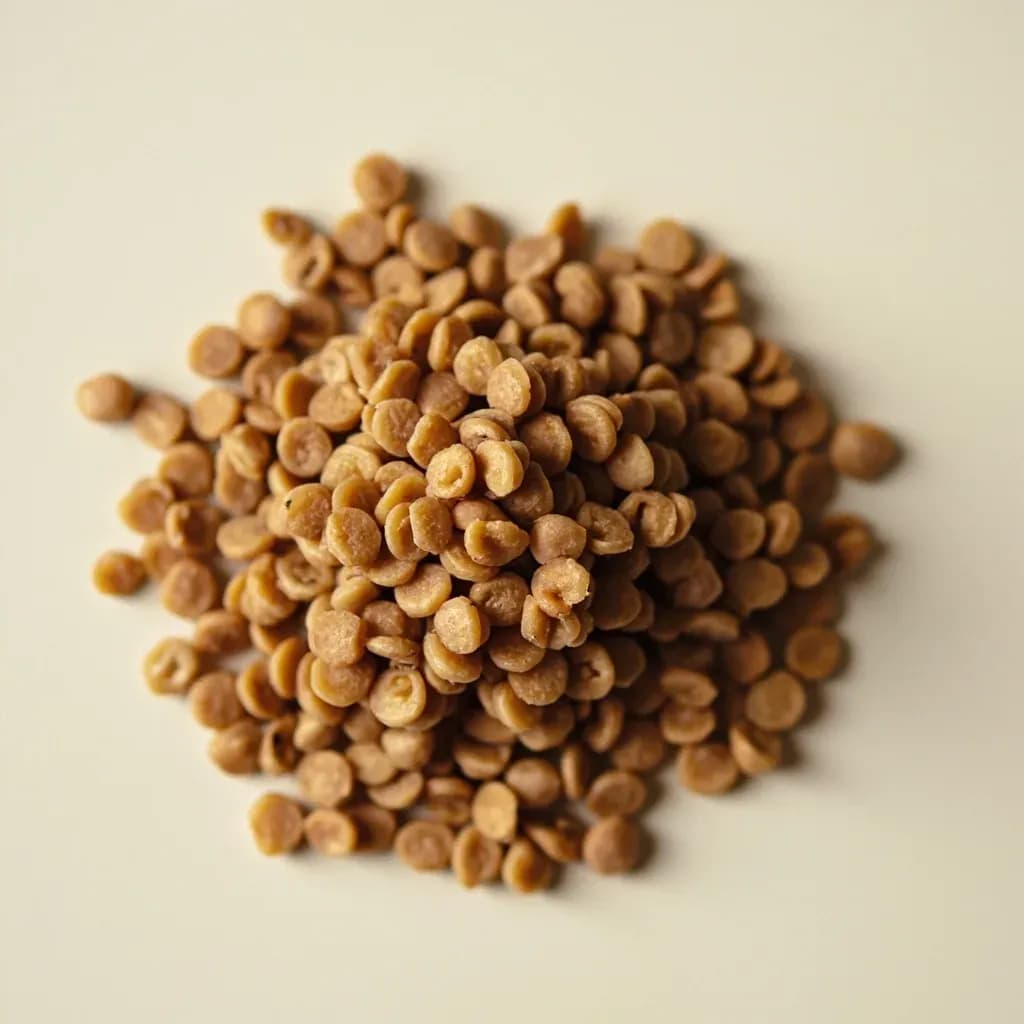
- Dried, split, hulled seed; small irregular pieces 2–4 mm across, pale gold to deep yellow
- Flavor
- Mild, earthy, slightly sweet, faintly nutty; neutral enough to absorb and carry spice
- Cook time
- 15–25 minutes unsoaked (moong fastest, chana slowest); ~6–8 minutes in a pressure cooker
- Water ratio
- 1 cup lentils to 2½–3 cups water or stock for soup; 1:2 for a thicker dal
- Yield
- 1 cup dry yields roughly 2 to 2¼ cups cooked, about 400 g
- Nutrition (per 100 g dry)
- ~24–25 g protein, ~10–11 g fiber, ~3.3 mg iron; good source of folate, magnesium, and potassium; naturally gluten-free
- Storage
- 1–2 years in an airtight container in a cool, dark, dry place; cooked lentils keep 3–4 days refrigerated, up to 3 months frozen
- Difficulty
- Beginner; among the most forgiving legumes to cook
Substitutes
- Red lentils (hulled masoor) — The closest true substitute; nearly identical cook time and texture, just slightly more orange in color.
- Yellow split peas — Works 1:1 by volume; very slightly earthier and holds its shape a touch more, so allow 5 extra minutes of cooking.
- Toor dal — Good in Indian recipes; takes 5–10 minutes longer to soften but has the same golden color and mild flavor.
- Moong dal — More delicate and faster; best in lighter dals and soups, not in long-simmered dishes where you want body.
- Green or brown lentils — Hold their shape and do not break down; only a good substitute when you want a chunky, brothy texture rather than a purée.
- Red split lentils (unhulled) — Almost identical to hulled masoor, just slightly firmer and a bit more peppery; rinse well and expect 20–25 minutes of cooking.
Pairs with
Also called
yellow split lentil · toor dal · moong dal · yellow dal