 Indonesian
Medium · Hot
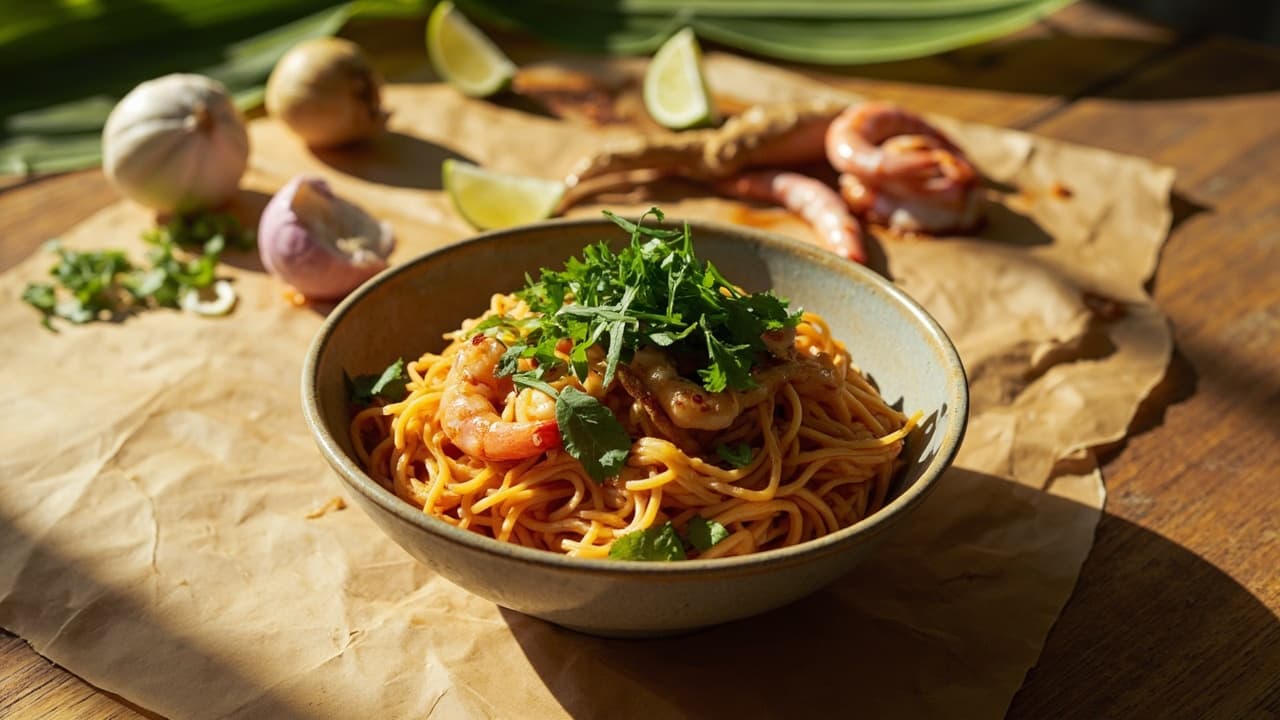
Spiced Coconut Shrimp Noodles with Lime
A fragrant Indonesian-inspired noodle dish with plump shrimp in a creamy coconut sauce, balanced with spicy cayenne heat and bright lime zest. The bumbu paste brings depth and soul to every bite.

Prep
20 min
Cook
20 min
Total
40 min
Method
Mise en Place
1
Peel and devein shrimp, pat dry with paper towels. Set aside.
2
Bring a large pot of salted water to boil for the spaghetti.
3
4
Wash and chop cilantro. Slice scallions thinly, separating white and green parts. Cut limes into wedges.
Cook Noodles
5
Cook spaghetti according to package directions until al dente. Reserve 1 cup of pasta water before draining.
Build the Bumbu and Cook Shrimp
6
Heat coconut oil in a large wok over medium-high heat until shimmering.
7
8
Make Coconut Cream Sauce
10
Pour heavy cream into the wok with the remaining bumbu. Stir well to combine.
Finish and Combine
12
Add cooked spaghetti to the sauce. Toss vigorously, adding splashes of reserved pasta water as needed to create a silky coating on every strand.
13
B
Nutri-Score
Good balance
A–E · lower is better · score 2
Calories
997
per serving
High in saturated fat · 24gSource of protein · 43gLow sugar · 16g
Protein
43g
Carbs
101g
Fat
50g
Sat. fat
24g
Fiber
8g
Sugar
16g
Sodium
1178mg
Dairy HeavyHigh CalorieHigh Sodium WarningHigh ProteinMuscle GainCalorie Surplus
Nutri-Score is a general nutritional-balance guide, not medical or dietary advice.
E
Environmental impact
Very high impact
A–E · lower is better · includes estimates
kg CO2e
3.5
per serving
ECarbonBEU all-round· carbon sets the grade
Water
19m³
Land
71Pt
Runoff
1.0g P
Shrimp drives 77% of this recipe’s estimated footprint.
Carbon from Poore & Nemecek 2018; water, land & runoff from Agribalyse — modelled averages for comparing recipes, not a measurement of your groceries.
Flavor Profile
7
Umami
4
Sweet
5
Salty
3
Sour
1
Bitter
5
Spicy
Textures
SilkyTenderChewyCreamy
Aromas
CitrusPungentHerbalTropicalSpicy
Kitchen Equipment
Primary Tool
WokWokLarge PotMortar And PestleChef KnifeCutting BoardGraterMeasuring SpoonsCitrus SqueezerTongsPaper TowelsMixing Bowl SmallLiquid Measuring Cup
Counter FootprintMedium
Techniques
Safety & Storage
Cooking Temperature
Cook shrimp until internal temperature reaches 145°F (63°C) - flesh should be pink and opaque throughout. Use a food thermometer to verify doneness.
Cross Contamination
Use separate cutting boards and utensils for raw shrimp. Wash all surfaces, knives, and plates thoroughly with hot soapy water after handling raw seafood before contact with other ingredients.
Storage
Refrigerate leftover noodles within 2 hours of cooking. Cream-based dishes support rapid bacterial growth at room temperature. Consume within 2 days when refrigerated at 40°F (4°C) or below.
High Risk Population
Pregnant individuals, young children, elderly, and immunocompromised persons face elevated risk from undercooked shrimp or improperly stored cream-based dishes. Ensure complete cooking and prompt refrigeration.
Handling
Pat raw shrimp completely dry before cooking to ensure proper browning and reduce splattering risk. Avoid leaving cooked shrimp at room temperature for more than 1 hour.
Allergen Warning
Verify soy sauce is gluten-free if serving to individuals with celiac disease, as traditional soy sauce contains wheat. Consider coconut as a potential tree-nut allergen for those with tree nut sensitivities.
Pro Tips
Technique
The most important step is building your bumbu correctly. Start with shallots and garlic first, let them become translucent and fragrant before adding the ginger—this layering is what creates depth. Never rush this step, or you'll miss the soul of the dish.
Substitution
If you want extra authenticity, swap heavy cream for full-fat coconut milk and add a teaspoon of shrimp paste (terasi) to the bumbu—you'll taste the difference immediately.
From the chef
The bumbu is what makes this noodle dish worth making — shallots, garlic, ginger, and cayenne ground fresh and fried in coconut oil until the wok smells like it knows what it is doing. Plump shrimp go in next, seared until just pink, then pulled out while the heavy cream joins the remaining paste to build a sauce that is spiced, creamy, and deeply aromatic. The spaghetti goes in last, tossed until every strand is coated, with lime zest finishing it all with a brightness that keeps the richness in check. Do not skip the fresh bumbu — that is the whole difference.
TagsIndonesian InspiredSpicyCoconutShrimpCreamyStir FryWeeknight DinnerSpice Paste
AllergensShellfishGlutenMilkSoy
Source: generated · June 10, 2026