 Cambodian
Medium · Hot
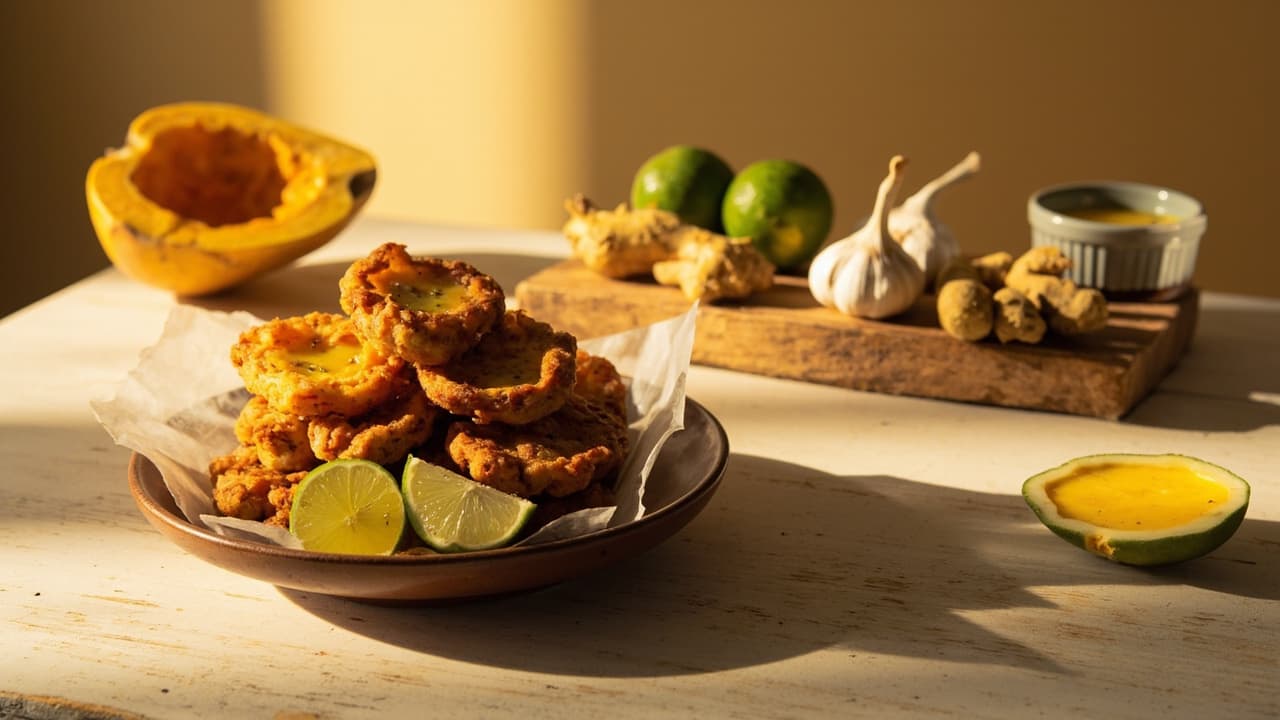
Butternut Squash Fritters with Black Pepper, Turmeric and Lime
Golden, crispy fritters made with roasted butternut squash and a fragrant kroeung-inspired paste of turmeric, black pepper, and fresh lime. A gentle introduction to Cambodian aromatic traditions, transformed into a homey bite-sized dish.

Prep
20 min
Cook
40 min
Total
1h
Method
1
Preheat oven to 200°C. Halve the butternut squash, brush lightly with 1 tbsp coconut oil, and place cut-side down on a lined baking sheet. Roast 35-40 minutes until the flesh is completely tender when pierced.
2
While the squash roasts, peel the garlic and ginger. On a cutting board, finely mince them together, then add to a small bowl with the turmeric and black pepper. Use a mortar to pound the mixture into a fragrant paste, about 2 minutes of working it until the oils release.
3
Remove the squash from the oven and let it cool 10 minutes. Scoop the flesh into a clean kitchen towel and squeeze firmly to remove excess moisture — this is the secret to crisp fritters. Roughly mash the drained squash in a large bowl.
4
Add the aromatic paste to the mashed squash along with the eggs, flour, breadcrumbs, and salt. Stir until everything is evenly combined and holds together when pressed. If the mixture feels wet, add 1 tbsp more breadcrumbs.
5
Heat the remaining 2 tbsp coconut oil in a wide skillet over medium heat. While the oil shimmers, divide the mixture into 8 equal portions and shape each into a flat patty about 2 cm thick. Fry in batches, 3-4 minutes per side, until deep golden and cooked through. Do not crowd the pan.
6
Transfer fritters to a paper-lined plate to drain briefly. Halve the limes and squeeze fresh juice generously over the hot fritters. Serve immediately with lime wedges on the side for squeezing.
Grade pending
Nutri-Score
Estimated nutrition
Grade pending · 100% ingredient coverage
Calories
309
per serving
Protein
8g
Carbs
41g
Fat
15g
Sat. fat
16g
Fiber
8g
Sugar
6g
Sodium
688mg
VegetarianAnti InflammatoryAntioxidant RichHigh Fiber
Nutri-Score is a general nutritional-balance guide, not medical or dietary advice.
Grade pending
Environmental impact
Estimated footprint
Grade pending · 100% ingredient coverage
kg CO2e
0.3
per serving
Water
0.6m³
Land
15Pt
Runoff
0.05g P
Egg drives 40% of this recipe’s estimated footprint.
Carbon from Poore & Nemecek 2018; water, land & runoff from Agribalyse — modelled averages for comparing recipes, not a measurement of your groceries.
Flavor Profile
5
Umami
4
Sweet
4
Salty
3
Sour
2
Bitter
4
Spicy
Textures
CrispySilkyTender
Aromas
CitrusEarthyHerbalPungent
Kitchen Equipment
Primary Tool
Frying PanFrying PanMortar And PestleSheet PanChef KnifeCutting BoardKitchen TowelMixing BowlsPaper TowelsParchment Paper
Safety & Storage
Cooking Temperature
Maintain medium heat when frying fritters; oil should shimmer before adding patties. If oil smokes, reduce heat immediately as overheating degrades coconut oil and creates safety hazard.
Handling
Use oven mitts when handling roasted squash straight from 200°C oven. Let squash cool 10 minutes before squeezing in kitchen towel to prevent burns.
Exercise caution with hot coconut oil during frying. Add fritters gently to prevent oil splatter, and never leave unattended on stovetop.
Cross Contamination
Wash hands thoroughly with soap after handling raw eggs before proceeding with other ingredients. Use separate cutting boards for aromatics if also handling raw proteins.
High Risk Population
Recipe contains eggs which should be fully cooked. Elderly, pregnant individuals, young children, and immunocompromised persons should ensure fritters are cooked through to safe internal temperature.
Storage
Store leftover fritters in airtight container in refrigerator within 2 hours of cooking. Consume within 3 days for best quality and safety.
Allergen Warning
Contains eggs, wheat, and gluten. Confirm all guests are aware before serving. Cross-contact with other allergens possible if prepared in facility processing nuts, soy, or sesame.
Pro Tips
Technique
The most important step is removing excess moisture from the roasted squash — squeeze firmly in a clean kitchen towel for at least 30 seconds. Wet mixture means soggy fritters that won't crisp properly in the pan.
Substitution
If butternut squash isn't available, sweet potato or kabocha squash make excellent alternatives with similar sweetness and texture. Adjust the cooking time as needed since denser varieties may require slightly longer roasting.
From the chef
In Cambodia, we don't always start with meat — sometimes the most beloved dishes come from the humble garden squash, transformed by the same kroeung pastes that anchor our curries and soups. This recipe came to me when teaching a class about our aromatic traditions; I wanted students to understand how turmeric and black pepper sing together before introducing them to fish sauce and palm sugar. These little fritters are my love letter to that first revelation — crispy outside, tender within, and brightened by lime the way our table always demands.
TagsCambodianKroeung InspiredCrispyVegetarianTurmericLimeBlack PepperAromaticFrittersWeeknight DinnerHearty
AllergensEggsWheatGluten
Source: generated · June 13, 2026