 Thai
ThaiMedium · Hot
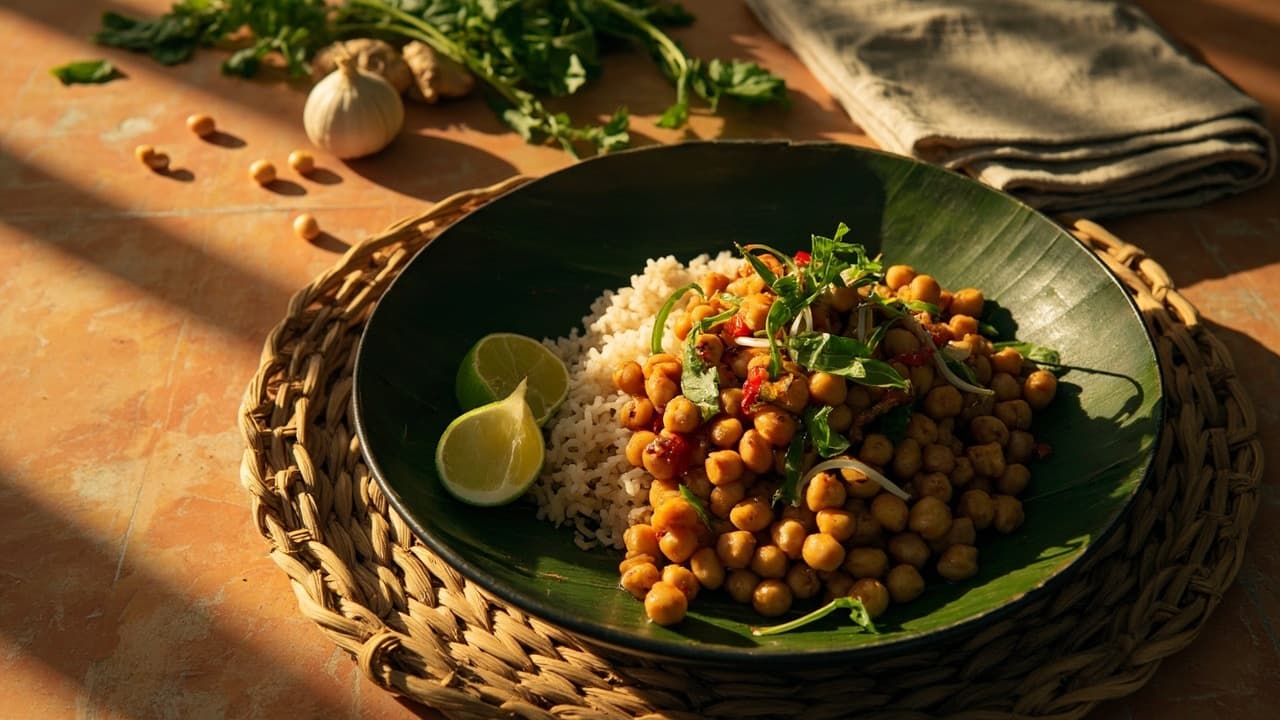
Spicy Chickpea and Basil Stir-Fry
A vibrant, high-heat stir-fry celebrating the four pillars of Thai cooking — sour, sweet, salty, spicy — with protein-rich chickpeas charred in a wok and finished with fragrant Thai basil and fresh lime.

Prep
15 min
Cook
15 min
Total
30 min
Method
Prep Work
1
Drain and rinse the chickpeas. Pat them very dry with a clean kitchen towel — this is the secret to getting them nicely charred in the wok, na krap!
2
Slice the garlic thinly, grate the ginger, cut the bell pepper into strips, and slice the scallions (keep white and green parts separate). Juice the lime and set everything within arm's reach.
3
Slice the garlic thinly, grate the ginger, cut the bell pepper into strips, and slice the scallions (keep white and green parts separate). Juice the lime and set everything within arm's reach.
The Wok Fire
4
Place your wok over the highest heat you have and let it smoke for a moment. Add coconut oil and swirl until it melts and shimmers.
5
6
7
Add the bell pepper strips and toss everything together. Cook 2 minutes until peppers soften slightly but still have crunch.
Building the Sauce
8
9
Squeeze in fresh lime juice, add salt, and season with black pepper. The lime makes everything sing, you see.
10
Add the bell pepper strips and toss everything together. Cook 2 minutes until peppers soften slightly but still have crunch.
The Grand Finish
11
Remove from heat immediately. Add fresh basil leaves and sliced scallion greens — toss gently just until wilted.
12
13
Serve immediately over jasmine rice or as a vibrant filling for tortillas. Garnish with extra basil leaves and scallion rings.
B
Nutri-Score
Good balance
A–E · lower is better · score 2
Calories
891
per serving
Low sugar · 2g
Protein
19g
Carbs
172g
Fat
14g
Sat. fat
12g
Fiber
5g
Sugar
2g
Sodium
662mg
Gluten FreeDairy FreeVeganPlant BasedEgg FreeHeart HealthyDiabetes FriendlyAnti InflammatoryLow Sodium AdjustableHigh FiberPlant ProteinLow Fat
Nutri-Score is a general nutritional-balance guide, not medical or dietary advice.
C
Environmental impact
Moderate impact
A–E · lower is better · includes estimates
kg CO2e
1.2
per serving
CCarbonAEU all-round· carbon sets the grade
Water
3.8m³
Land
23Pt
Runoff
0.09g P
Canned Chickpeas (drained and rinsed) drives 77% of this recipe’s estimated footprint.
Carbon from Poore & Nemecek 2018; water, land & runoff from Agribalyse — modelled averages for comparing recipes, not a measurement of your groceries.
Flavor Profile
7
Umami
3
Sweet
6
Salty
7
Sour
1
Bitter
6
Spicy
Textures
CrispyTenderTender Crisp
Aromas
HerbalPungentCitrusSmoky
Kitchen Equipment
Primary Tool
WokCounter FootprintMedium
Techniques
Safety & Storage
Cooking Temperature
Wok must be preheated to smoking point before adding oil - add oil only when wok is very hot to achieve proper char on chickpeas. If oil smokes excessively or flames appear, briefly remove from heat.
Cross Contamination
Canned chickpeas must be drained, rinsed, and thoroughly patted dry before high-heat cooking. Residual moisture causes steaming instead of charring and may cause oil splattering.
Allergen Warning
Both soy sauce and hot sauce contain soy. Use tamari or coconut aminos as a soy-free substitute if cooking for someone with soy allergy or sensitivity.
Handling
Garlic and ginger sliced thinly cook very quickly - watch carefully during the 30-second aromatics stage to prevent burning. Burnt garlic becomes bitter and may cause digestive discomfort.
High Risk Population
Fresh lime juice added at the end may not be sufficient to kill any surface bacteria on herbs. For immunocompromised individuals, consider briefly blanching basil or using pre-washed packaged herbs.
Storage
Refrigerate leftovers within 2 hours in airtight containers. Consume within 3-4 days. Reheat stir-fry to 165°F minimum before serving. Basil may discolor upon refrigeration but remains safe to eat.
Shelf Life
Fresh basil leaves lose freshness quickly - use within 24-48 hours of purchase. Yellowing or slimy leaves indicate spoilage and should be discarded.
Pro Tips
Technique
Pat your chickpeas until they're bone dry before hitting the wok — moisture is the enemy of that beautiful char we Thai cooks crave, na krap!
Flavor Boost
A squeeze of fish sauce instead of some soy sauce adds an umami depth that makes this dish sing like a Bangkok street vendor's finest work.
Substitution
No Thai basil? Italian basil works in a pinch, though the dish loses some of its Southeast Asian soul — try Holy basil if you can find it!
Equipment
A carbon steel or cast iron wok develops better char than non-stick, and that caramelization is where the magic lives, you see.
From the chef
In Chiang Mai, my grandmother taught me that the wok must breathe fire before it welcomes ingredients. This chickpea stir-fry carries that same spirit — bold and bright, where every bite sings the four sacred pillars of our cuisine. Na krap, when you smell that charred garlic mingling with lime and Thai basil, you understand why I fell in love with cooking at dawn.
TagsVeganHigh ProteinSpicyWeeknight DinnerOne PotPlant Based
AllergensSoyFish
Source: generated · June 10, 2026