 Cantonese
Medium · Hot
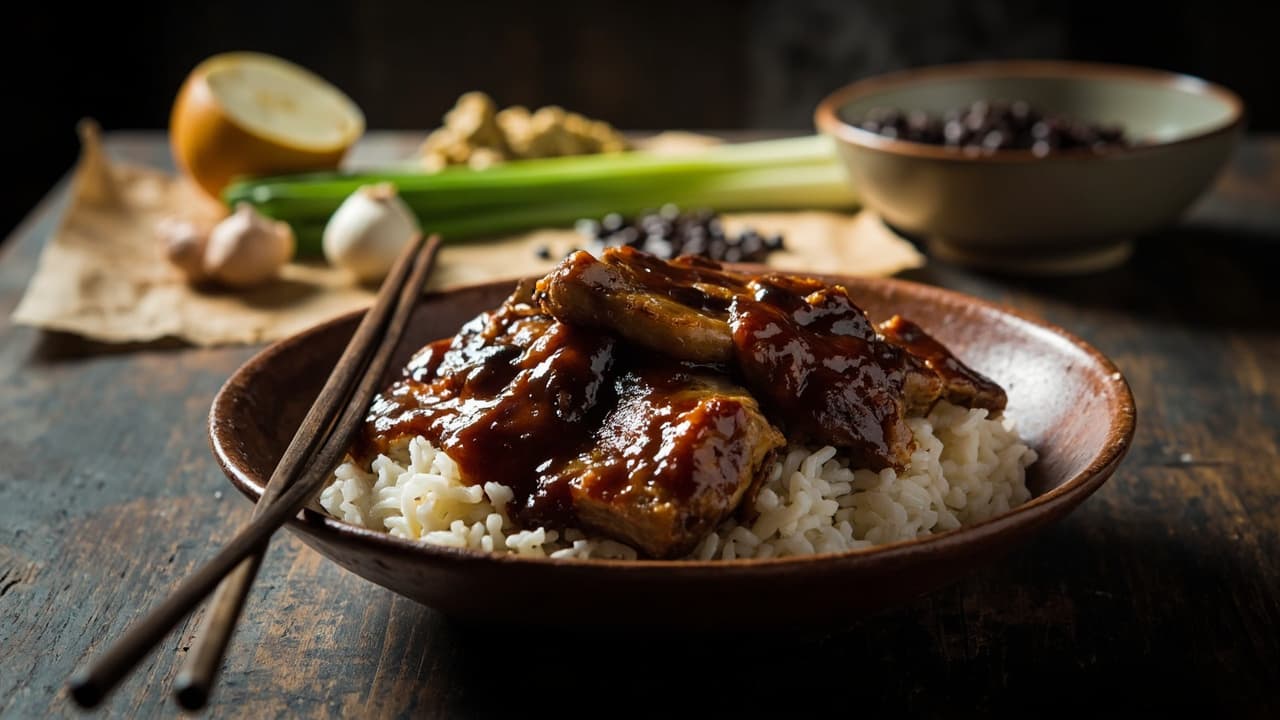
Braised Pork Belly with Black Bean
A rich and savory Cantonese braised pork belly dish where tender, glossy pork meets umami-packed black beans in a deeply flavored sauce. Perfect over steamed white rice.

Prep
40 min
Cook
1h 45m
Total
2h 25m
Method
Prep
1
Rinse black beans and soak in cold water for 30 minutes. Drain and set aside.
2
Cut pork belly into 3cm cubes. Pat dry with paper towels.
3
Peel and dice yellow onion. Smash garlic cloves with the flat of your knife. Peel and slice ginger. Cut scallions into 5cm lengths.
Build Aromatics
4
In a large Dutch oven or heavy pot, heat 15ml sesame oil over medium-high heat. Add onion, garlic, ginger, and scallion. Stir-fry until fragrant and lightly golden, about 2 minutes.
Braise
5
Add pork belly cubes to the pot. Sear on all sides until golden brown, about 5 minutes total.
6
Pour in soy sauce, add white sugar and star anise. Stir to coat the pork evenly.
7
Add enough water to just cover the pork (about 400ml). Bring to a boil, then reduce heat to low. Cover and simmer for 60 minutes, stirring occasionally.
8
Add drained black beans to the pot. Continue to braise, covered, for another 30 minutes until pork is tender and beans are soft.
Finish
9
Remove lid. Increase heat to medium. Cook for 5-10 minutes to reduce and thicken the sauce, stirring occasionally.
10
In a small bowl, mix cornstarch with 2 tablespoons of cold water. Stir into the pot to create a glossy sauce. Simmer for 2 more minutes.
11
Season with salt and white pepper. Remove star anise. Serve hot over steamed white rice.
D
Nutri-Score
Needs balance
A–E · lower is better · score 14
Calories
963
per serving
High in saturated fat · 25gCalorie-dense · 963 kcalLow sugar · 11g
Protein
20g
Carbs
32g
Fat
84g
Sat. fat
25g
Fiber
6g
Sugar
11g
Sodium
786mg
AnemiaBone HealthHigh Sodium CautionHigh ProteinIron RichZinc Rich
Nutri-Score is a general nutritional-balance guide, not medical or dietary advice.
D
Environmental impact
High impact
A–E · lower is better · includes estimates
kg CO2e
1.9
per serving
DCarbonAEU all-round· carbon sets the grade
Water
0.4m³
Runoff
0.1g P
Pork Belly drives 95% of this recipe’s estimated footprint.
Carbon from Poore & Nemecek 2018; water, land & runoff from Agribalyse — modelled averages for comparing recipes, not a measurement of your groceries.
Flavor Profile
9
Umami
4
Sweet
7
Salty
1
Sour
2
Bitter
2
Spicy
Textures
TenderSilkyYieldingGlossySoft
Aromas
AniseGinger ScallionGarlickyUmami RichNutty
Kitchen Equipment
Primary Tool
Dutch OvenCounter FootprintMedium
Safety & Storage
Cooking Temperature
Verify pork belly reaches safe internal temperature of 63°C before consumption.
Cross Contamination
use separate cutting boards for raw pork and vegetables to prevent cross-contamination
Storage
refrigerate leftovers within 2 hours in airtight container for up to 3-4 days
High Risk Population
ensure thorough cooking for pregnant individuals elderly and immunocompromised consumers
Handling
pat pork belly dry before searing to achieve proper browning and reduce splatter risk
Pro Tips
Technique
Don't rush the sear — get that pork belly golden on all sides before adding liquid. That Maillard crust is where flavor lives, and it's the difference between a braise that sings versus one that falls flat.
Substitution
No fermented black beans? Douchi not available? A tablespoon of fermented bean paste works in a pinch, though the traditional ones give deeper, more complex saltiness. Add a splash of dark soy sauce for color if needed.
Equipment
A heavy Dutch oven or cast iron pot retains heat perfectly for braising. Don't use thin aluminum — uneven heat means uneven cooking, and nobody wants half your pork tender while the other half is tough.
Flavor Boost
A splash of Shaoxing wine when you add the soy sauce lifts the entire braise. The alcohol amplifies the aromatics and cuts through the richness. Don't skip it.
From the chef
This dish is proof that real flavor takes patience, not complicated techniques. I grew up with Sichuan fire, but Cantonese braising taught me that low and slow transforms humble ingredients into something transcendent. The black beans absorb the rich pork fat while releasing their deep umami — serve this over steamed rice and watch everyone go quiet.
TagsBraisedPorkComfort FoodUmami RichOne PotWeekend Cooking
AllergensSoySesameGluten
Source: generated · June 10, 2026