 Persian
Medium · Hot
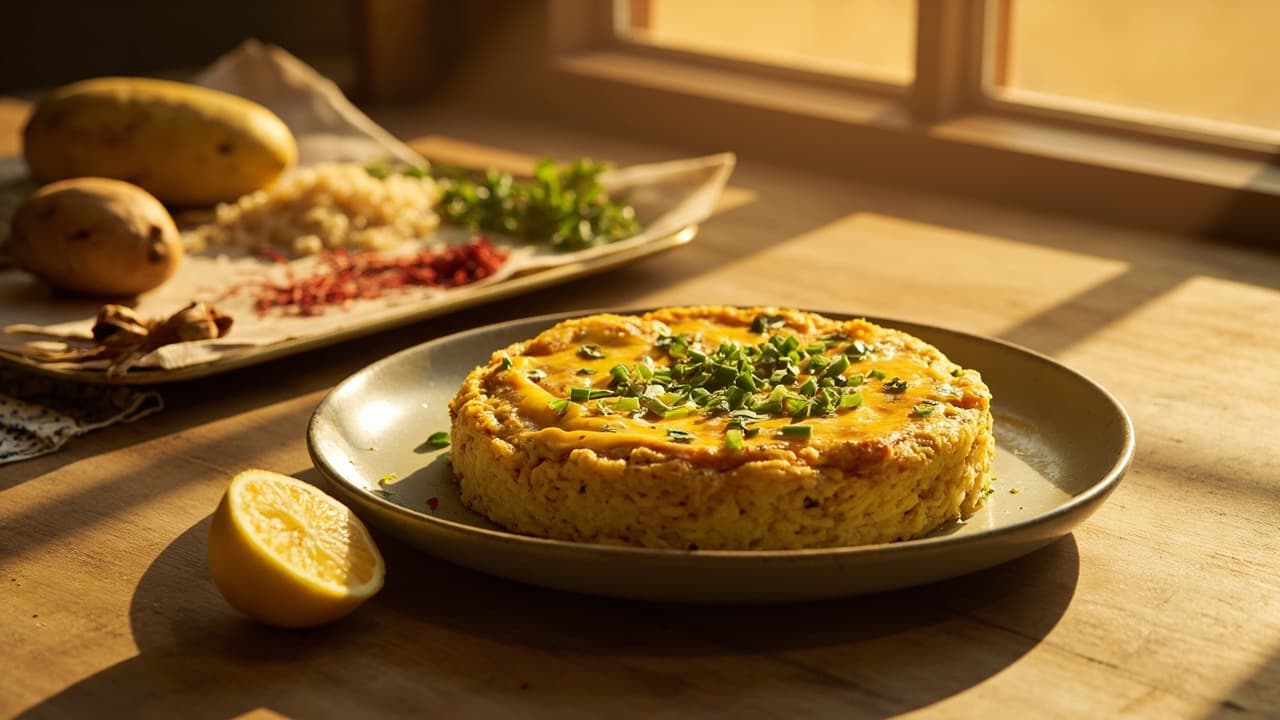
Golden Tahdig Rice Cake with Saffron Herb Topping
A ceremonial Persian rice cake with a crisp golden tahdig crust, perfumed with saffron and crowned with a bright herb topping. Patience transforms humble basmati into poetry on a plate.

Prep
45 min
Cook
1h
Total
1h 45m
Method
Saffron and Herb Preparation
Rice Preparation
2
Rinse the basmati rice in cold water until the water runs clear. Soak in salted water for 30 minutes, then drain.
Building the Tahdig
3
Stir the turmeric into the drained rice.
Parboiling the Rice
4
Bring a large pot of lightly salted water to a boil. Add the rice and parboil for 5 minutes until just tender on the outside but still firm at the center. Drain immediately.
Steaming the Rice Cake
C
Nutri-Score
Fair balance
A–E · lower is better · score 8
Calories
644
per serving
Low sugar · 2g
Protein
13g
Carbs
105g
Fat
20g
Sat. fat
13g
Fiber
7g
Sugar
2g
Sodium
1308mg
Heart HealthyAnti InflammatoryLow CholesterolHigh FiberBalanced Meal
Nutri-Score is a general nutritional-balance guide, not medical or dietary advice.
B
Environmental impact
Low impact
A–E · lower is better · includes estimates
kg CO2e
0.8
per serving
BCarbonAEU all-round· carbon sets the grade
Water
2.0m³
Land
23Pt
Runoff
0.07g P
Basmati rice drives 55% of this recipe’s estimated footprint.
Carbon from Poore & Nemecek 2018; water, land & runoff from Agribalyse — modelled averages for comparing recipes, not a measurement of your groceries.
Flavor Profile
6
Umami
4
Sweet
5
Salty
3
Sour
2
Bitter
1
Spicy
Textures
CrispyTenderFluffySilky
Aromas
FloralHerbalButteryEarthy
Kitchen Equipment
Primary Tool
Dutch OvenCounter FootprintMedium
Safety & Storage
High Risk Population
Cooked rice left at room temperature can harbor Bacillus cereus bacteria, which causes food poisoning. Rice must be cooled and refrigerated within 2 hours of cooking. This is especially critical for children, elderly, pregnant individuals, and immunocompromised persons.
Cooking Temperature
The rice steams on lowest heat for 55 minutes. Ensure proper heat distribution to form the tahdig crust without burning. The butter in the pan base reaches high temperatures during this slow cook.
Handling
Use oven mitts or thick towels when handling the pot lid wrapped in kitchen towel, as steam and the lid will be extremely hot. Inverting the pot to reveal the tahdig crust requires careful handling to prevent burns from hot surfaces.
Cross Contamination
Ensure the kitchen towel used to wrap the pot lid is free from gluten and allergen contamination from previous use. Wash thoroughly between different cooking tasks involving allergens.
Storage
Store leftover rice in airtight containers in the refrigerator within 2 hours of cooking. Consume within 3-4 days. Reheat to 165°F throughout before serving. Do not leave rice at room temperature for more than 2 hours total.
Allergen Warning
This dish contains milk/dairy from butter. Verify all individuals consuming this dish have no dairy allergies or intolerances before serving.
Equipment Safety
Use a sturdy pot with a well-fitting lid for steaming. The low-and-slow method for 55 minutes requires stable cookware to prevent accidental spills or tipping.
Pro Tips
Technique
Never rush the parboil—five minutes is all you need. The rice should bite back, still firm at its heart. A mushy grain before steaming means no poetry in the final plate.
Substitution
If barberries are available, scatter a handful over the tahdig before steaming—they add a jewel-like beauty and a gentle tartness that dances beautifully with the saffron.
From the chef
The tahdig crust forms in silence beneath the rice, and you learn to trust it only by listening. Turmeric stirs through the basmati before it goes into the pot, warming the grains from within. Saffron steeps separately in hot water until the liquid turns a vivid amber, then it blooms as butter in the pan before the rice goes in. Fifty-five minutes at the lowest flame is what this rice cake asks of you — no peeking, no adjusting, just patience. Finish with saffron butter cascading down the sides, bright herbs scattered across the top, and a squeeze of lemon. The crust beneath holds everything together and answers every moment of waiting.
TagsPersianTahdigSaffronBasmatiGolden CrustHerb ToppingCeremonialVegetarian
AllergensMilkSulfites
Source: generated · June 10, 2026