 Greek
GreekMedium · Hot
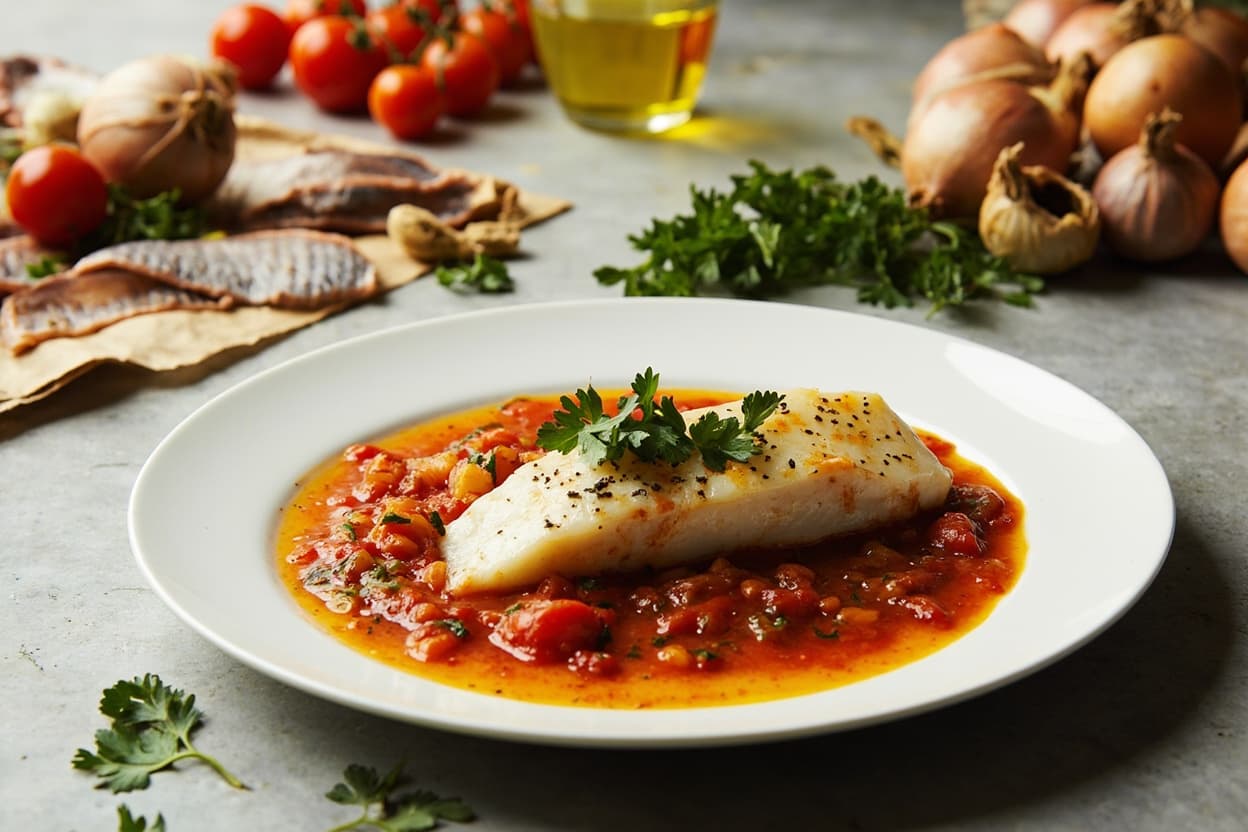
Bakaliaros Plaki, Baked Cod in Tomato and Herbs
Cod laid into a pan of slowly cooked tomato, onion, parsley, and olive oil, then baked until it flakes at the touch of a fork — this is plaki, and it is one of the purest things the Greek table offers. The fish doesn't need gilding; the tomato and olive oil do the work. Clean, honest, and deeply satisfying.

Prep
15 min
Cook
30 min
Rest
2 min
Total
47 min
Method
Prepare the cod
1
Pat the cod fillets dry with paper towels and season lightly with salt and black pepper on both sides. Set aside while you make the sauce.
Make the tomato sauce
2
Heat the olive oil in a large, wide baking dish or skillet over medium heat. Add the diced onion and cook, stirring occasionally, until soft and translucent, about 5 minutes.
3
Add the minced garlic and cook for another minute until fragrant, but not browned.
4
Pour in the crushed tomatoes and stir to combine. Add the dried oregano, salt, and black pepper. Let the sauce simmer gently for 10 minutes, stirring occasionally, until it thickens slightly.
Bake the fish
5
Preheat your oven to 190°C (375°F). Nestle the cod fillets gently into the tomato sauce, spacing them evenly apart. Spoon some sauce over each fillet.
6
Cut the lemon in half. Squeeze juice from one half over the fish and place the other half, cut-side down, in the baking dish. Scatter the chopped parsley over everything.
Serve
8
Let rest for 2 minutes. Serve the baklizaros plaki straight from the dish, spooning extra sauce over each fillet. A good drizzle of your best olive oil over the top before serving is not optional — it is essential.
A
Nutri-Score
Excellent balance
A–E · lower is better · score -1
Calories
276
per serving
High in protein · 24gLow sugar · 6gLow saturated fat · 2g
Protein
24g
Carbs
13g
Fat
15g
Sat. fat
2g
Fiber
3g
Sugar
6g
Sodium
1371mg
Gluten FreeMediterraneanPescatarianDairy FreeLow CarbohydrateHeart HealthyDiabetes FriendlyAnti InflammatoryLow SodiumHigh ProteinOmega 3 RichBalanced Macros
Nutri-Score is a general nutritional-balance guide, not medical or dietary advice.
Flavor Profile
6
Umami
4
Sweet
5
Salty
4
Sour
1
Bitter
2
Spicy
Textures
TenderSaucySilky
Aromas
HerbalTomato AromaGarlicCitrusOlive Oil Aroma
Kitchen Equipment
Primary Tool
Baking DishCounter FootprintMedium
Safety & Storage
Cooking Temperature
Bake cod to a minimum internal temperature of 63°C (145°F) until flesh flakes easily with a fork; verify with a calibrated food thermometer inserted into the thickest part of the fillet.
High Risk Population
Cod is a high-risk protein that requires thorough cooking; elderly, pregnant women, infants, and immunocompromised individuals face elevated risk from undercooked fish.
Cross Contamination
Use separate cutting boards, utensils, and plates for raw cod; never allow raw fish to contact ready-to-eat foods like herbs or lemon slices.
Storage
Refrigerate fresh cod at 4°C (40°F) or below; store leftovers in airtight containers and consume within 3 days; reheat to 74°C (165°F) before serving.
Allergen Warning
This dish contains fish (cod); verify all ingredients and garnishes are free from fish or fish-derived additives; inform guests of fish allergen.
Handling
Pat cod dry before seasoning to ensure proper browning; gently nestle fillets into sauce without breaking; wash hands, surfaces, and utensils thoroughly after handling raw fish.
Pro Tips
Technique
When you nestle the cod into the sauce, don't press down — let the fillets rest gently on top. The fish will cook perfectly and stay tender this way. And please, please, don't skip the final drizzle of your best olive oil before serving. This is not optional, my friend.
Substitution
If cod is hard to find, use another firm white fish like halibut or sea bass. Or, for a more traditional Greek version, try reconstituted bacala (salted cod) — just soak it for 24-48 hours, changing the water, before using it in this recipe.
Flavor Boost
A handful of kalamata olives scattered into the sauce before baking adds the most wonderful briny depth. My wife always insists I add them, and she is rarely wrong about these things.
Equipment
Use a wide, shallow baking dish — a skillet that can go from stovetop to oven is perfect. You want the fish to sit nestled in the sauce, not swimming in it.
From the chef
Plaki is the most honest way to cook fish — you lay the cod into a pan of slow-cooked tomato, onion, parsley, and good olive oil, then let the oven finish the work. The fish needs no gilding. It poaches gently in the sauce, absorbs the garlic and oregano, and when you press the fork against it and it falls into clean white flakes, you know you have done it right. A squeeze of lemon over the top, a drizzle of your best olive oil, and that is the whole story. Clean, satisfying, and honest in a way that no complicated sauce ever manages to be.
TagsBakedCodTomato SauceOlive OilOreganoLemonGreek
AllergensFish Allergen
Source: generated · May 30, 2026