 Spanish
Medium · Hot
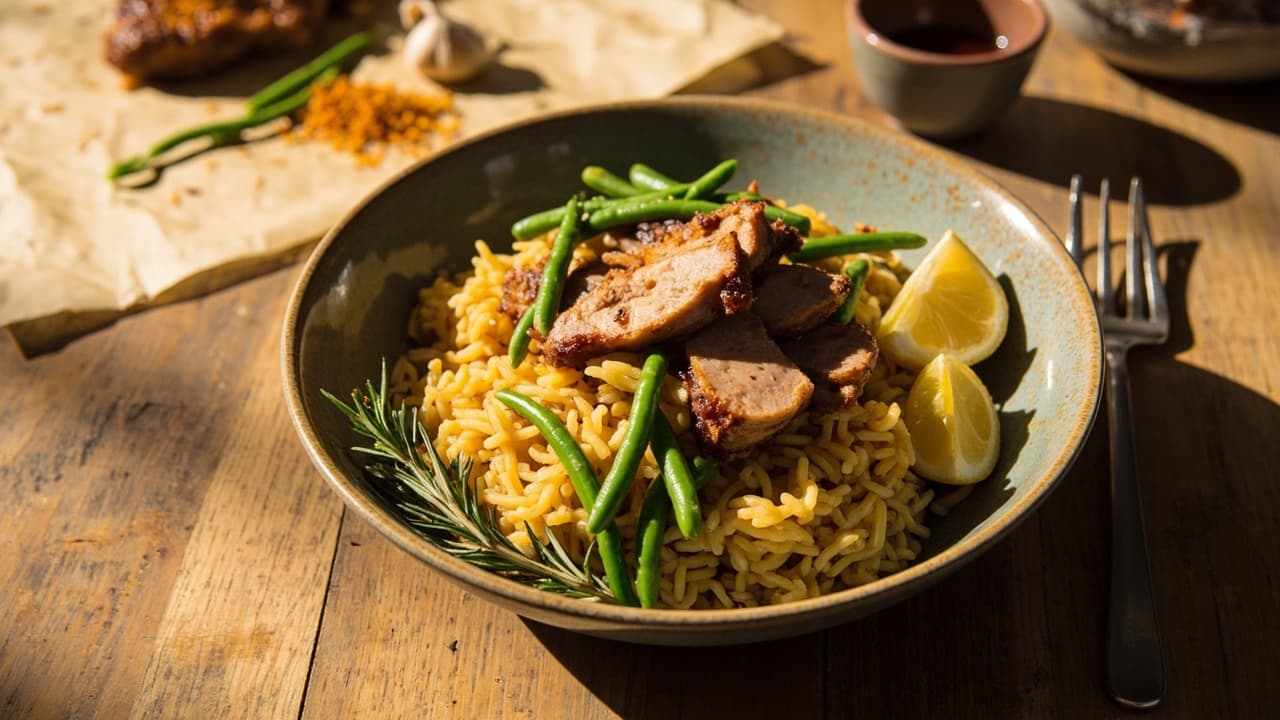
Socarrat Rice Bowl with Duck, Green Beans and Saffron
A proud Valencian rice bowl with crispy socarrat base, tender duck, green beans and white beans stained golden with saffron — the toasted crust is the whole point.
Prep
15 min
Cook
55 min
Rest
5 min
Total
55 min
Method
Prepare Duck
1
Do not exceed 2 hours total at room temperature; discard if left out longer. For food safety, some authorities recommend proceeding directly from refrigeration to cooking without resting.
Build the Sofrito
2
3
Reduce heat to medium. Pour off all but 2 tablespoons of duck fat. Add yellow onion and cook, stirring occasionally, for 5 minutes until softened and golden.
4
Add sliced garlic and cook 2 minutes more until fragrant. Stir in grated tomato and sweet paprika, cook for 8-10 minutes, stirring often, until the sofrito is deeply colored and jammy.
5
Meanwhile, steep saffron threads in 3 tablespoons of hot chicken broth for 5 minutes.
Cook the Rice
6
7
Scatter the arborio rice evenly across the pan. Do not stir — just shake the pan gently to distribute. Nestle the green beans and white beans into the rice. The rice layer should be no more than 2cm deep.
8
Cook on medium-high for 10-12 minutes. The rice will absorb the liquid and you will hear it crackle. When you see the edges pulling away from the pan, lower the heat to medium-low.
Develop the Socarrat
9
10
Wrap the pan handle in a dry towel and place a second dry towel over the top. Remove from heat and rest for 5 minutes — this is sacred, the socarrat is forming.
11
Remove towels. Run a spatula around the edges to loosen the socarrat crust. Place a large plate over the pan and flip confidently. Lift the pan to reveal the crackling golden crust. If any pieces stick, press them back down gently.
Serve
12
Serve immediately while the socarrat is still crackling. Bring lemon wedges to the table — squeeze over each portion as desired.
B
Nutri-Score
Good balance
A–E · lower is better · score 0
Calories
887
per serving
Source of protein · 33gLow sugar · 5g
Protein
33g
Carbs
92g
Fat
43g
Sat. fat
19g
Fiber
7g
Sugar
5g
Sodium
1038mg
Gluten FreeDairy FreeNut FreeLow Added SugarHeart HealthyDiabetes FriendlyHigh ProteinBalancedMediterranean
Nutri-Score is a general nutritional-balance guide, not medical or dietary advice.
C
Environmental impact
Moderate impact
A–E · lower is better · includes estimates
kg CO2e
1.6
per serving
CCarbonAEU all-round· carbon sets the grade
Water
2.3m³
Land
63Pt
Runoff
0.2g P
Duck breast, skin-on drives 60% of this recipe’s estimated footprint.
Carbon from Poore & Nemecek 2018; water, land & runoff from Agribalyse — modelled averages for comparing recipes, not a measurement of your groceries.
Flavor Profile
7
Umami
4
Sweet
5
Salty
2
Sour
1
Bitter
3
Spicy
Textures
CrispyTenderSilkyChewy
Aromas
HerbalSmokyFloralGarlicky
Kitchen Equipment
Primary Tool
Cast Iron SkilletCounter FootprintLarge
Techniques
Safety & Storage
High Risk Population
Leftover rice dishes pose a Bacillus cereus spore risk if held at improper temperatures. Serve immediately or cool rapidly below 40°F within 2 hours.
Cross Contamination
Raw duck rendered fat used in cooking creates cross-contamination risk. Use dedicated utensils and avoid contact with ready-to-eat foods.
Cooking Temperature
Duck skin rendering requires reaching adequate temperature to render fat and achieve golden crust without burning. Monitor oil shimmer before adding duck.
Duck must reach safe internal minimum temperature of 145°F (63°C) for medium-rare. Use a calibrated meat thermometer to verify doneness before serving. Undercooked poultry poses Salmonella and Campylobacter risk.
Equipment Safety
Hot pan handle wrapped in dry towel for resting creates burn and fire hazard. Ensure towel is completely dry and monitor during the 5-minute rest period.
Storage
Cooked rice has limited shelf life. Refrigerate leftovers within 1 hour and consume within 2 days. Reheat to 165°F before serving.
Allergen Warning
Chicken broth ingredient list must be verified before use. Common commercial brands contain celery or wheat-based ingredients that may not be obvious.
Pro Tips
Technique
Do not touch the rice after you spread it. I mean this. You scatter the arborio, you shake the pan to settle it, then you walk away. The moment you stir, you break the starch threads and lose any chance of a true socarrat. Let the pan do its work on medium-high heat until you hear it whisper.
Substitution
If you cannot find duck, bone-in chicken thighs work beautifully — they render their fat slowly and stay tender. Use what is good in your market, but keep the skin on and score it well so the fat releases into the pan.
Equipment
A wide, heavy skillet with a flat bottom is essential. The rice must spread thin, no more than two centimeters deep, so the surface area is large enough for the liquid to evaporate and the crust to form. A narrow pot will only give you steamed rice with a burned bottom.
Flavor Boost
Bloom your saffron in hot broth, not cold — pour three tablespoons of the simmering chicken stock over the threads and let them steep five minutes while you build the sofrito. Cold water or brief steeping gives you yellow rice, not the deep golden staining and floral perfume of properly activated saffron.
From the chef
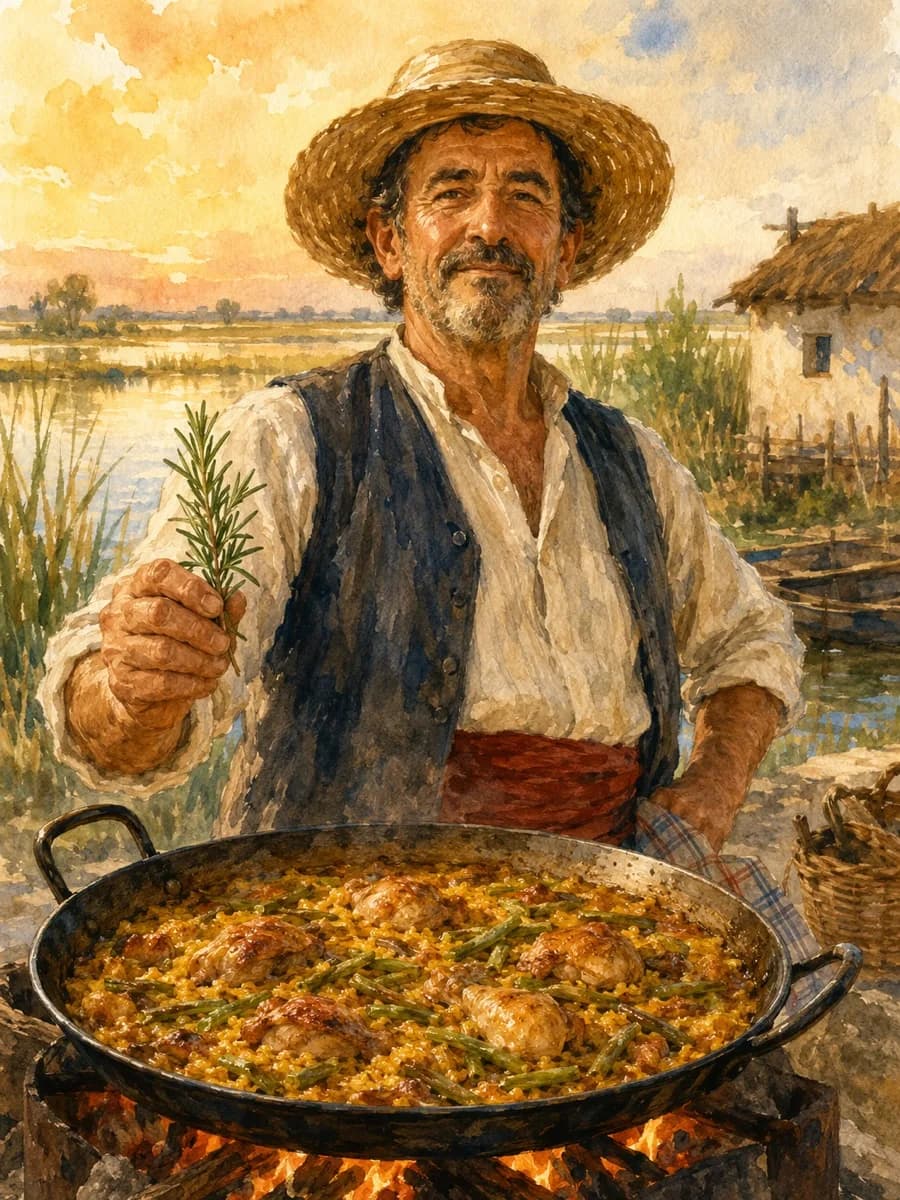
Duck renders its fat into the pan like a blessing, and that fat becomes the foundation of everything that follows — the sofrito deepening in it, the saffron-stained stock drinking into the arborio rice, and finally the socarrat crackling at the bottom while the duck rests on top. The rice goes in thin, you shake the pan and walk away, and when you hear that gentle hiss intensify and quiet, you know. Green beans hold their snap, white beans drink in the golden color, saffron steeped properly in hot stock — never timid, never rushed. Some will say duck is not traditional, and they may be right, but the socarrat does not lie, and this one does not disappoint.
TagsSocarratPaellaDuckSaffronOne PotValencianRice
AllergensCeleryGluten
Source: generated · June 10, 2026