 Japanese
Medium · Hot
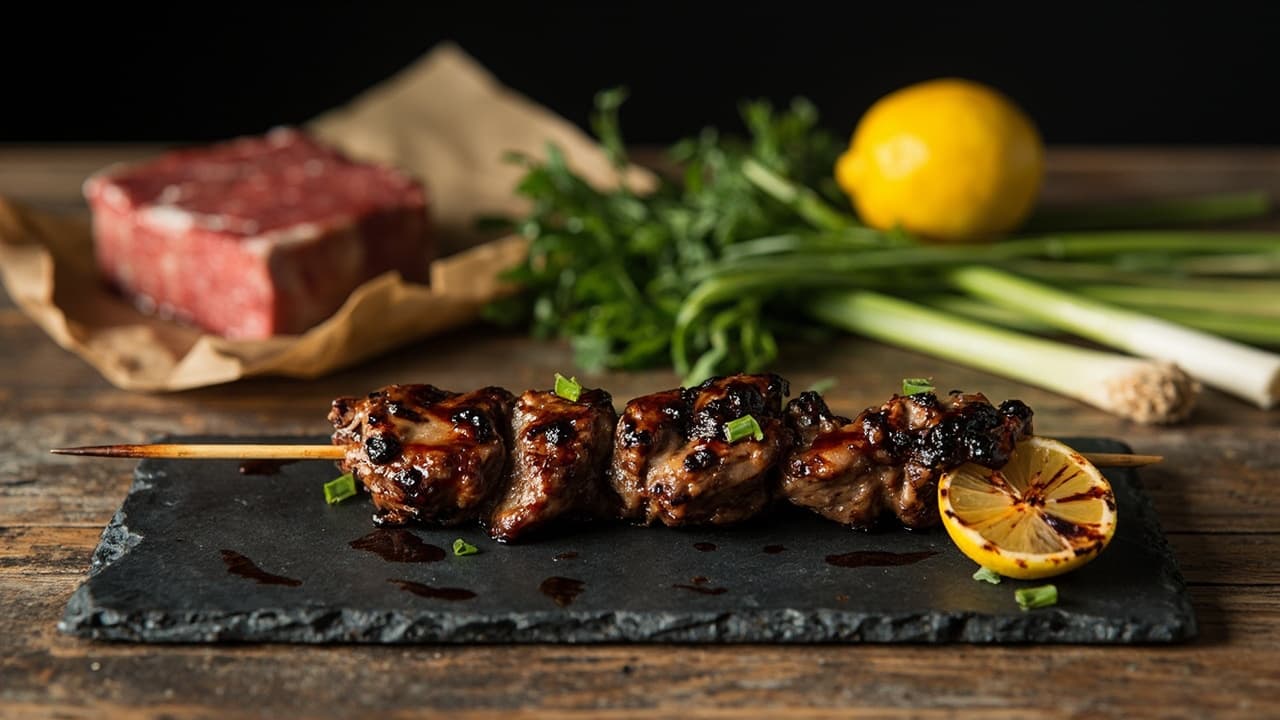
Seared Beef & Scallion Skewer with Charred Lemon
Tender beef cubes threaded with crisp scallion segments, seared over high heat and finished with a light soy basting, served alongside a halved lemon charred until the edges turn dark and fragrant.

Prep
20 min
Cook
15 min
Total
35 min
Method
1
Cut the beef into 4cm cubes. Season with salt and black pepper. Let rest at room temperature for 10 minutes.
2
Trim the scallions, keeping the white and light green portions. Cut each stalk into thirds, so the pieces are roughly the same length as the beef cubes.
3
Halve one lemon crosswise. Slice a thin piece off the rounded bottom of each half so they sit flat on the grill.
4
Thread one piece of beef onto a bamboo skewer, then a scallion segment, then another beef piece. Repeat until each skewer holds 4-5 beef cubes separated by scallion pieces. Leave small gaps between each piece so heat circulates freely.
5
Place a cast iron grill pan or heavy skillet over high heat. Brush lightly with half the olive oil. When the oil just begins to shimmer, lay the skewers down without crowding.
6
Sear undisturbed for 2-3 minutes until the bottom faces are deeply caramelized with a dark crust. Flip each skewer and cook another 2 minutes.
7
Brush the exposed tops with soy sauce during the last minute of searing. Flip once more, brush the other side with remaining soy sauce, and cook 30 seconds more. The beef should register 63°C at its center for medium doneness.
8
9
Transfer skewers to a plate. Rest 2 minutes—the juices will settle into the meat rather than running out when cut.
C
Nutri-Score
Fair balance
A–E · lower is better · score 3
Calories
469
per serving
High in protein · 40gLow sugar · 3g
Protein
40g
Carbs
8g
Fat
32g
Sat. fat
5g
Fiber
2g
Sugar
3g
Sodium
1404mg
Dairy FreeGluten FreeKeto FriendlyLow CarbPaleo FriendlyDiabetesHeart HealthyLow Sodium AdaptableHigh ProteinMuscle MaintenanceWeight Management
Nutri-Score is a general nutritional-balance guide, not medical or dietary advice.
E
Environmental impact
Very high impact
A–E · lower is better · includes estimates
kg CO2e
15
per serving
ECarbonBEU all-round· carbon sets the grade
Water
1.1m³
Land
288Pt
Runoff
0.2g P
Beef Steak drives 100% of this recipe’s estimated footprint.
Carbon from Poore & Nemecek 2018; water, land & runoff from Agribalyse — modelled averages for comparing recipes, not a measurement of your groceries.
Flavor Profile
6
Umami
3
Sweet
5
Salty
2
Sour
1
Bitter
4
Spicy
Textures
CrispyTender
Aromas
HerbalSmoky
Kitchen Equipment
Primary Tool
Cast Iron Grill PanSafety & Storage
Cooking Temperature
Cook beef to a minimum internal temperature of 63°C for medium doneness. Use a calibrated meat thermometer inserted into the center of the thickest cube to verify safe cooking.
Allow raw beef to rest at room temperature for only 10 minutes maximum before cooking to minimize bacterial growth risk.
Cross Contamination
Use separate cutting boards and utensils for raw beef preparation. Wash all surfaces and tools with hot soapy water after handling raw meat before proceeding to assembly.
Handling
Soak bamboo skewers in water for 30 minutes before threading to prevent them from burning or splintering during high-heat cooking.
Equipment Safety
Use long-handled tongs when working over high-heat cast iron pan. The oil will reach high temperatures and pose a burn risk if the pan is overcrowded.
Storage
Refrigerate leftover beef skewers within 2 hours of cooking. Consume within 3-4 days when stored at or below 4°C. Reheat to 74°C before serving.
High Risk Population
Pregnant individuals, immunocompromised persons, and young children should consume beef cooked to 71°C minimum (well done) rather than medium doneness to eliminate potential pathogens.
Allergen Warning
Verify soy sauce used is wheat-free or tamari-based if serving individuals with celiac disease or severe gluten sensitivity.
Pro Tips
Technique
Resist the urge to move the skewers too soon. Let the meat make contact with the hot surface and remain undisturbed for the full two to three minutes. You are not cooking—you are waiting for the crust to form. Only then does the flavor live.
Substitution
If wagyu is unavailable, choose a cut with visible marbling; the fat will render into the scallion segments as it cooks, infusing them with richness they could never achieve alone.
Equipment
A cast iron grill pan captures and radiates heat with a consistency that mimics binchōtan—dense, even, relentless. This is not the place for thin aluminum or nonstick surfaces that fear the fire.
From the chef
In Kagoshima, we say the fire speaks first—you simply must know how to listen. When I thread these beef cubes alongside the bright bite of scallion, I am not composing a dish; I am drawing out what already exists within the ingredient. The charred lemon does not decorate—it transforms, its sour oils awakening against the sear-warmed crust, completing a conversation between fire, protein, and citrus that has no need for excess.
TagsYakitori InspiredSkewersGrilledHigh HeatWeeknight DinnerCharredSoy Basted
AllergensSoyGluten
Source: generated · June 12, 2026