 Spanish
Medium · Hot
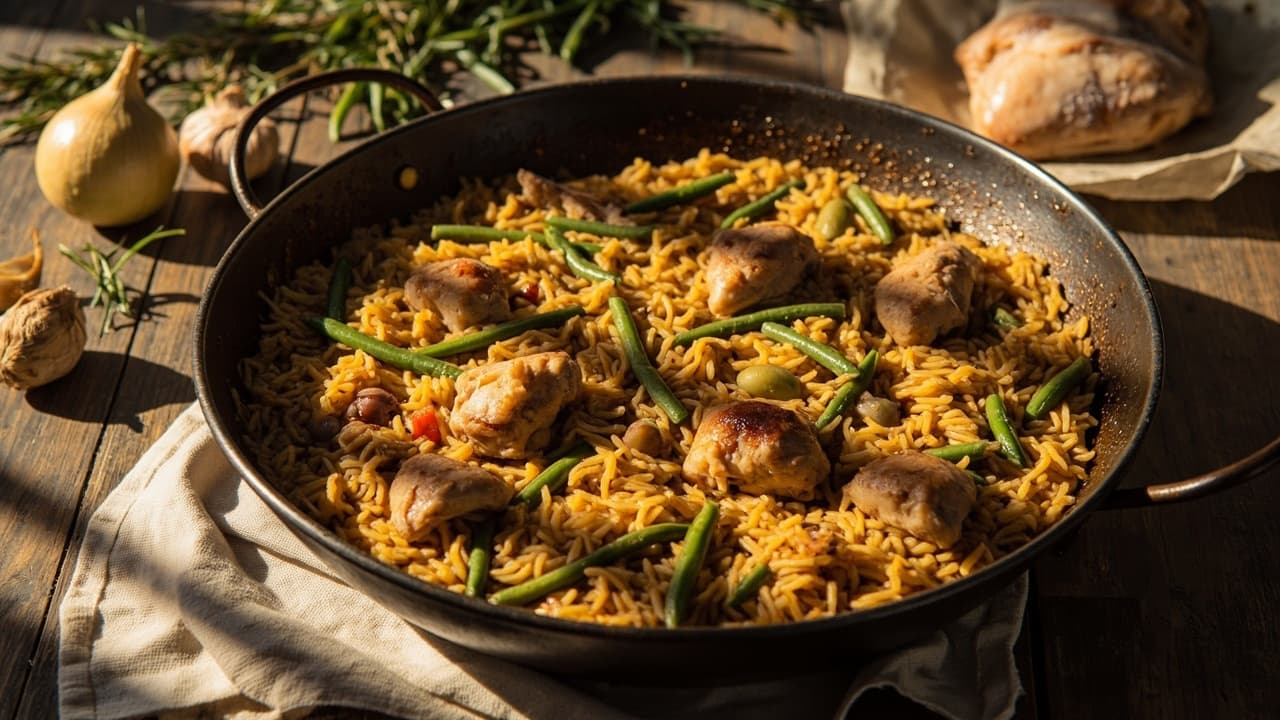
Socarrat Paella with Chicken, Green Beans and Butter Beans
A traditional Valencian paella with tender chicken thighs, crisp green beans and butter beans, saffron-stained rice with that prized toasted socarrat crust at the bottom of the pan.
Prep
35 min
Cook
45 min
Rest
5 min
Total
1h 10m
Method
Prepare the Sofrito
1
Heat the olive oil in your paella pan over medium heat. Add the diced yellow onion and cook slowly for 8-10 minutes until softened and golden, stirring occasionally with your wooden spoon.
2
Add the sliced bell pepper and cook for another 5 minutes until tender.
3
Stir in the minced garlic and cook for 1 minute until fragrant but not brown.
Brown the Chicken and Beans
5
Push the sofrito to the sides of the pan and add the chicken thighs, skin-side down. Brown for 5-6 minutes per side until golden.
6
Add the green beans and butter beans, stirring them into the sofrito. Cook for 3-4 minutes.
Build the Paella
7
Pour in the hot chicken broth. Add the saffron threads and salt. Stir gently to distribute the sofrito evenly, then taste and adjust seasoning.
8
Bring to a boil, then reduce to medium heat. Lay the chicken thighs on top and cook for 10 minutes.
9
Remove the chicken. Add the white rice in a thin, even layer across the pan. Do not stir after this point.
10
Return the chicken thighs on top of the rice. Cook on medium-low heat for 15-18 minutes until the rice has absorbed most of the liquid.
Achieve the Socarrat
11
Increase heat to medium-high for the final 3-4 minutes. You will hear a gentle crackling — this is the socarrat forming. The bottom is toasting into that precious golden crust.
12
Place the rosemary sprigs on top. When you hear the crackling intensify and then quiet, the socarrat is ready.
Rest and Serve
13
Remove from heat and cover with aluminum foil. Rest for 5 minutes — never skip this step.
14
Serve directly from the pan. The socarrat should stick to the bottom when you scoop rice from the top. Each guest gets a piece of that crackling gold.
A
Nutri-Score
Excellent balance
A–E · lower is better · score -4
Calories
1109
per serving
High in protein · 57gLow sugar · 7g
Protein
57g
Carbs
116g
Fat
45g
Sat. fat
8g
Fiber
8g
Sugar
7g
Sodium
741mg
Gluten FreeDairy FreeMediterraneanHeart HealthyDiabetes FriendlyAnti InflammatoryHigh ProteinBalanced MealLow Processed Food
Nutri-Score is a general nutritional-balance guide, not medical or dietary advice.
D
Environmental impact
High impact
A–E · lower is better · includes estimates
kg CO2e
2.3
per serving
DCarbonAEU all-round· carbon sets the grade
Water
2.6m³
Land
81Pt
Runoff
0.2g P
Chicken Thighs drives 63% of this recipe’s estimated footprint.
Carbon from Poore & Nemecek 2018; water, land & runoff from Agribalyse — modelled averages for comparing recipes, not a measurement of your groceries.
Flavor Profile
7
Umami
4
Sweet
5
Salty
2
Sour
2
Bitter
3
Spicy
Textures
CrispyTenderSilky
Aromas
HerbalSmokyFloral
Kitchen Equipment
Primary Tool
Cast Iron SkilletCounter FootprintMedium
Safety & Storage
Cross Contamination
Chicken broth may be processed in facilities that handle allergens. Verify with supplier if allergen-free status is required for high-risk individuals.
Handling
Raw chicken thighs must be handled with dedicated utensils and surfaces. Use separate cutting boards and sanitize all contact areas to prevent cross-contamination with other ingredients.
When resting covered with foil, use oven mitts and lift carefully to avoid steam burns. The trapped steam beneath the foil is extremely hot.
Cooking Temperature
Chicken must reach an internal temperature of 165°F (74°C) throughout before consumption. The high-heat socarrat step reaches temperatures that can cause severe burns if oil or steam escapes the pan.
Equipment Safety
The final socarrat step requires medium-high heat for 3-4 minutes. Stand back from the pan as oil may splatter and steam release is possible when the foil cover is removed.
Storage
Leftover paella must be refrigerated within 2 hours of cooking. Store in shallow airtight containers at 40°F (4°C) or below. Consume within 3-4 days.
High Risk Population
Leftover rice poses a Bacillus cereus risk if left at room temperature. Cool rice rapidly in shallow pans within 1 hour before refrigeration. Avoid serving to young children, elderly, or immunocompromised individuals if storage guidelines cannot be guaranteed.
Allergen Warning
While no common allergens are listed in this recipe, individuals with severe sensitivities should note that butter beans may be processed alongside other legumes including soy in some facilities.
Pro Tips
Technique
Never stir the rice after you spread it across the pan — this is the first and most important rule. The rice must lie still in a thin, even layer so that it can toast against the hot pan and form that precious socarrat. If you touch it, you will break the crust and muddy the grains.
Substitution
If you cannot find butter beans, large cannellini beans or even flat lima beans will work in their place, but whatever you use, add them when you add the green beans so they absorb the sofrito and stock properly — no shortcuts, no exceptions.
From the chef
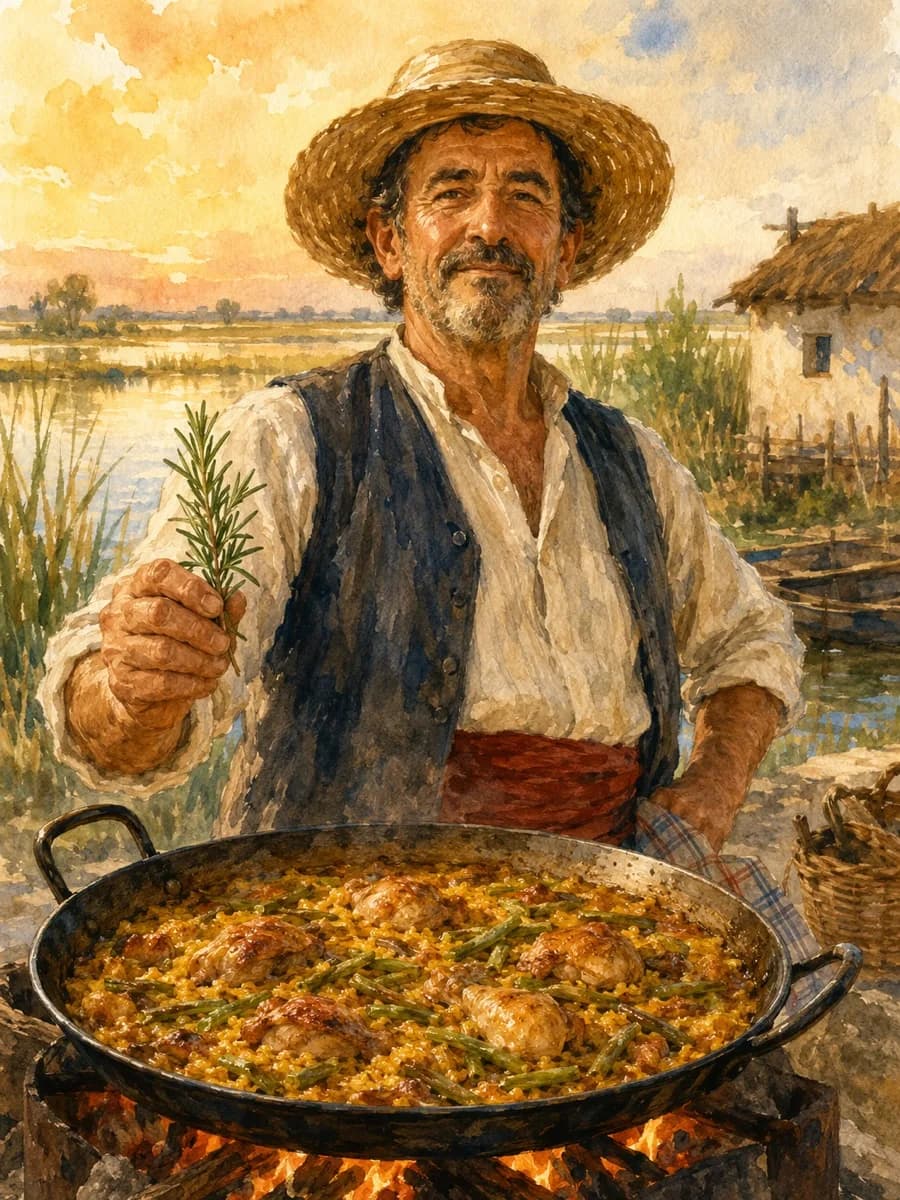
The socarrat is not a bonus — it is the whole point, that golden crackling crust that forms at the bottom of the pan while the saffron rice drinks in the last of the stock. You earn it by keeping your hands off the rice, spreading it thin, and listening for the sound of patience paying off. Chicken thighs browned in olive oil, a slow tomato-and-paprika sofrito that takes its full fifteen minutes, tender green beans and butter beans, saffron bloomed properly in hot stock — this is the paella of El Palmar, made the way it deserves to be made. If you stir the rice, you have missed the point entirely.
TagsTraditionalSocarratSaffronChickenGreen BeansButter BeansOne PotWeekend FeastCast Iron
Source: generated · June 10, 2026