 German
Medium · Hot
Thyme Roast Chicken over Potatoes
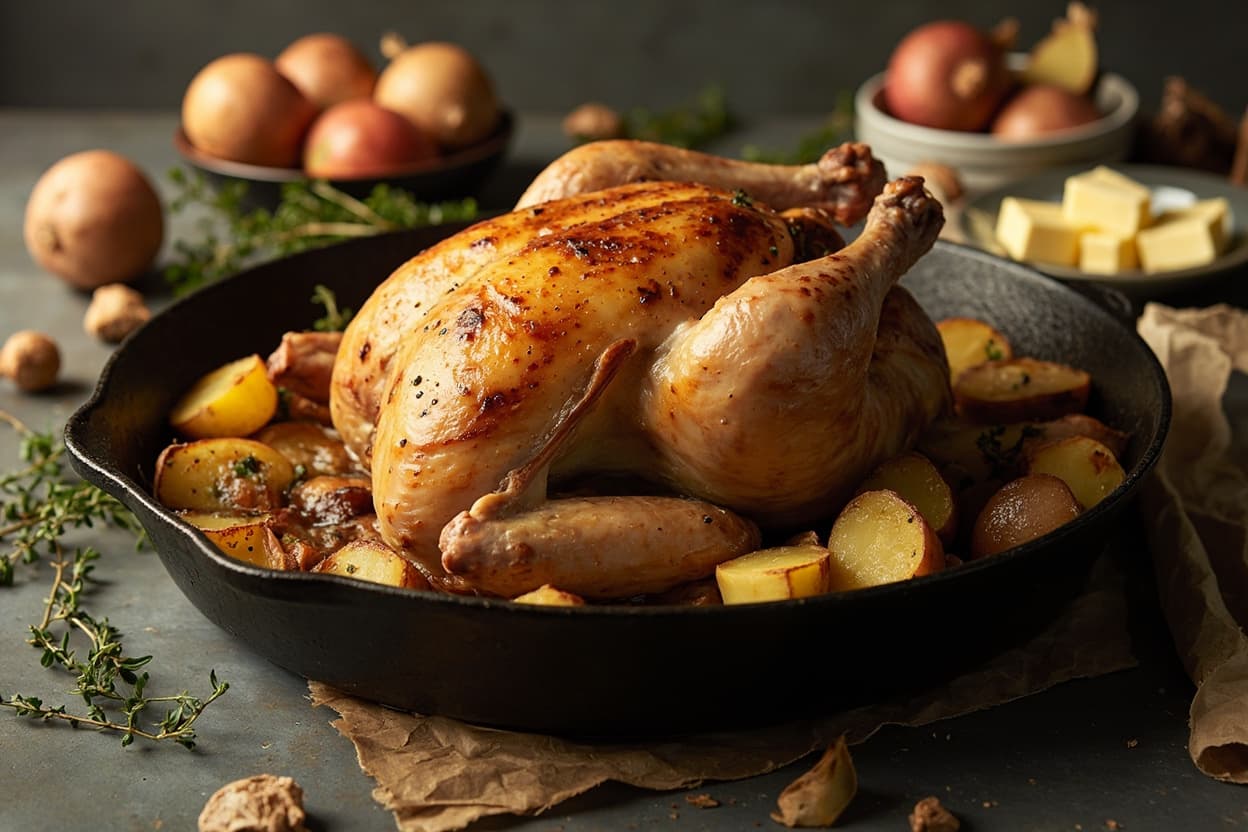
A whole chicken set directly on potato and onion so the juices run down as it roasts, the bird basted with butter and thyme until the skin goes deep amber and tight. The potatoes underneath cook in that rendered fat and come out better than any potato cooked separately ever could. Straightforward, unimprovable, the whole house smells of it.

Prep
20 min
Cook
1h 15m
Rest
10 min
Total
1h 45m
Method
Prep
1
Preheat oven to 200°C (400°F). Pat the whole chicken very dry with paper towels — Lukas insists on this, it means better browning.
2
Season the cavity generously with salt and black pepper. Rub the outside with 30g softened butter, then scatter thyme sprigs over and under the skin.
3
Peel and quarter potatoes. Toss with 30g melted butter, salt, and a few thyme leaves. Spread in a cast-iron skillet or roasting pan.
4
Halve the yellow onion and smash the garlic cloves. Nestle them around the potatoes.
Roast
5
6
Continue roasting another 20 to 25 minutes until the juices run clear and the skin is deep golden. An instant-read thermometer should read 75°C (165°F) at the thickest part of the thigh.
Rest and Finish
7
Transfer the chicken to a cutting board and tent loosely with foil. Let rest 10 minutes — never skip this, the juices redistribute.
C
Nutri-Score
Fair balance
A–E · lower is better · score 3
Calories
1151
per serving
High in protein · 73gLow sugar · 6g
Protein
73g
Carbs
41g
Fat
75g
Sat. fat
27g
Fiber
6g
Sugar
6g
Sodium
2095mg
Gluten FreeHeart HealthyHigh Blood Pressure CautionHigh ProteinModerate FatBalanced Meal
Nutri-Score is a general nutritional-balance guide, not medical or dietary advice.
E
Environmental impact
Very high impact
A–E · lower is better · includes estimates
kg CO2e
4.0
per serving
ECarbonBEU all-round· carbon sets the grade
Water
0.9m³
Land
117Pt
Runoff
0.4g P
Whole Chicken drives 92% of this recipe’s estimated footprint.
Carbon from Poore & Nemecek 2018; water, land & runoff from Agribalyse — modelled averages for comparing recipes, not a measurement of your groceries.
Flavor Profile
6
Umami
4
Sweet
5
Salty
1
Sour
2
Bitter
3
Spicy
Textures
CrispyTenderCaramelizedJuicy
Aromas
HerbalButteryRoastedSavoryAromatic
Kitchen Equipment
Primary Tool
Cast Iron SkilletCounter FootprintMedium
Safety & Storage
Cooking Temperature
Roast chicken to minimum internal temperature of 75°C (165°F) measured at thickest part of thigh. Verify with instant-read thermometer before serving.
Handling
Pat chicken very dry before seasoning as specified - moisture on poultry surface prevents proper browning and can harbor bacteria.
Cross Contamination
Use separate cutting boards and utensils for raw poultry. Never place cooked chicken on surfaces that held raw chicken without proper sanitation.
Wash hands thoroughly with soap for 20 seconds after handling raw chicken before touching other foods or surfaces.
High Risk Population
Poultry products carry salmonella risk - extra care needed for elderly, immunocompromised, pregnant individuals, and children under 5. Ensure thorough cooking.
Rest Time
Allow chicken to rest 10 minutes after roasting before carving. This allows juices to redistribute for safer, moister meat.
Storage
Refrigerate leftover chicken and potatoes within 2 hours of cooking. Store in airtight containers at 4°C (40°F) or below. Consume within 3-4 days.
Shelf Life
Butter used in recipe has limited shelf life at room temperature. Store unused butter refrigerated and check for rancidity before use.
Pro Tips
Technique
Always pat your chicken dry with paper towels before it goes in the oven — Lukas insists on this. Moisture is the enemy of that deep golden crust we are after. Do not rush it, and do not skip it.
Substitution
No fresh thyme? Dried thyme works, though use half the amount — the flavor concentrates more without the fresh oils. A bay leaf tucked under the skin alongside adds another layer of that Alpine forest note Lukas loves.
From the chef
In Salzburg, Sunday was never complete without the smell of roasting filling the stairwell — my Oma would have approved of this one. I learned early that a proper roast is not about fancy tricks; it is about respecting the bird, the potato beneath it, and giving everything time to turn golden. This is the kind of dish that brings the whole table to the kitchen before you even call them.
TagsRoasted ChickenPotatoesHerb SeasonedButter RichComfort FoodCast Iron
AllergensMilk
Source: generated · May 30, 2026