 Caribbean
Medium · Hot
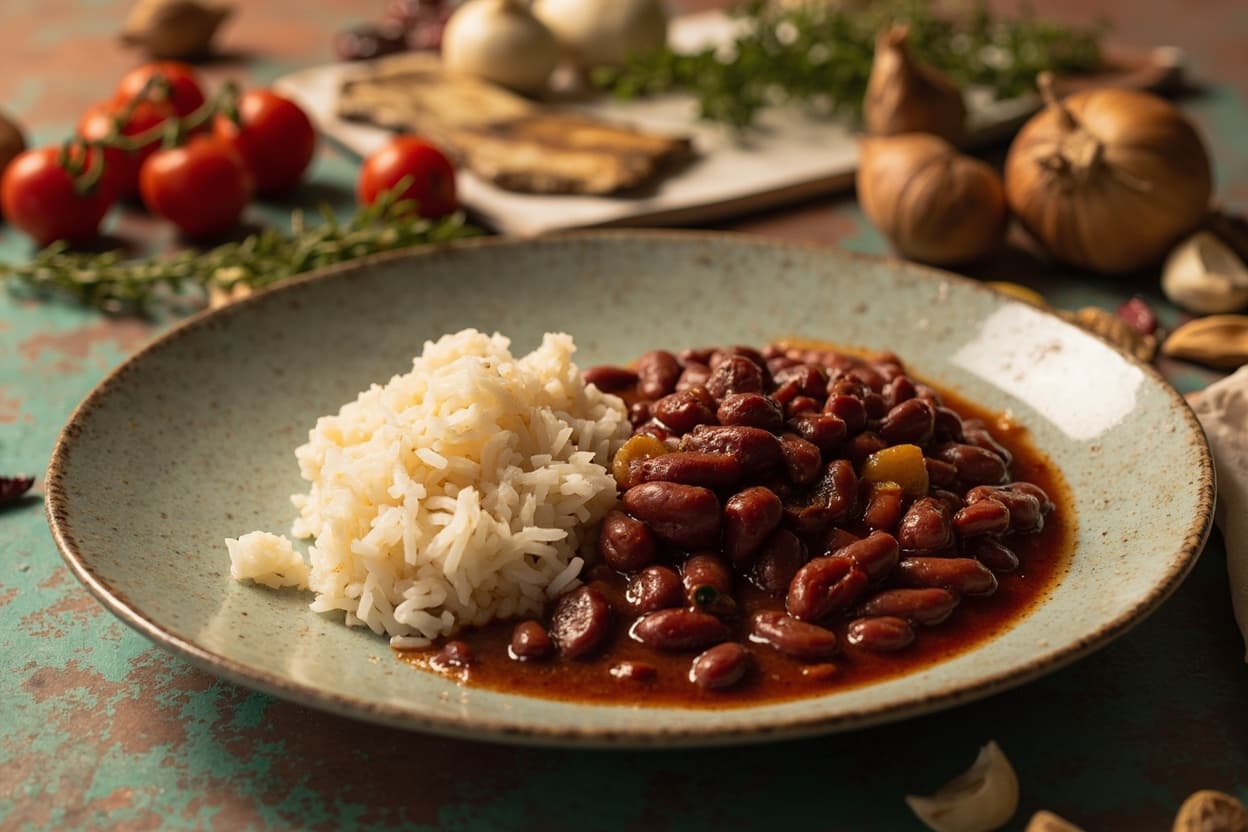
Stewed Red Beans with Coconut Rice
Kidney beans stewed low with garlic, thyme, and coconut oil until the pot liquor turns thick and deeply savory — the kind of beans that make plain rice something worth sitting down for. The rice drinks in the coconut oil as it cooks, each grain separate but rich. This is the backbone of Caribbean home cooking, and it carries the whole table.

Prep
15 min
Cook
30 min
Rest
5 min
Total
50 min
Method
Prep the Aromatics
1
Dice the yellow onion into small pieces. Mince the garlic cloves finely. Chop the tomatoes into bite-size chunks. Peel and dice the carrot into half-inch pieces.
2
Strip the thyme leaves from the sprigs — you need about 1 tablespoon of fresh thyme leaves for this dish.
3
Strip the thyme leaves from the sprigs — you need about 1 teaspoon of fresh thyme leaves for this dish.
Build the Bean Stew
4
Heat 3 tablespoons of coconut oil in a large pot over medium heat. When the oil is shimmering, add the diced onion and cook until it softens and becomes translucent, about 5 minutes.
5
6
Pour in the diced tomatoes and stir everything together. Let the tomatoes break down and release their juices, about 3 to 4 minutes.
7
Add the kidney beans with their liquid from the cans. Stir in the fresh thyme leaves, cayenne, black pepper, and salt.
8
Bring the mixture to a gentle boil, then reduce the heat to low. Cover and simmer for 20 minutes, stirring occasionally, until the beans are tender and the sauce has thickened.
Cook the Coconut Rice
9
Rinse the white rice under cold water until the water runs clear. This removes excess starch for fluffier rice.
10
Heat 2 tablespoons of coconut oil in a saucepan over medium heat. Add the rinsed rice and toast for 2 minutes, stirring to coat every grain with oil.
11
Add 2 and a half cups of water and 1 teaspoon of salt. Bring to a boil, then reduce heat to low.
12
Cover tightly and cook for 15 minutes. Remove from heat and let steam, covered, for 5 minutes. Fluff with a fork before serving.
Serve
13
Spoon the stewed red beans over a bed of fluffy coconut rice. Garnish with extra thyme leaves if desired. Serve hot and enjoy the island comfort.
C
Nutri-Score
Fair balance
A–E · lower is better · score 7
Calories
811
per serving
High in saturated fat · 18gCalorie-dense · 811 kcalSource of fibre · 13gLow sugar · 6g
Protein
22g
Carbs
136g
Fat
20g
Sat. fat
18g
Fiber
13g
Sugar
6g
Sodium
1565mg
Gluten FreePlant BasedDiabetes FriendlyHeart HealthyHigh ProteinBalanced Meals
Nutri-Score is a general nutritional-balance guide, not medical or dietary advice.
B
Environmental impact
Low impact
A–E · lower is better · includes estimates
kg CO2e
0.8
per serving
BCarbonAEU all-round· carbon sets the grade
Water
1.7m³
Runoff
0.06g P
White Rice drives 57% of this recipe’s estimated footprint.
Carbon from Poore & Nemecek 2018; water, land & runoff from Agribalyse — modelled averages for comparing recipes, not a measurement of your groceries.
Flavor Profile
6
Umami
4
Sweet
5
Salty
2
Sour
1
Bitter
5
Spicy
Textures
TenderFluffySaucySoft
Aromas
HerbalEarthyCoconutTomatoSpicy
Kitchen Equipment
Safety & Storage
Cross Contamination
No allergens present in ingredients, but ensure all kitchen equipment and surfaces are thoroughly cleaned before preparing if other allergen-containing foods have been handled to prevent cross-contact.
Storage
Refrigerate leftover stewed beans and coconut rice within 2 hours of cooking. Store separately in airtight containers and consume within 3-4 days for optimal quality and safety.
Cooking Temperature
{"classification":"cooking-temperature","text":{"text":"Beans must reach a gentle simmer during the 20-minute cook time to ensure proper flavor development. The stew should maintain small bubbles breaking the surface, not a rolling boil. A rolling boil is too vigorous and may cause beans to break apart. When reheating leftovers, bring both dishes to an internal temperature of at least 165°F throughout before serving."}}
Handling
Use separate cutting boards for raw ingredients like onion, garlic, and carrots to prevent bacterial cross-transfer. Ensure hands are washed thoroughly after handling raw beans and before handling other ingredients.
High Risk Population
When serving young children, elderly individuals, or immunocompromised persons, ensure beans are cooked until very tender and rice is fluffy with no hard grains to prevent choking hazards and ensure digestibility.
Pro Tips
Technique
When you toast the rice in coconut oil before adding water, you're doing what the old folks called 'awakening the grain'—it locks in flavor and gives you those beautiful separate, fluffy grains instead of mushy rice. Don't skip this step, mon.
Substitution
No kidney beans? Black beans work in a pinch, though they won't give you the same creamy texture when they break down. If you want that authentic Caribbean feel, stick with red or kidney beans—they're what we call 'proper beans' for this pot.
Time Saver
If you're short on time, use two cans of beans already cooked. Just drain but save that liquid—it's liquid gold full of flavor that thickens your stew naturally without needing cornstarch or flour.
From the chef
Kidney beans stewed with garlic, fresh thyme, tomatoes, and a hit of cayenne until the pot liquor goes thick and deeply savory — that is what makes plain rice into a proper meal. The rice cooks separately in coconut oil, each grain toasting before the water goes in, coming out separate and rich. Spoon the beans over and everything falls into place: the beans carry the spice and the fat, the rice soaks it up. This is the backbone of Caribbean home cooking, and it does not need to be anything more than that.
TagsComfort FoodCoconutSpicyOne PotWeeknight DinnerStewed
Source: generated · May 30, 2026