 French
Medium · Hot
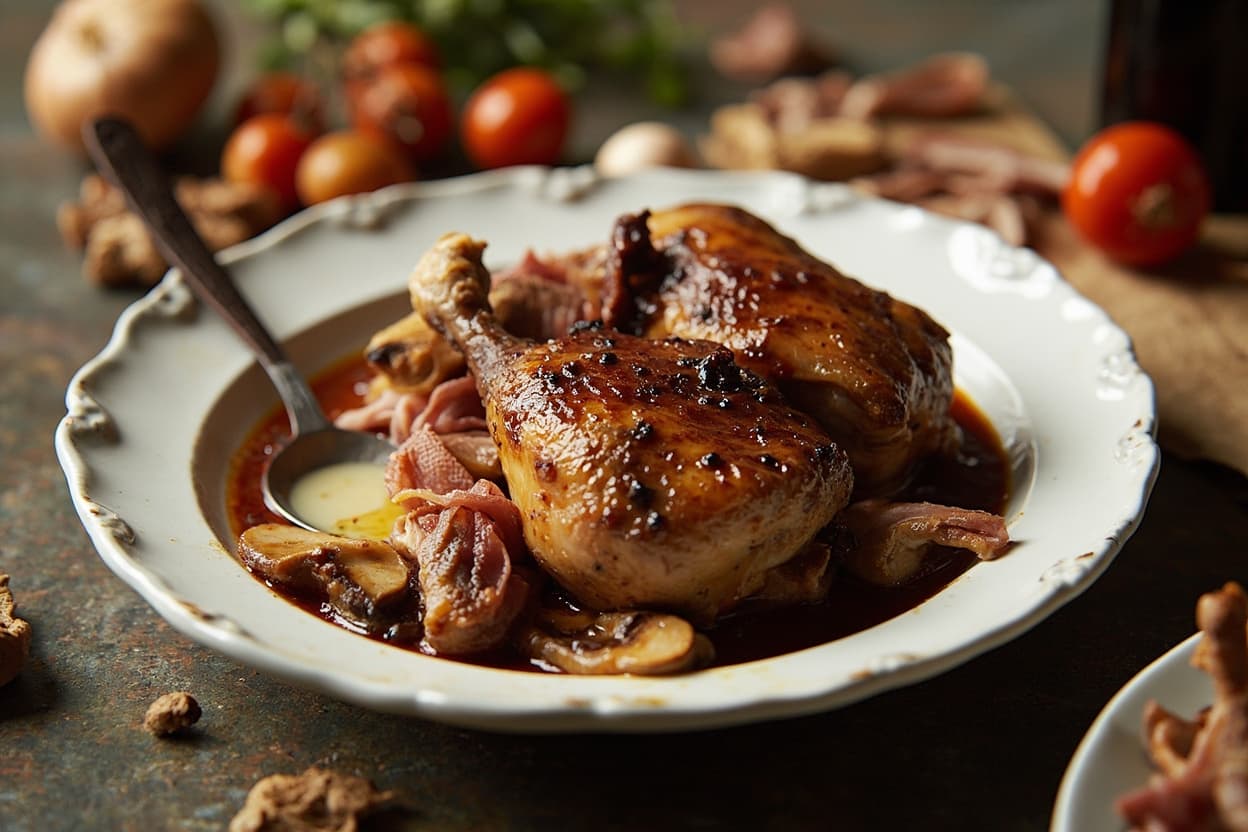
Coq au Vin with Mushrooms and Bacon
Coq au vin is proof that red wine vinegar and patience can transform the most ordinary chicken thigh into something that belongs on the table for several hours of conversation. Bacon goes in first to set the tone, then mushroom, yellow onion, and thyme build the braise that will carry the chicken to tenderness. The sauce that results from this process is the reason bistros exist.

Prep
30 min
Cook
50 min
Rest
5 min
Total
1h 25m
Method
Marinate the Chicken
1
Combine chicken thighs, red wine vinegar, thyme sprigs, and smashed garlic in a large bowl. Toss to coat, cover, and refrigerate for at least 30 minutes, preferably 2 hours. This vinegar marinade mimics the wine braise and begins tenderizing the meat.
Render the Bacon
2
In a heavy-based saucepan or Dutch oven over medium heat, cook the bacon lardons until the fat has fully rendered and the pieces are golden and crisp, about 8 minutes. Remove the bacon with a slotted spoon and set aside. Leave the bacon fat in the pot.
Sear the Chicken
3
Remove the chicken thighs from the marinade and pat them dry with paper towel. Season generously with salt and black pepper. Working in batches if necessary, sear the thighs skin-side down in the bacon fat over medium-high heat until deeply golden, 5–6 minutes. Flip and cook 2 minutes more. Transfer to a plate. Pour off all but 2 tablespoons of the fat.
Build the Aromatic Base
Braise with Mushrooms
5
Return the seared chicken thighs to the pot, nestling them into the aromatic vegetables. Add the quartered mushrooms, the reserved bacon lardons, and bring to a gentle simmer. Do not add the raw marinade liquid — discard it or boil it first before using. Bring to a gentle simmer, then cover and cook over low heat for 25 minutes, or until a meat thermometer inserted into the thickest part reads 165°F (74°C). The low heat is essential — rush this and the chicken will toughen.
Finish with Cream and Butter
6
Uncover the pot. Stir in the heavy cream and fresh thyme leaves. Simmer gently for 5 minutes until the sauce thickens slightly and coats the back of a spoon. Remove the pot from the heat and add the cold butter cubes one at a time, swirling the pot gently as each piece melts to create a silky, emulsified sauce. Taste and adjust seasoning with salt and pepper.
Rest and Serve
7
Let the coq au vin rest, off the heat, for 5 minutes. This allows the sauce to settle and the flavors to marry. Scatter the chopped parsley over the top and serve directly from the pot with crusty bread or buttered potatoes.
B
Nutri-Score
Good balance
A–E · lower is better · score 1
Calories
1069
per serving
High in protein · 87gLow sugar · 8g
Protein
87g
Carbs
19g
Fat
71g
Sat. fat
23g
Fiber
5g
Sugar
8g
Sodium
1327mg
Gluten FreeLow CarbHeart HealthyDiabetes FriendlyHigh Protein
Nutri-Score is a general nutritional-balance guide, not medical or dietary advice.
E
Environmental impact
Very high impact
A–E · lower is better · includes estimates
kg CO2e
3.3
per serving
ECarbon
Chicken thighs, bone-in drives 67% of this recipe’s estimated footprint.
Carbon from Poore & Nemecek 2018; water, land & runoff from Agribalyse — modelled averages for comparing recipes, not a measurement of your groceries.
Flavor Profile
8
Umami
3
Sweet
6
Salty
3
Sour
2
Bitter
2
Spicy
Textures
TenderCrispySilkyChewy
Aromas
HerbalSmokyEarthyWine ReducedSavory
Kitchen Equipment
Primary Tool
Dutch OvenCounter FootprintMedium
Techniques
Safety & Storage
Cooking Temperature
Chicken must reach an internal temperature of 165°F (74°C) throughout. Use a meat thermometer to verify doneness, especially at the thickest part of the thigh.
Handling
Marinated raw chicken should be handled with separate utensils and clean hands. Do not reuse the marinade that contacted raw chicken unless it is boiled first.
Add cold butter cubes gradually off heat while swirling to create an emulsion. Adding butter too quickly or over direct heat can cause the sauce to break.
Cross Contamination
Use separate cutting boards for raw chicken and vegetables. Wash all surfaces, utensils, and hands thoroughly with hot soapy water after handling raw poultry.
Storage
Transfer cooled leftovers to airtight containers and refrigerate within 2 hours. Store below 40°F (4°C) and consume within 3-4 days.
Allergen Warning
This dish contains dairy (butter and heavy cream). Inform guests of milk allergen before serving. For dairy-free alternatives, substitute with plant-based cream and olive oil.
High Risk Population
For pregnant individuals, young children, elderly, or immunocompromised persons, ensure chicken is fully cooked to 165°F (74°C) and leftovers are reheated to steaming before consumption.
Equipment Safety
When rendering bacon fat over medium heat, monitor closely. Hot fat can cause severe burns if it splatters or the pan is bumped.
Pro Tips
Technique
The cold butter finishing is what separates a proper coq au vin from a ordinary braise. Add the butter off the heat and swirl gently—you are creating an emulsion, not melting. If the sauce breaks, a splash of cream and vigorous whisking will rescue it.
Substitution
If thick-cut bacon is unavailable, pancetta makes an excellent substitute with a more subtle saltiness. For the mushrooms, cremini work beautifully, but a mix of cremini and wild mushrooms like shiitake adds wonderful earthiness.
From the chef
Coq au vin works because red wine vinegar and time do what nothing else can. Bacon goes in first — not for flavor alone, but for fat, the medium in which everything else builds. Onion, carrot, and celery soften in it until the pot smells of something honest, then the seared chicken thighs go back in, mushrooms join the braise, and two and a half hours later the liquid has reduced to a sauce that coats a spoon with real authority. The cold butter swirled in at the end is not optional — it is the moment the dish finds its composure.
TagsClassicBistro StyleBraisedWine ReducedCreamyHerbal
AllergensMilkSulfites
Source: generated · May 30, 2026