 Mediterranean
Easy · Warm
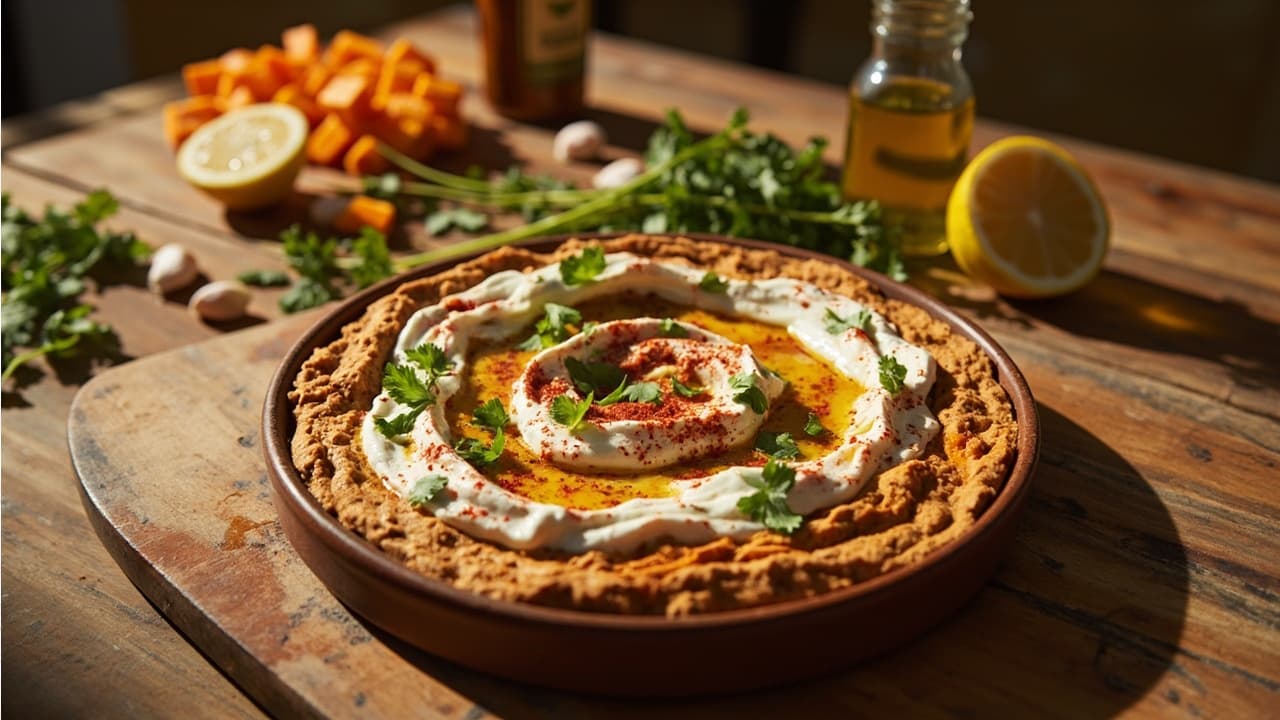
Smoky Pinto Bean and Butternut Squash Dip
A warmly spiced, velvety dip blending pinto beans with caramelized roasted butternut squash, finished with smoky paprika, lemon and cooling yogurt.

Prep
15 min
Cook
30 min
Total
45 min
Method
1
Preheat your oven to 200°C (fan 180°C). Toss the butternut squash cubes with 2 tbsp olive oil, cumin, and black pepper on a lined baking tray. Spread in a single layer without crowding. Roast for 20-22 minutes, turning halfway, until the squash is tender and golden at the edges. Let cool slightly.
2
While the squash roasts, warm 1 tbsp olive oil in a saucepan over medium heat. Add the whole garlic cloves and cook gently for 2 minutes until fragrant — do not brown. Stir in the drained pinto beans, smoked paprika, and a pinch of salt. Cook, stirring occasionally, for 5 minutes until the beans are heated through and slightly thickened. Remove from heat.
3
Transfer the roasted squash and the bean mixture to a blender (or use an immersion blender in a deep bowl). Add the lemon juice and remaining 1 tbsp olive oil. Blend on high for 60-90 seconds until completely smooth and creamy. Stop to scrape down the sides once. Taste and adjust salt, adding a splash of water if the dip is too thick — it should hold its shape on a chip but spread easily.
4
Let the dip rest at room temperature for 5 minutes. Stir the yogurt until smooth, then dollop it over the surface of the dip and swirl gently with a spoon. Finish with a light drizzle of olive oil, a pinch of smoked paprika, and scatter the fresh cilantro leaves over the top. Serve warm with pita wedges, flatbread, or sturdy vegetable crudités.
A
Nutri-Score
Excellent balance
A–E · lower is better · score -8
Calories
370
per serving
Source of protein · 17gHigh in fibre · 15gLow sugar · 5g
Protein
17g
Carbs
56g
Fat
10g
Sat. fat
5g
Fiber
15g
Sugar
5g
Sodium
636mg
Gluten FreeHalalVegetarianAnti InflammatoryDiabetesHeart HealthyHigh FiberLow Saturated FatPlant Based
Nutri-Score is a general nutritional-balance guide, not medical or dietary advice.
A
Environmental impact
Very low impact
A–E · lower is better · includes estimates
kg CO2e
0.3
per serving
ACarbonAEU all-round· both agree
Water
0.5m³
Runoff
0.03g P
Pinto beans (canned, drained) drives 45% of this recipe’s estimated footprint.
Carbon from Poore & Nemecek 2018; water, land & runoff from Agribalyse — modelled averages for comparing recipes, not a measurement of your groceries.
Flavor Profile
6
Umami
4
Sweet
5
Salty
3
Sour
1
Bitter
4
Spicy
Textures
SilkySmoothTender
Aromas
EarthyHerbalPungent GarlicSmokyWarm Spice
Kitchen Equipment
Safety & Storage
Cooking Temperature
Ensure oven reaches 200°C before roasting butternut squash. Bean mixture must be heated thoroughly to piping hot throughout before blending.
Cross Contamination
Use clean, sanitized blender or immersion blender. If using shared equipment, disassemble and clean all parts thoroughly between uses to prevent allergen transfer.
Storage
Refrigerate any leftover dip within 2 hours of serving. Store in airtight container and consume within 3-4 days. Do not leave yogurt-topped dip at room temperature for more than 2 hours.
Shelf Life
The dairy content from yogurt limits shelf life to 3-4 days refrigerated. Freeze plain bean-squash base (without yogurt topping) for up to 2 months; thaw and add fresh yogurt when serving.
Handling
Allow roasted squash to cool slightly before blending to avoid steam burns. When blending hot mixtures, hold the blender lid securely and use a cloth to protect hands from splatter.
Allergen Warning
This recipe contains milk/dairy from yogurt. For severe dairy allergies, omit the yogurt topping entirely or substitute with dairy-free alternative and note this changes the storage recommendation to 5-7 days.
Pro Tips
Technique
Don't rush the roasting — those golden, caramelized edges on the squash are where the flavor lives. If your pieces are crowded on the tray, they'll steam instead of roast, and you'll lose that depth that makes this dip special.
Substitution
If you can't find pinto beans, cannellini or even chickpeas work beautifully here. Each brings a slightly different creaminess, but all honor the warm, spiced spirit of the dish.
From the chef
Pinto beans and roasted butternut squash make a surprisingly velvety base when you blend them together — the beans bring protein and creaminess, the squash brings a quiet sweetness that the smoked paprika keeps honest. Garlic goes in gently, not browned, so it stays mellow rather than sharp. Lemon cuts through the richness, and the yogurt swirled on top cools everything just enough that the smoky paprika can do its work without overwhelming. This is the kind of dip that works as a starter, a snack, or a spread — warm or at room temperature, with flatbread or just a spoon.
TagsDipSpreadAppetizerVegetarianEasySmokyRoastedParty FoodMake AheadNo Cook
AllergensMilk
Source: generated · June 13, 2026