 Indonesian
Medium · Hot
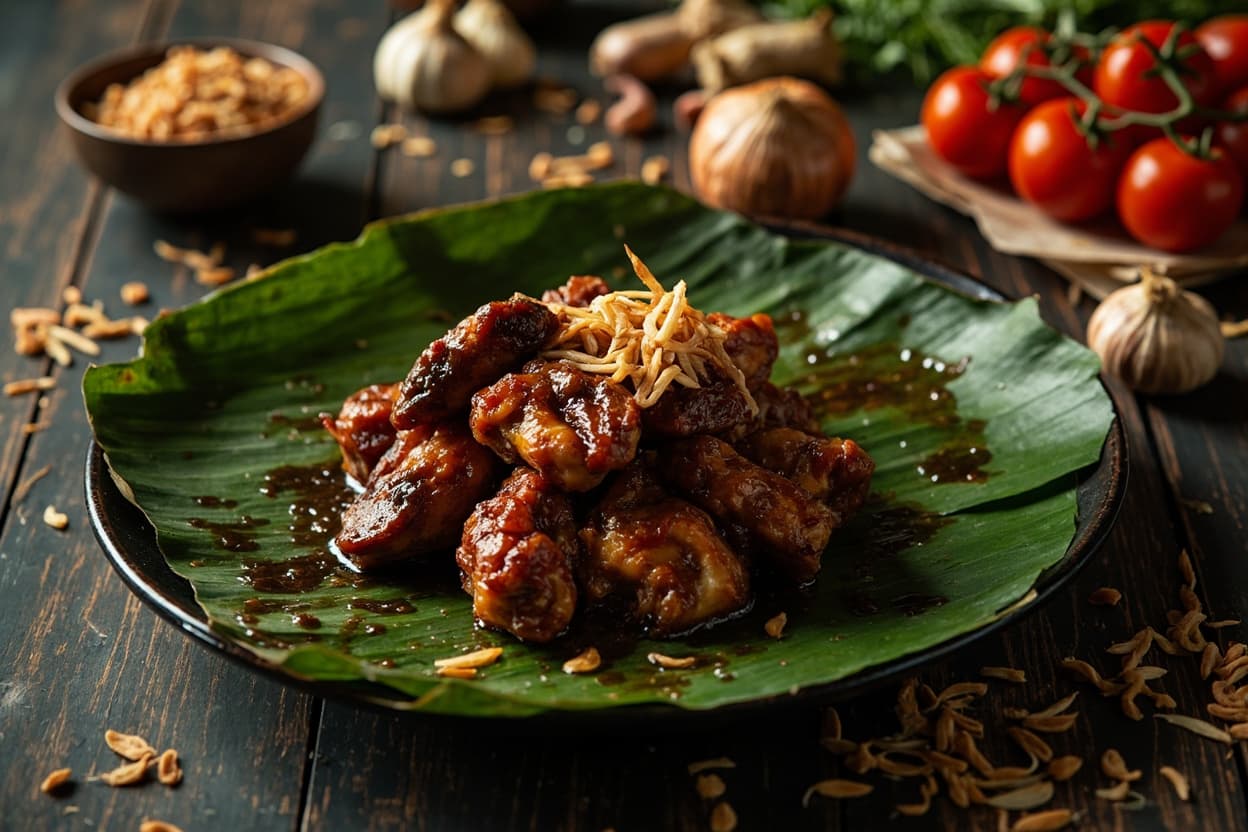
Ayam Kecap Sweet Soy Chicken with Fried Shallots
Yellow onion, garlic, and ginger build the base while the chicken thighs caramelize slowly in a soy-and-brown-sugar glaze that thickens into a deep, glossy coating. A final hit of lime lifts the sweetness just when it needs it. Every family in Java makes ayam kecap differently — this version is built for the weeknight but tastes like Sunday.

Prep
15 min
Cook
30 min
Rest
10 min
Total
55 min
Method
Build the Spice Paste
1
Peel and roughly chop the garlic cloves. Add them to a mortar and pestle along with the ginger, salt, and cayenne pepper. Grind everything into a rough, fragrant paste. Alternatively, use a small food processor. Set aside.
Marinate the Chicken
2
Pat the chicken thighs dry with paper towels. Score the skin and meat with a knife so the bumbu can penetrate. Rub the spice paste all over the chicken, getting into the cuts. Let it sit for at least 10 minutes while you prepare the sauce.
Braise in Sweet Soy Sauce
3
In a wide pan or wok, combine the soy sauce, brown sugar, and water over medium heat. Stir gently until the sugar dissolves and the sauce comes to a gentle simmer.
4
Nestle the marinated chicken thighs into the sauce, skin-side up. Spoon some sauce over the top. Cover and cook for 20 minutes, turning the chicken halfway through.
5
Uncover, increase heat to medium-high, and let the sauce bubble down into a thick, glossy glaze, spooning it over the chicken repeatedly. The chicken should be deeply caramelized and cooked through, about 10 more minutes. Remove and set aside, keeping warm.
Make the Fried Shallots
6
Slice the yellow onions into thin rings. In the same pan, heat the sunflower oil over medium-high heat. Add the onion rings in a single layer and fry, stirring frequently, until golden brown and crispy, 5–7 minutes. Watch carefully so they don't burn.
7
Slice the yellow onions into thin rings. In the same pan, heat the sunflower oil over medium-high heat to 350°F (175°C). Add the onion rings in a single layer and fry, stirring frequently, until golden brown and crispy, 5–7 minutes. Watch carefully so they don't burn.
Garnish and Serve
8
Arrange the glazed chicken thighs on a serving platter. Pile the hot fried shallots generously on top — they will sizzle slightly against the warm chicken.
9
Serve immediately with steamed white rice and a side of sambal on the side. The contrast of the sticky-sweet sauce and the crunchy golden onions is everything!
B
Nutri-Score
Good balance
A–E · lower is better · score 1
Calories
778
per serving
High in protein · 56gLow sugar · 13g
Protein
56g
Carbs
22g
Fat
52g
Sat. fat
8g
Fiber
4g
Sugar
13g
Sodium
976mg
Dairy FreeEgg FreeNut FreeHeart HealthDiabetesHigh ProteinLow Carb
Nutri-Score is a general nutritional-balance guide, not medical or dietary advice.
D
Environmental impact
High impact
A–E · lower is better · includes estimates
kg CO2e
2.1
per serving
DCarbonAEU all-round· carbon sets the grade
Water
0.6m³
Land
84Pt
Runoff
0.3g P
Chicken Thighs drives 93% of this recipe’s estimated footprint.
Carbon from Poore & Nemecek 2018; water, land & runoff from Agribalyse — modelled averages for comparing recipes, not a measurement of your groceries.
Flavor Profile
8
Umami
8
Sweet
6
Salty
2
Sour
3
Bitter
5
Spicy
Textures
CrispyTenderSilkySaucy
Aromas
SweetSmokyHerbalCaramelPungent
Kitchen Equipment
Primary Tool
WokWokMortar And PestleStovetop CookingChef KnifeCutting BoardMixing BowlSpatulaPaper TowelsPlastic Wrap
Counter FootprintMedium
Techniques
Safety & Storage
Cooking Temperature
Ensure chicken reaches internal temperature of 165°F (74°C) throughout. When frying shallots, maintain oil temperature to prevent burning while achieving crispy texture.
Cross Contamination
Use separate cutting boards and utensils for raw chicken and ready-to-eat items like fried shallots. Sanitize surfaces after handling raw poultry.
Storage
Refrigerate cooked chicken within 2 hours. Store fried shallots in an airtight container at room temperature for up to 2 weeks; refrigerate for longer shelf life.
Handling
Wash hands thoroughly with soap for 20 seconds after handling raw chicken. Do not reuse marinade that has contacted raw poultry unless boiled first.
High Risk Population
Ensure thorough cooking for young children, elderly, pregnant individuals, and immunocompromised persons. Avoid undercooked chicken which may harbor Salmonella or Campylobacter.
Shelf Life
Fried shallots lose crispness within 1-2 days; consume immediately for optimal texture. Leftover chicken dishes should be consumed within 3-4 days when refrigerated.
Pro Tips
Technique
Never skip scoring the chicken before you marinate — those deep cuts are where the bumbu (spice paste) truly penetrates, giving you flavor all the way through the meat, not just on the surface. Take your time grinding that paste in the mortar; the oils release differently than when blitzed in a processor, and you can feel the texture turning silky.
Substitution
If you can find real kecap manis, use it in place of soy sauce plus brown sugar for an even more authentic, deeply caramelized result. For the fried shallots, yellow onions are traditional, but shallots (bawang merah) give an even richer, sweeter crunch if you can find them — just slice thin and fry the same way.
Flavor Boost
Add a small piece of galangal to the braising sauce — it's gentler than ginger and adds a distinctly Indonesian floral warmth. And always serve with a fresh sambal on the side; ayam kecap without sambal is like a song without rhythm.
From the chef
Every keluarga in Yogyakarta has their own version of ayam kecap, passed down from grandmother to mother to daughter. Mine came with a cobek full of fresh sambal on the side — because in our house, we never eat kecap manis chicken without heat to balance that gorgeous sticky sweetness. This is the dish that made me fall in love with Indonesian cooking: simple, humble, yet so deeply satisfying that it still anchors me no matter where my culinary journeys take me.
TagsIndonesianSweet SoyBraisedCrispy ShallotsComfort FoodWeeknight DinnerSpicyUmami
AllergensSoyGluten
Source: generated · May 30, 2026