 Ethiopian
Medium · Warm
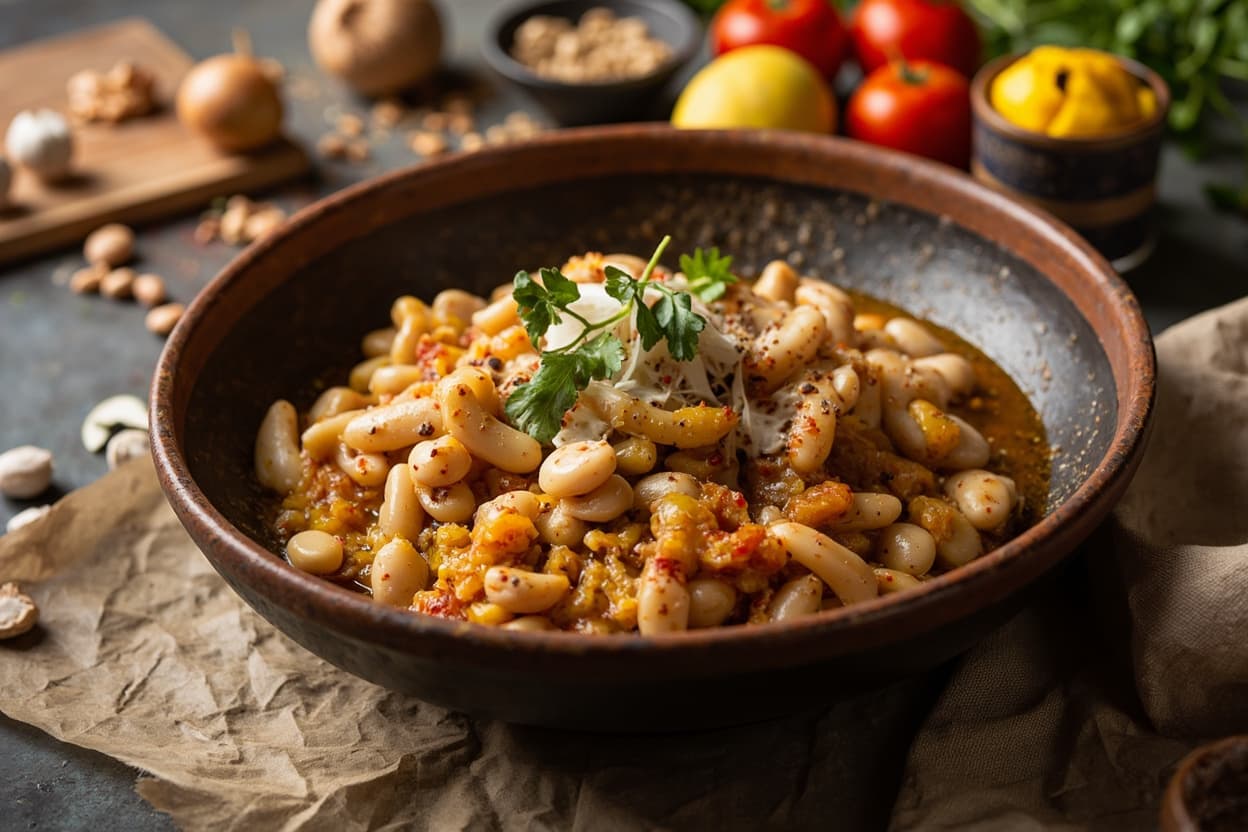
Ful Medames Spiced White Beans
White beans are simmered with tomato and garlic, then hit with cumin, a squeeze of lemon, and enough cayenne to wake them up from the inside out. The result is creamy, a little smoky, and bracingly alive — a dish that crosses the Horn of Africa's communal breakfast table with ease and reminds you that beans, seasoned properly, are never an afterthought.

Prep
15 min
Cook
1h 30m
Rest
1h
Total
2h 45m
Method
Prep the Beans
1
Sort and rinse the white beans, discarding any debris. Soak beans in water overnight or quick-soak by boiling for 2 minutes then resting covered for 1 hour.
2
3
Drain soaked beans and add to a large pot with 8 cups fresh water. Bring to a boil, reduce heat, and simmer uncovered for 45-90 minutes until beans are tender but not falling apart. (Cooking time varies by bean age and variety—taste test after 45 minutes and continue if needed.) Reserve 2 cups of cooking liquid.
Build the Flavor Base
4
While beans simmer, dice the yellow onion and mince the garlic. Core and roughly chop the tomatoes.
5
Season and Combine
7
8
Finish and Serve
10
11
Finely chop parsley and sprinkle generously over the top. Serve warm with crusty bread, Ethiopian injera, or over white rice for a communal gathering.
A
Nutri-Score
Excellent balance
A–E · lower is better · score -11
Calories
361
per serving
High in protein · 20gSource of fibre · 7gLow sugar · 4gLow saturated fat · 1g
Protein
20g
Carbs
56g
Fat
8g
Sat. fat
1g
Fiber
7g
Sugar
4g
Sodium
442mg
VeganGluten FreeDairy FreeLegume RichHeart HealthyDiabetes FriendlyPlant ForwardFiber RichAnti InflammatoryLow Sodium AdaptableHigh ProteinHigh FiberPlant BasedSustainable Protein
Nutri-Score is a general nutritional-balance guide, not medical or dietary advice.
A
Environmental impact
Very low impact
A–E · lower is better · includes estimates
kg CO2e
0.3
per serving
ACarbonAEU all-round· both agree
Water
0.5m³
Runoff
0.03g P
White Beans drives 42% of this recipe’s estimated footprint.
Carbon from Poore & Nemecek 2018; water, land & runoff from Agribalyse — modelled averages for comparing recipes, not a measurement of your groceries.
Flavor Profile
7
Umami
3
Sweet
5
Salty
4
Sour
1
Bitter
4
Spicy
Textures
CreamyTenderSilky
Aromas
EarthyHerbalSmokyWarm Spice
Kitchen Equipment
Primary Tool
StockpotCounter FootprintMedium
Techniques
Safety & Storage
Cooking Temperature
{"classification":"cooking-temperature","text":{"text":"White beans must reach an internal temperature of 180-190°F (82-88°C) during cooking for optimal tenderness and to deactivate antinutrients. Simmer for 45-60 minutes until beans are very tender and can be easily mashed against the roof of your mouth. Undercooked beans contain lectins that can cause foodborne illness. 165°F (74°C) is the absolute minimum food safety threshold but insufficient for proper bean texture."}}
Cross Contamination
When serving communally with shared injera or crusty bread, use separate serving utensils for the bean dish to prevent cross-contact with other foods. Clean serving spoons between uses.
Storage
Cool beans to room temperature within 2 hours of cooking. Store in airtight containers in the refrigerator at 40°F (4°C) or below. Consume within 3-4 days. Reheat leftovers to 165°F before serving.
Handling
Sort white beans thoroughly before soaking to remove debris, small stones, or damaged beans. Drain soaking water and use fresh water for cooking to reduce oligosaccharides that cause digestive discomfort.
High Risk Population
For young children under 5, elderly individuals, or immunocompromised persons, ensure beans are cooked until very tender and mashed slightly to improve digestibility and reduce choking risk.
Shelf Life
Cooked beans retain optimal quality for up to 4 days refrigerated. For longer storage, freeze in portioned containers for up to 2 months. Thaw overnight in refrigerator before reheating.
Pro Tips
Technique
Always bloom your spices in oil before adding the beans—heat the oil until it shimmers, then add cumin, paprika, and cayenne. Watch them sizzle gently for about a minute until the kitchen fills with that fragrant, warming aroma. This is where the flavor lives.
Substitution
No white beans on hand? Cannellini or even chickpeas work beautifully—they hold their shape well and absorb the spiced tomato base just as wonderfully.
Batch Cooking
This dish tastes even better the next day when the spices have married with the beans overnight. Make a big pot on Sunday and you'll have effortless, soul-warming meals ready for the week.
Flavor Boost
For authentic depth, swap half the olive oil with niter kibbeh—that golden, berbere-scented Ethiopian clarified butter that transforms any bean dish into something deeply satisfying.
From the chef
Ful medames is how we begin every morning in Addis—a pot of these spiced white beans shared at the table, each person scooping with torn injera, conversation flowing naturally. When I teach this dish, I tell my students: the beans are patient, the spices are generous, and the lemon at the end is what makes everyone smile. This is not a dish you eat alone—make extra, call your neighbors, let the communal spirit do its work. The word 'ful' itself means 'share' in our language, and I believe every pot should honor that meaning.
TagsEthiopian InspiredCommunal DishSpiced BeansSlow CookedPlant BasedOne PotVegetarian
Source: generated · May 30, 2026