 French
Medium · Chilled
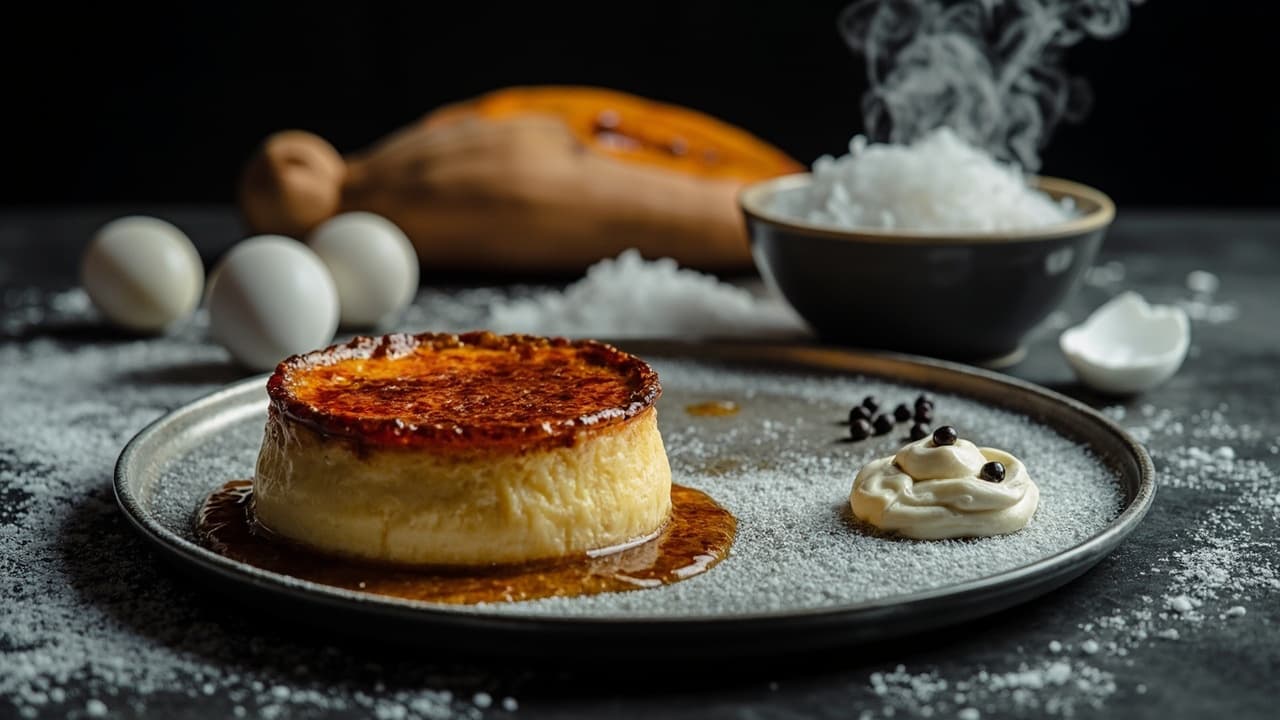
Smoked Butternut Crème Brûlée
A silky custard infused with roasted, smoked butternut squash and finished with a caramelized sugar crust.

Prep
20 min
Cook
45 min
Total
1h 5m
Method
1
2
Place cut-side down on a lined baking sheet. Roast 45–50 minutes until a knife pierces the flesh with no resistance.
3
Scoop the roasted flesh into a blender. Purée until completely smooth. Reserve 300g of squash purée for the custard; cool remaining squash to room temperature before refrigerating for another use.
4
5
In a saucepan over medium-low heat, warm the heavy-cream just until it begins to steam and small bubbles form at the edges, about 5 minutes. Do not boil.
6
Gradually pour the warm cream into the egg mixture, whisking constantly to temper the eggs.
8
Strain the mixture through a fine-mesh sieve into a large pitcher to remove any bits of cooked egg or squash fibers.
10
11
Bake 40–45 minutes, until the edges are set but the centers still jiggle slightly when the dish is nudged.
12
Remove the ramekins from the water bath. Cool on a wire rack to room temperature, about 30 minutes.
13
Cover each ramekin with plastic wrap. Refrigerate for at least 4 hours or overnight, until the custards are thoroughly chilled and firm to the touch.
15
Toast the sugar with a kitchen torch, moving the flame steadily in circular motions, until the sugar melts, bubbles, and turns a deep amber color. Let the crust cool and harden for 1 minute before serving.
C
Nutri-Score
Fair balance
A–E · lower is better · score 7
Calories
460
per serving
High in saturated fat · 15g
Protein
10g
Carbs
25g
Fat
37g
Sat. fat
15g
Fiber
3g
Sugar
19g
Sodium
302mg
Gluten FreePescatarianNot DiabeticNot Heart HealthyNot Weight LossHigh ProteinHigh Sat FatLow Fiber
Nutri-Score is a general nutritional-balance guide, not medical or dietary advice.
B
Environmental impact
Low impact
A–E · lower is better · includes estimates
kg CO2e
0.8
per serving
BCarbonAEU all-round· carbon sets the grade
Water
0.2m³
Land
27Pt
Runoff
0.07g P
Heavy Cream drives 60% of this recipe’s estimated footprint.
Carbon from Poore & Nemecek 2018; water, land & runoff from Agribalyse — modelled averages for comparing recipes, not a measurement of your groceries.
Flavor Profile
5
Umami
5
Sweet
4
Salty
2
Sour
3
Bitter
3
Spicy
Textures
CrispySilkyTender
Aromas
CaramelEarthySmoky
Kitchen Equipment
Primary Tool
OvenBlenderKitchen TorchOvenSaucepanBaking SheetDeep Baking DishFine Mesh SieveLarge PitcherMixing BowlPastry BrushRamekinWhiskWire RackParchment PaperPlastic Wrap
Techniques
Safety & Storage
High Risk Population
Raw eggs in this recipe pose salmonella risk. Pregnant women, young children, elderly, and immunocompromised individuals should avoid this dish or use pasteurized eggs.
Cooking Temperature
The water bath baking at 150°C ensures gentle, even cooking of the custard. The centers should still jiggle slightly when done, indicating internal temperature of approximately 82°C which is sufficient for egg safety.
Handling
When tempering eggs with hot cream, pour gradually while whisking constantly to avoid scrambling the eggs. Never add hot liquid directly to the egg mixture.
Cross Contamination
Use separate equipment for raw eggs and ready-to-eat foods. Clean and sanitize all utensils, bowls, and blenders that contact the raw egg mixture before using for other purposes.
Storage
Refrigerate completed custards within 2 hours of serving. Cover with plastic wrap and store at 4°C or below. Consume within 3-4 days for best quality and safety.
Shelf Life
The custard can be refrigerated covered for up to 3 days before the caramelized sugar topping loses quality. Do not freeze as texture will be compromised.
Equipment Safety
When caramelizing sugar with a kitchen torch, hold the flame at least 15cm from the surface. Move constantly in circular motions to prevent hot spots. Allow the caramelized crust to cool for 1 minute before serving to avoid burns.
Allergen Warning
This recipe contains eggs and milk. Verify all equipment is thoroughly cleaned before use by individuals with severe allergies to prevent trace contamination.
Internal Temperature
Use a food thermometer to verify the custard reaches 82°C (180°F) internally. The jiggle test is subjective and may not ensure safe egg temperatures. Undercooking can result in salmonella risk even if the custard appears set.
Pro Tips
Technique
Work the sugar crust in small, deliberate circles with the torch. Rushing creates uneven patches of un-melted crystal. A properly caramelized surface should look like black ice—glossy, fractured, and completely opaque.
Equipment
A kitchen torch with adjustable flame control is essential here. A weak torch will only soften the sugar; you need sustained, steady heat to achieve the glass-like crack that defines a true crème brûlée.
Make Ahead
The custards improve when chilled overnight. The smoke flavor deepens, the texture firms to the ideal consistency, and the surface sugar adheres better to a thoroughly cold custard when torching.
From the chef
Some nights the kitchen is quiet, and I think about what endures. Heat changes things—roasting transforms the butternut into something darker, smokier, almost bitter in the way winter should taste. I fold it into the custard like sediment in a frozen lake, then I wait. The sugar comes last, caramelized under flame until it cracks like ice on a fjord. You are small. The cold is patient. So is this dessert.
TagsDairyEgg RichSmokedMake AheadTorchedAutumnalChilledCustardButternut Squash
AllergensEggsMilk
Source: generated · June 13, 2026