 Fusion
Easy · Cold
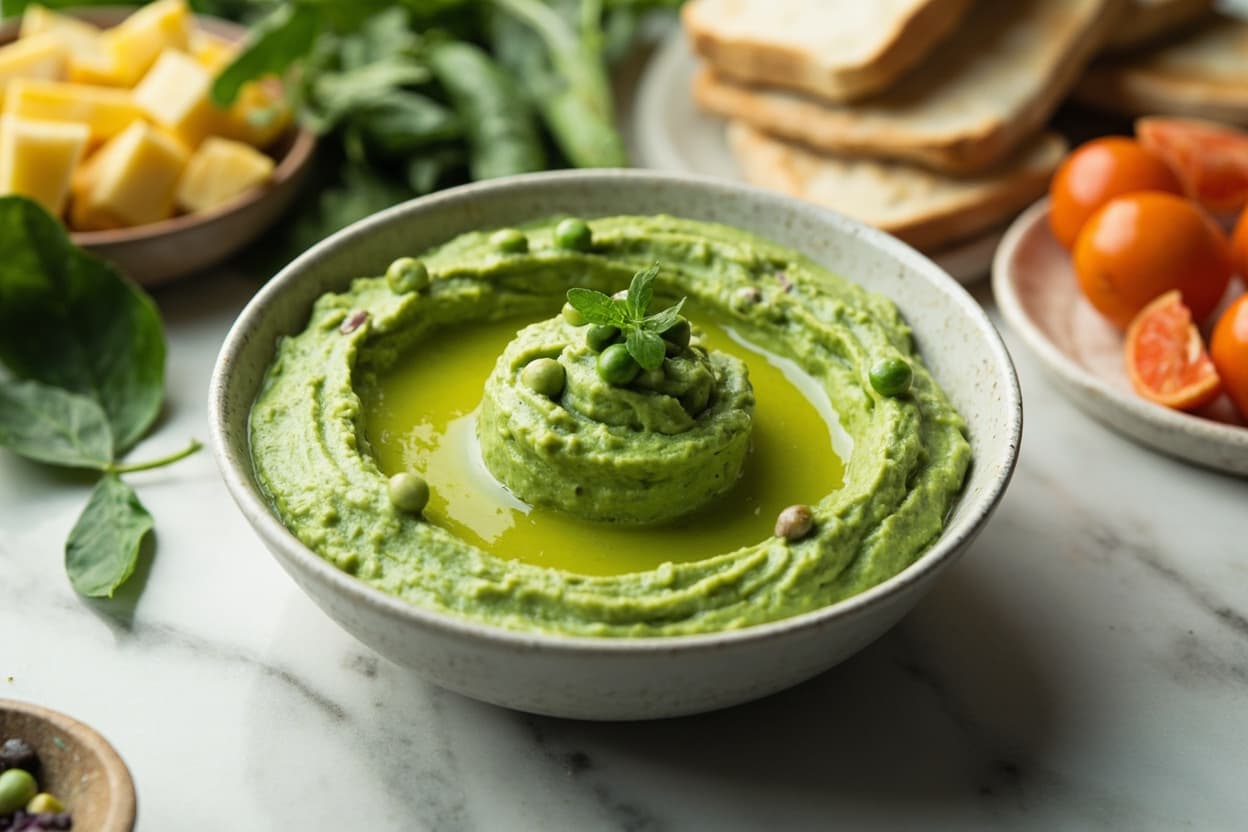
Frozen Pea and Lemon Hummus
A bright, vibrant hummus made with frozen edamame and fresh lemon. Ready in minutes with maximum flavor from pantry staples.

Prep
10 min
Cook
10 min
Total
20 min
Method
Cook the Frozen Edamame
1
Bring a medium pot of water to a rolling boil over high heat. Add the frozen edamame and cook for 5-7 minutes until tender and bright green.
2
Drain the edamame thoroughly and transfer to a heatproof bowl. Let cool for 2 minutes.
Blend to Smooth
3
Add the drained edamame to a food processor along with tahini, lemon juice, garlic, olive oil, cumin, and salt.
4
Blend on high for 2 minutes until smooth and creamy, scraping down the sides halfway through.
5
Add cold water one tablespoon at a time, pulsing after each addition, until the hummus reaches your desired consistency. It should be thick but scoopable.
Season and Finish
6
Taste and adjust seasoning — add more salt, lemon juice, or cumin to your preference. Blend briefly to incorporate.
7
Transfer to a serving bowl. Drizzle with extra olive oil and dust lightly with cumin.
8
Serve immediately with rice cakes, sliced vegetables, or warm flatbread. Store any leftovers in an airtight container in the fridge for up to 4 days.
A
Nutri-Score
Excellent balance
A–E · lower is better · score -2
Calories
281
per serving
High in salt · 1057mgHigh in protein · 15gHigh in fibre · 19g
Protein
15g
Carbs
16g
Fat
19g
Sat. fat
5g
Fiber
19g
Sugar
11g
Sodium
1057mg
Gluten FreeVeganPlant BasedHeart HealthyAnti InflammatoryBlood Sugar FriendlyHigh ProteinMuscle RecoveryLow Carb Friendly
Nutri-Score is a general nutritional-balance guide, not medical or dietary advice.
B
Environmental impact
Low impact
A–E · lower is better · includes estimates
kg CO2e
0.2
per serving
BCarbonAEU all-round· carbon sets the grade
Water
0.3m³
Runoff
0.05g P
frozen edamame drives 68% of this recipe’s estimated footprint.
Carbon from Poore & Nemecek 2018; water, land & runoff from Agribalyse — modelled averages for comparing recipes, not a measurement of your groceries.
Flavor Profile
5
Umami
2
Sweet
5
Salty
7
Sour
2
Bitter
1
Spicy
Textures
SilkySmoothCreamy
Aromas
CitrusNuttyEarthyPungent
Kitchen Equipment
Primary Tool
Food ProcessorFood ProcessorMedium PotMeasuring SpoonsMeasuring CupsHeatproof BowlSpatulaServing BowlPlastic WrapColander
Counter FootprintSmall
Safety & Storage
Allergen Warning
This hummus contains edamame (soy) and tahini (sesame). Both are major food allergens. Clearly label any stored portions and inform guests of allergen content before serving.
Cross Contamination
Thoroughly wash the food processor bowl, blade, and lid after each use. If preparing this hummus alongside other dishes, clean all utensils and surfaces to prevent allergen cross-contact with safe foods.
Storage
Transfer hummus to a clean, airtight container immediately after preparation. Refrigerate within 2 hours of serving. Store away from raw meats and other allergens in the refrigerator.
Shelf Life
Homemade hummus keeps for 3-4 days refrigerated. For high-risk populations (pregnant individuals, elderly, immunocompromised), consume within 3 days for optimal safety.
Handling
When boiling frozen edamame, ensure water reaches a full rolling boil. Cook edamame for the full 5-7 minutes to ensure adequate heat penetration for food safety.
High Risk Population
Pregnant individuals, young children, elderly, and immunocompromised persons should only consume homemade hummus that has been properly refrigerated and consumed within the recommended timeframe.
Pro Tips
Technique
Don't overthink the boiling—just cook until the edamame floats and turns bright green, about 5-7 minutes. Overcooking is the only real crime here.
Substitution
Swap the edamame for frozen peas or chickpeas if that's what you have. The lemon and cumin carry the flavor regardless of the legume.
Time Saver
Skip boiling entirely—blend the frozen edamame straight from the bag with an extra tablespoon of water. It won't be as smooth but it's half the work.
From the chef
I keep frozen edamame in the same drawer as my emergency candles—not because I need to, but because I know what I'm doing. This hummus came from one of those nights when the fridge had become an accusation and I needed something bright and alive in under twenty minutes. The edamame goes straight from the freezer to the boiling water, no defrosting, no guilt, just a few pantry staples and suddenly you've got a dip that tastes like you tried.
TagsQuick And EasyFrozen IngredientsPlant BasedCitrusBright Flavor20 Minutes Or LessNo Cook
AllergensSoySesame
Source: generated · June 9, 2026