 Levantine
Easy · Hot
Roasted Butternut Squash Wedges with Herb Oil and Tahini Drizzle
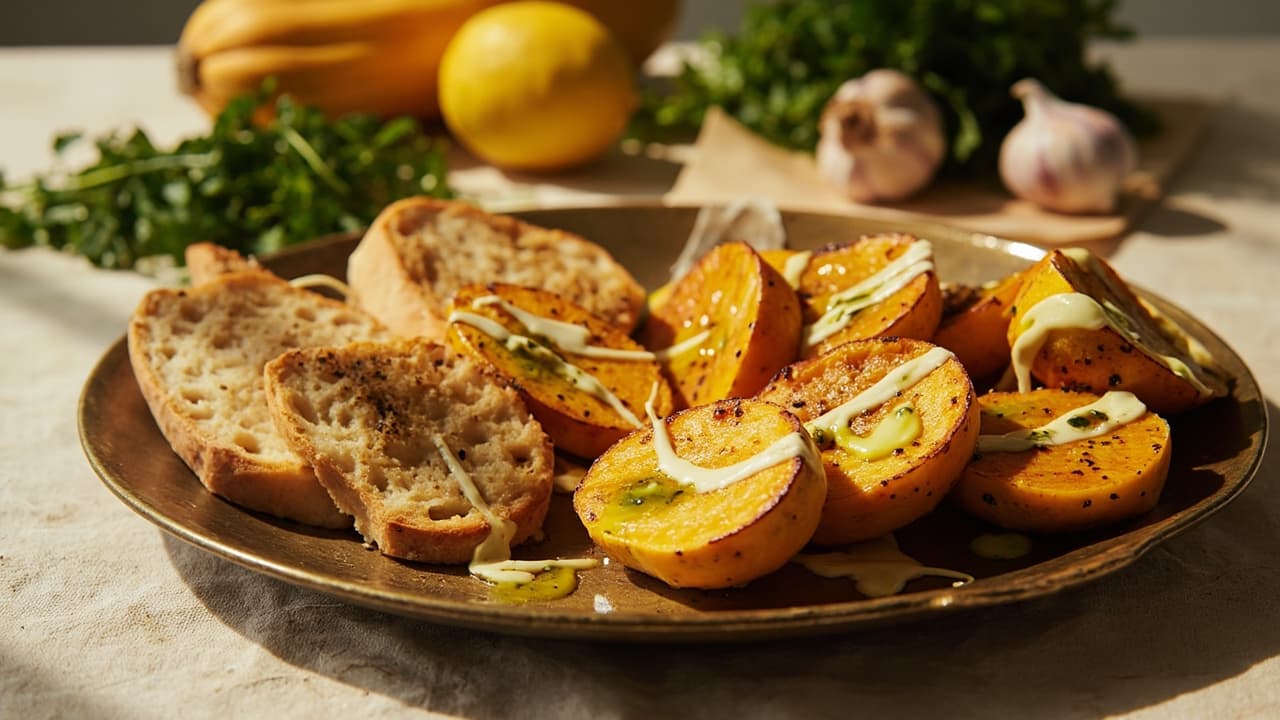
Golden roasted squash wedges crowned with bright herb oil and a nutty tahini drizzle — because a squash alone is just a squash, and we are not in the business of delivering unfinished paperwork.

Prep
15 min
Cook
30 min
Total
45 min
Method
1
Position a rack in the upper third of the oven and preheat to 220°C (425°F). Line a baking sheet with parchment.
2
Toss the squash wedges with 3 tablespoons olive oil, 1 teaspoon salt, and ½ teaspoon black pepper until evenly coated. Arrange in a single layer, skin-side down, with space between each wedge.
3
Roast 25-30 minutes, flipping halfway through, until deeply caramelized at the edges and tender when pierced with a knife. Remove and let rest 5 minutes on the pan.
4
5
6
7
Whisk vigorously for 1-2 minutes until the mixture transforms from thick and clumpy to a smooth, pourable consistency. The cold water is essential — it emulsifies the tahini. If it seizes, keep whisking; it will come together.
8
Transfer the roasted squash wedges to a large serving platter, fanning them slightly so the caramelized edges show.
9
Drizzle the herb oil generously over the warm squash, letting it pool in the crevices.
10
Place the tahini drizzle in a small bowl and set it alongside the squash, or drizzle it directly in ribbons across the platter.
11
Serve immediately while the squash is still warm, with plenty of bread nearby for dragging through both sauces. This is not optional.
A
Nutri-Score
Excellent balance
A–E · lower is better · score -1
Calories
517
per serving
Source of fibre · 18gLow sugar · 13g
Protein
8g
Carbs
48g
Fat
38g
Sat. fat
17g
Fiber
18g
Sugar
13g
Sodium
1046mg
Antioxidant RichHealthy FatsHigh FiberLow Processed FoodPlant Based Protein
Nutri-Score is a general nutritional-balance guide, not medical or dietary advice.
B
Environmental impact
Low impact
A–E · lower is better · includes estimates
kg CO2e
0.5
per serving
BCarbonAEU all-round· carbon sets the grade
Water
1.6m³
Land
47Pt
Runoff
0.1g P
butternut squash, halved and cut into 1-inch wedges drives 34% of this recipe’s estimated footprint.
Carbon from Poore & Nemecek 2018; water, land & runoff from Agribalyse — modelled averages for comparing recipes, not a measurement of your groceries.
Flavor Profile
6
Umami
4
Sweet
5
Salty
4
Sour
2
Bitter
3
Spicy
Textures
CrispySaucySilkyTender
Aromas
CitrusHerbalNuttyPungentSmoky
Kitchen Equipment
Safety & Storage
Allergen Warning
Sesame is a major allergen present in this recipe from tahini. Ensure all guests are informed about sesame content before serving. Use dedicated serving utensils for the tahini drizzle to prevent cross-contact with other dishes.
Cooking Temperature
Roasting temperature reaches 220°C (425°F). Use oven mitts when handling the baking sheet and allow it to cool before washing. Never place hot cookware on cold surfaces or wet countertops.
Handling
The herb oil is prepared in a food processor with raw garlic. Ensure the processor is thoroughly cleaned before use. The tahini drizzle contains raw garlic paste - warn guests with garlic sensitivities.
Cross Contamination
If preparing this dish alongside other recipes, avoid using the same cutting boards or utensils for raw ingredients and the herb oil. The food processor blade is sharp - handle with care during cleaning.
Storage
Roasted squash can be stored refrigerated in an airtight container for up to 4 days. The herb oil is best used immediately but can be refrigerated for up to 3 days - flavor will diminish. The tahini drizzle should be used the same day for optimal texture and safety.
High Risk Population
The raw garlic in the tahini drizzle may cause digestive discomfort for young children, elderly individuals, or those with compromised immune systems. Consider serving a modified version without raw garlic for these populations.
Equipment Safety
The food processor blade is extremely sharp. Always unplug before cleaning and handle by the plastic hub only. When scraping down the sides during herb oil preparation, use a spatula designed for non-stick surfaces.
Shelf Life
Prepared herb oil loses freshness within 24 hours due to parsley oxidation. For food service settings, prepare components in stages and combine just before plating to maintain quality and safety.
Garlic Oil Safety
Raw garlic blended with oil in the herb oil component presents a botulism risk if stored improperly. While lemon juice adds acidity, the herb oil should be refrigerated and consumed within 24 hours. Never leave herb oil at room temperature for more than 2 hours.
Pro Tips
Technique
Don't crowd the squash on the pan. Those caramelized edges happen because moisture escapes and sugars concentrate. If the wedges overlap, they steam instead of roast, and we are absolutely not in the business of steamed vegetables here.
The tahini drizzle demands cold water, not warm. Warm water makes it seize into a clumpy paste. Cold water is what transforms it into something silky and pourable—keep whisking and it will come together like magic.
Substitution
No flat-leaf parsley? Use cilantro, or a mix of mint and dill. The herb oil wants to be bright and perfumed, so whatever fragrant, slightly peppery fresh herbs you have will work. Just don't skip it.
From the chef
Butternut squash roasted at high heat until the edges caramelize like amber is already good — but crowned with a vivid herb oil and a ribbon of nutty tahini drizzle, it becomes an argument. The herb oil, blended from flat-leaf parsley and garlic with lemon zest, turns the pan drippings into something that smells like a Lebanese summer morning. The tahini drizzle is not decoration; it is the reason you are making this. Pour generously, let both sauces pool and mingle across the caramelized flesh, and serve with plenty of bread nearby for dragging through the platter. The vegetables are just the vehicle.
TagsTahiniHerb OilRoasted SquashCommunal EatingEasyWeeknight DinnerBread FriendlySauce ForwardVegetarianVeganGluten Free
AllergensSesame
Source: generated · June 13, 2026