 Spanish
Medium · Hot
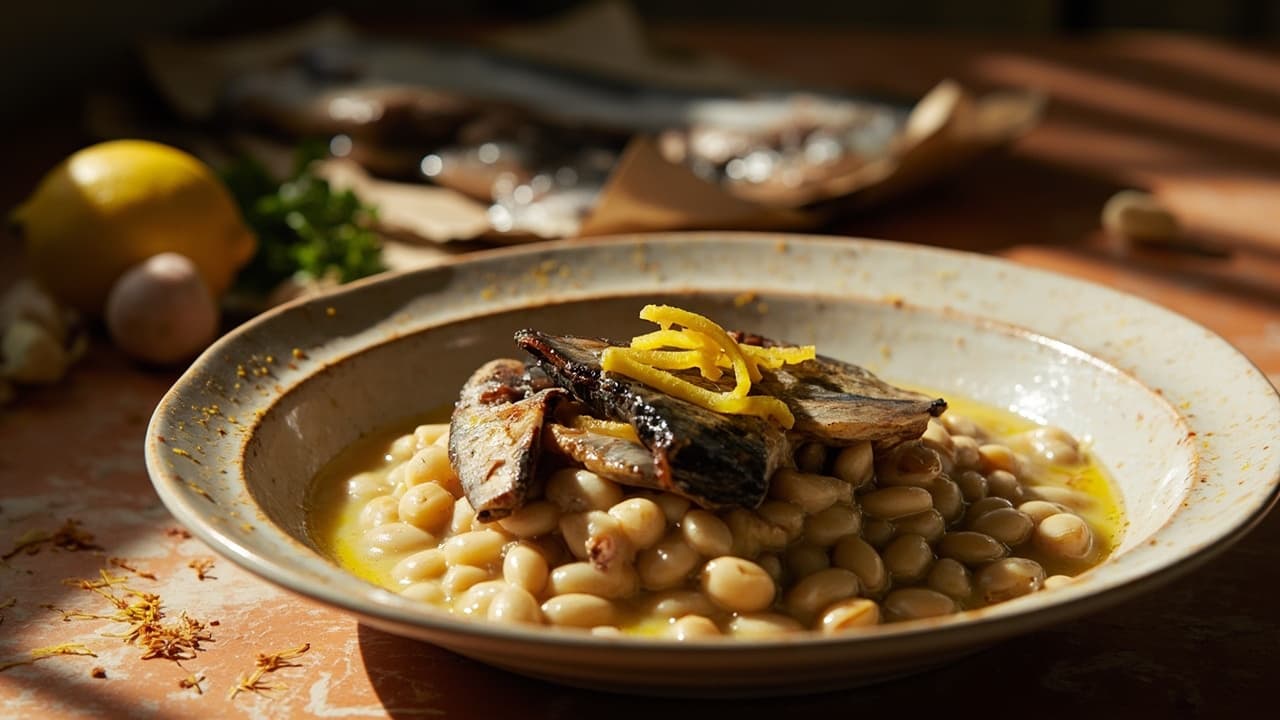
Sardines with White Beans and Garlic
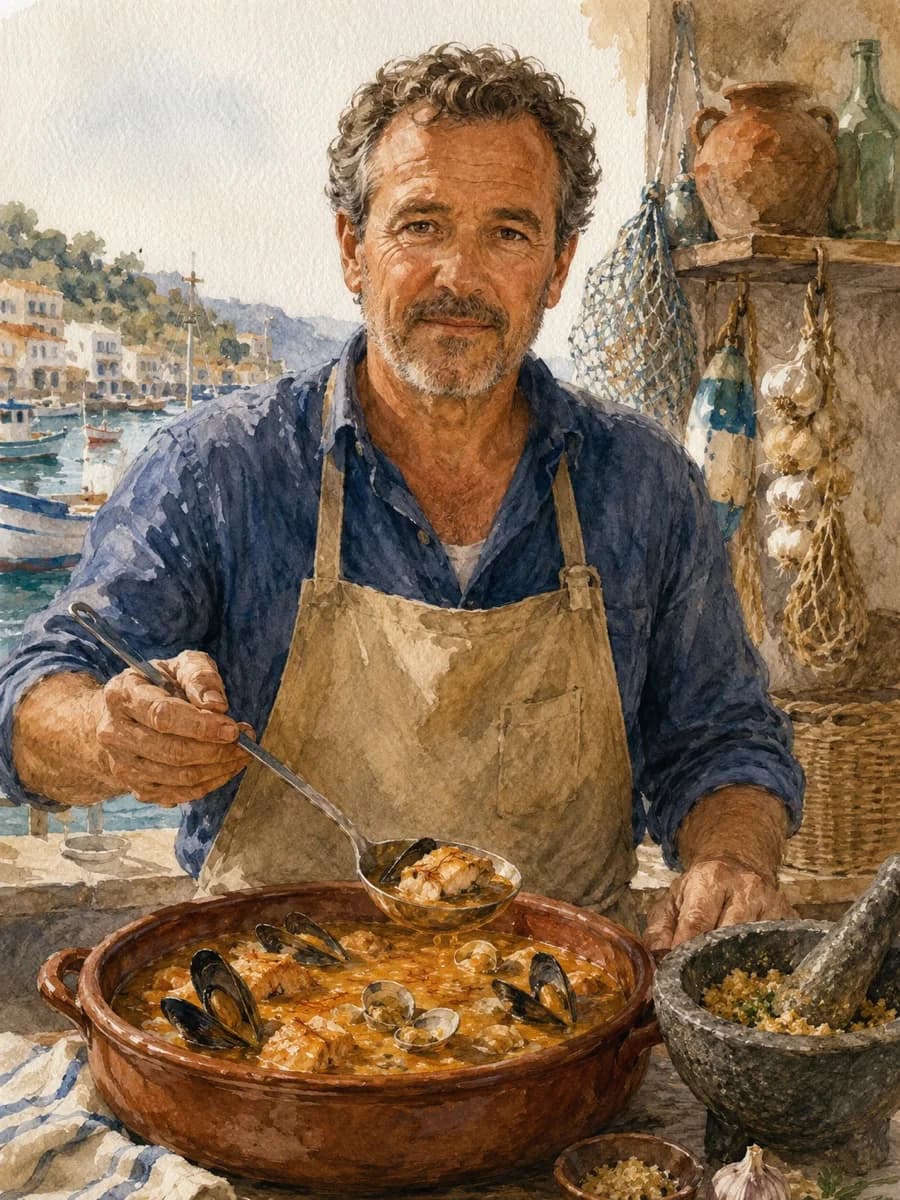
Briny sardines nestled atop creamy white beans perfumed with garlic and a bright hit of lemon — a coastal Mediterranean preparations Pau learned at the Barceloneta market, where the day-boat catch met the humble bean pot.
Prep
15 min
Cook
30 min
Total
45 min
Method
Building the Sofregit Base
1
In a heavy-bottomed Dutch oven, warm the olive oil over medium-low heat. Add the diced onion with a pinch of salt and let it soften slowly, stirring occasionally, until golden and sweet — about 15 minutes.
Simmering the White Beans
3
Add the drained white beans to the sofregit. Pour in just enough water to barely cover the beans. Stir in the bloomed saffron with its water and season with salt and black pepper.
Searing the Sardines
5
A
Nutri-Score
Excellent balance
A–E · lower is better · score -1
Calories
1039
per serving
High in protein · 85gLow sugar · 5g
Protein
85g
Carbs
71g
Fat
46g
Sat. fat
11g
Fiber
9g
Sugar
5g
Sodium
1555mg
Gluten FreePescatarianMediterraneanDairy FreeLow CarbHeart HealthyAnti InflammatoryBone HealthDiabetes FriendlyOmega 3 RichHigh ProteinHigh FiberBalanced MacrosLow Glycemic
Nutri-Score is a general nutritional-balance guide, not medical or dietary advice.
Grade pending
Environmental impact
Estimated footprint
Grade pending · 86% ingredient coverage
kg CO2e
≥0.4
per serving
White beans, soaked overnight and drained drives 41% of this recipe’s estimated footprint.
Carbon from Poore & Nemecek 2018; water, land & runoff from Agribalyse — modelled averages for comparing recipes, not a measurement of your groceries.
Flavor Profile
7
Umami
4
Sweet
6
Salty
4
Sour
2
Bitter
2
Spicy
Textures
CrispyCreamyTender
Aromas
GarlickyFloralHerbalSavory
Kitchen Equipment
Primary Tool
Dutch OvenCounter FootprintMedium
Techniques
Safety & Storage
Cross Contamination
Fish allergen present. Clean and sanitize all utensils, cutting boards, and cookware that contact sardines before using for other ingredients. Prepare sardines last if handling other allergens. Prevent any drippings from contacting ready-to-serve components.
Storage
Fresh sardines should be stored at 32-38°F and used within 1-2 days of purchase. Keep sardines on ice or in the coldest part of refrigerator. Store cooked sardine dishes separately from raw fish and other proteins.
Cooking Temperature
Sardines must reach an internal temperature of 145°F for at least 15 seconds to ensure safety. The high-heat sear method described achieves adequate temperatures, but verify with a calibrated thermometer if uncertain about fish freshness.
High Risk Population
Elderly, immunocompromised, pregnant individuals, and young children should consume only thoroughly cooked fish. Those with fish allergies must avoid this dish entirely regardless of preparation method.
Handling
Sardines should be prepared and cooked the same day for optimal freshness and safety. If sardines have an off-odor, slimy texture, or faded gills, discard immediately. Always wash hands thoroughly with soap after handling raw fish.
Shelf Life
Cooked sardine dishes should be consumed within 2-3 days when refrigerated at 40°F or below. Reheat leftovers to 165°F before consuming. Do not leave cooked fish at room temperature for more than 2 hours.
Pro Tips
Technique
When searing the sardines, resist the urge to move them — let them develop a golden crust undisturbed for those full three minutes per side. The skin should crackle slightly when done right, while the flesh stays juicy and opaque.
Substitution
If fresh sardines aren't available, quality canned sardines in olive oil work beautifully; simply drain and give them a quick sear to warm through and crisp the exterior before plating.
Equipment
A heavy-bottomed Dutch oven is essential for the beans — you want even, gentle heat that coaxes the sofregit to a jammy sweetness without scorching the bottom.
From the chef
Sardines and white beans are not two dishes sharing a plate — they become one thing when you build the sofrito slowly enough. The onion goes golden before the garlic enters, the tomato cooks down until the oil starts to separate at the edges, and the saffron blooms in warm water before it ever touches the pot. The beans drink that perfumed broth and become creamy and deep. The sardines go on a very hot pan, skin crisping in three minutes. Lemon and parsley at the end, bread alongside to catch the broth.
TagsSardinesWhite BeansGarlicLemonSaffronSofregitCatalanCoastalOne PotMediterraneanSeafood
AllergensFish
Source: generated · June 10, 2026