 French
Easy · Warm
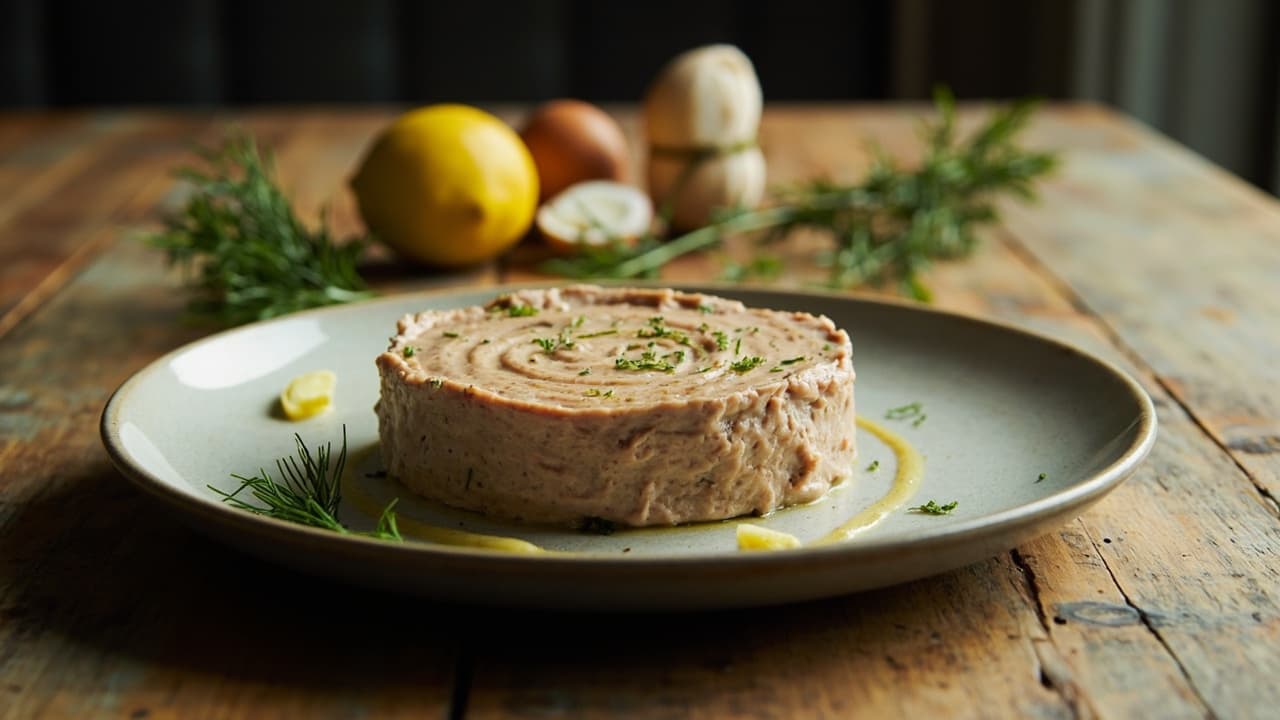
Tuna Pate Perfected with Dill
A silken, refined tuna pate elevated with bright dill and a whisper of lemon — crafted for the feline aristocrat who demands nothing less than perfection.

Prep
15 min
Cook
20 min
Total
35 min
Method
1
Drain both cans of tuna thoroughly. Flake the tuna with a fork, checking carefully for any bones or sharp fragments — discard any found.
2
Place the egg in a small saucepan, cover with cold water by 1 inch, and bring to a boil over high heat. Remove from heat, cover, and let stand for exactly 10 minutes. Transfer to an ice bath for 2 minutes, then peel and chop finely.
3
Melt butter in a medium saucepan over medium-low heat until it begins to shimmer and foam gently.
4
Add the flaked tuna and chopped egg to the pan. Stir with a wooden spoon to incorporate the butter evenly. Cook for 3-4 minutes, stirring occasionally, until the mixture is warmed through and the edges are just beginning to gentle sizzle.
5
Pour in the chicken broth. Stir well, then bring to a soft simmer over medium heat. Reduce heat to low and let it gently bubble for 5 minutes, stirring once or twice, until the broth is mostly absorbed and the mixture has thickened slightly.
6
7
Transfer the warm mixture to a food processor. Pulse 8-10 times until the pate reaches a smooth, creamy consistency with no large chunks remaining. For a silkier texture, process for an additional 30 seconds.
B
Nutri-Score
Good balance
A–E · lower is better · score 2
Calories
171
per serving
High in protein · 16gLow sugar · 1g
Protein
16g
Carbs
3g
Fat
11g
Sat. fat
6g
Fiber
1g
Sugar
1g
Sodium
452mg
Dairy PresentGluten FreeGrain FreeHigh ProteinLow CarbNo Added SugarDiabetesDiabetic DietHeart HealthyLow Carb DietLow Sodium OptionWeight ManagementHeart HealthLean Protein
Nutri-Score is a general nutritional-balance guide, not medical or dietary advice.
Flavor Profile
7
Umami
2
Sweet
5
Salty
4
Sour
1
Bitter
0
Spicy
Textures
CreamySilkyTender
Aromas
CitrusDairyHerbal
Kitchen Equipment
Primary Tool
Medium SaucepanFood ProcessorMedium SaucepanSmall SaucepanIce Bath BowlMeasuring CupsMeasuring SpoonsMixing BowlSpatulaWooden SpoonFine Mesh StrainerPaper Towels
Safety & Storage
Allergen Warning
This recipe contains fish (tuna), eggs, and dairy (butter). Clearly label these allergens for any human consumption.
Handling
Inspect flaked tuna thoroughly for bones or sharp fragments before cooking to prevent choking or oral injury.
Cross Contamination
Use separate utensils and cutting boards when handling raw tuna and eggs to prevent bacterial cross-contamination.
Storage
Transfer cooled pate to an airtight container and refrigerate promptly. Store away from raw meats and other potential contaminants.
Shelf Life
Refrigerated pate is safe for up to 2 days. Discard any portion left at room temperature for more than 2 hours.
High Risk Population
Ensure all ingredients are cat-safe. Avoid any seasoning adjustments using ingredients toxic to felines such as onion, garlic, or xylitol.
Cooking Temperature
Chicken broth must reach internal temperature of 165°F (74°C) when added to the mixture and maintained during simmering.
Pro Tips
Technique
Pulse the warm tuna mixture in the food processor rather than blending continuously—eight to ten gentle pulses creates that silken texture I demand, while over-processing reduces it to something rather tragic.
When preparing the hard-boiled egg, transfer it to an ice bath immediately after cooking and peel it while still cold. This prevents that dreadful grey-green ring around the yolk—an imperfection I simply will not tolerate in my kitchen.
From the chef
Tuna pate is not a thing you improvise — it is a thing you earn. The secret here lies in patience: the broth is absorbed slowly, at low heat, until the tuna softens into something nearly velvety, and the dill releases its oils at precisely the moment you stop hovering over it. A whisper of lemon lifts everything at the end. The result is silken, bright, and utterly composed — not complicated, merely correct. Whether your palate can appreciate the distinction is, naturally, your own concern.
TagsSilky SmoothDillLemonCat SafeQuickEasy
AllergensFishEggsMilk
Source: generated · June 13, 2026