 Filipino
Medium · Hot
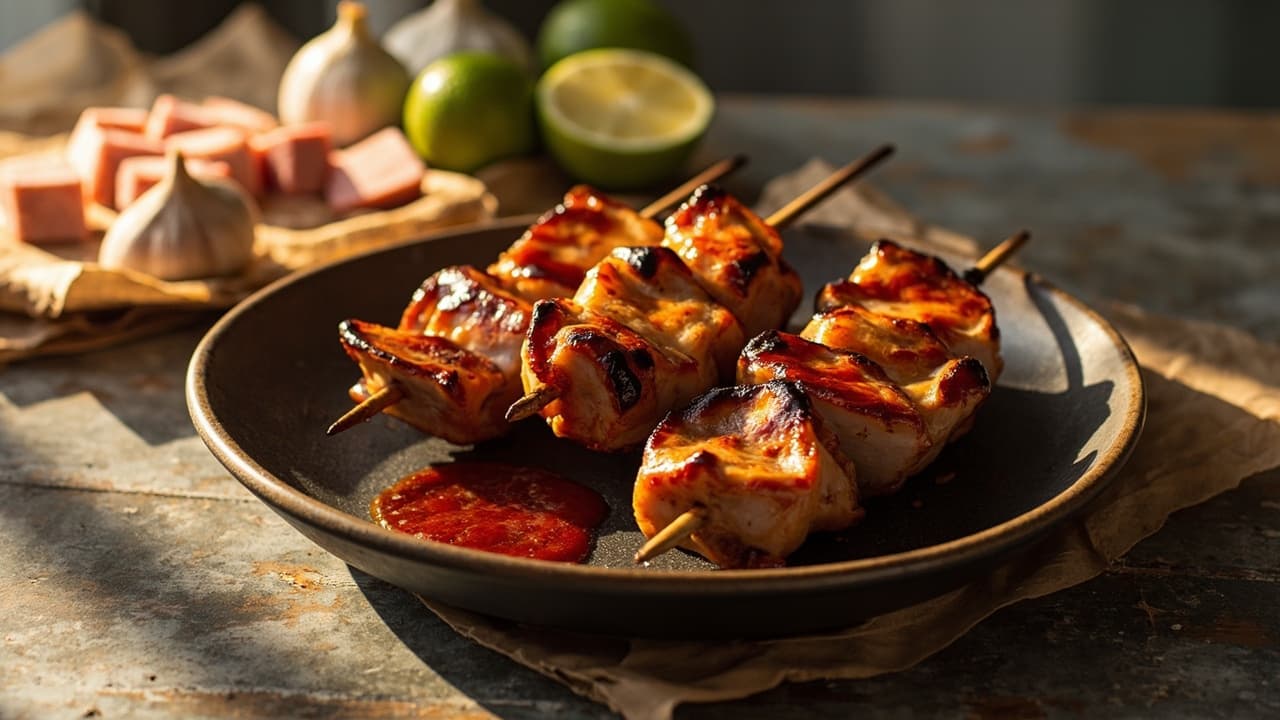
Coconut Charcoal Pork Belly Skewers with Smoked Paprika Baste
Tender pork belly threaded onto skewers and grilled over coconut charcoal, basted repeatedly with a smoky paprika-soy glaze that caramelizes into sticky, charred perfection. Rico's signature technique delivers crispy edges and a juicy, flavor-packed interior.

Prep
20 min
Cook
25 min
Total
45 min
Method
1
Cut the pork belly into 3cm cubes, ensuring each piece has a balanced ratio of fat and lean. Pat dry with paper towels and season evenly with salt. Let rest at room temperature for 15 minutes while you prepare the baste.
2
In a small saucepan over medium-low heat, combine soy sauce, brown sugar, smoked paprika, minced garlic, lemon juice, and honey. Stir gently until the sugar dissolves and the mixture begins to simmer, about 3 minutes. Remove from heat and let cool slightly. Reserve half for serving; use the other half for glazing.
3
Build a medium-high heat fire using coconut shell charcoal in your grill, leaving a hot zone and a cooler zone. Allow the coals to reach a glowing orange state with white ash edges, about 15-20 minutes. Brush the grill grate lightly with coconut oil to prevent sticking.
4
Thread 4-5 pork belly cubes onto each metal skewer, leaving small gaps between pieces for even heat circulation. Place skewers over the hot zone and sear for 2-3 minutes per side, until the exterior develops a deep golden-brown crust with slight char marks. Rotate regularly to avoid flare-ups.
E
Nutri-Score
Least favorable
A–E · lower is better · score 26
Calories
1084
per serving
High in saturated fat · 38gHigh in salt · 2487mgCalorie-dense · 1084 kcal
Protein
18g
Carbs
20g
Fat
104g
Sat. fat
38g
Fiber
1g
Sugar
17g
Sodium
2487mg
Dairy FreeGluten FreeDiabetes CautionLow Sodium CautionWeight Management CautionHigh Protein
Nutri-Score is a general nutritional-balance guide, not medical or dietary advice.
D
Environmental impact
High impact
A–E · lower is better · includes estimates
kg CO2e
2.3
per serving
DCarbonAEU all-round· carbon sets the grade
Water
0.9m³
Land
68Pt
Runoff
0.2g P
Pork Belly, cut into 3cm cubes drives 93% of this recipe’s estimated footprint.
Carbon from Poore & Nemecek 2018; water, land & runoff from Agribalyse — modelled averages for comparing recipes, not a measurement of your groceries.
Flavor Profile
7
Umami
4
Sweet
6
Salty
2
Sour
1
Bitter
2
Spicy
Textures
CrispyStickyTender
Aromas
SavorySmokySweet
Kitchen Equipment
Primary Tool
Charcoal GrillTechniques
Safety & Storage
Cooking Temperature
Cook pork belly skewers to an internal temperature of at least 145°F (63°C) measured at the thickest point of the largest cube. The high fat content can cause flare-ups that may char the exterior before the interior reaches safe temperature.
When preparing the baste, bring to a simmer for at least 3 minutes to ensure any surface contaminants are eliminated before using as a glaze.
Cross Contamination
Keep raw pork belly separated from ready-to-eat foods during prep. Use separate cutting boards and utensils, or clean thoroughly between uses.
If using the same grill grate for other foods after pork belly, ensure it is scrubbed clean and re-oiled. Fat residue from pork belly can cause cross-flavor transfer and potential allergen exposure for soy-sensitive individuals.
Handling
Allow pork belly to rest at room temperature for no more than 15 minutes as directed. Do not leave at room temperature beyond this window to prevent bacterial growth in the fat-rich meat.
Storage
Refrigerate unused portion of baste within 2 hours of preparation. The soy-based glaze is a high-risk food that supports bacterial growth at room temperature.
Store leftover cooked skewers in airtight containers and refrigerate within 2 hours. Consume within 3-4 days or freeze for up to 2 months.
Equipment Safety
When grilling with coconut shell charcoal, ensure proper ventilation. Coconut charcoal produces intense heat; use long-handled tongs and heat-resistant gloves when managing flare-ups.
Allergen Warning
Soy sauce contains soy and may contain wheat/gluten. For soy-free preparation, substitute with coconut aminos. For gluten-free, ensure soy sauce is labeled gluten-free or use tamari.
Pro Tips
Technique
Keep that basting brush moving—thin, even coats let the glaze caramelize without burning. Too much at once and you'll get a sticky mess instead of that beautiful charred finish. I learned this the hard way watching my lola, and trust me, patience wins every time.
Substitution
For a more traditional Filipino touch, swap the lemon for calamansi—you'll get that signature citrus brightness that cuts through the richness, just like in my signature calamansi-soy baste.
From the chef
Pork belly over coconut shell charcoal is one of the great truths of Filipino barbecue — the fat renders slowly into the fire, the baste builds layer by layer, and you end up with something sticky, smoky, and impossible to put down. The key here is a smoked paprika-soy glaze sweetened with honey and lifted with lemon. You baste every minute during those last six minutes, letting each coat caramelize before the next goes on. Rest the skewers three minutes when they come off — that patience is what keeps the interior juicy.
TagsGrilled SkewersPork BellyCharcoal GrilledSweet SavorySmoky GlazeSoy BasedWeeknight DinnerMedium Difficulty
AllergensSoy
Source: generated · June 12, 2026