 French
Medium · Warm
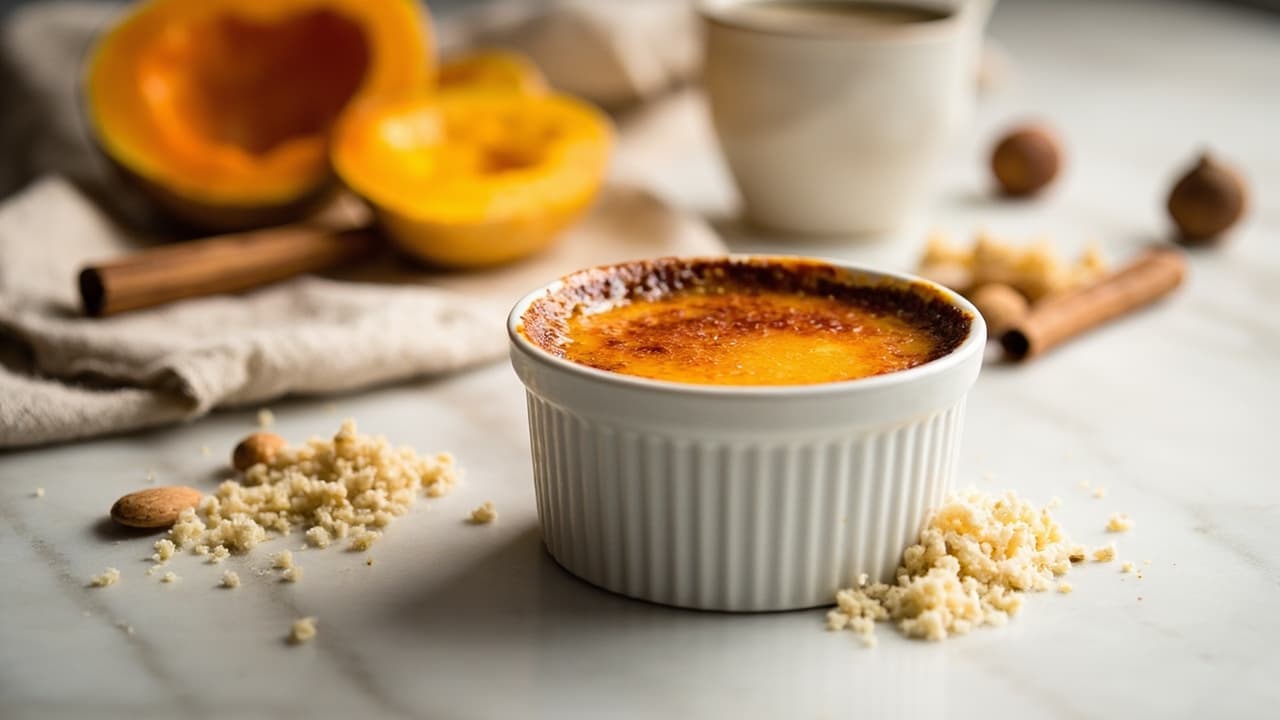
Butternut Squash Creme Brûlée with Almond Crumble
A classical creme brulace infused with roasted butternut squash puree and warm spice, crowned with a crisp almond crumble. Helene's version balances the earthy sweetness of squash against a bitter caramelized top and buttery crunch.

Prep
20 min
Cook
1h 8m
Total
1h 28m
Method
1
Preheat the oven to 200C. Halve the butternut squash, rub cut surfaces with 15g butter and a pinch of salt, and place cut-side down on a lined baking tray.
2
3
Preheat oven to 180C. In a bowl, rub together the almonds (roughly chopped), flour, 30g white sugar, and a pinch of salt with the 35g cold butter until the mixture forms coarse, uneven crumbs with no dry patches remaining.
4
5
Reduce oven to 150C. Warm the heavy cream in a saucepan over medium heat until it just begins to steam and small bubbles appear at the edges, about 5 minutes. Do not boil.
6
In a separate bowl, whisk the eggs, 80g white sugar, vanilla extract, nutmeg, and a pinch of salt until pale and smooth, about 2 minutes by hand.
7
Pour the warm cream into the egg mixture in a slow, steady stream, whisking constantly to temper without scrambling the eggs. Strain through a fine sieve into a clean bowl.
8
Fold the butternut squash puree into the custard base until fully incorporated with no streaks. Divide among 4 ramekins (approx 150ml each) set in a deep baking dish. Fill the dish with hot water to reach halfway up the ramekin sides.
9
Bake at 150C for 30-32 minutes. The custards are done when the edges are set and the center still has a slight, deliberate wobble when the dish is gently shaken. Remove ramekins from the water bath immediately and cool to room temperature on a wire rack.
10
Cover each ramekin with plastic wrap touching the surface and refrigerate a minimum of 3 hours, or overnight, to set fully.
11
Sprinkle 1 tbsp white sugar evenly over the chilled surface of each custard. Using a kitchen torch held 2-3 cm from the surface, melt and caramelize the sugar in sweeping circular motions until a deep, amber-brown crust forms with no white patches. Allow the crust to harden 30 seconds before serving.
12
Pile a spoonful of almond crumble alongside or on top of each brulace at the table. Serve immediately.
D
Nutri-Score
Needs balance
A–E · lower is better · score 11
Calories
830
per serving
High in saturated fat · 26gCalorie-dense · 830 kcalLow salt · 235mg
Protein
15g
Carbs
67g
Fat
59g
Sat. fat
26g
Fiber
7g
Sugar
49g
Sodium
235mg
Egg ContainingLactose ContainingNut ContainingStandard Omnivore
Nutri-Score is a general nutritional-balance guide, not medical or dietary advice.
C
Environmental impact
Moderate impact
A–E · lower is better · includes estimates
kg CO2e
1.1
per serving
CCarbonAEU all-round· carbon sets the grade
Water
0.7m³
Land
42Pt
Runoff
0.1g P
Heavy Cream drives 53% of this recipe’s estimated footprint.
Carbon from Poore & Nemecek 2018; water, land & runoff from Agribalyse — modelled averages for comparing recipes, not a measurement of your groceries.
Flavor Profile
5
Umami
6
Sweet
3
Salty
1
Sour
4
Bitter
3
Spicy
Textures
CreamyCrispySilkySmooth
Aromas
CaramelNuttySweet VanillaWarm Spice
Kitchen Equipment
Primary Tool
OvenDeep Baking DishKitchen TorchOvenSaucepanChef KnifeCutting BoardDigital Precision ScaleFine SieveInstant Read ThermometerMixing BowlsOffset SpatulaTamisWhiskWire RackParchment PaperPlastic WrapRamekins 150ml
Techniques
Safety & Storage
Cooking Temperature
Maintain oven at 150C during custard baking. Overcooking will cause eggs to scramble and produce a grainy texture rather than silky smooth custard.
When tempering eggs with warm cream, pour slowly while whisking constantly. Adding hot liquid too quickly will cause visible egg protein strands and ruin the texture.
Heat cream only until it begins to steam with small bubbles at edges. Do not boil as this scorches the milk proteins and alters flavor.
Cross Contamination
When preparing almond crumble, use dedicated equipment or thoroughly clean utensils before using for allergen-free preparations to prevent cross-contact with tree nut residues.
Dust from almond crumble can aerosolize during preparation. Prepare almond crumble separately or after allergen-sensitive preparations if serving to individuals with severe tree nut allergies.
Storage
Refrigerate finished custards uncovered initially to prevent condensation on caramelized sugar surface. Once chilled and surface is dry, cover with plastic wrap pressed directly to surface to prevent skin formation.
Store almond crumble separately in an airtight container at room temperature. It will remain crisp for up to 3 days but absorbs moisture rapidly when exposed to humid environments.
Shelf Life
Creme brulee custards are best consumed within 24-48 hours of preparation. The caramelized sugar crust softens over time and dairy-based custards degrade in quality.
High Risk Population
This recipe contains raw egg mixture that is baked but may not reach temperatures sufficient for immunocompromised individuals, elderly, pregnant women, or infants. Ensure water bath reaches all sides of ramekins during baking.
Equipment Safety
When caramelizing sugar with a kitchen torch, hold 2-3 cm from surface and use sweeping circular motions. Never leave torch unattended and keep away from flammable materials. Allow torch to cool completely before storage.
Allergen Warning
This recipe contains multiple priority allergens: milk, eggs, tree nuts, and gluten. Always inform guests of allergen contents and keep allergen-containing components clearly separated during service.
Handling
Cool crumble completely on baking tray before transferring to prevent crumbling. Warm crumble is fragile and will break into powder rather than maintain crisp crumb texture when served.
Pro Tips
Technique
When caramelizing the sugar crust, resist the urge to rush. Hold your torch at a steady 2-3 centimeters distance and move in slow, overlapping circles. Rushing produces an uneven crust with bitter burnt patches. You want the color of polished mahogany, not charred wood — that is the difference between a pastry and an accident.
Substitution
Demerara or Turbinado sugar may replace the white sugar for the brûlée crust — the larger crystals yield a more dramatic crack with subtle molasses undertones that pair magnificently with the squash. However, do not substitute in the custard itself; the fine grain of white sugar dissolves completely, ensuring that silky, seamless texture we require.
From the chef
Roasted butternut squash, pureed through a tamis and folded into a classical custard base, does something quite particular here — it softens the cream's richness and introduces an earthy sweetness that neither dominates nor disappears. The caramelized sugar top, torched to a deep amber, provides the necessary counterpoint: bitter, crisp, and unforgiving of uneven application. The almond crumble at the side adds crunch and fragrance where the custard offers only silk. Each element exists to correct or complete the others. That is the discipline this dessert demands, and it rewards those who apply it.
TagsCreme BruleeBakedNut ContainingDairyEggAutumnSeasonalMake AheadElegantTorch Caramelized
AllergensMilkEggsTree NutsWheatGluten
Source: generated · June 13, 2026