 Italian
Medium · Hot
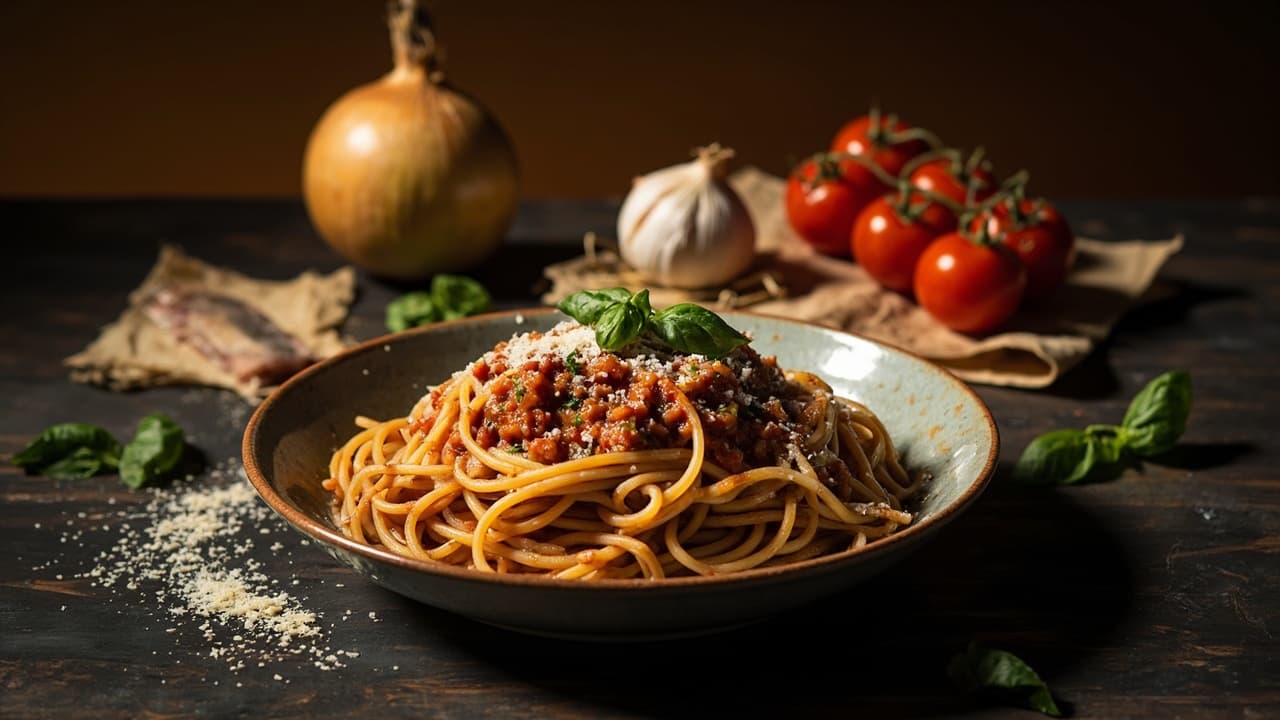
Anchovy Tomato Spaghetti with Basil
A classic Italian pasta where umami-rich anchovies melt into a fragrant tomato sauce, tossed with al dente spaghetti and fresh basil. Kenji-style: bridging the gap between familiar comfort food and bold, global flavors.

Prep
15 min
Cook
30 min
Total
45 min
Method
Prep
1
Mince the garlic cloves finely. Dice the yellow onion into small pieces. Roughly chop the tomatoes (or crush them with your hands for a rusticker texture). Chop the anchovy fillets into small pieces.
Build the Sauce
2
Heat olive oil in a skillet over medium heat. Add minced garlic and diced onion; sauté for 2-3 minutes until fragrant and translucent. Add chopped anchovy fillets and cook for 30-60 seconds, stirring continuously, until the anchovies dissolve into a paste. Add the chopped tomatoes, black pepper, and cayenne. Stir to combine. Reduce heat to medium-low and simmer for 15-20 minutes, stirring occasionally, until the sauce thickens and the tomatoes break down completely.
Cook the Pasta
3
Cook to al dente (190-195°F/88-91°C internal temperature).
D
Nutri-Score
Needs balance
A–E · lower is better · score 11
Calories
990
per serving
High in salt · 6339mgHigh in protein · 74gLow sugar · 10g
Protein
74g
Carbs
91g
Fat
36g
Sat. fat
14g
Fiber
14g
Sugar
10g
Sodium
6339mg
Heart HealthyAnti InflammatoryHigh ProteinLow Sugar
Nutri-Score is a general nutritional-balance guide, not medical or dietary advice.
C
Environmental impact
Moderate impact
A–E · lower is better · includes estimates
kg CO2e
1.0
per serving
CCarbonAEU all-round· carbon sets the grade
Water
1.0m³
Land
39Pt
Runoff
0.1g P
Tomato drives 37% of this recipe’s estimated footprint.
Carbon from Poore & Nemecek 2018; water, land & runoff from Agribalyse — modelled averages for comparing recipes, not a measurement of your groceries.
Flavor Profile
7
Umami
4
Sweet
5
Salty
3
Sour
1
Bitter
4
Spicy
Textures
TenderSilkyChewySaucy
Aromas
HerbalSavoryPungentUmami Rich
Kitchen Equipment
Primary Tool
SkilletCounter FootprintMedium
Safety & Storage
Allergen Warning
This dish contains fish (anchovies) and milk (parmesan cheese). These allergens persist even after cooking. Inform guests of allergen content before consumption.
Cross Contamination
Use dedicated cutting boards and utensils when preparing anchovies to prevent cross-contact with other ingredients, especially if preparing for individuals with severe fish allergies.
Cooking Temperature
Bring tomato sauce to a full simmer (200°F/93°C minimum) and maintain for the full 15-20 minutes. Pasta should be cooked to al dente (190-195°F/88-91°C).
High Risk Population
Pregnant women, young children, elderly, and immunocompromised individuals should ensure fish is thoroughly cooked. Anchovies should be fully incorporated into sauce with no visible pieces remaining.
Storage
Refrigerate leftovers in airtight containers within 2 hours of cooking. Consume within 3-4 days. Reheat to 165°F/74°C before serving.
Handling
Wash fresh basil thoroughly under running water before use. Pat dry to reduce moisture content that could promote bacterial growth.
Shelf Life
Prepared sauce without pasta can be refrigerated for up to 5 days or frozen for 2-3 months. Cooked pasta with sauce should be consumed within 3-4 days.
Histamine Risk
Anchovies contain histidine which converts to histamine if fish is mishandled. Always use fresh, high-quality anchovies. Cook at temperatures above 165°F/74°C for at least 30 seconds to reduce histamine levels. Discard fish with strong odor, discoloration, or mushy texture.
Pro Tips
Technique
Let your anchovies actually fry in the olive oil for 30-60 seconds before adding anything else. You're not cooking them to eat them whole — you're dissolving them into the fat, almost like making a anchovy butter. That garlicky, salty paste is what builds your sauce's foundation.
Substitution
If anchovies feel like too big a leap, start with 1-2 teaspoons of fish sauce in place of them. Same umami logic, different entry point. Or if you want to go the other direction, add a tiny pinch of dashi powder — it won't taste Japanese, it'll just taste richer.
From the chef
Here's the thing about anchovies — they're basically the Italian version of what bonito flakes do in Japanese cooking. Those tiny fillets melt right into your sauce and disappear, leaving behind this incredible savory depth that makes people wonder why their pasta tastes so much more complex than the stuff they grew up with. I discovered this trick years ago while trying to explain umami to my American friends, and now it's one of my favorite ways to bridge the gap between comfort food and something that actually teaches you something about flavor.
TagsItalianPastaTomato SauceAnchoviesUmamiWeeknight DinnerQuick
AllergensFishMilkGluten
Source: generated · June 10, 2026