 Basque
Medium · Hot
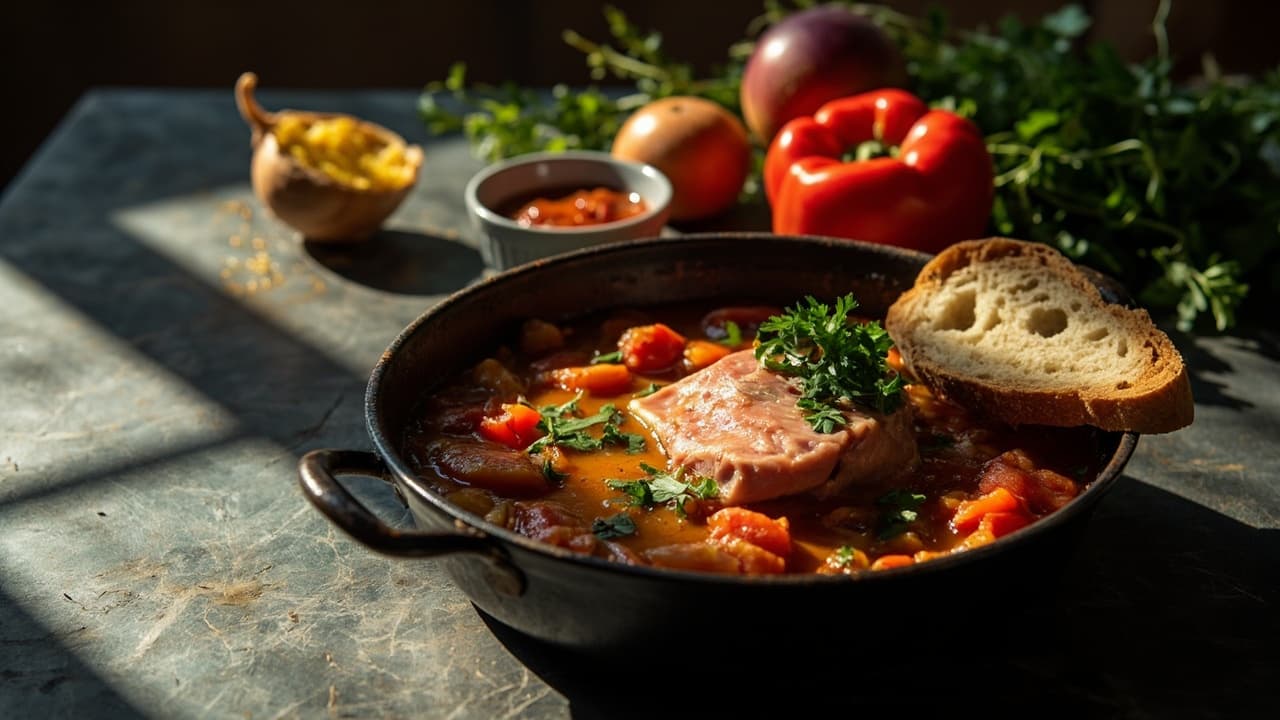
Basque Tuna Belly Braised with Onions, Tomatoes and Sweet Peppers
A hearty Atlantic preparation where tuna belly is slowly braised in a rich sofrito of sweet peppers, onions, and tomatoes. The tuna absorbs all that briny depth while staying tender — this is what the coast tastes like.

Prep
15 min
Cook
30 min
Total
45 min
Method
Season and Sear the Tuna
1
Pat the tuna belly dry with paper towels. Season generously with salt and black pepper on all sides.
2
Heat 3 tablespoons olive oil in a heavy cazuela or Dutch oven over high heat until shimmering. Sear the tuna belly for 2 minutes per side until golden with a slight char. Remove and set aside — it will finish cooking in the braise.
Build the Sofrito
3
Reduce heat to medium. Add the remaining 4 tablespoons olive oil to the same pan. Toss in the diced yellow onion and cook, stirring occasionally, for 8 minutes until softened and translucent.
4
Add the sliced bell peppers and cook for another 6 minutes until they begin to sweeten and caramelize at the edges.
5
Stir in the minced garlic and cook for 1 minute until fragrant — do not let it burn.
6
Add the chopped tomatoes and cook down for 5 minutes, breaking them up with your spoon, until they release their juices and the sofrito thickens.
7
[object Object]
Finish and Plate
8
Remove the lid and let the sauce reduce slightly for 3 minutes if it seems too loose — you want it glossy and clinging to the fish.
9
A
Nutri-Score
Excellent balance
A–E · lower is better · score -2
Calories
527
per serving
High in protein · 39gLow sugar · 10g
Protein
39g
Carbs
21g
Fat
33g
Sat. fat
7g
Fiber
8g
Sugar
10g
Sodium
1886mg
Gluten FreeDairy FreePescatarianMediterraneanLow CarbWhole30Heart HealthyAnti InflammatoryDiabetes FriendlyLow Sodium OptionalHigh ProteinOmega 3 RichBalanced Fat
Nutri-Score is a general nutritional-balance guide, not medical or dietary advice.
Grade pending
Environmental impact
Estimated footprint
Grade pending · 69% ingredient coverage
kg CO2e
≥0.5
per serving
Tomato drives 38% of this recipe’s estimated footprint.
Carbon from Poore & Nemecek 2018; water, land & runoff from Agribalyse — modelled averages for comparing recipes, not a measurement of your groceries.
Flavor Profile
7
Umami
4
Sweet
5
Salty
3
Sour
1
Bitter
4
Spicy
Textures
CrispyTenderSilkyGlossy
Aromas
SmokySavoryMediterraneanTomato BasedHerbal
Kitchen Equipment
Primary Tool
Dutch OvenDutch OvenCast Iron SkilletChef KnifeCutting BoardTongsWooden SpoonMeasuring SpoonsFish SlicePaper Towels
Counter FootprintMedium
Safety & Storage
Cooking Temperature
Braise tuna belly until internal temperature reaches 145°F (63°C) to eliminate pathogens. The slow 20-minute braise at low heat with lid should achieve this, but verify with a calibrated meat thermometer inserted into the thickest part.
Cross Contamination
Use separate cutting boards and utensils for raw tuna and vegetables. Never let raw fish contact surfaces used for the sofrito or garnish without sanitizing between uses. Change gloves after handling raw tuna.
Storage
Refrigerate fresh tuna at 40°F (4°C) or below before cooking. After cooking, cool leftovers to room temperature within 2 hours, then refrigerate at 40°F or below. Consume within 3 days. Reheat leftovers to 165°F (74°C) before serving.
High Risk Population
Pregnant women, elderly individuals, young children, and immunocompromised persons must ensure tuna is fully cooked to 145°F. These populations face heightened risk from undercooked seafood.
Handling
Pat tuna belly dry before seasoning as moisture interferes with proper searing. Wash hands thoroughly with soap for 20 seconds before and after handling raw fish. The high-heat sear (2 minutes per side) creates a protective crust that locks in juices.
Allergen Warning
This dish contains fish (tuna). Even trace amounts can cause severe reactions in allergic individuals. Do not use this recipe if preparing food for someone with fish or seafood allergies. Cross-contact during preparation can be fatal.
Pro Tips
Technique
The sear is quick — two minutes per side, high heat, oil shimmering — but the braise is slow and gentle. Twenty minutes with the lid on, and the tuna finishes cooking in all that pepper-tomato depth. This is the difference between tender and rubbery.
Flavor Boost
The vinegar goes in around the edges of the pan, not directly on the fish. It awakens the sofrito and adds a clean sharpness that makes the whole dish taste more alive. Never skip it.
Substitution
If you cannot find fresh tuna belly, a thick swordfish steak holds up beautifully to this slow braise. The texture is different but the method works the same magic.
From the chef
Tuna belly is a cut that asks for patience, not fire. You sear it first — two minutes a side to get a faint char on the outside — then nestle it into a sofrito of sweet peppers, onion, and tomato that has already been cooking for twenty minutes. A thread of white vinegar around the edge of the pan, the lid on, the heat low. Twenty minutes later the belly yields gently to a fork but holds its shape, and that briny Atlantic depth has soaked through every layer of the sofrito. Parsley and good olive oil at the end. The sea does the rest.
TagsBasqueSeafoodTunaBraisedOne PotOlive OilAtlanticSofritoTraditional
AllergensFish
Source: generated · June 10, 2026