 Indonesian
Medium · Hot
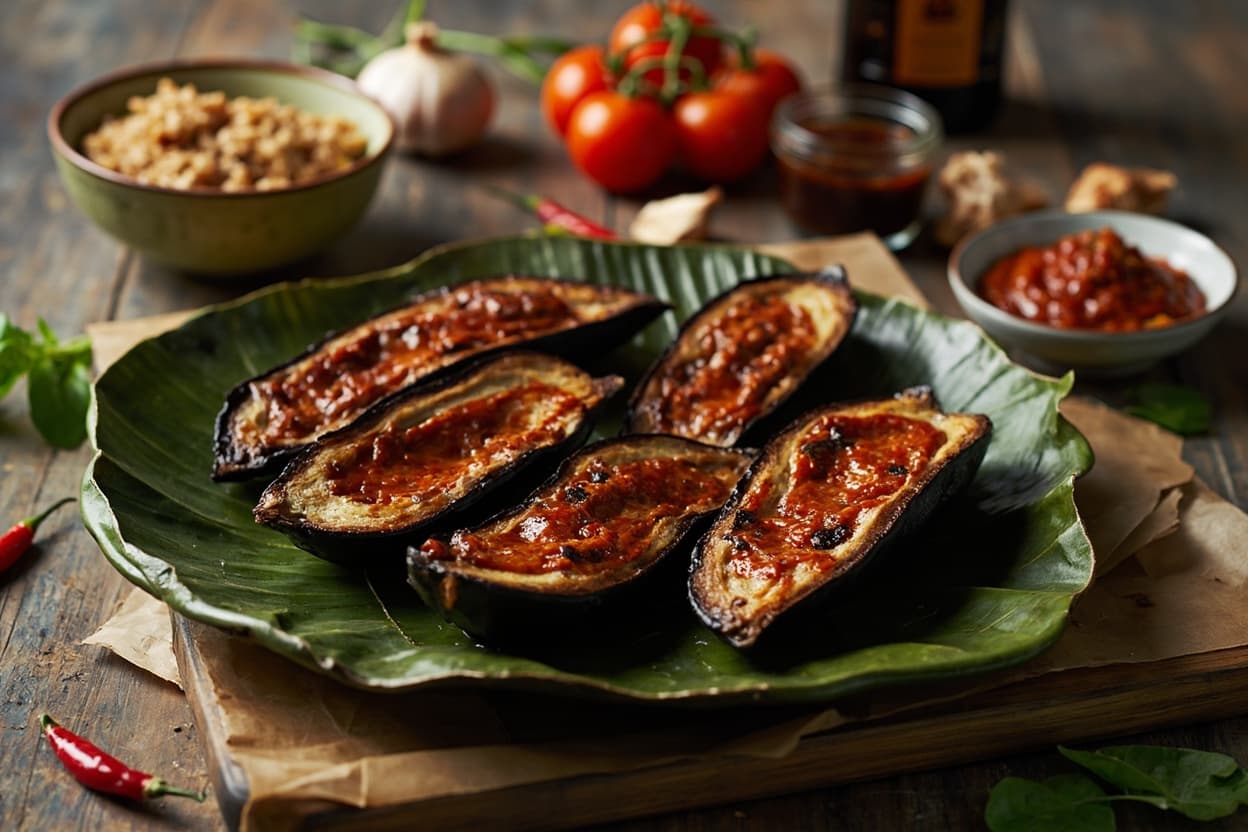
Sweet-Soy Glazed Eggplant with Chile Sambal
Eggplant is the great receiver — it absorbs the soy-and-brown-sugar glaze completely, and the sambal of cayenne, tomato, yellow onion, and garlic on top adds a layer of heat that plays off that sweetness brilliantly. Caramelization at the skin gives you texture; the collapsed interior gives you richness. This dish proves the Indonesian pantry can do extraordinary things with a single vegetable.

Prep
15 min
Cook
30 min
Rest
10 min
Total
55 min
Method
Prep the Eggplant
1
Cut each eggplant in half lengthwise. Score the flesh in a crosshatch pattern, making deep cuts without piercing the skin. Sprinkle generously with salt and let sit 10 minutes to draw out bitterness. Pat dry with paper towels.
Make the Sweet-Soy Glaze
2
Mince the garlic and finely grate the ginger. In a small bowl, whisk together soy sauce, brown sugar, minced garlic, grated ginger, and black pepper until the sugar dissolves. Set aside.
Build the Chile Sambal
3
Finely dice the yellow onion. Mince the remaining garlic cloves. In a mortar and pestle or small bowl, combine cayenne, diced onion, minced garlic, lime juice (from the whole lime), and salt. Grind and mix until a chunky paste forms. Taste and adjust salt or lime as needed.
Cook the Glazed Eggplant
4
Heat coconut oil in a wok or large skillet over medium-high heat. Place eggplant halves cut-side down and cook 3-4 minutes until golden. Flip and pour the sweet-soy glaze around the eggplant.
C
Nutri-Score
Fair balance
A–E · lower is better · score 10
Calories
156
per serving
High in salt · 1744mgSource of fibre · 4g
Protein
3g
Carbs
21g
Fat
8g
Sat. fat
7g
Fiber
4g
Sugar
11g
Sodium
1744mg
Gluten FreeDairy FreeEgg FreeDiabetes FriendlyHeart HealthyAnti InflammatoryLow CholesterolHigh FiberLow Saturated FatPlant Forward
Nutri-Score is a general nutritional-balance guide, not medical or dietary advice.
A
Environmental impact
Very low impact
A–E · lower is better · includes estimates
kg CO2e
0.2
per serving
ACarbonAEU all-round· both agree
Water
0.5m³
Land
11Pt
Runoff
0.04g P
Eggplant drives 51% of this recipe’s estimated footprint.
Carbon from Poore & Nemecek 2018; water, land & runoff from Agribalyse — modelled averages for comparing recipes, not a measurement of your groceries.
Flavor Profile
7
Umami
6
Sweet
5
Salty
3
Sour
1
Bitter
6
Spicy
Textures
TenderCaramelizedStickyChunky
Aromas
GarlickySpicyCitrusSavory
Kitchen Equipment
Techniques
Safety & Storage
Cooking Temperature
Heat coconut oil over medium-high until shimmering before adding eggplant. Cut-side down placement requires 3-4 minutes for proper caramelization. Internal doneness achieved when flesh yields easily and glaze has thickened to lacquer-like consistency.
Cross Contamination
Use dedicated cutting boards for vegetables. The salting step for eggplant drawing out bitterness can cross-contaminate if same surface used for other foods without proper sanitation.
Allergen Warning
Soy sauce is a primary ingredient in the glaze. Verify all accompaniments and serving vessels are soy-free if serving to individuals with soy allergies. Plain steamed rice is recommended as a safe side.
High Risk Population
Chile sambal contains 2 tablespoons cayenne pepper creating significant heat. Not appropriate for young children sensitive to capsaicin elderly with digestive sensitivity or those with inflammatory bowel conditions.
Handling
Score eggplant deeply in crosshatch pattern without piercing skin. Salted eggplant must be thoroughly pat-dried before cooking to prevent oil splatter from moisture.
Equipment Safety
Coconut oil reaches high smoking point—do not leave unattended. Wok will retain heat well after removal—warn diners and use appropriate trivets for serving.
Storage
Cool leftovers to room temperature within 2 hours maximum. Refrigerate in airtight containers. Consume within 3-4 days. Glaze and sambal can be stored separately for meal prep.
Fresh ginger and garlic in both glaze and sambal require proper hand hygiene during mincing and grating steps to prevent bacterial transfer.
Pro Tips
Technique
Don't rush the sambal! Using your mortar and pestle to grind the cayenne, onion, garlic, and lime together creates texture and releases oils that a food processor simply cannot achieve. The chunky, vibrant paste should smell bright and sharp — that's when you know the flavors have married perfectly.
Substitution
If you have trouble finding fresh cayenne, Thai bird's eye chilies work beautifully and give an even more authentic Southeast Asian kick. For the sweet glaze, while kecap manis is traditional, the brown sugar and soy sauce combination here gives you that sticky, caramelized finish when you let the sauce reduce until it coats the back of a spoon.
From the chef
Eggplant is the great receiver of the Indonesian pantry, and here it gets two treatments at once. The flesh is scored deep, salted to draw out bitterness, then placed cut-side down in coconut oil until golden before the sweet soy glaze — brown sugar, soy sauce, garlic, ginger — goes in and reduces around it into a glossy lacquer. While that happens, you build the chile sambal fresh: cayenne, yellow onion, garlic, and lime juice pounded into a chunky paste with real heat and bright acidity. Spoon that sambal over the glazed eggplant just before serving and the contrast is everything — sweet, sticky, fiery, alive.
TagsSpicyVeganWeeknight DinnerEggplantSambal
AllergensSoy
Source: generated · May 30, 2026