 Filipino
Medium · Hot
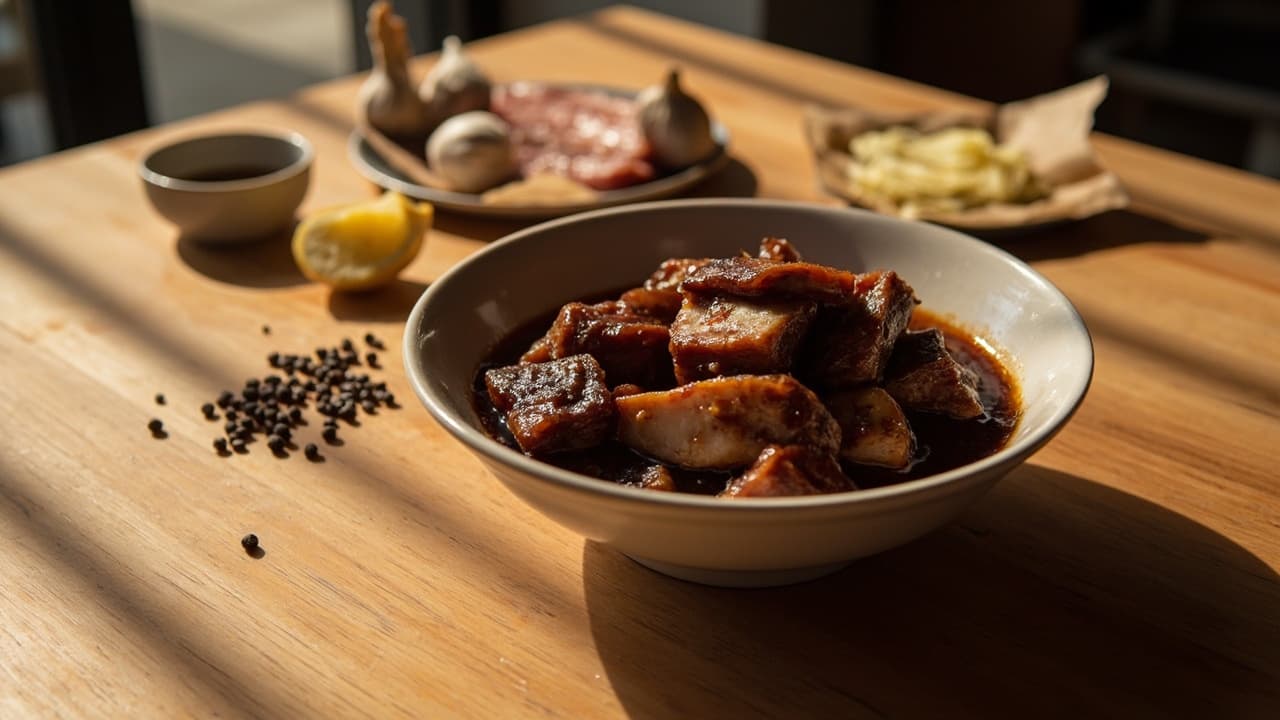
Lola's Pork Belly Adobo
Tender, glossy pork belly braised in a perfectly balanced soy-vinegar sauce with heaps of garlic. This is the adobo my lola made every Sunday — tangy, savory, and endlessly comforting.

Prep
20 min
Cook
1h 30m
Rest
5 min
Total
1h 55m
Method
Prepare the Pork Belly
1
Rinse the pork belly pieces under cold water and pat completely dry with paper towels. This step is important — dry meat means a better sear and crispier edges.
2
Season the pork belly generously with salt and black pepper. Set aside at room temperature for 10 minutes while you prep the other ingredients.
Build the Adobo Braise
3
In a large bowl, combine soy sauce, white vinegar, chicken broth, and white sugar. Stir until the sugar dissolves completely. This is your adobo marinade — the soul of the dish.
Sear the Pork
5
Heat sunflower oil in your Dutch oven over high heat until it shimmers. Add the pork belly pieces in a single layer — do not crowd the pan. Sear for 3-4 minutes per side until deeply golden brown. Work in batches if needed. The caramelized bits at the bottom are pure gold — don't burn them! Use a meat thermometer to verify internal temperature reaches 145°F (63°C) before consuming.
6
Once all pork is seared, arrange the pieces back in the Dutch oven. Pour the soy-vinegar mixture over the pork. Add the crushed garlic, quartered onion, and another pinch of black pepper.
Braise Low and Slow
7
Bring everything to a boil over high heat, then immediately reduce to the lowest simmer. Cover the Dutch oven with a tight-fitting lid.
8
Braise for 1 hour and 15 minutes, turning the pork belly pieces halfway through. The sauce should be gently bubbling, not furiously boiling. You want tender, fork-breaking pork, not tough meat. Verify the braising liquid maintains a temperature between 275-325°F (135-160°C).
9
After 1 hour, uncover the pot and let the sauce reduce for 15 minutes, stirring occasionally, until it thickens into a glossy, syrupy glaze that coats every piece of pork belly and reaches an internal temperature of 165°F (74°C). This is lola's trick — patience makes the adobo.
Make the Garlic Rice
10
While the adobo finishes reducing, rinse the white rice until water runs clear. Cook in your rice cooker or pot with the appropriate amount of water.
11
In a small pan, heat 1 tablespoon sunflower oil over medium heat to 350°F (175°C). Add minced garlic and stir constantly for 2 minutes until golden and fragrant. Be careful — burned garlic is bitter! Monitor oil temperature to prevent smoking and acrolein formation.
Mix the Sawsawan
13
In a small bowl, combine white vinegar, soy sauce, minced garlic, and minced onion. Let it sit for 5 minutes so the flavors marry. This simple dipping sauce transforms everything on the table.
Serve the Feast
14
Spoon garlic rice onto a large platter or banana leaf. Arrange the adobo pork belly on top, drizzling generously with the reduced braising sauce. Scatter some crispy braised garlic from the pot over the top.
15
Serve family-style with the sawsawan on the side, extra steamed rice, and a green vegetable on the side if you like. Mangga! (Let's eat!)
D
Nutri-Score
Needs balance
A–E · lower is better · score 18
Calories
1380
per serving
High in saturated fat · 41gCalorie-dense · 1380 kcalLow sugar · 5g
Protein
23g
Carbs
8g
Fat
138g
Sat. fat
41g
Fiber
1g
Sugar
5g
Sodium
1144mg
Gluten FreeDairy FreeLow CarbNot Suitable Low SodiumNot Suitable Heart DiseaseNot Suitable Weight LossHigh Cholesterol WarningHigh Fat ContentHigh ProteinEnergy SustainingComfort Food
Nutri-Score is a general nutritional-balance guide, not medical or dietary advice.
E
Environmental impact
Very high impact
A–E · lower is better · includes estimates
kg CO2e
3.2
per serving
ECarbonAEU all-round· carbon sets the grade
Water
0.6m³
Land
95Pt
Runoff
0.2g P
Pork Belly, cut into 2-inch pieces drives 97% of this recipe’s estimated footprint.
Carbon from Poore & Nemecek 2018; water, land & runoff from Agribalyse — modelled averages for comparing recipes, not a measurement of your groceries.
Flavor Profile
9
Umami
4
Sweet
7
Salty
8
Sour
2
Bitter
3
Spicy
Textures
CrispyTenderSilkyChewy
Aromas
GarlickyTangySavoryUmami RichPepperySmoky
Kitchen Equipment
Primary Tool
Dutch OvenDutch OvenRice CookerWokLadleChef KnifeCutting BoardMeasuring CupsMeasuring SpoonsMixing BowlFine Mesh StrainerPaper TowelsBanana LeafDipping Bowl
Counter FootprintLarge
Safety & Storage
Cooking Temperature
{"classification":"cooking-temperature","text":{"text":"Sear pork belly over high heat until internal temperature reaches 145°F (63°C) for food safety. Braising at low simmer (185-205°F / 85-96°C) ensures even cooking without burning. The 325°F mentioned in the original note exceeds proper simmering temperature."}}
Cross Contamination
Use separate cutting boards and utensils for raw pork belly and ready-to-eat foods like garlic rice and dipping sauce. Never return cooked pork to plates that held raw meat.
Storage
Cool adobo completely within 2 hours and refrigerate in airtight containers. Consume within 3-4 days or freeze for up to 3 months. Reheat to 165°F before serving.
Handling
Pat pork belly completely dry before searing to prevent oil splatter. When adding cold pork to hot oil, stand back and add pieces gradually to avoid violent bubbling.
Allergen Warning
Both soy sauce and chicken broth may contain soy. Chicken broth may also contain celery. Always verify packaged ingredient labels for hidden allergens.
High Risk Population
This dish is high in sodium from soy sauce and saturated fat from pork belly. Those with hypertension, heart disease, or kidney conditions should consume in moderation.
Equipment Safety
When deglazing the Dutch oven after searing, add liquid carefully to avoid steam burns. Use oven mitts when handling the hot lid, especially after braising for extended periods.
Pro Tips
Technique
Don't rush the sear, kaibigan! Those golden brown edges on the pork belly are where all the flavor lives. When you hear that sizzle, leave it alone for 3-4 minutes — no peeking!
Substitution
No cane vinegar? Apple cider vinegar works beautifully in a pinch. Even white vinegar is fine, but the flavors won't be quite as mellow and complex. The adobo will still taste like home.
From the chef
Adobo is all about patience and acid. Pork belly gets a proper sear first — deep golden brown on every side — then goes into a braise of soy sauce, white vinegar, crushed garlic, and onion for over an hour until the meat is fork-tender and the fat has melted into the sauce. The last fifteen minutes uncovered is the move: the liquid reduces down to a glossy, syrupy glaze that clings to every piece. Pile it over garlic fried rice and that tangy, savory smell fills the whole house. Nobody needs a reason to show up when this is on the stove.
TagsFilipinoAdoboPorkBraisedFamily StyleComfort FoodGarlicVinegarSoy Sauce
AllergensSoyGluten
Source: generated · June 10, 2026