 French
Medium · Hot
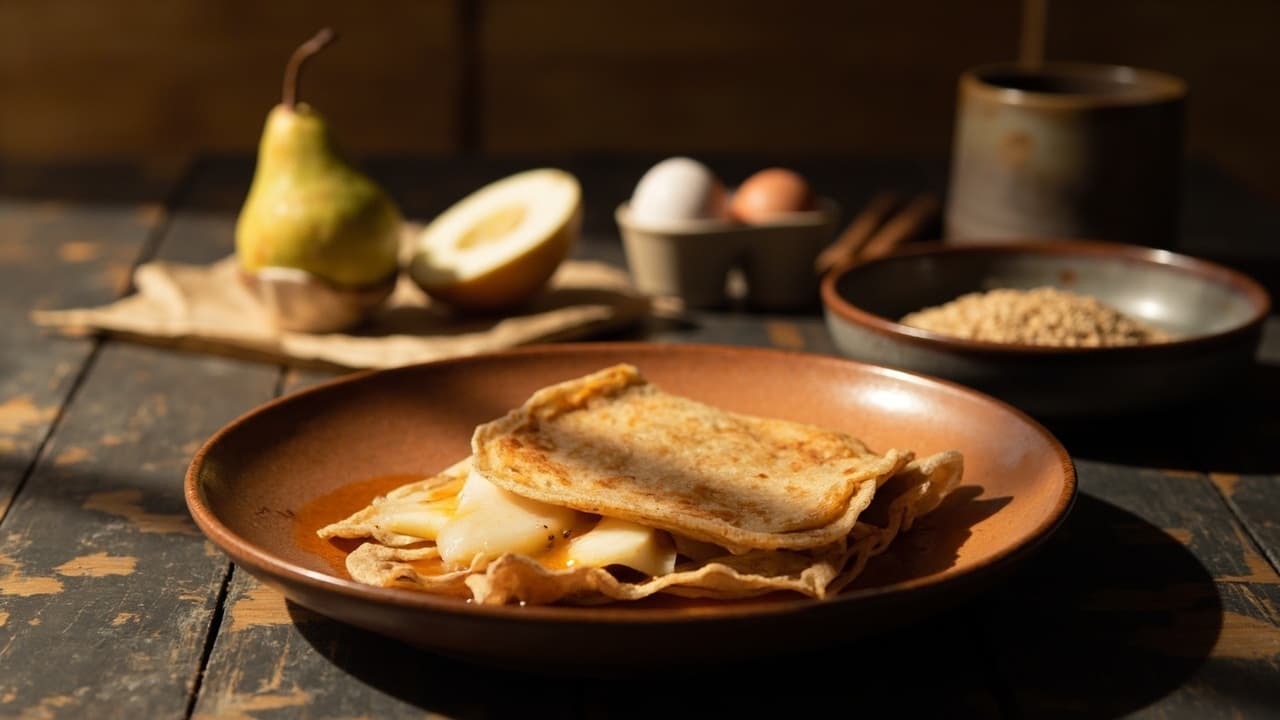
Buckwheat Crepes with Caramelized Pears and Soy-Maple Syrup
Delicate buckwheat crepes filled with sweet caramelized pears and drizzled with a savory-sweet soy-maple syrup that bridges sweet and umami in every bite.

Prep
15 min
Cook
30 min
Total
45 min
Method
1
In a large bowl, whisk together buckwheat flour, all-purpose flour, and salt. Make a well in the center.
2
Crack eggs into the well and pour in whole milk. Whisk from the center outward, gradually incorporating flour until a smooth batter forms with no lumps. Stir in melted butter.
3
Cover and let batter rest at room temperature for 20 minutes to hydrate the buckwheat and relax gluten.
4
5
Immediately tilt and swirl the pan in a circular motion to spread batter into a thin, even layer covering the bottom.
6
Cook 1-2 minutes until edges turn golden and lift easily with a spatula. Flip and cook another 30 seconds until lightly golden. Transfer to a plate.
7
Repeat with remaining batter, stacking crepes between layers of parchment paper. You should have 8 crepes total.
8
Melt 2 tablespoons butter in a wide skillet over medium-high heat. Add sliced pears and white sugar, stirring to coat.
9
Cook 5-7 minutes, stirring occasionally, until pears are golden and caramelized and sugar has dissolved into a light amber glaze. Remove from heat.
10
Combine soy sauce and maple syrup in a small saucepan over medium-low heat. Stir gently and simmer for 2-3 minutes until slightly thickened and fragrant.
11
Lay a crepe flat on each plate. Spoon caramelized pears down the center of each crepe. Drizzle with soy-maple syrup.
12
Fold crepes into quarters or roll them up, depending on preference. Drizzle with remaining syrup and serve immediately.
D
Nutri-Score
Needs balance
A–E · lower is better · score 12
Calories
479
per serving
Protein
14g
Carbs
67g
Fat
19g
Sat. fat
12g
Fiber
4g
Sugar
30g
Sodium
1475mg
VegetarianActive LifestyleEnergy Focused
Nutri-Score is a general nutritional-balance guide, not medical or dietary advice.
B
Environmental impact
Low impact
A–E · lower is better · includes estimates
kg CO2e
0.8
per serving
BCarbonAEU all-round· carbon sets the grade
Water
0.3m³
Land
26Pt
Runoff
0.06g P
Whole milk drives 38% of this recipe’s estimated footprint.
Carbon from Poore & Nemecek 2018; water, land & runoff from Agribalyse — modelled averages for comparing recipes, not a measurement of your groceries.
Flavor Profile
6
Umami
3
Sweet
5
Salty
2
Sour
1
Bitter
0
Spicy
Textures
CrispyStickyTender
Aromas
CaramelDairyNutty
Kitchen Equipment
Techniques
Safety & Storage
High Risk Population
Raw eggs in the batter pose salmonella risk. Vulnerable populations including pregnant women, young children, elderly, and immunocompromised individuals should use pasteurized eggs or avoid consuming raw batter.
Cooking Temperature
{"classification":"cooking-temperature","text":{"text":"Maintain medium heat for crepe cooking. If pan is too hot, crepes will burn before cooking through; too cool and they will tear when flipping. Target 325-375°F (160-190°C) for optimal results."}}
Cross Contamination
Use separate utensils and cutting boards for allergen-containing ingredients. Clean surfaces thoroughly between preparing different components to prevent cross-contact for allergen-sensitive individuals.
Storage
Cooked crepes stack well between parchment paper in airtight container for up to 2 days refrigerated. Reheat gently in skillet. Caramelized pears keep 3-4 days refrigerated. Soy-maple syrup stores 1 week refrigerated.
Handling
Butter burns easily when caramelizing pears at medium-high heat. Stir frequently and remove from heat promptly when amber glaze forms to prevent scorching.
Allergen Warning
This recipe contains milk, eggs, wheat/gluten, and soy. Check all packaged ingredients for allergen cross-contamination warnings, especially soy sauce brands which may contain wheat.
Pro Tips
Technique
When swirling your pan to spread the batter, work quickly—this is your window. Buckwheat batter is looser than regular flour, so speed matters. If your crepes tear, they're too thin; if they're rubbery, your pan is too cold. Think of it like learning to ride a bike: wobbly at first, then automatic.
Substitution
No buckwheat on hand? You can use 100% all-purpose flour for the crepes, but you'll lose that nutty, rustic edge. If you want to go full umami-bomb, swap the maple syrup for 2 tablespoons honey and 2 tablespoons tamari—slightly different sweetness, same savory depth.
Flavor Boost
A pinch of cinnamon or cardamom in the crepe batter itself bridges the gap between sweet and savory even before the syrup hits. I learned this trick from a Moroccan friend, and honestly, it changed everything.
Equipment
A carbon steel or well-seasoned cast iron skillet works even better than non-stick for those crisp, lacy edges on your crepes. Just make sure to get it properly hot before adding batter—drop of water should dance, not steam immediately.
From the chef
Buckwheat flour carries an earthy, slightly bitter quality that makes these crepes taste more substantial than their delicate thinness suggests — closer to Japanese soba than to a standard wheat crepe, which is precisely why they pair so well with something sweet and rich. Caramelized pears bring a jammy, amber sweetness that the buckwheat can actually hold up against. The soy-maple syrup is the key move: soy brings a fermented umami backbone that deepens the maple without making the dish taste savory, and the combination makes you understand why salt has always belonged in dessert. Let the batter rest so the buckwheat hydrates fully — it makes every crepe more pliable and less prone to tearing.
TagsBuckwheatCrepeUmami ForwardSweet SavoryFruitFusionMedium DifficultyVegetarian Friendly
AllergensMilkEggsWheatSoyGluten
Source: generated · June 12, 2026