 French
Medium · Hot
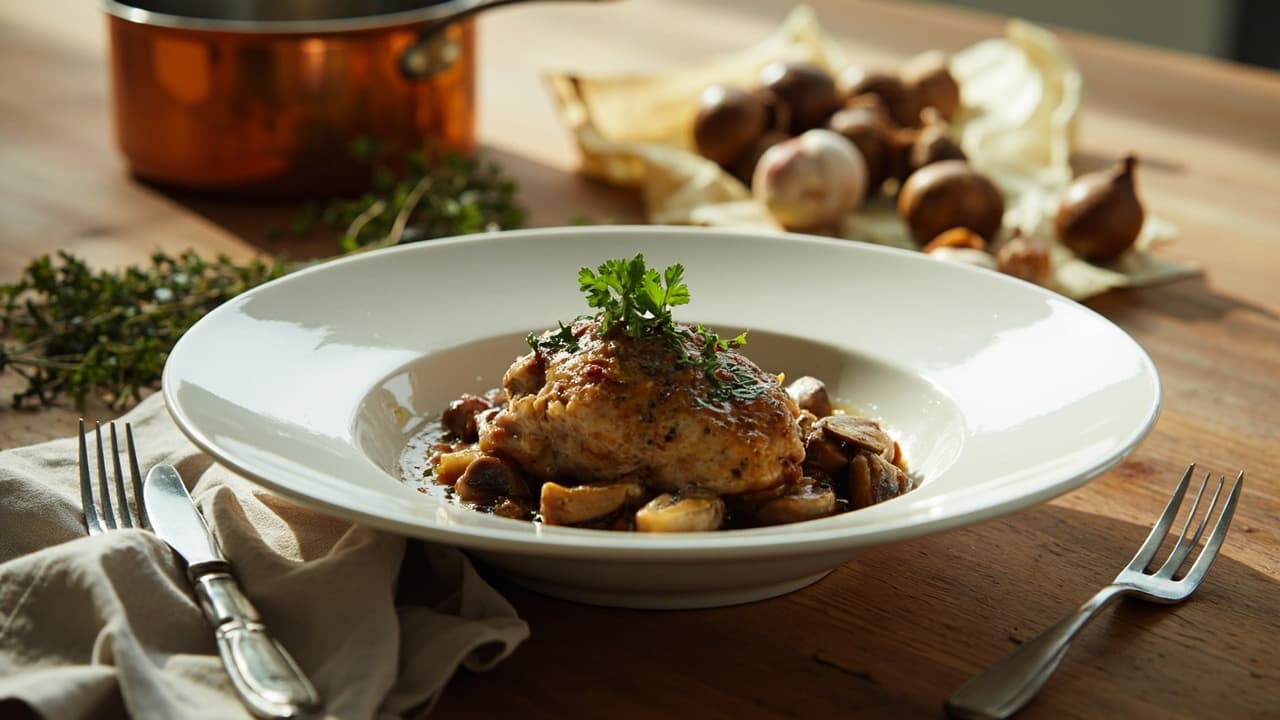
Braised Chicken Thighs with Wine-Reduced Mushroom Sauce
Tender chicken thighs braised in a rich, wine-reduced mushroom sauce with shallots and thyme. A classic French bistro preparation where patience and proper fond-building make all the difference.

Prep
15 min
Cook
35 min
Rest
5 min
Total
55 min
Method
Prepare and Sear Chicken
1
Flip and cook 2-3 minutes on the other side
2
[object Object]
Braise the Chicken
3
Remove the lid and increase heat to medium. Let the sauce simmer uncovered for 3-4 minutes to reduce and concentrate further, spooning some of the sauce over the chicken thighs occasionally.
Finish and Serve
4
Finish with a scattering of fresh chopped parsley. Serve immediately with crusty bread, mashed potatoes, or rice to soak up every drop of that magnificent sauce.
C
Nutri-Score
Fair balance
A–E · lower is better · score 4
Calories
554
per serving
High in saturated fat · 17gHigh in protein · 36gLow sugar · 8g
Protein
36g
Carbs
14g
Fat
40g
Sat. fat
17g
Fiber
3g
Sugar
8g
Sodium
1022mg
Gluten FreeLow CarbKeto FriendlyHeart HealthyDiabetes FriendlyLow Sodium AdaptableHigh ProteinModerate Fat
Nutri-Score is a general nutritional-balance guide, not medical or dietary advice.
C
Environmental impact
Moderate impact
A–E · lower is better · includes estimates
kg CO2e
1.5
per serving
CCarbon
Chicken Thighs drives 72% of this recipe’s estimated footprint.
Carbon from Poore & Nemecek 2018; water, land & runoff from Agribalyse — modelled averages for comparing recipes, not a measurement of your groceries.
Flavor Profile
7
Umami
4
Sweet
4
Salty
3
Sour
2
Bitter
1
Spicy
Textures
CrispyTenderSilkyCreamy
Aromas
HerbalEarthyRichSavoryButtery
Kitchen Equipment
Primary Tool
Saute PanSaute PanSaucepanChef KnifeCutting BoardMeasuring CupsMeasuring SpoonsWooden SpoonTongsPaper TowelsAluminum Foil
Counter FootprintMedium
Safety & Storage
Cooking Temperature
Chicken thighs must reach minimum 165°F (74°C) internal temperature. Use a calibrated meat thermometer inserted into the thickest part away from bone.
Cross Contamination
Raw poultry releases significant fat during searing. Reserve pan drippings only from fully cooked chicken. Clean all cutting boards and utensils that contacted raw meat before using for sauce preparation.
Storage
Refrigerate leftovers within 2 hours in airtight containers. The dairy-based sauce component reduces safe storage to 3-4 days compared to standard braised dishes.
High Risk Population
Red wine vinegar contains negligible alcohol (typically <0.5%) as the fermentation process converts most alcohol to acetic acid. This dish is safe for all populations. If substituting red wine for vinegar, ensure it reduces by at least 50% to evaporate alcohol content.
Handling
Pour off rendered chicken fat carefully to avoid splattering on skin or surfaces. Hot butter and cream mixtures cause severe burns if contact occurs.
Allergen Warning
Verify chicken broth label for hidden allergens. Many commercial broths contain celery, wheat, or soy as flavor enhancers or anti-caking agents.
Pro Tips
Technique
Never, ever use a non-stick pan for this dish. The fond—the little caramelized treasure bits at the bottom of your pan—is the soul of this sauce. A non-stick surface will betray you. You need stainless steel or well-seasoned cast iron to capture every nuance as you build layers of flavor.
Substitution
If you find yourself without red wine vinegar, substitute an equal amount of dry white wine for a lighter version, or add a teaspoon of Dijon mustard to the cream for that same bright acidity that cuts through the richness.
When searing the chicken, resist the urge to move it. Let it develop that deep golden crust naturally. You'll know it's ready when the skin releases itself from the pan without resistance—that's your moment to flip.
From the chef
This dish reminds me of my early days in Lyon, when I first understood that patience is not merely waiting—it's active love for the craft. The sear that crisps the skin, the fond you coax from the pan, the slow marriage of wine and cream and butter into something transcendent... these are not steps to rush. This is coq au vin's more elegant cousin, and it will reward you handsomely if you approach it with respect and proper technique.
TagsFrenchBistroBraisedWine ReducedMushroom SauceChickenComfort FoodThymeButtery
AllergensMilkSulfitesCelery
Source: generated · June 10, 2026