 German
Medium · Hot
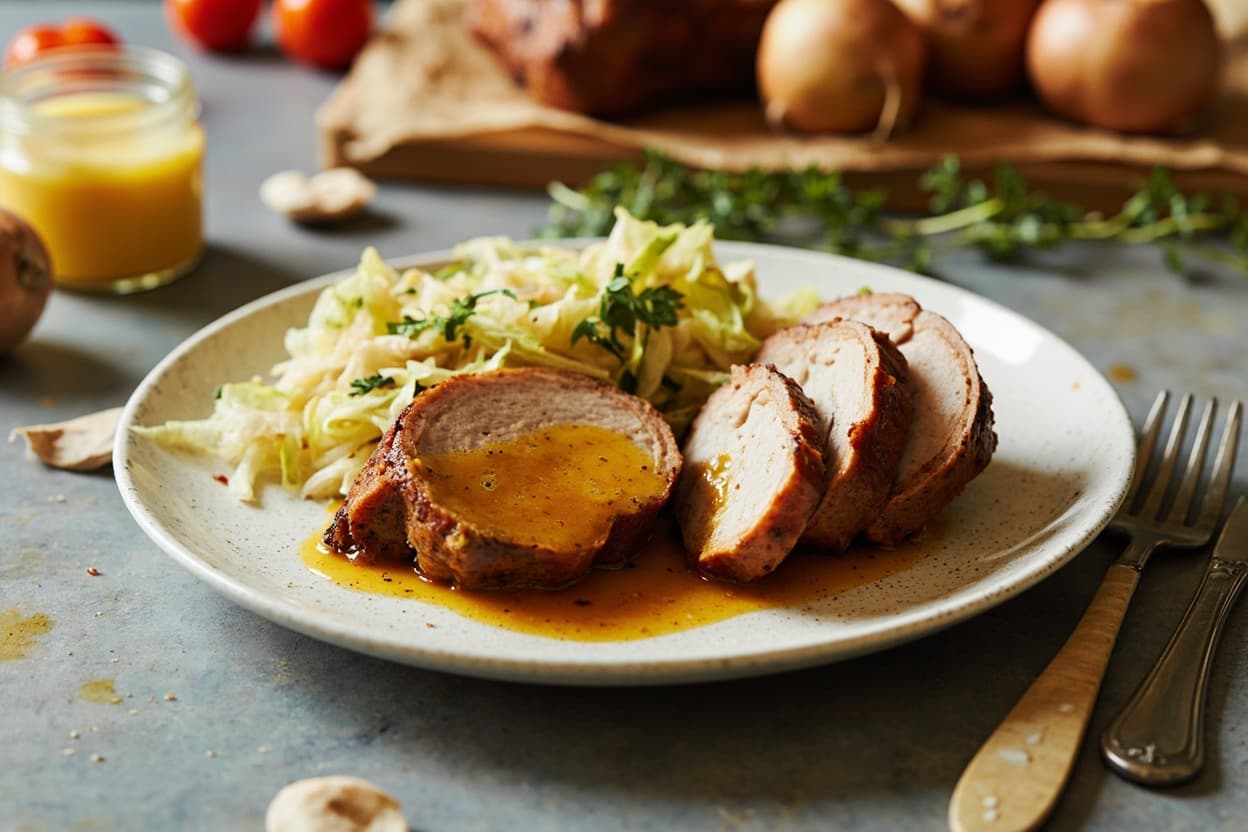
Mustard-Braised Pork Loin with Buttered Cabbage
Pork loin rubbed with mustard and braised slowly so the crust builds and the inside stays just right, the onion collapsing into the braising liquid and thickening it without any additional work. Cabbage wilted in butter alongside — not boiled, properly wilted — so it still has something to it. This is hearth cooking done with a little precision.

Prep
15 min
Cook
30 min
Rest
5 min
Total
50 min
Method
Prep
1
Pat the pork loin dry with paper towels. Season generously with salt and black pepper on all sides.
2
Halve, peel, and dice the yellow onion. Smash the garlic cloves with the flat of your knife. Peel and slice the carrots into rounds.
Sear
3
Heat a heavy cast-iron skillet or Dutch oven over medium-high heat. Add 30g butter and let it foam.
Braise
5
6
7
Pour in the white vinegar and scrape up any browned bits from the bottom of the pan.
9
10
Braise for 35-45 minutes, turning the pork halfway through, until the loin is tender and cooked through to an internal temperature of 63°C (145°F).
Buttered Cabbage
11
While the pork braises, core and thinly slice the cabbage into ribbons.
12
In a separate large frying pan, melt 60g butter over medium heat until it begins to turn golden and nutty.
13
Add the cabbage ribbons and toss to coat in the butter. Season with salt and black pepper.
14
Cook, stirring occasionally, for 12-15 minutes until the cabbage is tender, sweet, and lightly caramelized at the edges. Do not cover.
D
Nutri-Score
Needs balance
A–E · lower is better · score 13
Calories
617
per serving
High in saturated fat · 26gHigh in protein · 45gLow sugar · 6g
Protein
45g
Carbs
13g
Fat
43g
Sat. fat
26g
Fiber
3g
Sugar
6g
Sodium
2127mg
Gluten FreeDairy InclusiveCarnivoreLow CarbDiabetes FriendlyLow Fiber DietHigh ProteinModerate CarbohydrateSaturated Fat Conscious
Nutri-Score is a general nutritional-balance guide, not medical or dietary advice.
E
Environmental impact
Very high impact
A–E · lower is better · includes estimates
kg CO2e
3.0
per serving
ECarbonAEU all-round· carbon sets the grade
Water
0.7m³
Land
93Pt
Runoff
0.3g P
Pork Loin drives 82% of this recipe’s estimated footprint.
Carbon from Poore & Nemecek 2018; water, land & runoff from Agribalyse — modelled averages for comparing recipes, not a measurement of your groceries.
Flavor Profile
7
Umami
4
Sweet
5
Salty
3
Sour
2
Bitter
1
Spicy
Textures
TenderCrispySaucy
Aromas
PungentNuttyCaramelizedHerbal
Kitchen Equipment
Primary Tool
Cast Iron SkilletCounter FootprintMedium
Safety & Storage
Cooking Temperature
Pork loin must reach 63°C (145°F) internal temperature. Use a meat thermometer inserted into the thickest part, away from bone, to verify safe doneness.
Cross Contamination
Raw pork juices can contaminate other foods. Use separate cutting boards for raw meat and vegetables. Sanitize all surfaces and utensils after handling raw pork.
Storage
Leftover braised pork should be refrigerated in airtight containers within 2 hours and consumed within 3-4 days for optimal safety.
High Risk Population
Pregnant women, elderly, young children, and immunocompromised individuals should ensure pork is cooked to well-done (71°C/160°F) as a precaution.
Handling
Butter should be kept cold until use. Do not leave butter at room temperature for extended periods during prep. Discard any butter that shows signs of rancidity.
Pro Tips
Technique
Let your butter turn golden and nutty before adding the cabbage—it takes only two minutes more and makes all the difference. You want the butter to smell like hazelnuts, not just melt.
Substitution
If you cannot find sharp yellow mustard, a good whole-grain variety works beautifully. The texture changes but the flavor stays true to what this dish needs.
From the chef
In Salzburg, we did not complicate braises. My Oma taught me that pork wants time and good mustard—nothing more. This dish reminds me of Sunday evenings after service, when the kitchen was quiet and I would make this just for myself, the way she made it: the caramelized edges of cabbage catching butter, the sharp bite of mustard cut through with a little vinegar, the whole house smelling like home.
TagsBraisedComfort FoodButter RichMustardy
AllergensMilkMustard
Source: generated · May 30, 2026