 Mediterranean
Medium · Hot
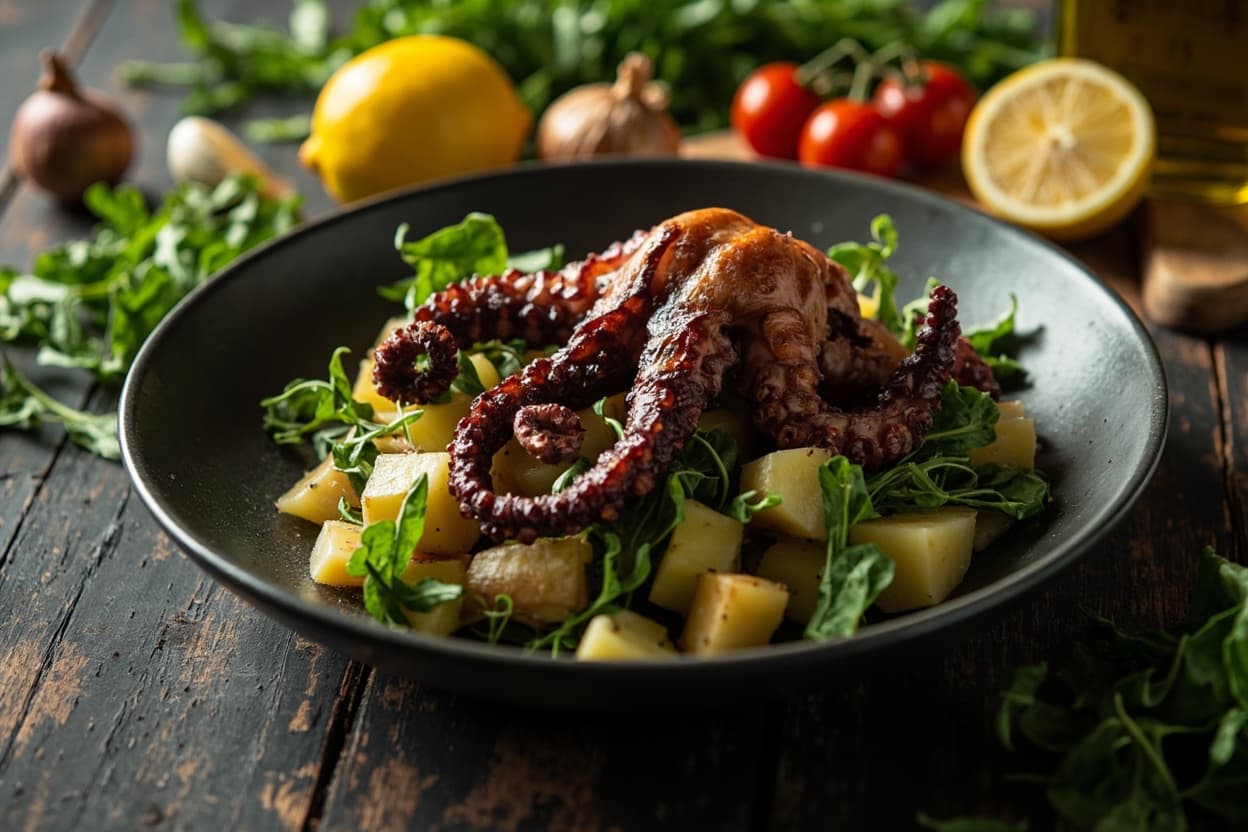
Charred Octopus with Potato and Arugula
Tender octopus gets a hard char at the end — not burnt, just kissed by the heat until the edges go crisp and smoky. Soft potato underneath catches the juices, the arugula stays peppery and a little wilted where the warm octopus lands on it, and lemon cuts through everything. The kind of plate you'd get at a good beach terrace and think about for years.

Prep
20 min
Cook
1h 15m
Rest
20 min
Total
1h 55m
Method
Prepare and Marinate the Octopus
1
Remove the beak and eyes from the octopus if not already done by your fishmonger. Rinse under cold water, checking that all sand is removed from inside the head cavity.
2
Pat the octopus very dry with a clean kitchen towel — key for a good char later.
3
In a bowl, combine 1/4 cup olive oil, grated garlic, and lemon zest. Add the octopus and toss well to coat. Set aside to marinate while you bring the poaching liquid to a boil, at least 15 minutes.
Poach the Octopus
4
In a large pot, combine 1 cup water, white wine, bay leaf, and 1 tbsp salt. Bring to a vigorous boil.
5
6
Remove from heat and let the octopus cool in its liquid for 20 minutes. Lift out and pat very dry. Reserve the cooking liquid if desired for a sauce.
Char the Octopus
7
Heat 2 tbsp olive oil in a large cast-iron or heavy frying pan over the highest heat possible until smoking.
8
Place the octopus in the pan — work in batches if needed. Do not move them. Let them sear undisturbed for 2–3 minutes until deep char marks form.
9
Flip and char the other side. Add lemon juice and smoked paprika, spooning over the octopus as it finishes. Remove to a plate and rest.
10
Flip and char the other side for 1-2 minutes. Add lemon juice and smoked paprika, spooning over the octopus as it finishes. Remove to a plate and rest.
Make the Potato Salad
11
Boil the halved potatoes in well-salted water until tender but not falling apart, about 15–18 minutes. Drain.
12
13
Add the drained potatoes. Toss to coat and cook 3–4 minutes until golden in spots. Season with black pepper.
Dress the Arugula
Plate
16
C
Nutri-Score
Fair balance
A–E · lower is better · score 4
Calories
467
per serving
High in salt · 2126mgLow sugar · 3g
Protein
9g
Carbs
31g
Fat
35g
Sat. fat
5g
Fiber
6g
Sugar
3g
Sodium
2126mg
Gluten FreeDairy FreePescatarianHeart HealthyLow SugarDiabetes FriendlyHigh ProteinMediterranean DietLow Carb Option
Nutri-Score is a general nutritional-balance guide, not medical or dietary advice.
A
Environmental impact
Very low impact
A–E · lower is better · includes estimates
kg CO2e
0.4
per serving
ACarbon
Carbon from Poore & Nemecek 2018; water, land & runoff from Agribalyse — modelled averages for comparing recipes, not a measurement of your groceries.
Flavor Profile
7
Umami
4
Sweet
6
Salty
6
Sour
3
Bitter
2
Spicy
Textures
TenderCrispyChewySilky
Aromas
SmokyHerbalBrinyCitrusGarlicky
Kitchen Equipment
Primary Tool
Cast Iron SkilletLarge PotCast Iron SkilletMedium Frying PanStrainerChef KnifeCutting BoardMixing BowlMeasuring CupsMeasuring SpoonsKitchen TowelPlastic Wrap
Counter FootprintMedium
Techniques
Safety & Storage
Cross Contamination
Prepare octopus separately from other proteins. Clean all surfaces, utensils, and cutting boards thoroughly after handling raw octopus to prevent cross-contact with other seafood or allergens.
Cooking Temperature
Poach octopus to internal temperature of 145°F (63°C) minimum. Char at highest heat until skin blisters and tentacle surfaces are deeply caramelized to destroy pathogens.
Handling
Ensure octopus is completely dry before high-heat searing. Moisture causes steam, prevents proper char, and creates splatter hazard from hot oil.
High Risk Population
Seafood dishes present heightened risk for elderly, pregnant individuals, young children, and immunocompromised consumers. Ensure thorough cooking and fresh ingredients only.
Storage
Store raw octopus at 32-38°F (0-3°C) and use within 1-2 days. Cooked octopus can be refrigerated up to 3 days. Reheat to 165°F (74°C) minimum.
Allergen Warning
Even trace cross-contact with shellfish or fish can cause severe reaction in sensitive individuals. Inform staff and diners about mollusk content.
Pro Tips
Technique
Pat that octopus bone dry before it hits the screaming hot pan — any moisture and you're steaming, not charring. And don't crowd the pan, or you'll drop the heat and lose that beautiful blistered skin.
To test if your octopus is done, pierce the thickest part of a tentacle with a skewer or thin knife. If it enters like warm butter, you're there. If it fights you, cook it another 10 minutes.
Equipment
Use the heaviest pan you've got — cast iron is my choice for this. You need that retained heat to sear fast and stay hot even when the octopus hits.
Flavor Boost
Save a cup of that poaching liquid before you discard it. It tastes like the sea and makes a beautiful quick sauce if you reduce it with a knob of butter and a squeeze of lemon.
Substitution
No octopus? This same treatment works beautifully with cuttlefish or large squid. Just adjust the poaching time — squid needs only 2–3 minutes, not 45.
Presentation
Scatter those capers and parsley leaves right before serving — not an hour before. You want that freshness and pop when the plate hits the table.
From the chef
The hard char is what makes this dish — not burnt, just kissed by the highest heat you can get until the tentacle edges go crisp and smoky and the inside stays tender. The octopus gets a long gentle simmer first, then rests in its own liquid before it hits the smoking pan. Warm potatoes tossed in garlic-bloomed oil and parsley go underneath, peppery arugula alongside, and lemon over everything. Fire, good olive oil, and respect for what you're cooking — that really is the whole story with a plate this honest.
TagsSeafoodCharredMediterraneanOctopusLemonOlive OilPotatoArugulaGrilledBrinyGarlicky
AllergensMollusksSulfitesGluten
Source: generated · May 30, 2026