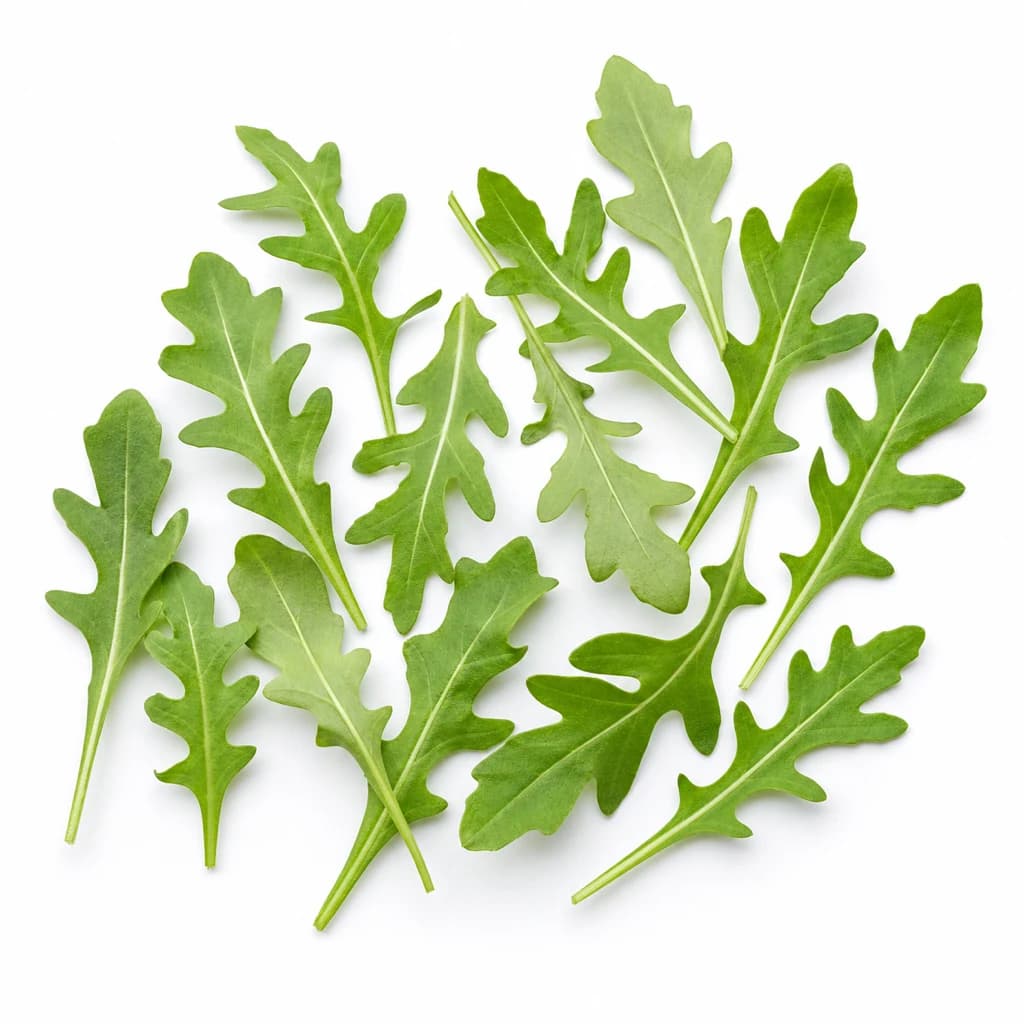
Natural form
Fresh arugula leaves showing their distinctive deeply lobed, elongated shape and bright green color.
Establishes the leaf's unmistakable silhouette and color so readers can identify arugula on sight.
Produce
Arugula
Peppery salad green for salads, pizza, and a sharp finish
Bright and peppery, arugula adds a sharp kick to salads, wilts onto a hot pizza, and dresses up a sandwich. Use it fresh and keep the leaves dry and cold.
Arugula (rocket) is the peppery, mustardy salad green that brings attitude to the plate — bright, nutty, and faintly spicy, with a bite that wakes up everything around it. It needs no cooking: pile it raw under shaved parmesan and lemon, wilt it onto a hot pizza, or tuck it into a sandwich for a sharp, fresh edge. Mature leaves bite harder; baby arugula is milder and tender.
- Measured in
- g
- Storage
- Refrigerate
- Shelf life
- 5 days
Find it in
Types & varieties
Small, tender, mild; the everyday bagged salad green
Larger, more deeply lobed leaves; much sharper bite
Thin, jagged leaves; intensely peppery
How to choose
Want vibrant green, perky leaves with no yellowing, dark slimy patches, or sour smell. The sharpness depends on maturity and growing conditions — baby leaves are gentle, while wild and mature arugula pack a serious peppery punch, so taste before you commit a whole bowl.
How to store
Arugula is delicate and wilts fast. Keep it dry and cold in the crisper, loosely wrapped in a paper towel inside a bag, and use within a few days. Don't wash until just before serving; if leaves go limp, a quick ice-water bath helps.
How to use its bite
Arugula's pepper is its whole point — balance it with sweetness (figs, pears, balsamic), richness (parmesan, prosciutto, olive oil), and acidity (lemon). Dress it lightly and at the last moment; it bruises and collapses quickly. Wilted onto hot dishes it softens and mellows into a peppery green.
- Pair with sweet, rich, and acidic partners
- Dress lightly, just before serving
- Wilt onto hot food to mellow it
Common uses
Tips & pitfalls
- Lemon, olive oil, and shaved parmesan is the perfect three-ingredient salad
- Pile it raw onto hot pizza or pasta off the heat so it just wilts
- Blend it into a peppery pesto in place of basil
- Balance its bite with sweet fruit and salty cheese
- Add it to sandwiches for a fresh, spicy crunch
Nutrition
Energy
105 kJ · per 100 g
Where the calories come from
Protein
2.6g
5% DV
Carbs
3.7g
1% DV
Fat
0.7g
1% DV
Fiber
1.6g
6% DV
Sugars
2.1g
of which
Sodium
27mg
1% DV
Source · USDA FoodData Central · Arugula, raw
View on FDC →In the shops
Matched grocery products
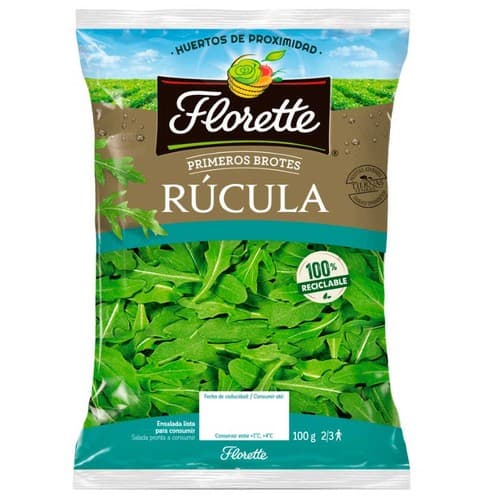 €2.19
€2.19Arugula
FLORETTE · kg · Bonpreu
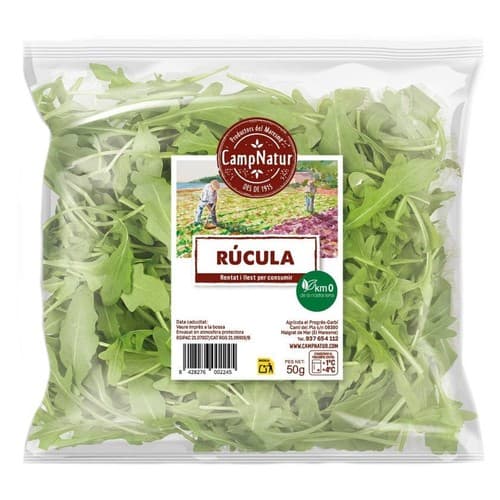 €1.09
€1.09Arugula Km0
CAMPNATUR · kg · Bonpreu
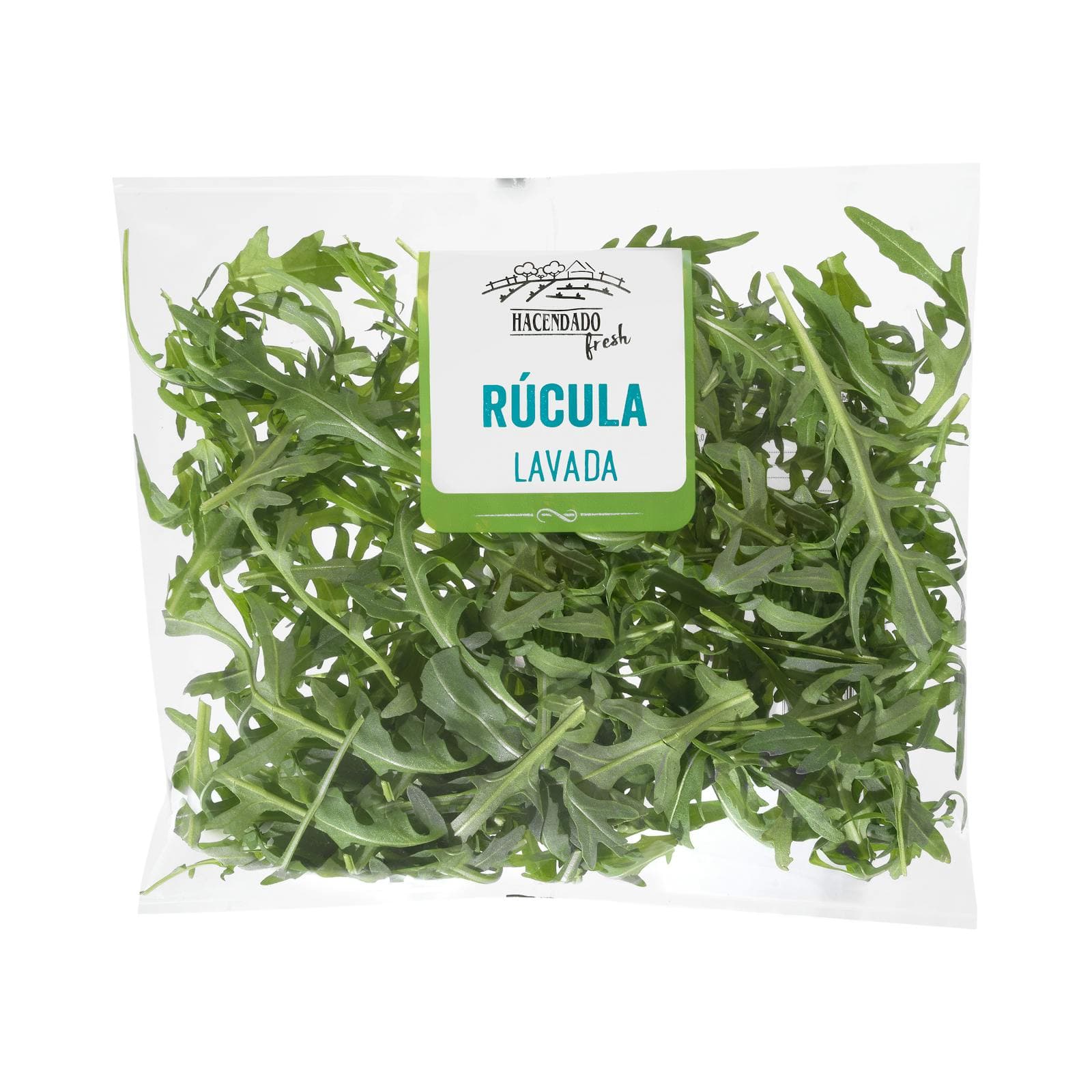 €0.85
€0.85Washed Arugula
50 g · Mercadona
 €0.85
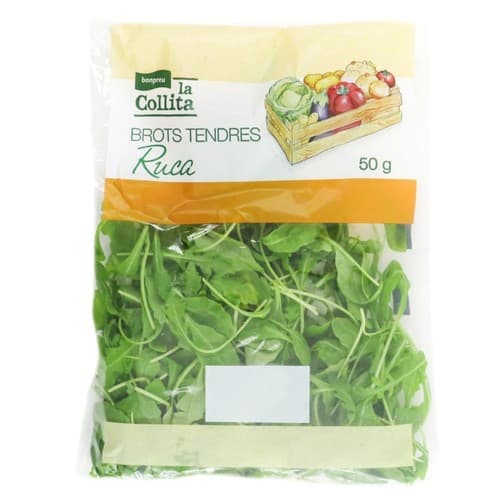
€0.85Arugula Sprouts
LA COLLITA · kg · Bonpreu
Good to know
- Peak season
- Spring and fall (cool weather); milder then, sharper in heat
- Flavor
- Peppery, mustardy, nutty; sharper as it matures
- Origin
- Mediterranean; long eaten in Italian and Middle Eastern cooking
- Nutrition
- ~25 kcal/100g; vitamin K, folate, calcium, nitrates
- How to buy
- Perky, deep-green leaves; no yellowing, slime, or sour smell
Substitutes
- Watercress — Similar peppery bite; good raw
- Baby spinach — Milder; for tenderness without the pepper
- Mizuna — Mild mustardy green for salads
Also called
rocket · rúcula
Related

Tomato
Juicy, sun-sweet fruit for sauces, salads, and slow-cooked depth

Yellow Onion
The aromatic backbone of soups, sofritos, and braises

Garlic
Pungent cloves that perfume nearly every savory dish

Lemon
Bright, acidic citrus that wakes up almost any dish

Potato
Humble, hearty staple — roast, mash, fry, or boil

Carrot
Sweet, crunchy root — raw, roasted, or the base of a sofrito

Cucumber
Cool, crisp, and watery — for salads, pickles, and tzatziki

Lettuce
Crisp leaves for salads, wraps, and a fresh crunch