 Vietnamese
Medium · Hot
Sweet Soy Caramel Salmon
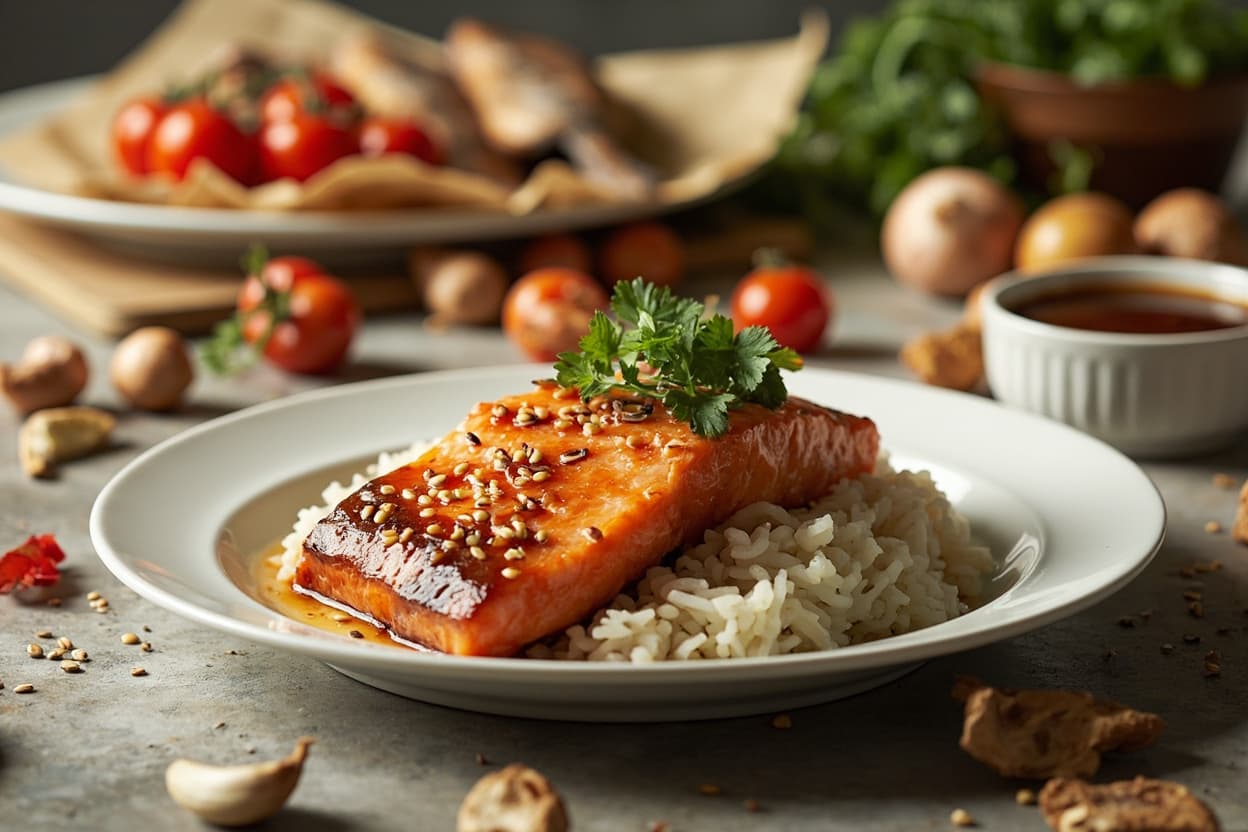
Brown sugar, soy sauce, ginger, and garlic reduce together into a lacquer that coats salmon fillets as they cook, the edges catching and caramelizing while the center stays yielding. The rice alongside absorbs whatever runs from the pan. A glaze with patience behind it — not sweet for its own sake, but balanced carefully.

Prep
10 min
Cook
20 min
Total
30 min
Method
Prepare the Glaze
1
Mince the garlic finely. In a small bowl, whisk together soy sauce, honey, garlic, ginger, and lime juice until combined.
Season and Sear the Salmon
Glaze and Finish
3
Remove from heat. Spoon the prepared sweet soy glaze over the salmon, turning to coat evenly. The residual heat will thicken the glaze into a light amber caramel that clings to the fish.
Serve with Freshness
4
Bring to the table with fresh cilantro leaves and lime wedges. Squeeze lime over the salmon and scatter herbs just before eating to keep them vibrant.
C
Nutri-Score
Fair balance
A–E · lower is better · score 10
Calories
338
per serving
High in salt · 1272mgHigh in protein · 26gLow saturated fat · 3g
Protein
26g
Carbs
15g
Fat
19g
Sat. fat
3g
Fiber
2g
Sugar
11g
Sodium
1272mg
Gluten FreeDairy FreeHeart HealthyAnti InflammatoryLow Sodium AlertHigh ProteinOmega 3 RichLow Carb
Nutri-Score is a general nutritional-balance guide, not medical or dietary advice.
D
Environmental impact
High impact
A–E · lower is better · includes estimates
kg CO2e
2.4
per serving
DCarbonAEU all-round· carbon sets the grade
Water
0.7m³
Land
42Pt
Runoff
0.2g P
Salmon fillets drives 96% of this recipe’s estimated footprint.
Carbon from Poore & Nemecek 2018; water, land & runoff from Agribalyse — modelled averages for comparing recipes, not a measurement of your groceries.
Flavor Profile
6
Umami
5
Sweet
5
Salty
3
Sour
1
Bitter
0
Spicy
Textures
CrispyTenderGlazed
Aromas
HerbalCaramelGingery
Kitchen Equipment
Techniques
Safety & Storage
Cooking Temperature
Cook salmon to internal temperature of 145°F (63°C) for food safety.
Allergen Warning
This dish contains fish (salmon) and soy (soy sauce). Verify all diners have no allergies before serving.
Cross Contamination
Use separate cutting boards and utensils for raw salmon to prevent cross-contamination with ready-to-eat foods.
Storage
Refrigerate leftover salmon within 2 hours in airtight containers. Consume within 2-3 days.
High Risk Population
Pregnant individuals, young children, elderly, and immunocompromised persons should ensure salmon reaches safe internal temperature.
Pro Tips
Technique
Do not pour the glaze over the fish before it finishes searing. Let the salmon rest off the heat, then spoon the caramel gently — the residual warmth is enough to coat without overcooking. The glaze should kiss the fish, not drown it.
Substitution
If you cannot find fresh ginger, a pinch of ground ginger will do in a whisper, but never replace the lime — its brightness is the counterpoint the dish calls for. For a deeper umami note, a few drops of fish sauce can fold into the glaze.
From the chef
The glaze here whispers sweetness rather than shouting it — brown sugar, soy, ginger, and lime reduce together into an amber lacquer that clings to each salmon fillet as the edges catch and caramelize while the center stays yielding. Herbs and lime arrive only at the end, scattered just before eating to stay vibrant and alive. That finishing touch at the table is the philosophy behind every dish I make: the freshness must be protected, never cooked away, so each bowl remains responsive to the eater's own hand.
TagsWeeknight DinnerPan SearedHealthyQuickGlazeSeafood
AllergensFishSoy
Source: generated · May 30, 2026