 Central Asian
Medium · Hot
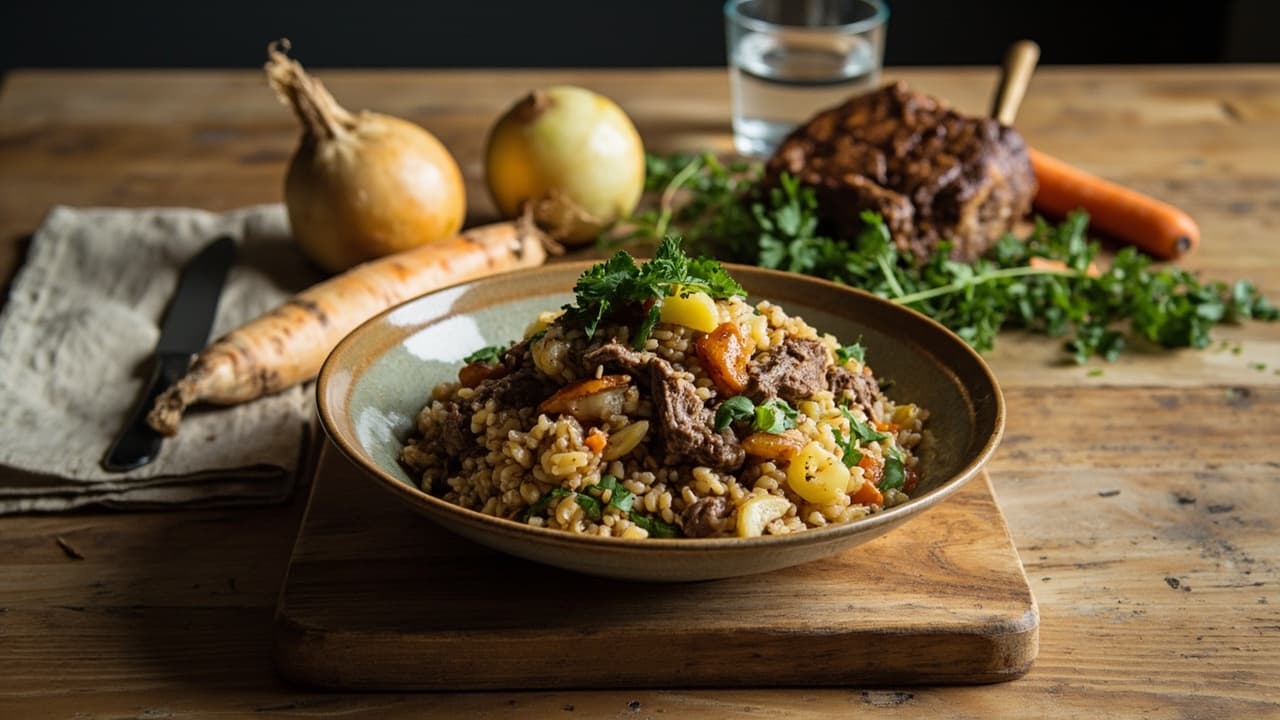
Lamb and Buckwheat Pilaf with Parsnip
A rustic pilaf of toasted buckwheat and tender lamb, accented with sweet roasted parsnip and aromatic vegetables. Simple, savory, and deeply satisfying in the tradition of Central Asian hearth cooking.
Prep
15 min
Cook
40 min
Total
55 min
Method
1
Rinse the buckwheat in a fine-mesh strainer under cold running water until the water runs clear, about 1 minute. Drain well and set aside.
2
Trim any excess fat from the lamb chop and cut the meat into 3cm pieces. Pat dry with paper towels and season with 0.5 tsp salt and the black pepper. Set aside.
3
Peel and finely dice the yellow onion. Mince the garlic. Peel the carrot and parsnip, then cut into 1cm dice. Roughly chop the parsley. Have all prep work within reach before heating the pan.
4
Heat the sunflower oil in a large, heavy-bottomed pot over medium-high heat until the oil shimmers and flows easily across the pan, about 1 minute.
5
Add the lamb pieces in a single layer, leaving space between each piece. Sear without touching for 3-4 minutes until a deep golden-brown crust forms on the first side. Flip and cook 2-3 minutes more until browned on the second side. Transfer to a plate and repeat with remaining lamb if needed. The internal temperature should reach 74C when fully cooked later.
6
Reduce heat to medium. Add the diced onion to the same pot with the remaining oil. Cook, stirring occasionally, for 5-6 minutes until softened and translucent.
7
8
Add the rinsed buckwheat to the pot. Stir continuously for 2 minutes to coat each grain in the oil and lightly toast it. The buckwheat will smell slightly nutty.
9
Return the seared lamb to the pot. Pour in the chicken broth and add the remaining 1 tsp salt. Increase heat and bring to a rolling boil, about 2 minutes.
10
B
Nutri-Score
Good balance
A–E · lower is better · score 0
Calories
920
per serving
High in protein · 52gLow sugar · 9g
Protein
52g
Carbs
77g
Fat
48g
Sat. fat
24g
Fiber
10g
Sugar
9g
Sodium
1761mg
Dairy FreeGluten FreeDiabetesHeart HealthyHigh ProteinLow Processed Food
Nutri-Score is a general nutritional-balance guide, not medical or dietary advice.
E
Environmental impact
Very high impact
A–E · lower is better · includes estimates
kg CO2e
6.4
per serving
ECarbonCEU all-round· carbon sets the grade
Water
1.2m³
Land
683Pt
Runoff
0.4g P
Lamb chop, boneless drives 94% of this recipe’s estimated footprint.
Carbon from Poore & Nemecek 2018; water, land & runoff from Agribalyse — modelled averages for comparing recipes, not a measurement of your groceries.
Flavor Profile
8
Umami
4
Sweet
5
Salty
2
Sour
1
Bitter
3
Spicy
Textures
FluffyJuicyNuttySaucySilkySlightly CrispyTender
Aromas
AromaticEarthyFragrantHerbalMeatyNuttyRoastedRobustSavorySmokyWood Smoke
Kitchen Equipment
Primary Tool
Dutch OvenTechniques
Safety & Storage
Cooking Temperature
Sear lamb pieces until a deep golden-brown crust forms, then ensure the pilaf reaches a rolling boil before simmering. The final internal temperature of lamb pieces should reach 74°C (165°F) when fully cooked through.
High Risk Population
For pregnant individuals, young children, elderly persons, or immunocompromised individuals, ensure lamb reaches 74°C throughout and is held at safe serving temperatures above 60°C until consumed.
Cross Contamination
Use separate cutting boards and utensils for raw lamb versus vegetables. Wash hands thoroughly with soap and warm water after handling raw meat before touching other ingredients or cookware.
Raw lamb juices remaining in the pot after searing can harbor bacteria. Ensure thorough cleaning of all surfaces and utensils that contact the raw meat before using for vegetables or the finished dish.
Storage
Refrigerate leftover pilaf within 2 hours of cooking in shallow airtight containers. Consume within 3-4 days. Reheat thoroughly to 74°C before serving.
Shelf Life
Cooked pilaf can be frozen for up to 2-3 months if stored in freezer-safe containers with minimal air exposure. Thaw overnight in the refrigerator and reheat to 74°C throughout before consuming.
Allergen Warning
Always verify ingredient labels on packaged items like chicken broth for hidden allergens including gluten, celery, and mustard derivatives that may not be apparent from the ingredient name alone.
Handling
Pat lamb pieces thoroughly dry with paper towels before seasoning and searing to ensure proper browning and reduce splattering risk from moisture on the meat surface.
Pro Tips
Technique
When searing your lamb, resist the urge to move the pieces around too soon. Let them develop that deep golden crust—that Maillard reaction is where the magic happens, creating those rich, savory flavors that make this pilaf truly satisfying.
Substitution
If parsnips are not available, substitute with additional carrots for a milder sweetness that still pairs beautifully with the toasted buckwheat and lamb.
From the chef
Buckwheat toasted in the pan first takes on a nutty depth that rice never quite reaches — stir it for two minutes in the fat left from the lamb and you can smell it change. The seared lamb pieces go back in with broth, parsnip, and carrot, and the whole pot cooks covered on the lowest heat until every grain is tender and the liquid is fully absorbed. Parsnip brings a subtle sweetness that rounds out the savory lamb, and fresh parsley folded in at the end keeps the dish from feeling heavy. This is straightforward, rustic cooking that holds together on its own terms.
TagsLambBuckwheatOne PotWeeknight DinnerRusticComfort FoodSavoryAromatic
AllergensGlutenCeleryMustard
Source: generated · June 12, 2026