 Nordic
Medium · Warm
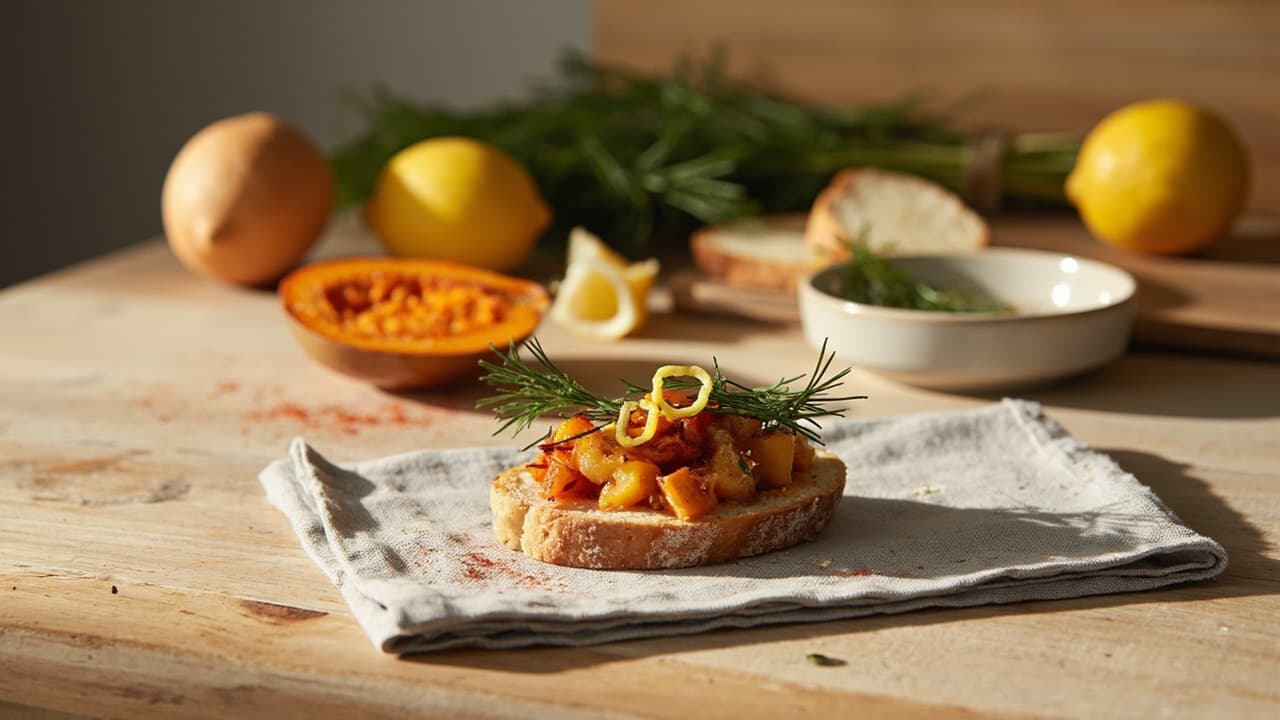
Roasted Butternut Squash Crostini with Smoked Paprika and Dill
Open-faced crostini topped with caramelized roasted butternut squash, a dusting of smoked paprika, and bright fresh dill. A restrained Nordic approach to a warm, layered bite.

Prep
15 min
Cook
30 min
Total
45 min
Method
1
Heat your oven to 200°C (400°F). Peel the butternut squash, remove the seeds, and cut into 2cm cubes. Spread on a rimmed baking sheet.
2
Drizzle with 2 tablespoons olive oil, then sprinkle over 1 teaspoon salt and 1 teaspoon smoked paprika. Toss until evenly coated. Spread in a single layer without crowding.
3
4
Slice the white bread into 12-16 rounds, each about 1cm thick. Arrange on a separate baking sheet.
5
6
Rub each warm toast round lightly with the cut side of the garlic clove — just enough to perfume the surface.
7
8
Grate a whisper of lemon zest over each crostini, then squeeze a drop or two of lemon juice. Season with the remaining salt and black pepper. Serve immediately while the squash retains some warmth.
B
Nutri-Score
Good balance
A–E · lower is better · score 2
Calories
516
per serving
Source of fibre · 12gLow sugar · 10g
Protein
12g
Carbs
74g
Fat
20g
Sat. fat
11g
Fiber
12g
Sugar
10g
Sodium
1510mg
Clean EatingLow SodiumPlant ForwardHeart HealthyLow Sodium DietWeight ManagementAnti InflammatoryFiber ConsciousLow Sugar
Nutri-Score is a general nutritional-balance guide, not medical or dietary advice.
A
Environmental impact
Very low impact
A–E · lower is better · includes estimates
kg CO2e
0.2
per serving
ACarbonAEU all-round· both agree
Water
0.6m³
Land
14Pt
Runoff
0.03g P
Butternut Squash drives 29% of this recipe’s estimated footprint.
Carbon from Poore & Nemecek 2018; water, land & runoff from Agribalyse — modelled averages for comparing recipes, not a measurement of your groceries.
Flavor Profile
6
Umami
4
Sweet
5
Salty
2
Sour
1
Bitter
3
Spicy
Textures
CrispyTender
Aromas
HerbalSmoky
Kitchen Equipment
Primary Tool
OvenSafety & Storage
Cross Contamination
Use separate cutting boards and utensils when handling raw butternut squash and ready-to-eat bread components to prevent cross-contact between raw vegetables and prepared crostini.
Cooking Temperature
Roast butternut squash until golden at edges and tender throughout (25-30 minutes at 200°C/400°F). Ensure crostini reaches golden crispness before assembly.
Storage
Store components separately: roasted squash in a sealed container refrigerated for up to 3 days; unassembled crostini in an airtight bag at room temperature for 1 day. Assemble just before serving for optimal texture.
Allergen Warning
Clearly label this dish as containing wheat (gluten), milk/dairy, and mustard. Individuals with these allergies or sensitivities should avoid consumption.
High Risk Population
Young children, elderly individuals, pregnant persons, and immunocompromised individuals should only consume this dish when all components have been properly cooked to safe temperatures and served immediately after assembly.
Handling
Rub garlic clove gently on warm toast—excessive pressure may cause tearing. Allow roasted squash to cool 5 minutes before handling to prevent burns during assembly.
Pro Tips
Technique
When roasting the squash, resist the urge to stir too often — let those edges caramelize undisturbed. The Maillard reaction is doing quiet, important work here, and you want golden spots, not steam.
Substitution
If you cannot find fresh dill, a small handful of flat-leaf parsley with a few drops of white vinegar stirred in will give you a similar bright, clean finish — just do not reach for dried dill.
From the chef
Butternut squash roasted until the edges caramelize and the flesh turns yielding and sweet — that is where this crostini begins. A dusting of smoked paprika deepens the color and gives the warmth a direction without muddling it. Each toast round gets a light rub of garlic, a thin spread of mustard, and then the squash, finished with fresh dill and a whisper of lemon zest. It is the Nordic approach to an autumn bite: layered, restrained, and exactly as warm as it needs to be.
TagsNordicCrostiniVegetable ForwardRoasted VegetablesDillButternut SquashOpen Faced SandwichSmorrebrod InspiredSeasonal
AllergensWheatMilkMustard
Source: generated · June 13, 2026