 Lebanese
Medium · Hot
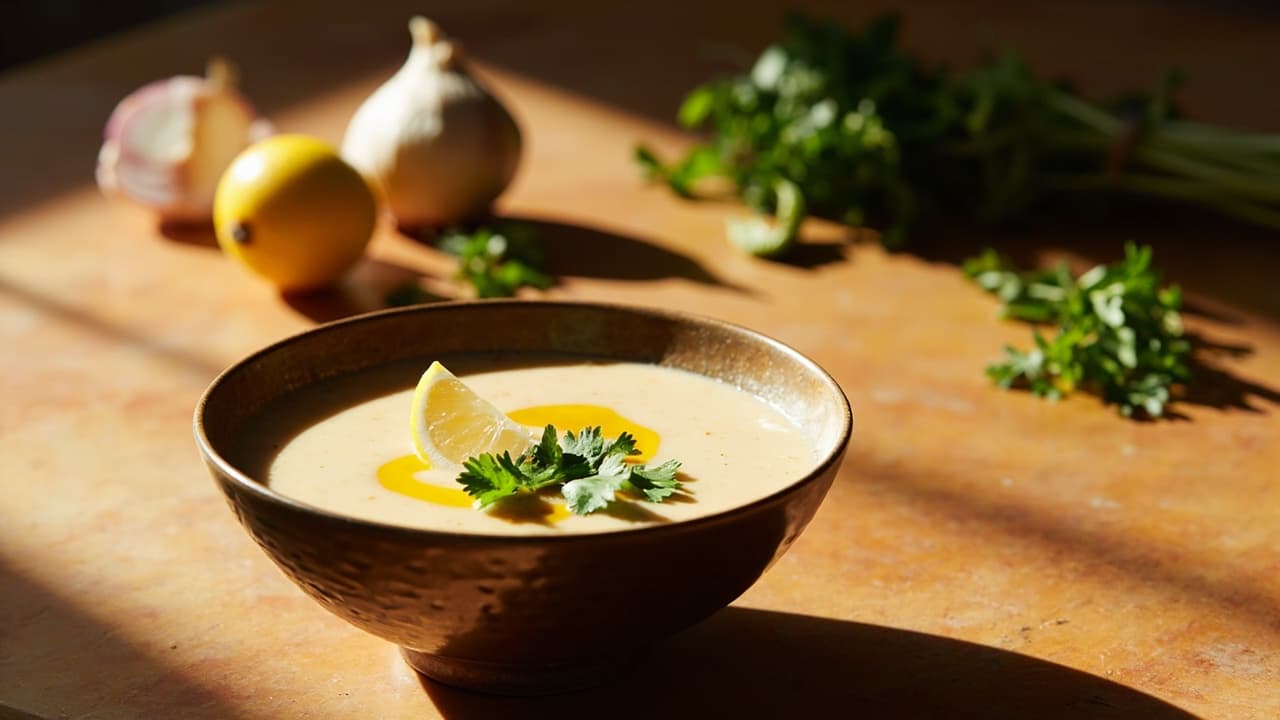
Silky Chickpea and Tahini Soup with Cumin
A velvety Lebanese-inspired soup where chickpeas are blended with rich tahini and bright lemon into silky perfection, finished with cumin and a drizzle of olive oil.

Prep
15 min
Cook
30 min
Total
45 min
Method
Prepare the Aromatics
1
Peel and finely dice the yellow onion. Peel and mince the garlic cloves. Peel and roughly chop the carrots. Peel and cube the potato into 1-inch pieces.
Build the Foundation
2
Simmer the Soup
4
Blend to Silky Perfection
6
Remove the pot from heat. Using an immersion blender or working in batches with a standing blender, puree the soup until completely smooth and velvety.
A
Nutri-Score
Excellent balance
A–E · lower is better · score -10
Calories
624
per serving
Source of protein · 27gSource of fibre · 17gLow sugar · 6gLow saturated fat · 2g
Protein
27g
Carbs
94g
Fat
18g
Sat. fat
2g
Fiber
17g
Sugar
6g
Sodium
909mg
Heart HealthyDiabetes FriendlyAnti InflammatoryLow Sodium AlternativeWeight ManagementHigh ProteinHigh FiberBalanced Macros
Nutri-Score is a general nutritional-balance guide, not medical or dietary advice.
A
Environmental impact
Very low impact
A–E · lower is better · includes estimates
kg CO2e
0.3
per serving
ACarbonAEU all-round· both agree
Water
1.0m³
Land
19Pt
Runoff
0.05g P
Chickpeas drives 52% of this recipe’s estimated footprint.
Carbon from Poore & Nemecek 2018; water, land & runoff from Agribalyse — modelled averages for comparing recipes, not a measurement of your groceries.
Flavor Profile
6
Umami
4
Sweet
5
Salty
6
Sour
1
Bitter
2
Spicy
Textures
SilkyVelvetyCreamy
Aromas
NuttyEarthyCitrusHerbal
Kitchen Equipment
Primary Tool
Large PotLarge PotImmersion BlenderChef KnifeCutting BoardMeasuring CupsMeasuring SpoonsWooden SpoonColanderServing Bowls
Counter FootprintMedium
Safety & Storage
Allergen Warning
Sesame is present in tahini. This soup contains sesame - verify all guests have no sesame allergy before serving.
Handling
When blending hot liquids, leave the lid vent open, cover with a towel, and blend in short pulses to prevent pressure buildup and splashing burns.
Equipment Safety
For immersion blending: secure the blender base and keep it fully submerged. For standing blender: never blend hot liquid at full speed without the vented lid.
Storage
Cool soup to room temperature within 2 hours, then refrigerate in airtight containers for up to 4 days or freeze for up to 3 months.
Cooking Temperature
Ensure soup reaches and maintains a rolling simmer at 185-200°F (85-93°C) for the full 20-25 minutes to properly cook vegetables and ensure food safety. Using a calibrated thermometer, verify the internal temperature reaches 165°F (74°C) if using chicken components.
Cross Contamination
Clean all utensils, cutting boards, and surfaces that contacted tahini before preparing allergen-free dishes in the same kitchen.
High Risk Population
Infants, elderly, pregnant women, and immunocompromised individuals should only consume soup that has been properly heated to piping hot throughout before serving.
Pro Tips
Technique
For that true silkiness, blend in stages—first without the tahini until completely smooth, then stream in the tahini with the motor running. This ensures the sesame paste emulsifies properly rather than seizing up into lumps. A high-powered blender will give you the most luxurious result, but an immersion blender works beautifully if you are patient.
Substitution
If tahini feels too bold, you may substitute it with an equal measure of almond or cashew butter for a gentler nuttiness, though the tahini is really the soul of this dish. For a brighter, more herbaceous finish, add a handful of fresh parsley to the pot before the final blend—the color will be stunning.
Storage
This soup actually improves overnight as the cumin and lemon deepen their conversation. Store it in an airtight container for up to four days, and do not freeze if you have used tahini, as the emulsion will break upon thawing.
From the chef
Tahini and lemon do something remarkable to a pot of chickpeas: they pull the soup into a velvety, tangy richness that feels both nourishing and refined. Cumin blooms in the oil before the vegetables go in, and a long simmer softens everything until the immersion blender can make it truly silky. The tahini goes in last, stirred through with a generous squeeze of lemon, giving the broth a nutty brightness that store-bought shortcuts simply cannot touch. A drizzle of good olive oil and a handful of freshly chopped parsley finish it properly — this is how the mezze table begins.
TagsSilkySmoothCreamyOne PotComfort FoodVegetarian AdaptableGluten FreeNuttyTangyMiddle Eastern Spices
AllergensSesame
Source: generated · June 10, 2026