 American
Medium · Hot
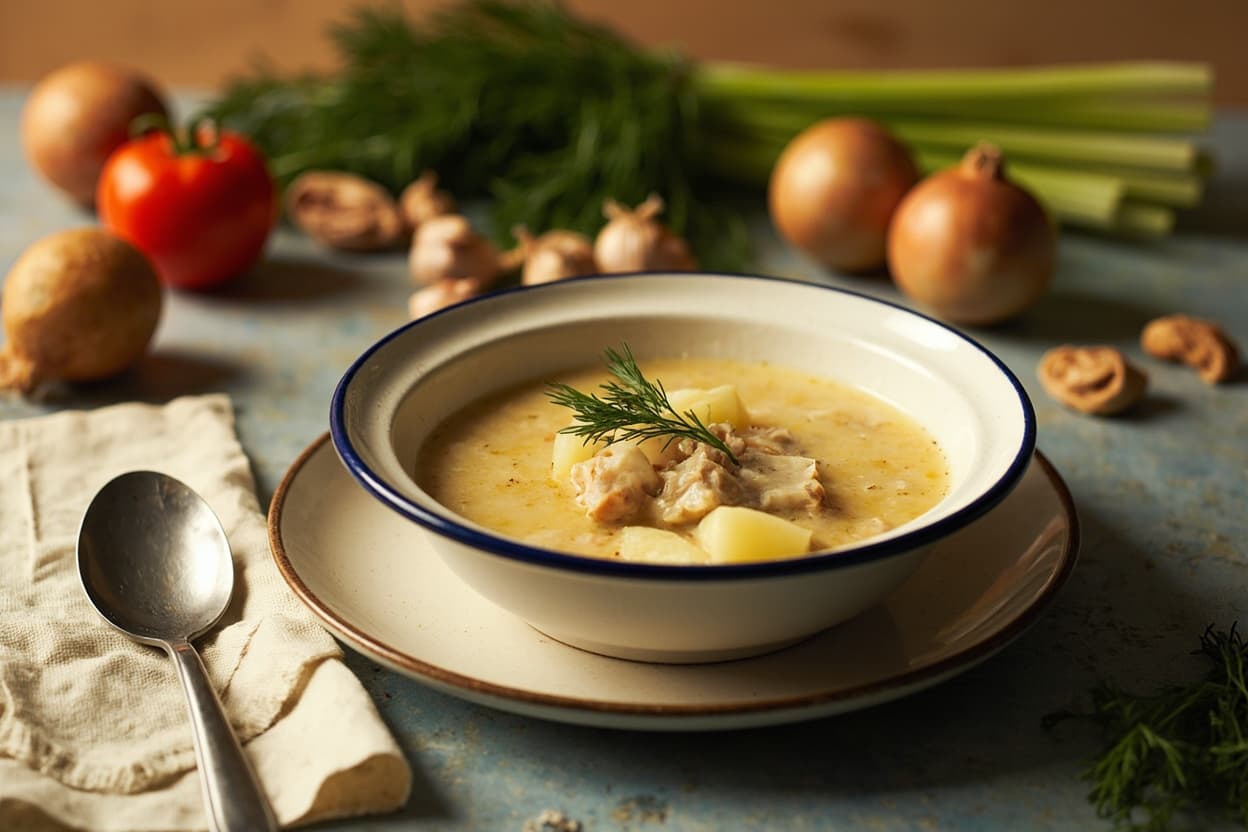
Cod and Potato Chowder with Dill
Potato and celery go into a pot of whole milk and are coaxed slowly to tenderness before the cod is laid in to poach gently in the warm, milky broth — it flakes apart at the touch of a spoon. Dill arrives at the very end, feathery and faintly anise-sweet, lifting the whole chowder. It is the kind of thing a fisherman's family would have made on a cold harbour evening, and it still works perfectly.

Prep
20 min
Cook
30 min
Total
50 min
Method
Prepare the Vegetables
1
Peel and dice the yellow-onion into small cubes. Set aside.
2
Peel the carrots and slice into thin half-moons, about 1/4-inch thick.
3
Rinse and dice the celery stalks into small pieces, keeping the tender inner stalks for their delicate flavor.
4
Peel the potatoes and cut into 3/4-inch cubes. Place in a bowl of cold water to prevent browning.
Build the Chowder Base
6
In a large heavy pot or Dutch oven, melt the butter over medium-low heat. Let it foam gently — this gentle start builds flavor without burning.
7
Add the diced onion, carrots, and celery. Sprinkle with a generous pinch of salt. Cook, stirring with a wooden spoon, for 8 to 10 minutes until the vegetables are soft and translucent. Do not rush this step.
8
Add the minced garlic and cook for 1 minute until fragrant, stirring constantly.
9
Pour in the whole-milk and add the dried thyme. Bring to a gentle simmer over medium heat, stirring occasionally to prevent scorching. Let it bubble gently for 2 to 3 minutes to meld the flavors without reaching a full boil.
Cook the Chowder
10
11
12
Using a spatula, gently break the cod into large chunks in the pot. Stir in the heavy-cream and let the chowder simmer for another 3 minutes until it thickens slightly and the fish is fully cooked through.
B
Nutri-Score
Good balance
A–E · lower is better · score 2
Calories
470
per serving
High in protein · 31gLow sugar · 12g
Protein
31g
Carbs
31g
Fat
25g
Sat. fat
14g
Fiber
5g
Sugar
12g
Sodium
1543mg
Gluten FreeLow CarbHeart HealthyDiabetes FriendlyWeight ManagementHigh ProteinBalanced MealBone Health
Nutri-Score is a general nutritional-balance guide, not medical or dietary advice.
Grade pending
Environmental impact
Estimated footprint
Grade pending · 76% ingredient coverage
kg CO2e
≥0.8
per serving
whole-milk drives 50% of this recipe’s estimated footprint.
Carbon from Poore & Nemecek 2018; water, land & runoff from Agribalyse — modelled averages for comparing recipes, not a measurement of your groceries.
Flavor Profile
7
Umami
4
Sweet
5
Salty
1
Sour
1
Bitter
3
Spicy
Textures
VelvetyTenderSilkyCreamy
Aromas
HerbalButterySavoryEarthyGarlicky
Kitchen Equipment
Primary Tool
Dutch OvenCounter FootprintMedium
Safety & Storage
Cooking Temperature
Cook cod to minimum internal temperature of 145°F (63°C) for food safety. The chowder should reach a gentle simmer before adding fish and maintain that heat throughout cooking.
Storage
Dairy-based chowders are high-risk for bacterial growth. Refrigerate leftovers within 2 hours in airtight containers. Consume within 3-4 days. Reheat to 165°F (74°C) before serving.
Cross Contamination
Use separate cutting boards and utensils for raw cod to prevent cross-contamination with other ingredients. Clean all surfaces with hot soapy water after handling raw fish.
High Risk Population
This dish contains dairy (milk, cream) and fish (cod). Individuals with lactose intolerance, fish allergies, or seafood allergies should avoid this dish entirely.
Allergen Warning
When serving to guests, clearly communicate the presence of dairy and fish allergens. Be aware that butter, milk, and cream all contain milk proteins.
Pro Tips
Technique
Never let your milk base boil hard once you've added it — a gentle bubble is all you want, otherwise the proteins will seize and your chowder turns grainy instead of silky.
Substitution
If cod is thin on the ground, halibut or haddock will do beautifully here. Just keep that same rule: low heat and a light hand when you introduce the fish.
From the chef
Cod and potato belong together the way bay belongs in a broth — one cannot do what the other does. Here the potatoes go in first, simmering in milk and cream with onion, carrot, and celery until they are just tender, and then the cod is laid in gently on top to poach in that warm milky bath. It flakes apart at the touch of a spoon, which is exactly how it should be. Dill arrives at the very end, feathery and faintly sweet, lifting the whole chowder into something bright. Do not rush a single step. The low simmer is what makes it.
TagsChowderSeafoodComfort FoodDairy RichPotatoesOne PotDillButter Base
AllergensMilkFish
Source: generated · May 30, 2026