 French
Medium · Warm
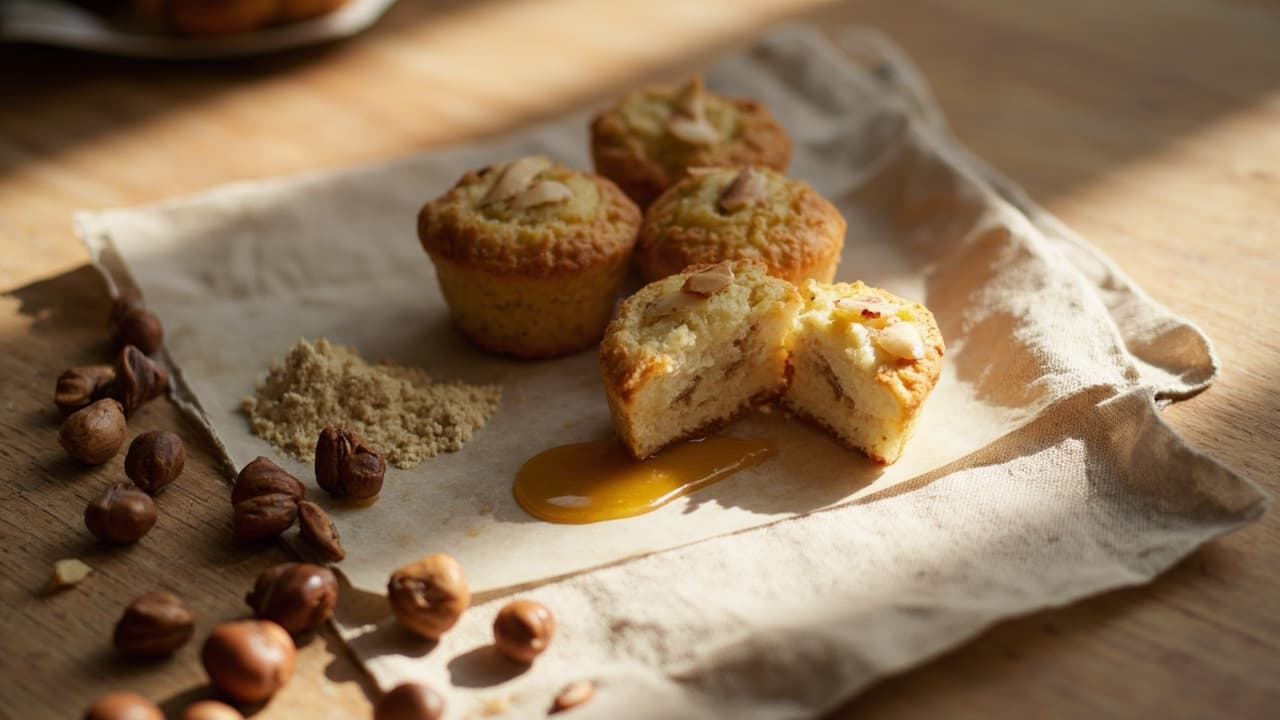
Brown Butter Hazelnut Honey Financiers
Small French tea cakes with nutty brown butter, toasted hazelnuts, and a gentle honey sweetness. Crisp edges, tender centers, the kind of treat that makes an afternoon feel intentional.

Prep
20 min
Cook
15 min
Rest
1h
Total
1h 35m
Method
Prep
1
Preheat your oven to 190°C (375°F). Position a rack in the center.
2
Butter 12 financier molds or a standard muffin tin generously. Dust with a little flour and tap out the excess. Set aside.
3
Toast the whole hazelnuts in a dry skillet over medium heat, tossing frequently, until golden and fragrant, about 5 minutes. Transfer to a clean kitchen towel and rub vigorously to remove most of the papery skins. Let cool, then roughly chop. Reserve a few whole halves for topping if you like.
Brown the Butter
4
In a light-colored saucepan over medium heat, melt the butter, swirling the pan occasionally. Continue cooking until the foam subsides and the milk solids turn deep golden brown and smell nutty, about 6-8 minutes. Watch it carefully — it goes from golden to burnt quickly. Immediately pour into a large mixing bowl to stop the cooking. Let cool until barely warm.
Mix the Batter
5
In a medium bowl, whisk together the almond flour, all-purpose flour, and salt. Set aside.
6
In a small bowl, lightly whisk the egg whites until just broken up — you don't want them foamy, just loose. Add the honey and vanilla extract and give it a quick stir.
7
Pour the flour mixture into the cooled brown butter and fold gently with a spatula until just combined.
8
Add the egg white mixture and fold until you have a smooth, thick batter. It should fall from the spatula in a slow ribbon.
9
Fold in the chopped hazelnuts.
10
Cover the bowl and refrigerate the batter for at least 1 hour. This rest is not optional — it hydrates the almond flour and firms up the butter, giving you those signature crisp edges.
Bake
11
Spoon the chilled batter into your prepared molds, filling each about three-quarters full. If desired, press a whole hazelnut half gently into the top of each financier.
12
Bake for 12-15 minutes, until the edges are deeply golden and a toothpick comes out clean. The centers should spring back lightly when pressed.
13
Let cool in the molds for 5 minutes, then turn out onto a wire rack. Financiers are best served warm or at room temperature the day they're made.
C
Nutri-Score
Fair balance
A–E · lower is better · score 9
Calories
195
per serving
High in saturated fat · 6gCalorie-dense · 195 kcalSource of protein · 7gSource of fibre · 2g
Protein
7g
Carbs
8g
Fat
16g
Sat. fat
6g
Fiber
2g
Sugar
4g
Sodium
109mg
Ovo VegetarianContains GlutenContains DairyNut Free Alternative RequiredHeart HealthyLow SodiumBalanced DietLow SugarWhole FoodsReduced Processed Sugar
Nutri-Score is a general nutritional-balance guide, not medical or dietary advice.
C
Environmental impact
Moderate impact
A–E · lower is better · includes estimates
kg CO2e
0.1
per serving
CCarbonAEU all-round· carbon sets the grade
Water
0.4m³
Land
15Pt
Runoff
0.03g P
Unsalted Butter drives 57% of this recipe’s estimated footprint.
Carbon from Poore & Nemecek 2018; water, land & runoff from Agribalyse — modelled averages for comparing recipes, not a measurement of your groceries.
Flavor Profile
4
Umami
5
Sweet
4
Salty
1
Sour
3
Bitter
1
Spicy
Textures
CrispyTenderNuttyRich
Aromas
NuttyButteryToastedCaramelizedFloral
Kitchen Equipment
Primary Tool
SaucepanSaucepanMixing BowlWhiskSilicone SpatulaKitchen ScaleMeasuring SpoonMeasuring CupSpoonPlastic WrapPaper Towel
Counter FootprintMedium
Techniques
Safety & Storage
Handling
Use heat-resistant spatula when working with brown butter — the milk solids reach extremely high temperatures and can cause severe burns if splashed.
Cool brown butter to barely warm before combining with flour — too hot will melt the batter structure; too cold will cause clumping.
Cooking Temperature
Brown butter quickly transitions from golden to burnt between 150-180°C. Watch continuously and remove from heat immediately when deep golden brown to prevent fire hazard.
Cross Contamination
Tree nut allergens (almonds and hazelnuts) can remain on surfaces, utensils, and equipment. Clean thoroughly with soap and water between uses if preparing for allergen-sensitive individuals.
Storage
Financiers contain dairy and eggs — refrigerate within 2 hours of baking. Store in airtight container up to 3 days. Freeze individual pieces wrapped tightly for up to 1 month.
Allergen Warning
Recipe contains three separate tree-nut allergens: almond flour and two forms of hazelnut (whole and chopped). Verify all guests are aware before serving.
Equipment Safety
Light-colored saucepan recommended for browning butter to easily monitor color changes. Dark pans make it difficult to see when butter is properly browned versus burning.
Shelf Life
These financiers are best same-day. The crisp edges soften after 24 hours due to moisture redistribution from the butter and egg whites.
Food Hazard
This recipe uses raw egg whites that are not pasteurized. While the final baking step will cook the batter thoroughly, those who are pregnant, elderly, immunocompromised, or feeding young children should use pasteurized liquid egg whites or locally-sourced eggs that have been properly refrigerated and washed.
Pro Tips
Technique
Let your brown butter cool until your fingertip can rest against the saucepan for a two-count without discomfort. Too hot and it will seize the flour; too cool and the batter won't marry properly. You'll feel the moment—that window where everything just clicks together.
Substitution
Hazelnuts can be swapped for blanched almonds or walnuts in equal weight. Toast them the same dry way and chop roughly. The flavor shifts—almonds lean sweeter, walnuts earthier—but the texture stays true.
Make Ahead
The resting period isn't waiting time—it's work happening quietly. The almond flour hydrates, the butter firms, and the sugars begin their slow caramelizing conversation. Overnight in the fridge deepens the flavor noticeably. Just bring it back to room temperature before baking.
From the chef
I first encountered a financier properly made in a small patisserie off a Lyon side street—the kind of place where they still weighed the batter. What stopped me wasn't flavor alone, but sound: that delicate crunch giving way to a yielding center. These are my ode to that moment. Brown butter taken to its nutty edge, hazelnuts rubbed free of their papery skins, a whisper of honey that knows when to step back. The batter rests, hydrating slowly, and in that patience you find what makes a financier worth making—those golden crusts, that tender heart.
TagsFrenchPastryTea CakeHazelnutBrown ButterHoneyNuttyGluten ContainingBaked Goods
AllergensTree NutsEggsMilkWheatGluten
Source: generated · June 10, 2026