 Spanish
Medium · Hot
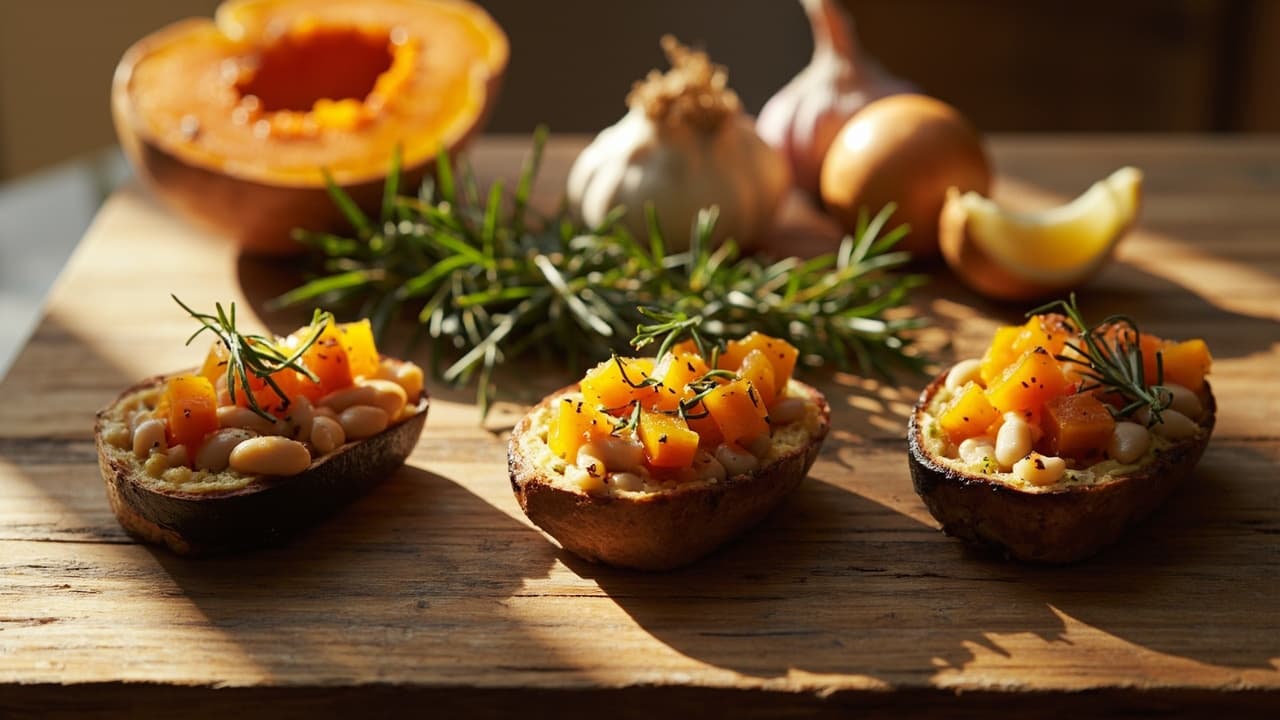
Socarrat White Bean Cazuelitas with Butternut Squash and Rosemary
Individual cazuelitas with a crispy bread shell cradling saffron-scented white beans and roasted butternut squash, finished with a socarrat crust at the base and fragrant rosemary.
Prep
20 min
Cook
35 min
Total
55 min
Method
1
Drain and rinse white beans; set aside.
2
Peel butternut squash and cut into 1cm cubes; you need about 300g.
3
Warm chicken broth and steep saffron threads in it for 5 minutes.
4
Remove crusts from bread slices; flatten each slice with a rolling pin until very thin.
6
Add finely diced yellow onion and cook 5-6 minutes, stirring occasionally, until soft and translucent.
7
Add minced garlic and cook 1 minute more until fragrant.
8
9
Fold white beans and cubed butternut squash into the sofrito; season with salt.
10
Pour saffron-infused chicken broth over everything; stir gently to combine.
11
Simmer uncovered over medium-low heat for 8-10 minutes, until squash is just tender and most liquid is absorbed; remove from heat.
13
Press one flattened bread slice into each ramekin, pleating the edges to form a cup shape with no gaps.
14
Divide bean-squash filling equally among the bread cups; drizzle 1 tsp olive oil over each.
15
Place ramekins on a baking sheet; bake 20 minutes until tops are golden and edges of bread are crispy.
16
Increase oven to 220C (425F); bake 3-4 minutes more until bread at the bottom browns to a deep golden socarrat.
17
Cool in ramekins 3 minutes — this lets the shell set before unmolding.
18
Run a thin knife around each cazuelita; invert onto a plate and lift off the ramekin.
19
Scatter chopped rosemary over each cazuelita; serve immediately while the socarrat is still crackling.
A
Nutri-Score
Excellent balance
A–E · lower is better · score -6
Calories
595
per serving
Source of protein · 27gSource of fibre · 12gLow sugar · 6g
Protein
27g
Carbs
85g
Fat
19g
Sat. fat
9g
Fiber
12g
Sugar
6g
Sodium
819mg
High FiberHigh ProteinMediterraneanVegetarian AdaptableAnti InflammatoryDiabetesHeart Healthy
Nutri-Score is a general nutritional-balance guide, not medical or dietary advice.
B
Environmental impact
Low impact
A–E · lower is better · includes estimates
kg CO2e
0.5
per serving
BCarbonAEU all-round· carbon sets the grade
Water
0.4m³
Runoff
0.04g P
White Beans drives 37% of this recipe’s estimated footprint.
Carbon from Poore & Nemecek 2018; water, land & runoff from Agribalyse — modelled averages for comparing recipes, not a measurement of your groceries.
Flavor Profile
6
Umami
3
Sweet
5
Salty
2
Sour
1
Bitter
4
Spicy
Textures
CrispyTender
Aromas
HerbalSmoky
Kitchen Equipment
Techniques
Safety & Storage
Cooking Temperature
Preheat oven to 200C (390F) and verify with an oven thermometer; the final socarrat phase at 220C (425F) requires close monitoring to achieve the golden crust without burning.
High Risk Population
The bread shells become extremely crisp and may pose a choking hazard for young children or elderly individuals; supervise closely during consumption.
Handling
Use oven mitts when handling hot ramekins; the cazuelitas retain extreme heat from the socarrat formation and can cause burns if touched directly.
Cross Contamination
Designate separate utensils for the sofrito preparation and bread handling to prevent cross-contact between raw and cooked components.
Storage
Consume immediately after preparation; the bread shell will lose structural integrity and become soggy if stored, and dairy components promote bacterial growth when cooled.
Allergen Warning
Butter used for greasing ramekins contains milk allergens; ensure thorough cleaning of all baking equipment if used for allergen-free preparations afterward.
Pro Tips
Technique
Never rush the sofrito — your onion must turn translucent and soft, almost sweet, before the garlic goes in. Rushing this step is like skipping the fire under a paella pan: you will have rice, but you will not have arròs.
When you raise the oven to 220C for the final socarrat, stay in the kitchen. This is not a step you walk away from — those few minutes between perfect golden and burnt are measured in heartbeats.
Substitution
If butternut squash is not available, you can use roasted green beans or even a firm chunks of peeled pumpkin — the key is achieving that tender-crisp texture that holds its shape when the filling goes into the bread shell.
From the chef
These cazuelitas exist for the socarrat — that crackling, golden crust at the base of each little bread cup is what the whole thing is built around. A proper sofrito slow-cooked until the tomato darkens and the oil sings, white beans simmered in saffron-scented broth, butternut squash cut just small enough to soften without dissolving — all of it landing in a buttered bread shell that toasts against the ramekin floor. When you flip one onto the plate and hear that first crack, you have done it right. That is the sound of Sunday lunch done correctly.
AllergensWheatMilkGluten
Source: generated · June 13, 2026