 Cambodian
Medium · Hot
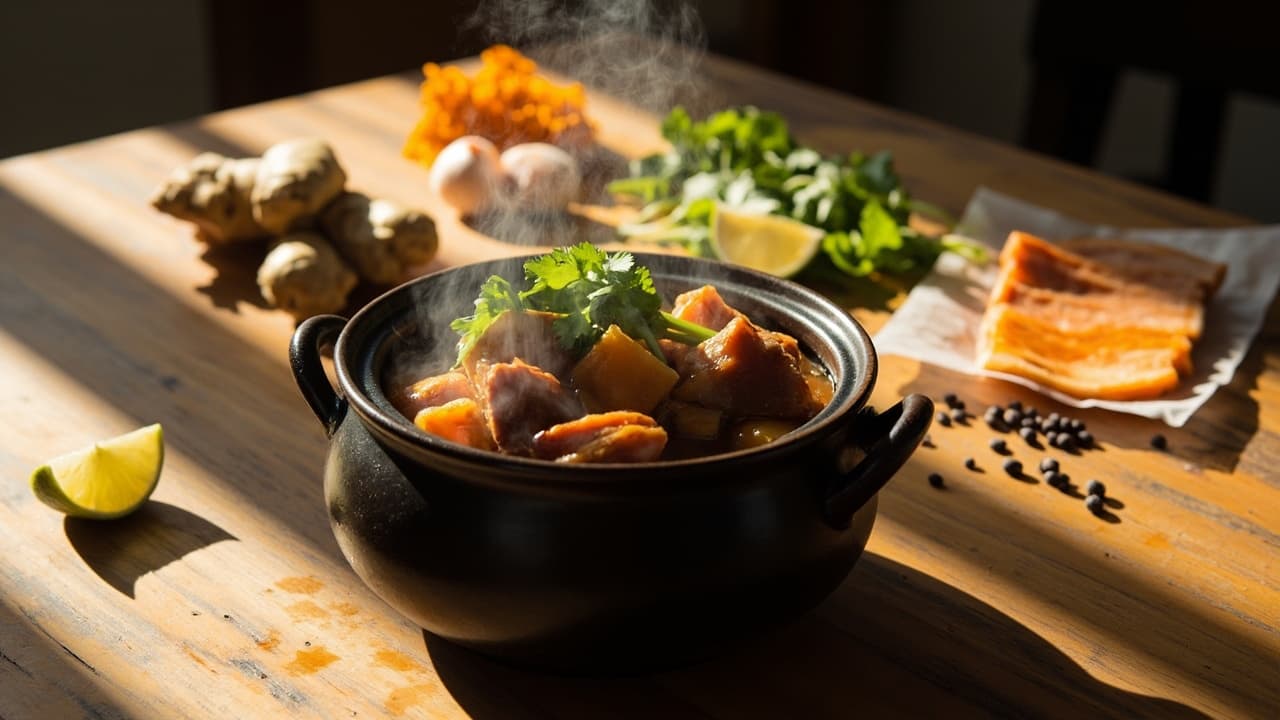
Pork Belly and Sweet Potato Claypot with Turmeric and Black Pepper
A comforting Cambodian claypot braise where silky pork belly meets caramelized sweet potato, perfumed with turmeric and black pepper. The aromatic paste builds deep flavor in layers, creating a sweet-savory dish that brings everyone to the table.

Prep
15 min
Cook
40 min
Rest
5 min
Total
1h
Method
Prepare Aromatic Paste
1
Pound the garlic and ginger into a rough paste in a mortar. Add turmeric, black pepper, and brown sugar. Continue pounding until everything is well combined and fragrant.
Brown the Pork Belly
2
Slice pork belly into 2cm cubes. Heat claypot or heavy pot over medium-high heat and add coconut oil.
3
Add pork belly pieces in a single layer. Sear without stirring for 3 minutes until golden. Flip and brown the other sides for another 3 minutes.
Build the Claypot
4
Push pork belly to the sides of the pot. Add the aromatic paste to the center and fry for 1-2 minutes, stirring constantly, until deeply fragrant.
5
Gently toss the pork belly with the paste, coating every piece. Add soy sauce and let it bubble and glaze the meat.
6
Add sweet potato chunks and enough water to just barely submerge. Stir gently to combine.
Braise and Finish
7
Bring to a gentle simmer, then cover and reduce heat to low. Cook for 25-30 minutes until pork is tender and sweet potato is soft but holds its shape.
8
Uncover and let the sauce reduce for 5 minutes until it thickens and clings to the pork and sweet potato.
D
Nutri-Score
Needs balance
A–E · lower is better · score 11
Calories
682
per serving
High in saturated fat · 23gCalorie-dense · 682 kcalLow sugar · 9g
Protein
11g
Carbs
24g
Fat
61g
Sat. fat
23g
Fiber
3g
Sugar
9g
Sodium
323mg
Gluten FreeDairy FreeEgg FreeNot Suitable Low SodiumAromatic Flavor
Nutri-Score is a general nutritional-balance guide, not medical or dietary advice.
C
Environmental impact
Moderate impact
A–E · lower is better · includes estimates
kg CO2e
1.3
per serving
CCarbonAEU all-round· carbon sets the grade
Water
0.5m³
Land
41Pt
Runoff
0.1g P
Pork Belly drives 93% of this recipe’s estimated footprint.
Carbon from Poore & Nemecek 2018; water, land & runoff from Agribalyse — modelled averages for comparing recipes, not a measurement of your groceries.
Flavor Profile
7
Umami
5
Sweet
5
Salty
3
Sour
1
Bitter
4
Spicy
Textures
CrispyTenderSilkyTender
Aromas
EarthyHerbalPepperySmoky
Kitchen Equipment
Primary Tool
ClaypotCounter FootprintMedium
Safety & Storage
Cooking Temperature
Braise pork belly to internal temperature of 145°F (63°C). The low-heat simmer for 25-30 minutes ensures safe cooking, but verify with a meat thermometer.
Cross Contamination
Use separate cutting boards for raw pork and fresh aromatics. Wash hands, utensils, and surfaces thoroughly after handling raw pork belly.
Handling
When browning pork belly, ensure pieces are dry and in a single layer. Moisture causes steaming instead of searing, reducing food safety and flavor development.
Equipment Safety
Clay pots are sensitive to thermal shock. Never place a hot claypot directly on cold surfaces or add cold liquid to a hot pot—cracks can cause burns or breakage.
Storage
Refrigerate leftovers within 2 hours in airtight containers. Consume within 3-4 days. Reheat to 165°F (74°C) before serving.
High Risk Population
Pork belly dishes should be fully cooked when serving immunocompromised individuals, pregnant women, or young children due to potential bacterial contamination in undercooked pork.
Pro Tips
Technique
Never rush the aromatic paste—pound until the garlic and ginger become one with the turmeric and pepper. You should smell that deep, earthy fragrance before you proceed. When the paste releases its oils and turns golden, that is when you know it is ready to build your claypot.
Substitution
If palm sugar is unavailable, brown sugar works, though the depth differs slightly. Avoid substituting Thai curry paste for kroeung—these are different foundations entirely, and the paste you build here cannot be shortcut without losing the soul of the dish.
From the chef
Pork belly and sweet potato find each other beautifully in a claypot braise, where turmeric gives a golden warmth and black pepper threads through every bite with quiet insistence. The paste is the heart of this dish — garlic, ginger, and brown sugar pounded together until fragrant, then fried in the center of the pot until it blooms. The pork belly slowly surrenders its fat into the sauce, and the sweet potato absorbs all that pepper-forward depth. My students ask why I never rush it, and I tell them: the claypot cannot lie. It gives exactly what you give it.
TagsClaypotBraiseComfort FoodPorkSweet PotatoOne PotAromatic
AllergensSoy
Source: generated · June 10, 2026