 British
Medium · Hot
Sausage and White Bean Traybake with Peppers
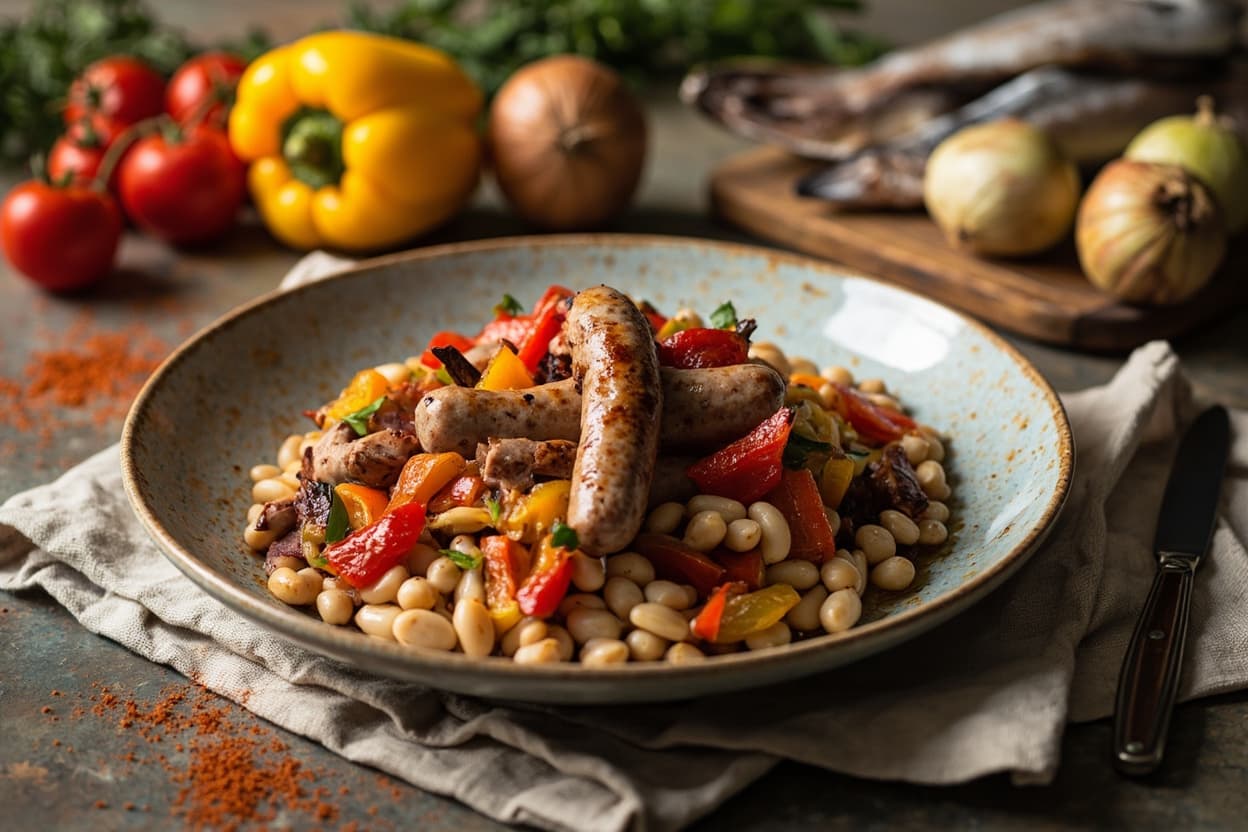
Everything into one deep tray — white beans, sausage, bell pepper, yellow onion, a heavy dusting of smoked paprika — and into a hot oven to let the sausage fat do the work. The beans at the edges go slightly crisp, the pepper softens and sweetens, and the whole tray comes out smelling of a Spanish kitchen at its most unguarded. Dinner without ceremony.

Prep
15 min
Cook
30 min
Total
45 min
Method
Prep
1
Preheat the oven to 200°C (400°F). Cut each bell-pepper in half, remove seeds and ribs, then slice into strips. Dice the tomato. Peel and finely slice the garlic and onion.
Sear the Sausages
Build the Traybake
3
4
Add the bell-pepper strips and cook for 2 more minutes until slightly softened.
5
Pour in the white-beans and diced tomato. Nestle the seared sausages back into the tray among the beans and peppers.
Season and Roast
6
Sprinkle smoked-paprika, black-pepper, and salt evenly over everything. Toss gently to coat the beans and peppers.
7
Transfer to the oven and roast for 25-30 minutes, until sausages are cooked through and the beans have started to caramelize at the edges, with the peppers lightly charred.
A
Nutri-Score
Excellent balance
A–E · lower is better · score -8
Calories
628
per serving
Source of protein · 29gSource of fibre · 9gLow sugar · 7g
Protein
29g
Carbs
72g
Fat
26g
Sat. fat
5g
Fiber
9g
Sugar
7g
Sodium
861mg
Gluten FreeDairy FreeHeart HealthyDiabetes FriendlyHigh ProteinHigh Fiber
Nutri-Score is a general nutritional-balance guide, not medical or dietary advice.
B
Environmental impact
Low impact
A–E · lower is better · includes estimates
kg CO2e
0.7
per serving
BCarbonAEU all-round· carbon sets the grade
Water
0.5m³
Runoff
0.06g P
Sausage drives 35% of this recipe’s estimated footprint.
Carbon from Poore & Nemecek 2018; water, land & runoff from Agribalyse — modelled averages for comparing recipes, not a measurement of your groceries.
Flavor Profile
7
Umami
4
Sweet
4
Salty
3
Sour
1
Bitter
4
Spicy
Textures
CrispyTenderJuicyCaramelized
Aromas
SmokyHerbalSavoryEarthy
Kitchen Equipment
Primary Tool
Roasting TrayCounter FootprintMedium
Safety & Storage
Cooking Temperature
Sausages must reach an internal temperature of 160°F (71°C) minimum. The 25-30 minute roast at 200°C (400°F) should achieve this, but verify with a probe thermometer to ensure food safety.
Cross Contamination
Raw sausages harbor bacteria. Use separate cutting boards and utensils for raw meat preparation, or thoroughly sanitize all contact surfaces before use with other ingredients.
Handling
After searing raw sausages, avoid touching other ingredients or cooked surfaces until hands are washed. The rendered fat can spread contamination if handled improperly.
Storage
Cooked traybake should be refrigerated within 2 hours of cooking. Store in airtight containers and consume within 3-4 days. Reheat to 165°F (74°C) before serving leftovers.
Shelf Life
Raw sausages should be used by the use-by date on packaging. Cooked dish maintains quality for up to 4 days refrigerated. Do not leave at room temperature for more than 2 hours total.
Allergen Warning
Commercial sausages frequently contain multiple hidden allergens (gluten, dairy, eggs, soy). Always verify specific brand ingredients or contact manufacturer for allergen-free alternatives if serving sensitive individuals.
Pro Tips
Technique
Let the sausages brown properly in the hot pan before you move them—that caramelization is where the flavor lives. Don't rush it or crowd the pan.
Equipment
A wide Dutch oven or heavy roasting tray works best here; you want to sear the sausages and then roast everything together in the same vessel so the flavors marry.
From the chef
Sausages browned in the pan, then everything into one deep tray — white beans, bell pepper, yellow onion, a heavy dusting of smoked paprika — and into a hot oven to let the sausage fat do the work. The beans at the edges go slightly crisp, the pepper softens and sweetens, and the whole tray comes out smelling of a kitchen at its most unguarded. A drizzle of olive oil and a handful of parsley at the end, and you are feeding four without fuss or ceremony. The kind of dish that fills the house with something better than perfume and asks nothing of you except a little patience while the oven runs.
TagsWeeknight DinnerHeartyComfort FoodProtein RichOne PanMediterranean Influence
AllergensGlutenMilkEggsSoy
Source: generated · May 30, 2026