Transform & Preserve
Salting & Degorging Vegetables
Salting watery or bitter vegetables to draw out moisture and bitterness.
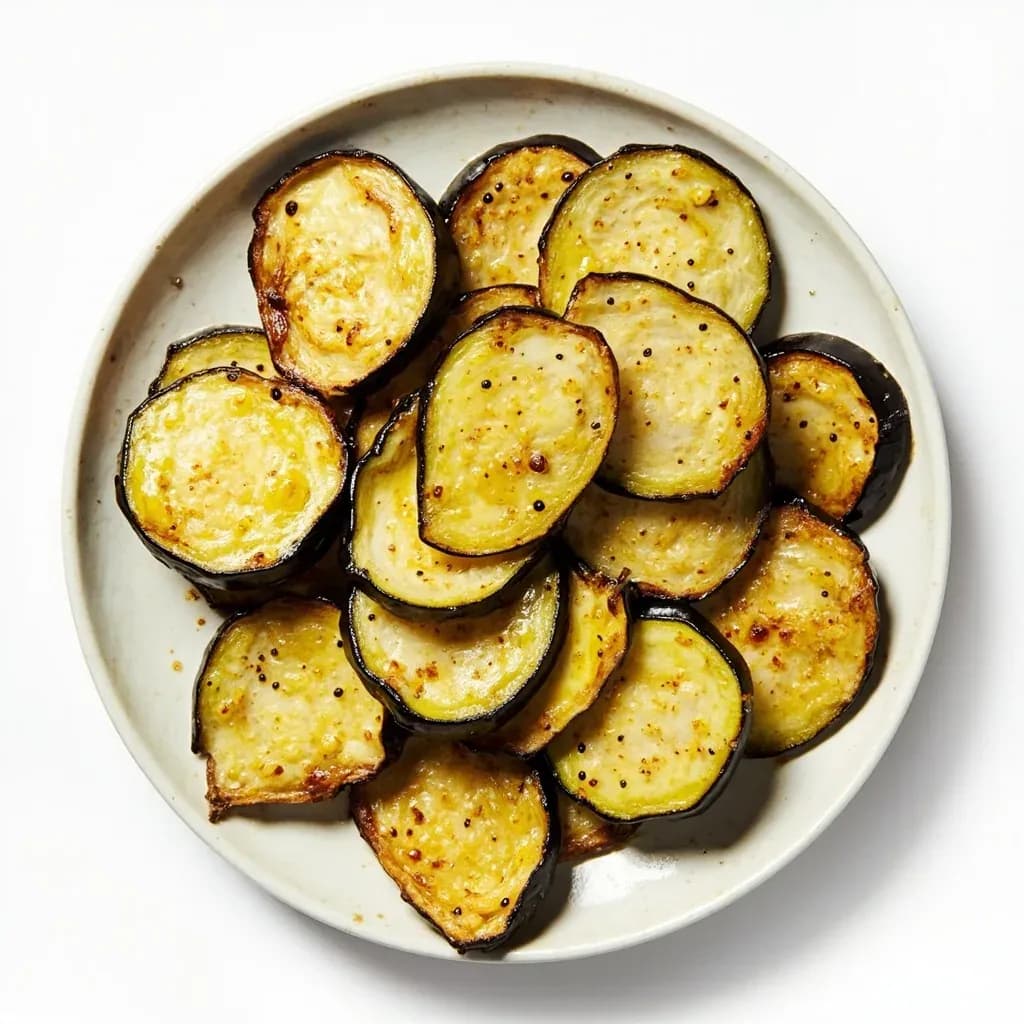
Degorging salts vegetables like eggplant, cucumber, or bitter melon and lets them sit so the salt draws out excess water and bitter compounds. The released liquid is then squeezed or rinsed off, leaving firmer flesh that fries better and tastes less bitter. The French term dégorger covers this, as does salt-rubbing goya or salting patlıcan before cooking.
Dégorgement — from the French *dégorger*, "to disgorge" — is the kitchen practice of salting cut vegetables and letting them sit so that osmosis pulls water and certain water-soluble flavor compounds out of their cells. It is one of the oldest moisture-control moves in European and Asian cooking, described by both Brillat-Savarin and Escoffier for eggplant and cucumbers, and embedded in cuisines from Italian (eggplant for parmigiana) to South Indian (bitter melon for thoran) to Scandinavian (cucumber for smørrebrød). The vegetables release visible liquid, become more pliable, and lose some of the raw, sometimes bitter edge that would otherwise survive into the finished dish.
The technique matters for three concrete reasons. First, it concentrates flavor: a slice of salted eggplant that has lost a quarter of its weight in water tastes more like eggplant, not like water. Second, it controls oil absorption: a waterlogged eggplant cube dropped into hot oil soaks up far more fat than a properly dégorged one, which is why pre-salting is the difference between a greasy and a silky pan-fried steak. Third, it changes texture — salted cucumbers stay snappy in a yogurt sauce, salted cabbage keeps its crunch in slaw, and salted zucchini browns on the grill rather than steaming into mush.
Modern cultivars have softened some of these effects. Today's supermarket eggplants carry far less of the bitter glycoalkaloids that made dégorgement a necessity a century ago, so for many cooks the technique is now mostly about moisture and texture rather than flavor. But the underlying principle — salt + time + pressure is a useful tool — hasn't changed, and it extends well beyond eggplant to any vegetable that weeps in the pan.
- Difficulty
- Easy
Types & varieties
The classic application; removes bitter glycoalkaloids and water so slices or cubes fry or roast without going greasy or soggy. Italian and globe types benefit most; slender Asian and graffiti varieties are naturally milder and need less or no salting.
Salted and drained for tzatziki, raita, cold yogurt soups, and Danish smørrebrød so the slices don't dilute dressings and stay crisp.
Salted before grilling, sautéing, or baking to prevent the soft, watery texture that ruins high-heat cooking.
Shredded and salted for slaws, stuffed-cabbage prep, and the early stage of sauerkraut; the salt is often retained as part of the cure rather than rinsed off.
Salted to leach cucurbitacin bitterness before stuffing or stir-frying in South Asian, Filipino, and Chinese cooking.
A brief salt rest before pickling or in some French salads softens sharpness and helps the slices hold their shape.
A light pre-salt draws surface water out so mushrooms sear rather than steam, though this is a cousin technique rather than a true dégorgement.
How to do it
- 1
Choose and prep the vegetable
Peel if the recipe calls for it — eggplant skin can usually stay on, while cucumbers for tzatziki are often peeled. Cut into a uniform size (cubes, rounds, or planks) so the salt penetrates evenly. Wetter vegetables like cucumber and zucchini take thinner cuts; eggplant can be cut thicker because its spongy flesh gives the salt more to work on.
- 2
Salt generously and evenly
Toss the cut pieces with kosher or fine sea salt, roughly 1 tablespoon per pound. Spread them in a single layer on a sheet pan, in a colander set over a bowl, or in a wide bowl. The surface should look lightly frosted with salt, not buried under it; the salt will dissolve as it pulls water out.
- 3
Rest and weight
Let stand at room temperature: about 15–20 minutes for cucumber, 30 minutes for zucchini, 30–60 minutes for eggplant, up to 2 hours for shredded cabbage. Place a second pan or a plate directly on the vegetables and weight it with a few cans or a heavy pot. You will see liquid pool in the pan or drip into the bowl — the weight is what turns a modest result into a properly dégorged one.
- 4
Drain and squeeze
Tip off the pooled liquid. Gather the vegetables in a clean, dry kitchen towel and squeeze firmly to expel the rest. Press hard for cabbage and cucumber; be gentler with eggplant cubes, which crush easily.
- 5
Rinse or not, then dry
Rinse briefly under cold water if the final dish is salt-sensitive — a cucumber-yogurt sauce, a delicate slaw, a grilled zucchini side. Skip the rinse for eggplant headed into a cooked, oil-based dish where the surface seasoning is welcome. In either case, pat the pieces completely dry on towels. Surface moisture is the enemy of browning, and a wet piece of eggplant will steam in the pan no matter how well you salted it.
- 6
Cook as directed
Use the prepped vegetable right away. Because it now absorbs less oil and browns more readily, you can often pull back slightly on the oil in the original recipe — useful for eggplant, which is a notorious oil sponge.
The science in plain language
Salt on the surface of a cut vegetable creates a hypertonic environment — the liquid outside the cells is saltier than the liquid inside. Water moves across the cell membranes to balance the concentration, and it carries some dissolved flavor compounds with it. With a weight on top, the cells are also physically compressed, which speeds the release. The result is a vegetable that has lost free water, lost a little sugar and a little bitter compound, and gained a small amount of surface seasoning. None of this is mysterious; it is the same osmotic principle that drives dry-brining a steak or salting tofu before frying.
- Salt concentration matters more than total salt mass — a thin, even coating works better than burying the vegetable
- Mechanical pressure noticeably increases the liquid you can extract compared with salting alone
- Rinsing removes surface salt and some absorbed salt; the choice to rinse is really a choice about the final dish's seasoning level
- The drained liquid carries real flavor and is worth saving for stocks, soups, or cooking grains
When to skip it
Dégorgement is not free — it adds time and a towel-drying step, and for some vegetables and some dishes it is unnecessary. Knowing when not to do it is part of using the technique well.
- Whole, unpeeled vegetables that will be roasted in plenty of oil (a halved baby eggplant, say) usually don't need it
- Vegetables you intend to braise in lots of liquid have nowhere for the released water to go anyway
- Slender Asian eggplants and modern greenhouse varieties are mild enough to skip the step in weeknight cooking
- Delicate squash blossoms, soft herbs, and leafy greens are damaged by the salt and the press — use a different approach or none at all
Common uses
Tips & pitfalls
- Slice evenly — uniform ½-inch eggplant planks or ¼-inch zucchini rounds salt more predictably than irregular chunks
- Use enough salt to lightly frost the surface; you are seasoning, not pickling, and the goal is osmotic contact, not a brine
- Weight the vegetables with a plate and a few cans; the mechanical press is the single biggest difference between a watery result and a properly dégorged one
- Squeeze in a clean kitchen towel rather than just draining — a firm wring pulls out noticeably more liquid than tipping a colander
- Skip the rinse for eggplant in oil-based dishes so the surface seasoning stays on; rinse cucumber and cabbage if the final dish should not taste salted
- Pat the pieces completely dry before frying, roasting, or grilling, or you will steam instead of sear and undo the work
- Reserve the drained liquid for vegetable stock, soup, or cooking water for grains — it carries genuine flavor rather than just bitterness
- Don't salt too far ahead: 30–60 minutes is the practical ceiling for most vegetables, beyond which they go limp and gray; cabbage for sauerkraut is the exception
- Remember that modern supermarket eggplants are far less bitter than older cultivars, so dégorgement is now mostly about moisture control for frying rather than removing glycoalkaloids
- Cut denser vegetables like eggplant into thinner pieces than you think you need — the salt penetrates only a few millimeters into the flesh per hour
Good to know
- French term
- Dégorgement (verb: dégorger, "to disgorge")
- Mechanism
- Osmosis — salt on the surface draws cell water and some water-soluble flavor compounds out through the cut cell walls
- Salt type
- Kosher or fine sea salt; avoid iodized table salt for purity, and avoid flaky salts that sit unevenly on the surface
- Typical ratio
- Roughly 1 tablespoon kosher salt per pound of cut vegetable, adjusted to taste and to how long the vegetable will sit
- Time range
- 15–20 minutes for cucumber; 30 minutes for zucchini; 30–60 minutes for eggplant; up to 2 hours for shredded cabbage
- Equipment
- Sheet pan, colander, or bowl, plus a second pan or plate and a few cans to weight the vegetables; a clean kitchen towel for drying
- Rinse or not
- Eggplant is usually not rinsed so salt and flavor stay; cucumber, zucchini, and cabbage are often rinsed or squeezed if the final dish shouldn't taste seasoned
- Difficulty
- Beginner — the work is mostly waiting, and the visual cue (pooled liquid) is unmistakable
Also called
Salting and Degorging Vegetables (Dégorger) · Salting Eggplant · Salt-Rubbing to Debitter Goya · Dégorger
Related

Confit
Cook slowly submerged in fat for silky tenderness and keeping

Cure
Draw out moisture with salt and time to preserve and concentrate

Pickle
Steep in acidic brine for bright, tangy, crunchy preservation

Ferment
Let friendly microbes transform food into tangy, complex flavor

Marinate
Soak in a seasoned mix to flavor and tenderize before cooking

Brine
Soak in salt water so meat stays juicy and seasoned throughout

Dehydrate
Slowly dry out moisture to concentrate flavor and extend shelf life

Cold-Smoke
Perfume cured food with smoke without cooking it through