Prep & Assembly
Massaging Vegetables
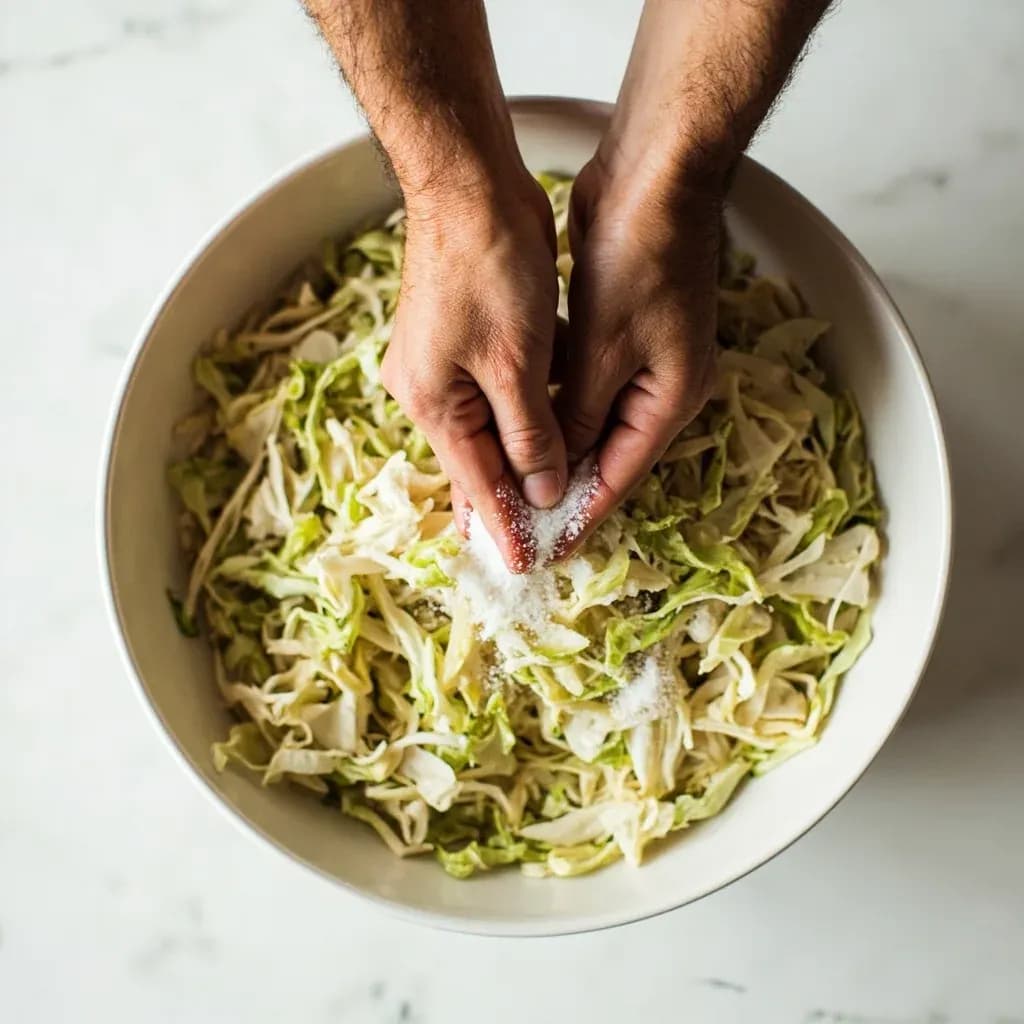
Working salt or dressing into vegetables by hand to soften them and draw out water.
Massaging vegetables means rubbing them by hand, usually with salt or an acidic dressing, to break down tough fibers and pull out moisture. It tenderizes kale and other hardy greens, wilts cabbage for kimchi, and seasons Korean namul evenly. The physical action softens texture and lets flavors penetrate without cooking. Salt massaging also begins the osmosis that makes pickling and fermenting possible.
Massaging vegetables is a no-heat technique in which salt (and often oil) is worked into raw greens by hand until they wilt, darken, and shrink. The method is most commonly applied to sturdy leafy greens such as kale, collards, and Swiss chard, and to shredded crucifers like cabbage and Brussels sprouts, transforming them from tough and fibrous into silky, seasoned, and salad-ready in a matter of minutes.
The effect comes from two mechanisms acting at once. Salt draws water out of the plant cells through osmosis, collapsing the rigid internal structure that makes raw greens feel waxy and grassy. Mechanical pressure — the squeezing and rubbing itself — physically ruptures cellulose cell walls so the leaves lose their crunch and become pliable. The released liquid carries salt and any added oil into the leaf, which is why a properly massaged green tastes seasoned all the way through rather than just on the surface, and why it holds vinaigrette far better than raw, chopped greens do.
The same principle, extended over days or weeks, is the foundation of sauerkraut, kimchi, and traditional salt-cured greens across Europe and East Asia. Modern home massaging is the quick, oil-based version of that older preserving technique, tuned for weeknight salads rather than crocks of fermenting cabbage.
- Difficulty
- Easy
Types & varieties
The classic choice; thick leaves benefit most from a thorough massage
Holds dressing well in its crinkles; massage until all crunch is gone
Softer leaves; needs only 1–2 minutes and less salt
Usually too tender to require massaging; skip or massage only briefly
Requires the longest massage (5–10 min) and a heavier hand to break down fibers
Shredded; salt draws out liquid that becomes the dressing
Same treatment as green; color deepens and turns vivid
Naturally tender; short massage enhances pliability for wraps
Shredded raw; massage transforms them into a slaw-like texture
Stems removed; leaves massage in about 2 minutes
Pre-shredded; brief toss with salt and oil is enough
How to do it
- 1
Prep the vegetables
Wash and thoroughly dry the greens. For kale, collards, or chard, strip the leaves from the stems by holding the base of the stem and pulling the leaf upward; discard or save the stems for another use. Tear or chop the leaves into bite-sized pieces and place in a large bowl with plenty of room to work.
- 2
Add salt
Sprinkle kosher salt evenly over the greens — roughly ½ teaspoon per large bunch of kale, scaling up for denser collards. Use your hands to toss and distribute the salt so no pockets remain.
- 3
Begin massaging
Press the greens between your palms and fingers, squeeze firmly, and release. Work the salt into the leaves by scrunching handfuls, rubbing pieces against each other, and pressing down into the bowl. The leaves will start to darken and weep liquid.
- 4
Add oil and continue
After about 1 minute, drizzle in 1–2 tablespoons of olive or avocado oil. Continue massaging for another 1–3 minutes. The greens should reduce noticeably in volume, turn a deep saturated green, and feel silky rather than crisp or waxy.
- 5
Taste and adjust
Pinch a piece and taste. It should taste seasoned all the way through, not just on the surface, and have no raw, fibrous bite. If under-salted, add a pinch more and massage 30 seconds more. If too salty, rinse briefly under cold water, pat dry, and re-oil.
- 6
Finish with acid and extras
Squeeze in lemon juice or vinegar and add minced garlic, grated cheese, nuts, or other salad components. Toss to combine and serve, or store refrigerated for up to 5 days — flavor improves as it sits.
The science behind the squeeze
Massaging is doing two things at once, and understanding them makes it easier to judge when the greens are done. Salt acts on the outside of the leaf by osmosis: it pulls water out of the cells and, in doing so, collapses the turgor pressure that keeps the leaf rigid. The leaf is still raw and still full of fiber, but it no longer stands up to a bite. The mechanical pressure of rubbing and squeezing then physically breaks open cellulose cell walls, releasing more water and, importantly, creating a rougher, more absorbent surface. That rough surface is what grips oil droplets so a vinaigrette clings instead of sliding to the bottom of the bowl. Oil added partway through the massage acts as a flavor carrier, distributing fat-soluble compounds (and any aromatics you whisk into it) into the broken-down leaf.
- Salt does most of the tenderizing; the massage mostly does the seasoning and cell-wall damage.
Massaged vs. cooked greens
Massaging is not a substitute for cooking, but it occupies a useful middle ground. Heat breaks down pectin and cellulose fully and gives greens a sweet, mellow, almost silken texture; massaging leaves them raw and brightly colored, with a more mineral, slightly grassy flavor. Dressings cling to massaged leaves as well as they do to wilted ones, which is why a cold kale salad can outperform a warm one for lunchbox purposes. The technique also plays well with brief cooking: collards that are massaged for 5 minutes and then quickly sautéed finish in a fraction of the usual time and absorb far more flavor.
Common pitfalls
- Adding acid (lemon, vinegar) too early, which can turn the leaves mushy and watery
- Using fine table salt, which over-seasons and clumps
- Leaving the tough central rib on kale or collards, which never softens no matter how long you work it
- Skipping the oil, which makes the salt taste harsh and the leaves feel dry
- Stopping the massage at the first sign of wilting; the leaves need a full 2–3 minutes to truly transform
Common uses
Tips & pitfalls
- Always strip the tough central rib from kale and collards before massaging; it stays fibrous no matter how long you work it.
- Use kosher or coarse sea salt — fine table salt over-seasons and dissolves unevenly.
- Add oil partway through, not at the start; it helps distribute the salt and adds richness.
- Hold off on acid (lemon juice, vinegar) until after massaging; acid added early can make greens limp and watery.
- Massage until the leaves feel silky and the volume is cut roughly in half — under-massaged kale tastes grassy and fibrous.
- Pat greens thoroughly dry before starting; excess water dilutes the salt and prevents proper seasoning.
- Taste a leaf between your fingers as you work; you should taste salt on the surface and through the leaf, not just feel moisture.
- For cabbage slaw, save the liquid that pools in the bowl — it is concentrated, seasoned brine that doubles as dressing.
- Massaged greens hold dressing far better than raw, untreated greens because the oil clings to the broken-down surface.
- If the mix tastes flat after massaging, it almost always needs more salt, not more acid.
Good to know
- Technique type
- Hand manipulation of vegetables with salt and/or oil to tenderize and season
- Equipment needed
- Hands; a large mixing bowl; optional wooden spoon or pestle
- Temperature
- Room temperature; not heat-based
- Typical time
- 2–5 minutes for kale; 5–10 minutes for tougher collards; 1–2 minutes for shredded cabbage
- Salt ratio
- About ½ to 1 teaspoon kosher salt per large bunch of kale (8–10 oz)
- Volume reduction
- Greens typically shrink 30–50% during massaging
- Visible cues
- Color deepens to a saturated green; leaves turn silky, pliable, and glossy
- Storage after
- Massaged greens keep 3–5 days refrigerated in a sealed container
- Difficulty
- Beginner; relies on feel rather than precise timing
- Origin note
- Mechanism is ancient (sauerkraut, salt-cured greens); the current name and home-kitchen use date to the raw-food and kale-salad movement of the 2000s–2010s
Also called
Massaging / Bruising Vegetables · Salt Massaging (Kimchi) · Seasoning Vegetables (Namul Muchim)
Related

Whisk
Beat ingredients smooth and aerated with a looping wire motion

Sift
Pass dry ingredients through mesh to aerate and remove lumps

Strain
Pour through mesh to separate solids from liquid for a smooth result

Filter
Pass liquid through fine material to clarify out the smallest particles

Rice
Press cooked potatoes through small holes for fluffy, lump-free texture

Mash
Crush soft cooked food into a rustic, creamy purée

Grind
Crush food into a coarse to fine texture, from spices to meat

Grate
Shred food into fine bits against a sharp-toothed surface